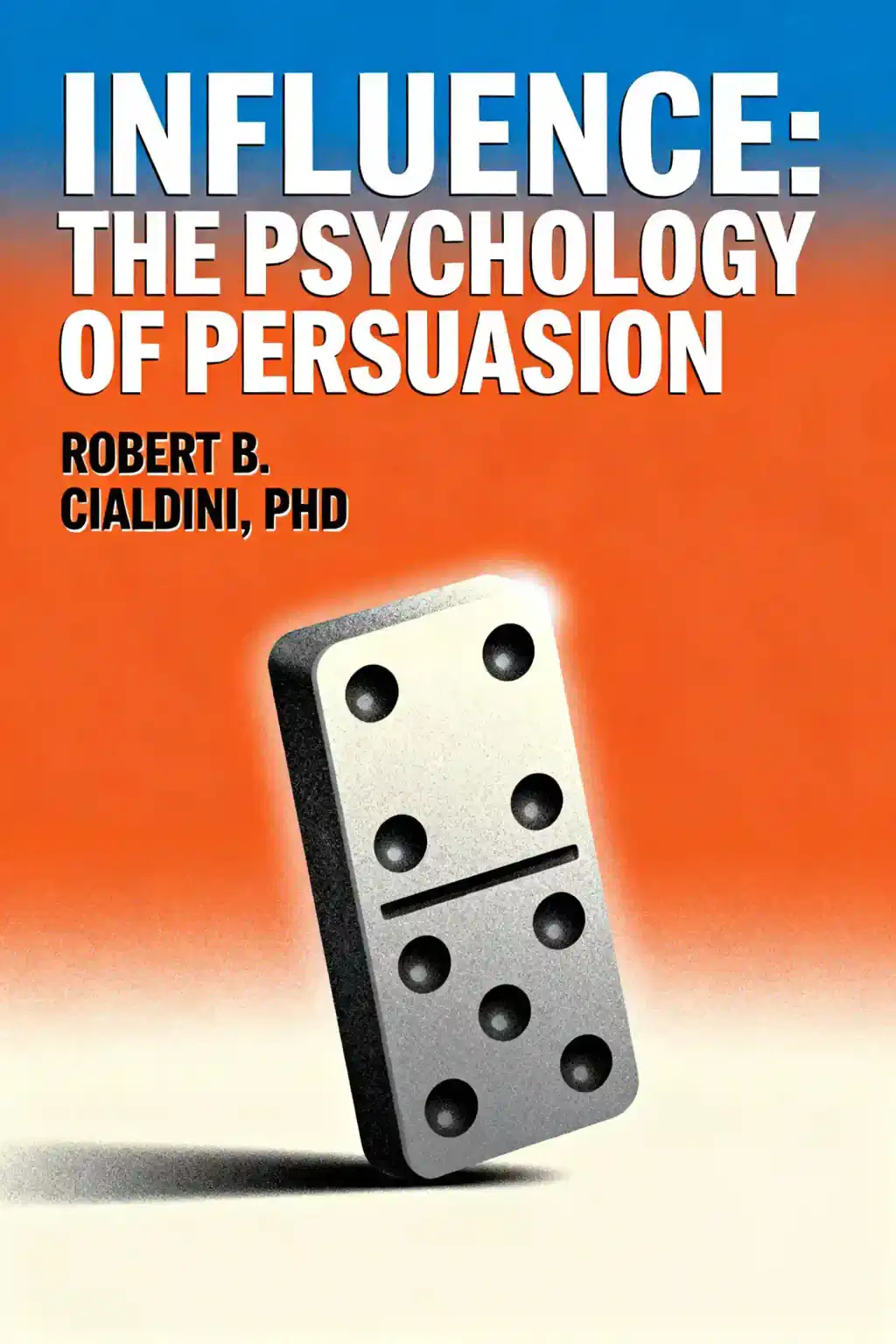
Influence: The Psychology of Persuasion
We often make choices on autopilot, leaving us vulnerable to manipulation. Discover the six triggers that drive human behavior to regain your autonomy.

Melhor citação de Influence: The Psychology of Persuasion
Our brains are wired to use mental shortcuts—fixed action patterns that usually serve us well but can be easily exploited by those who know the 'trigger features.' Understanding these isn't just about avoiding a bad deal; it’s about regaining your autonomy in a world that is constantly trying to nudge you toward a specific choice.
Generated with BeFreed
An audio lesson about the book Influence, covering its key ideas and takeaways.


Perguntas frequentes
We live in an increasingly complex world where the sheer volume of information makes it impossible to analyze every detail before making a choice. To avoid cognitive paralysis, our brains use "primitive consent" or automatic shortcuts to navigate daily life efficiently. While these fixed action patterns usually serve us well by saving time and energy, they can be exploited by people who know how to trigger these responses artificially.
This is a persuasion technique based on the rule of reciprocation. An influencer starts by making a large, unreasonable request that they expect you to reject. After the rejection, they "retreat" to a smaller, more reasonable request. Because the influencer appears to have made a concession, you feel a social pressure to match that concession by saying yes to the second request. This tactic often makes the person being persuaded feel more responsible for the final deal and more satisfied with the outcome.
In uncertain situations, people look to the actions of others to determine the correct behavior, a phenomenon known as social proof. This can lead to "pluralistic ignorance" during a crisis; if there are many bystanders and no one is reacting, each individual assumes that there is no real emergency because everyone else appears calm. To get help in such a situation, you must eliminate this uncertainty by specifically pointing to one person and giving them a direct instruction.
The principle of consistency dictates that once we take a stand or make a choice, we face internal and interpersonal pressure to behave consistently with that commitment. This drive is so powerful that it can change our internal logic to justify our actions. For example, a gambler feels more confident about a horse after placing a bet because their self-image has shifted to align with the action they just took, making them want to believe they made the right choice.
To avoid mindless obedience to authority, you should ask yourself two critical questions: "Is this authority truly an expert?" and "How truthful can we expect this expert to be in this situation?" It is important to distinguish between the substance of expertise and the mere symbols of authority, such as titles, expensive clothing, or luxury cars, which can be easily faked to trigger a submissive response.
Criado por ex-alunos da Universidade de Columbia em San Francisco
"Instead of endless scrolling, I just hit play on BeFreed. It saves me so much time."


"I never knew where to start with nonfiction—BeFreed’s book lists turned into podcasts gave me a clear path."


"Perfect balance between learning and entertainment. Finished ‘Thinking, Fast and Slow’ on my commute this week."
"Crazy how much I learned while walking the dog. BeFreed = small habits → big gains."
"Reading used to feel like a chore. Now it’s just part of my lifestyle."

"Feels effortless compared to reading. I’ve finished 6 books this month already."
"BeFreed turned my guilty doomscrolling into something that feels productive and inspiring."

"BeFreed turned my commute into learning time. 20-min podcasts are perfect for finishing books I never had time for."
"BeFreed replaced my podcast queue. Imagine Spotify for books — that’s it. 🙌"

"It is great for me to learn something from the book without reading it."
"The themed book list podcasts help me connect ideas across authors—like a guided audio journey."
"Makes me feel smarter every time before going to work"
Criado por ex-alunos da Universidade de Columbia em San Francisco
"Instead of endless scrolling, I just hit play on BeFreed. It saves me so much time."
"I never knew where to start with nonfiction—BeFreed’s book lists turned into podcasts gave me a clear path."
"Perfect balance between learning and entertainment. Finished ‘Thinking, Fast and Slow’ on my commute this week."
"Crazy how much I learned while walking the dog. BeFreed = small habits → big gains."
"Reading used to feel like a chore. Now it’s just part of my lifestyle."
"Feels effortless compared to reading. I’ve finished 6 books this month already."
"BeFreed turned my guilty doomscrolling into something that feels productive and inspiring."
"BeFreed turned my commute into learning time. 20-min podcasts are perfect for finishing books I never had time for."
"BeFreed replaced my podcast queue. Imagine Spotify for books — that’s it. 🙌"
"It is great for me to learn something from the book without reading it."
"The themed book list podcasts help me connect ideas across authors—like a guided audio journey."
"Makes me feel smarter every time before going to work"
"Instead of endless scrolling, I just hit play on BeFreed. It saves me so much time."
"I never knew where to start with nonfiction—BeFreed’s book lists turned into podcasts gave me a clear path."
"Perfect balance between learning and entertainment. Finished ‘Thinking, Fast and Slow’ on my commute this week."
"Crazy how much I learned while walking the dog. BeFreed = small habits → big gains."
"Reading used to feel like a chore. Now it’s just part of my lifestyle."
"Feels effortless compared to reading. I’ve finished 6 books this month already."
"BeFreed turned my guilty doomscrolling into something that feels productive and inspiring."
"BeFreed turned my commute into learning time. 20-min podcasts are perfect for finishing books I never had time for."
"BeFreed replaced my podcast queue. Imagine Spotify for books — that’s it. 🙌"
"It is great for me to learn something from the book without reading it."
"The themed book list podcasts help me connect ideas across authors—like a guided audio journey."
"Makes me feel smarter every time before going to work"
"Instead of endless scrolling, I just hit play on BeFreed. It saves me so much time."
"I never knew where to start with nonfiction—BeFreed’s book lists turned into podcasts gave me a clear path."
"Perfect balance between learning and entertainment. Finished ‘Thinking, Fast and Slow’ on my commute this week."
"Crazy how much I learned while walking the dog. BeFreed = small habits → big gains."
"Reading used to feel like a chore. Now it’s just part of my lifestyle."
"Feels effortless compared to reading. I’ve finished 6 books this month already."
"BeFreed turned my guilty doomscrolling into something that feels productive and inspiring."
"BeFreed turned my commute into learning time. 20-min podcasts are perfect for finishing books I never had time for."
"BeFreed replaced my podcast queue. Imagine Spotify for books — that’s it. 🙌"
"It is great for me to learn something from the book without reading it."
"The themed book list podcasts help me connect ideas across authors—like a guided audio journey."
"Makes me feel smarter every time before going to work"