How Incentives Kill Democracy (Not Bad People)
Why democracies collapse when lying, polarizing, and norm-breaking literally pay better than restraint-and how crisis periods make authoritarianism the rational choice.

Melhor citação de How Incentives Kill Democracy (Not Bad People)
The immediate, tangible rewards for extreme behavior often outweigh the abstract, long-term benefits of democratic restraint. Most democratic collapse happens gradually because the incentive structures reward the wrong behaviors.
Generated by Jerry
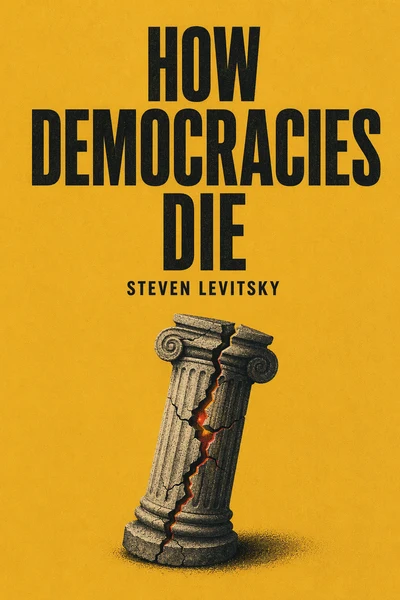
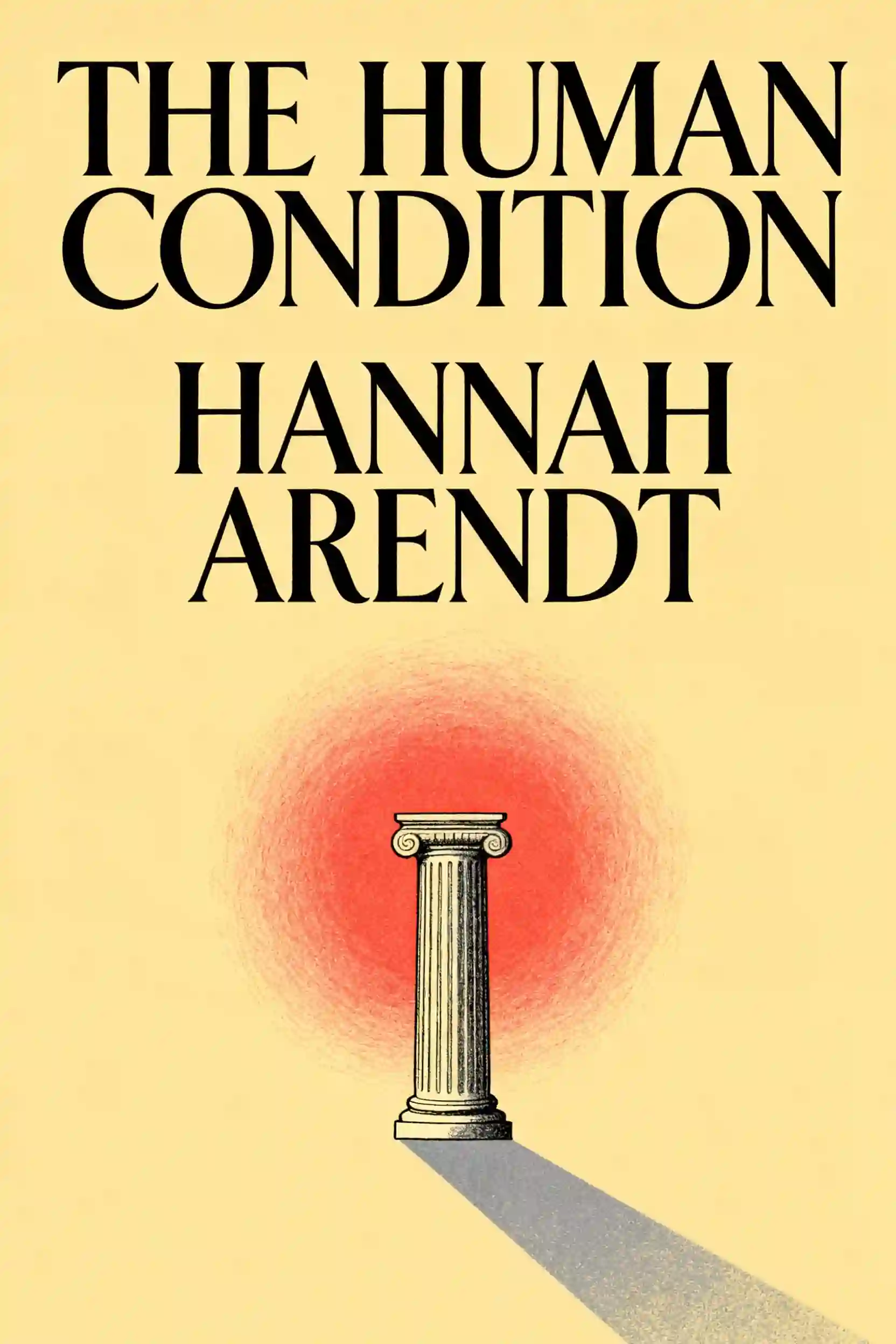
How Democracies Die — Steven Levitsky & Daniel Ziblatt — 2018. Democratic collapse is usually endogenous: elected leaders exploit legal tools while informal norms of restraint decay. The core claim is that institutions fail not from ignorance but from incentives that reward polarization, short-term power, and norm violation. The Human Condition — Hannah Arendt — 1958. Politics depends on action within a shared public world; modern society substitutes labor, consumption, and administration for genuine action. When incentives favor productivity and survival over judgment and plurality, freedom withers without coercion. Men in Dark Times — Hannah Arendt — 1968. In periods of collapse, clarity comes from individuals who refuse incentive-aligned falsehoods. Thinking becomes subversive precisely because prevailing rewards favor conformity and silence. 1984 — George Orwell — 1949. Totalitarianism perfects incentive design by aligning survival, status, and identity with obedience to falsehood. Truth disappears not because it is disproven, but because dissent becomes too costly. The Fourth Turning — William Strauss & Neil Howe — 1997. Crisis eras restructure institutions and norms through generational conflict. Incentives harden during these periods, privileging order and security over openness and deliberation. Think Like a Freak — Steven D. Levitt & Stephen J. Dubner — 2014. Behavior follows incentives more reliably than ideology, morality, or stated beliefs. To understand outcomes, one must ignore narratives and trace who gains, who pays, and who is insulated from consequences. Integrated, Think Like a Freak supplies the missing micro-foundation beneath the others. Levitsky and Ziblatt describe what breaks; Levitt and Dubner explain why actors keep breaking it even when they profess democratic values. Norm erosion persists because incentives reward violation and externalize long-term costs. Arendt's framework deepens this: when societies reorganize around economic incentives alone, political action is displaced by optimization. Citizens become laborers of ideology or consumers of outrage, both rational responses to reward structures that pay attention, compliance, or tribal loyalty rather than judgment. Darkness is not imposed; it is priced in. Orwell shows the end-state of perfected incentives. When truth-telling yields punishment and repetition yields safety, epistemic collapse becomes individually rational. Totalitarianism succeeds not by terror alone but by making dishonesty the dominant survival strategy. The Fourth Turning contextualizes why incentive realignment accelerates during crises. Emergency conditions compress time horizons, making short-term rewards dominate. Generations shaped under crisis internalize these incentives as normal, mistaking adaptation for virtue. The combined insight is stark: democratic decay is not primarily a moral failure but an incentive failure. Appeals to norms, truth, or civic duty collapse when counter-incentives are stronger, faster, and more personal. Systems drift toward authoritarian equilibria when lying, polarizing, or norm-breaking outperforms restraint in career, money, status, or safety. A synthetic model follows. Stage one: incentive skew—media, parties, and platforms reward extremity and punishment over cooperation. Stage two: ontological shrinkage—politics becomes transactional, crowding out action and plurality. Stage three: epistemic lock-in—falsehoods dominate because they are cheaper to produce and safer to repeat. Crises accelerate all three. Testable predictions emerge. If institutional actors face asymmetric penalties for compromise versus obstruction, polarization will intensify regardless of rhetoric. If truth production is costly and truth distortion is subsidized, shared reality will fragment even without censorship. If crisis incentives persist after emergencies end, authoritarian norms will stabilize across generations. The implication is uncomfortable but actionable: democracies are rebuilt by changing payoffs before changing minds. If truth pays, people tell it; if restraint pays, elites practice it; if action pays, citizens reappear. Where incentives remain misaligned, moral exhortation becomes background noise—and darkness becomes rational.





![[PDF] Hannah Arendt on Politics, Economics, and the Welfare State](https://d1y2du6z1jfm9e.cloudfront.net/assets/podcast/yellow.png)
Criado por ex-alunos da Universidade de Columbia em San Francisco
"Instead of endless scrolling, I just hit play on BeFreed. It saves me so much time."


"I never knew where to start with nonfiction—BeFreed’s book lists turned into podcasts gave me a clear path."


"Perfect balance between learning and entertainment. Finished ‘Thinking, Fast and Slow’ on my commute this week."
"Crazy how much I learned while walking the dog. BeFreed = small habits → big gains."
"Reading used to feel like a chore. Now it’s just part of my lifestyle."

"Feels effortless compared to reading. I’ve finished 6 books this month already."
"BeFreed turned my guilty doomscrolling into something that feels productive and inspiring."

"BeFreed turned my commute into learning time. 20-min podcasts are perfect for finishing books I never had time for."
"BeFreed replaced my podcast queue. Imagine Spotify for books — that’s it. 🙌"

"It is great for me to learn something from the book without reading it."
"The themed book list podcasts help me connect ideas across authors—like a guided audio journey."
"Makes me feel smarter every time before going to work"
 Ask ChatGPT
 Ask Claude
Criado por ex-alunos da Universidade de Columbia em San Francisco
"Instead of endless scrolling, I just hit play on BeFreed. It saves me so much time."
"I never knew where to start with nonfiction—BeFreed’s book lists turned into podcasts gave me a clear path."
"Perfect balance between learning and entertainment. Finished ‘Thinking, Fast and Slow’ on my commute this week."
"Crazy how much I learned while walking the dog. BeFreed = small habits → big gains."
"Reading used to feel like a chore. Now it’s just part of my lifestyle."
"Feels effortless compared to reading. I’ve finished 6 books this month already."
"BeFreed turned my guilty doomscrolling into something that feels productive and inspiring."
"BeFreed turned my commute into learning time. 20-min podcasts are perfect for finishing books I never had time for."
"BeFreed replaced my podcast queue. Imagine Spotify for books — that’s it. 🙌"
"It is great for me to learn something from the book without reading it."
"The themed book list podcasts help me connect ideas across authors—like a guided audio journey."
"Makes me feel smarter every time before going to work"
"Instead of endless scrolling, I just hit play on BeFreed. It saves me so much time."
"I never knew where to start with nonfiction—BeFreed’s book lists turned into podcasts gave me a clear path."
"Perfect balance between learning and entertainment. Finished ‘Thinking, Fast and Slow’ on my commute this week."
"Crazy how much I learned while walking the dog. BeFreed = small habits → big gains."
"Reading used to feel like a chore. Now it’s just part of my lifestyle."
"Feels effortless compared to reading. I’ve finished 6 books this month already."
"BeFreed turned my guilty doomscrolling into something that feels productive and inspiring."
"BeFreed turned my commute into learning time. 20-min podcasts are perfect for finishing books I never had time for."
"BeFreed replaced my podcast queue. Imagine Spotify for books — that’s it. 🙌"
"It is great for me to learn something from the book without reading it."
"The themed book list podcasts help me connect ideas across authors—like a guided audio journey."
"Makes me feel smarter every time before going to work"
"Instead of endless scrolling, I just hit play on BeFreed. It saves me so much time."
"I never knew where to start with nonfiction—BeFreed’s book lists turned into podcasts gave me a clear path."
"Perfect balance between learning and entertainment. Finished ‘Thinking, Fast and Slow’ on my commute this week."
"Crazy how much I learned while walking the dog. BeFreed = small habits → big gains."
"Reading used to feel like a chore. Now it’s just part of my lifestyle."
"Feels effortless compared to reading. I’ve finished 6 books this month already."
"BeFreed turned my guilty doomscrolling into something that feels productive and inspiring."
"BeFreed turned my commute into learning time. 20-min podcasts are perfect for finishing books I never had time for."
"BeFreed replaced my podcast queue. Imagine Spotify for books — that’s it. 🙌"
"It is great for me to learn something from the book without reading it."
"The themed book list podcasts help me connect ideas across authors—like a guided audio journey."
"Makes me feel smarter every time before going to work"