Games People Play: Eric Berne’s Transactional Analysis Explained
Explore Eric Berne’s Games People Play and Transactional Analysis. Learn how Parent, Adult, and Child ego states and 'strokes' shape our social dynamics and scripts.
Melhor citação de Games People Play: Eric Berne’s Transactional Analysis Explained
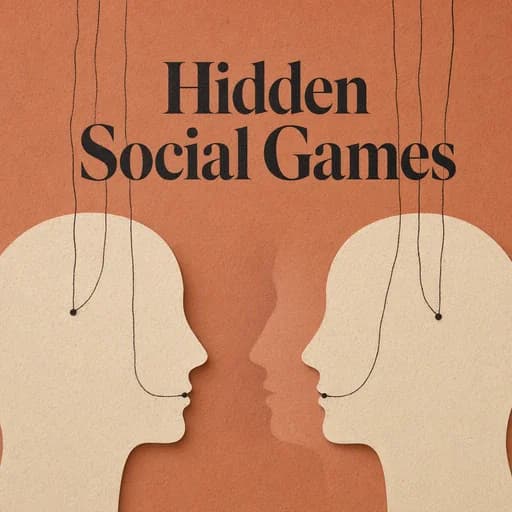
We avoid the vulnerability of true intimacy by playing these high-stakes games, which provide a much bigger emotional hit even if that hit is painful.
Generated by Aditya
Create an intellectually rigorous, long-form audio masterclass based on the attached source '_OceanofPDF.com_The_Games_People_Play_-_Eric_Berne.md'. Use a reasoning framework inspired by Marc Andreessen: present competing interpretations before evaluating Berne's positions, process ideas step-by-step, and tag conclusions with confidence levels (High to Low). The lesson must cover Transactional Analysis foundations, ego states (Parent, Adult, Child), transactions, and time-structuring. Explain specific games like 'Why Don't You—Yes But' and 'See What You Made Me Do'. For each concept, define the problem, the concept, real-world examples, and its limitations. Contrast Berne's descriptive vs. explanatory power and evaluate which ideas remain influential or outdated. Maintain a narrative, storytelling style for a layperson while preserving technical terminology and distinguishing explicit text from logical inferences. Conclude with Berne's central thesis and five key takeaways for improving relationships.


Perguntas frequentes
Eric Berne’s 1964 classic, Games People Play, suggests that much of our social interaction is not spontaneous but follows unconscious patterns or scripts. These 'games' are played to receive 'strokes,' which are essential units of recognition needed for mental and biological well-being. According to Berne, these interactions are so vital that a lack of recognition can have severe physical and psychological consequences, leading people to seek even negative attention over being ignored.
In Transactional Analysis, Eric Berne identifies three distinct ego states: Parent, Adult, and Child. These states represent different ways of thinking, feeling, and behaving during social interactions. By understanding how these ego states interact, individuals can identify the 'games' they are playing. This framework helps explain why certain conversations feel scripted and how these dynamics can either strengthen relationships or lead to self-sabotage in various social settings.
People engage in psychological games to obtain 'strokes,' which Berne defines as units of recognition necessary to keep a person mentally and biologically afloat. Because any interaction is often viewed as better than being ignored, individuals may settle for negative attention through repetitive, frustrating patterns. These games allow people to follow hidden scripts that fulfill their unconscious needs for recognition, even if the outcome of the conversation feels exhausting or unproductive for those involved.
Criado por ex-alunos da Universidade de Columbia em San Francisco
"Instead of endless scrolling, I just hit play on BeFreed. It saves me so much time."


"I never knew where to start with nonfiction—BeFreed’s book lists turned into podcasts gave me a clear path."


"Perfect balance between learning and entertainment. Finished ‘Thinking, Fast and Slow’ on my commute this week."
"Crazy how much I learned while walking the dog. BeFreed = small habits → big gains."
"Reading used to feel like a chore. Now it’s just part of my lifestyle."

"Feels effortless compared to reading. I’ve finished 6 books this month already."
"BeFreed turned my guilty doomscrolling into something that feels productive and inspiring."

"BeFreed turned my commute into learning time. 20-min podcasts are perfect for finishing books I never had time for."
"BeFreed replaced my podcast queue. Imagine Spotify for books — that’s it. 🙌"

"It is great for me to learn something from the book without reading it."
"The themed book list podcasts help me connect ideas across authors—like a guided audio journey."
"Makes me feel smarter every time before going to work"
Criado por ex-alunos da Universidade de Columbia em San Francisco
"Instead of endless scrolling, I just hit play on BeFreed. It saves me so much time."
"I never knew where to start with nonfiction—BeFreed’s book lists turned into podcasts gave me a clear path."
"Perfect balance between learning and entertainment. Finished ‘Thinking, Fast and Slow’ on my commute this week."
"Crazy how much I learned while walking the dog. BeFreed = small habits → big gains."
"Reading used to feel like a chore. Now it’s just part of my lifestyle."
"Feels effortless compared to reading. I’ve finished 6 books this month already."
"BeFreed turned my guilty doomscrolling into something that feels productive and inspiring."
"BeFreed turned my commute into learning time. 20-min podcasts are perfect for finishing books I never had time for."
"BeFreed replaced my podcast queue. Imagine Spotify for books — that’s it. 🙌"
"It is great for me to learn something from the book without reading it."
"The themed book list podcasts help me connect ideas across authors—like a guided audio journey."
"Makes me feel smarter every time before going to work"
"Instead of endless scrolling, I just hit play on BeFreed. It saves me so much time."
"I never knew where to start with nonfiction—BeFreed’s book lists turned into podcasts gave me a clear path."
"Perfect balance between learning and entertainment. Finished ‘Thinking, Fast and Slow’ on my commute this week."
"Crazy how much I learned while walking the dog. BeFreed = small habits → big gains."
"Reading used to feel like a chore. Now it’s just part of my lifestyle."
"Feels effortless compared to reading. I’ve finished 6 books this month already."
"BeFreed turned my guilty doomscrolling into something that feels productive and inspiring."
"BeFreed turned my commute into learning time. 20-min podcasts are perfect for finishing books I never had time for."
"BeFreed replaced my podcast queue. Imagine Spotify for books — that’s it. 🙌"
"It is great for me to learn something from the book without reading it."
"The themed book list podcasts help me connect ideas across authors—like a guided audio journey."
"Makes me feel smarter every time before going to work"
"Instead of endless scrolling, I just hit play on BeFreed. It saves me so much time."
"I never knew where to start with nonfiction—BeFreed’s book lists turned into podcasts gave me a clear path."
"Perfect balance between learning and entertainment. Finished ‘Thinking, Fast and Slow’ on my commute this week."
"Crazy how much I learned while walking the dog. BeFreed = small habits → big gains."
"Reading used to feel like a chore. Now it’s just part of my lifestyle."
"Feels effortless compared to reading. I’ve finished 6 books this month already."
"BeFreed turned my guilty doomscrolling into something that feels productive and inspiring."
"BeFreed turned my commute into learning time. 20-min podcasts are perfect for finishing books I never had time for."
"BeFreed replaced my podcast queue. Imagine Spotify for books — that’s it. 🙌"
"It is great for me to learn something from the book without reading it."
"The themed book list podcasts help me connect ideas across authors—like a guided audio journey."
"Makes me feel smarter every time before going to work"