Decode the habit loop
Understand the four-stage neurological pattern that drives all automatic behaviors.
Melhor citação de Decode the habit loop
If we aren't designing our habits on purpose, we are essentially living a life we inherited by accident. It is the difference between being the pilot of your own ship or just a passenger watching the scenery go by.
Generated by Freedee_6AFA6A3E






Perguntas frequentes
The habit loop is a four-stage neurological pattern that governs every automatic behavior. It begins with a Cue, which is a trigger like a time of day or an emotional state that tells the brain to go into automatic mode. This is followed by a Craving, the motivational force or desire for a specific change in state. The third stage is the Response, which is the actual habit or action you perform. Finally, the Reward provides the payoff that satisfies the craving and teaches your brain whether this specific loop is worth repeating in the future.
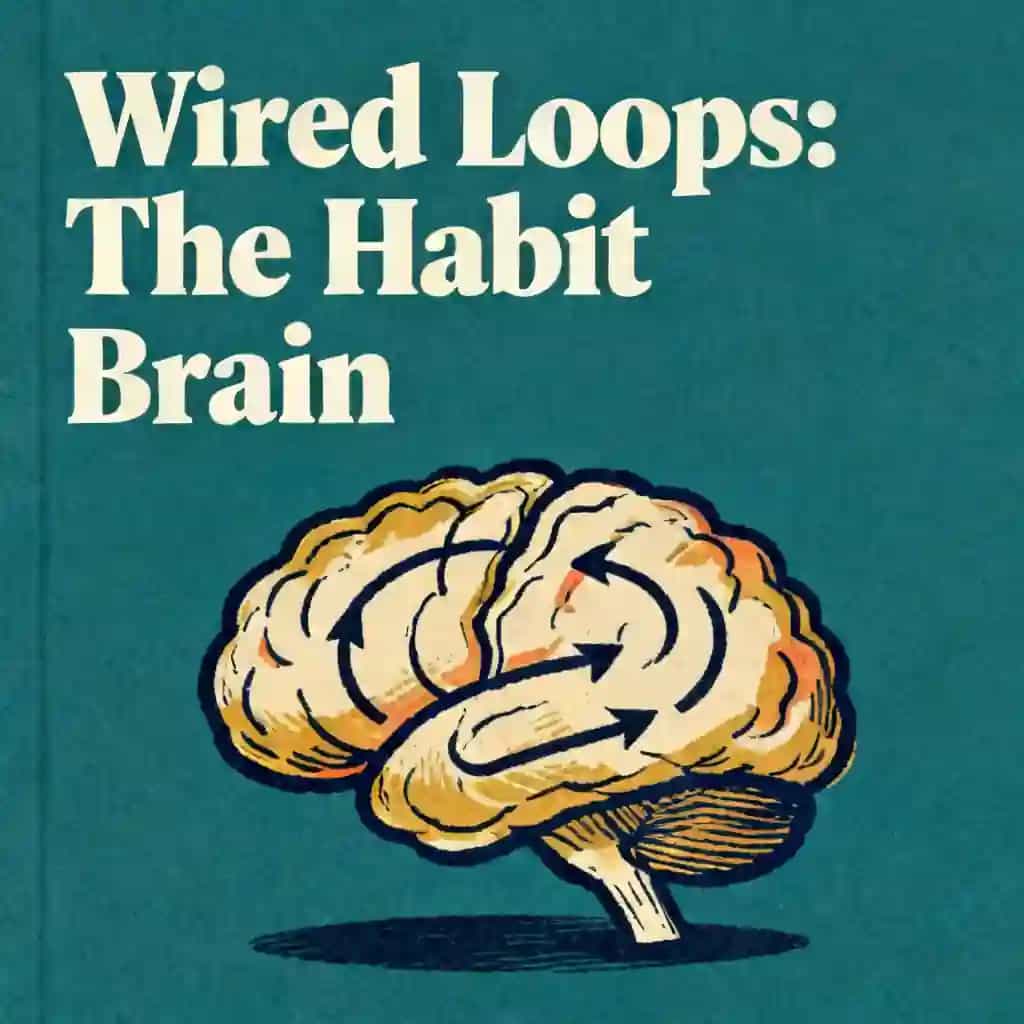
Habits are primarily stored in the basal ganglia, which are deep subcortical structures often referred to as the brain's "basement." The brain uses these structures to "chunk" complex sequences of actions into single units to save energy and reduce cognitive load. Because these neural pathways are stored so deeply, they often remain dormant rather than being erased. When you are stressed or tired, your "thinking brain" or prefrontal cortex loses energy, causing you to fall back on these durable, energy-efficient default patterns stored in the basal ganglia.
Dopamine acts as a "reward prediction error" signal rather than just a pleasure chemical. It surges when an experience is better than expected, acting as a teaching signal that tells the brain to pay attention and repeat the behavior. However, once a habit becomes predictable, the dopamine hit fades because there is no longer a "surprise" or "error" in the prediction. To keep a habit engaging over time, you can engineer variety or use tools like habit trackers to provide new sources of variable rewards.
The 2-Minute Rule is a strategy where you scale down a new habit until it takes less than two minutes to perform, such as "reading one page" instead of "reading a book." The goal is to master the art of "showing up" and establishing the neural "chunk" in the basal ganglia before worrying about the intensity or duration of the activity. By making the habit incredibly easy to start, you reduce friction and focus on casting a "vote" for a new identity, which is more effective for long-term change than focusing on outcome-based goals.
Environment design involves manipulating your physical surroundings to make good habits easier and bad habits harder, following the "path of least resistance." You can use the "20-second rule" to decrease friction for positive habits, such as laying out workout clothes the night before, or increase friction for negative habits, such as removing batteries from a TV remote. By changing your scenery and cues, you reduce the need to rely on willpower, which is a depleting resource, and instead allow your environment to trigger the desired loops automatically.
Criado por ex-alunos da Universidade de Columbia em San Francisco
"Instead of endless scrolling, I just hit play on BeFreed. It saves me so much time."


"I never knew where to start with nonfiction—BeFreed’s book lists turned into podcasts gave me a clear path."


"Perfect balance between learning and entertainment. Finished ‘Thinking, Fast and Slow’ on my commute this week."
"Crazy how much I learned while walking the dog. BeFreed = small habits → big gains."
"Reading used to feel like a chore. Now it’s just part of my lifestyle."

"Feels effortless compared to reading. I’ve finished 6 books this month already."
"BeFreed turned my guilty doomscrolling into something that feels productive and inspiring."

"BeFreed turned my commute into learning time. 20-min podcasts are perfect for finishing books I never had time for."
"BeFreed replaced my podcast queue. Imagine Spotify for books — that’s it. 🙌"

"It is great for me to learn something from the book without reading it."
"The themed book list podcasts help me connect ideas across authors—like a guided audio journey."
"Makes me feel smarter every time before going to work"
 Ask ChatGPT
 Ask Claude
Criado por ex-alunos da Universidade de Columbia em San Francisco
"Instead of endless scrolling, I just hit play on BeFreed. It saves me so much time."
"I never knew where to start with nonfiction—BeFreed’s book lists turned into podcasts gave me a clear path."
"Perfect balance between learning and entertainment. Finished ‘Thinking, Fast and Slow’ on my commute this week."
"Crazy how much I learned while walking the dog. BeFreed = small habits → big gains."
"Reading used to feel like a chore. Now it’s just part of my lifestyle."
"Feels effortless compared to reading. I’ve finished 6 books this month already."
"BeFreed turned my guilty doomscrolling into something that feels productive and inspiring."
"BeFreed turned my commute into learning time. 20-min podcasts are perfect for finishing books I never had time for."
"BeFreed replaced my podcast queue. Imagine Spotify for books — that’s it. 🙌"
"It is great for me to learn something from the book without reading it."
"The themed book list podcasts help me connect ideas across authors—like a guided audio journey."
"Makes me feel smarter every time before going to work"
"Instead of endless scrolling, I just hit play on BeFreed. It saves me so much time."
"I never knew where to start with nonfiction—BeFreed’s book lists turned into podcasts gave me a clear path."
"Perfect balance between learning and entertainment. Finished ‘Thinking, Fast and Slow’ on my commute this week."
"Crazy how much I learned while walking the dog. BeFreed = small habits → big gains."
"Reading used to feel like a chore. Now it’s just part of my lifestyle."
"Feels effortless compared to reading. I’ve finished 6 books this month already."
"BeFreed turned my guilty doomscrolling into something that feels productive and inspiring."
"BeFreed turned my commute into learning time. 20-min podcasts are perfect for finishing books I never had time for."
"BeFreed replaced my podcast queue. Imagine Spotify for books — that’s it. 🙌"
"It is great for me to learn something from the book without reading it."
"The themed book list podcasts help me connect ideas across authors—like a guided audio journey."
"Makes me feel smarter every time before going to work"
"Instead of endless scrolling, I just hit play on BeFreed. It saves me so much time."
"I never knew where to start with nonfiction—BeFreed’s book lists turned into podcasts gave me a clear path."
"Perfect balance between learning and entertainment. Finished ‘Thinking, Fast and Slow’ on my commute this week."
"Crazy how much I learned while walking the dog. BeFreed = small habits → big gains."
"Reading used to feel like a chore. Now it’s just part of my lifestyle."
"Feels effortless compared to reading. I’ve finished 6 books this month already."
"BeFreed turned my guilty doomscrolling into something that feels productive and inspiring."
"BeFreed turned my commute into learning time. 20-min podcasts are perfect for finishing books I never had time for."
"BeFreed replaced my podcast queue. Imagine Spotify for books — that’s it. 🙌"
"It is great for me to learn something from the book without reading it."
"The themed book list podcasts help me connect ideas across authors—like a guided audio journey."
"Makes me feel smarter every time before going to work"