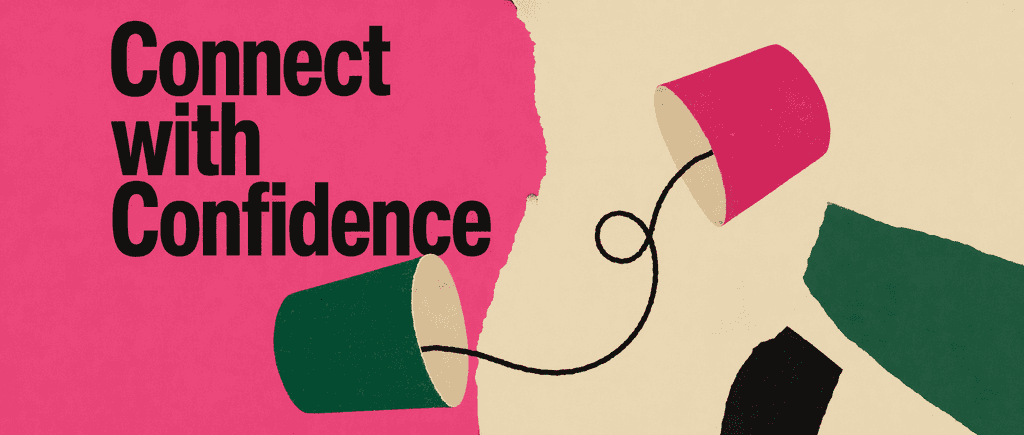
Build social confidence and stop feeling awkward
Feeling invisible in social settings is common, but confidence is a skill you can train. Learn to break the cycle of self-monitoring and speak freely.

Melhor citação de Build social confidence and stop feeling awkward
Radiating confidence isn't a personality trait you’re born with; it’s a skill you can train by moving from 'impress mode' into 'express mode.' It’s about being comfortable enough in your own skin to let the seams show.
Generated by ems
Play I wanna learn to be able to like talk to anybody and not feel like they think that I'm weird and need to feel confident in myself and happy and radiate confident confidence and be able to speak when I want


Perguntas frequentes
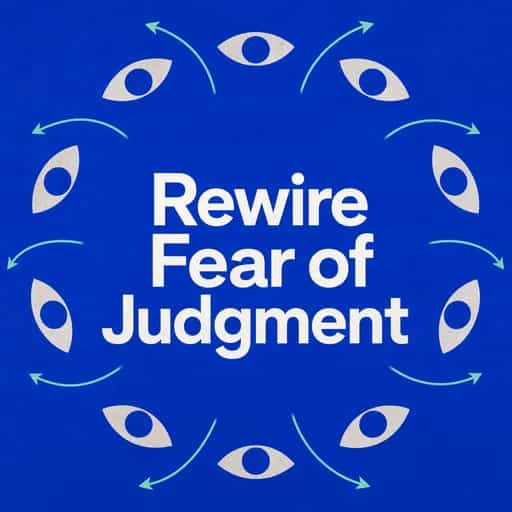
The internal security camera refers to a psychological state called self-focused attention, often experienced during social anxiety. Instead of focusing on the conversation or the other person, your attention flips inward to monitor your own physical sensations, such as a racing heart or shaky hands. This creates a massive resource drain on the brain, leaving very little mental bandwidth for actual communication and making you feel more awkward than you actually appear.
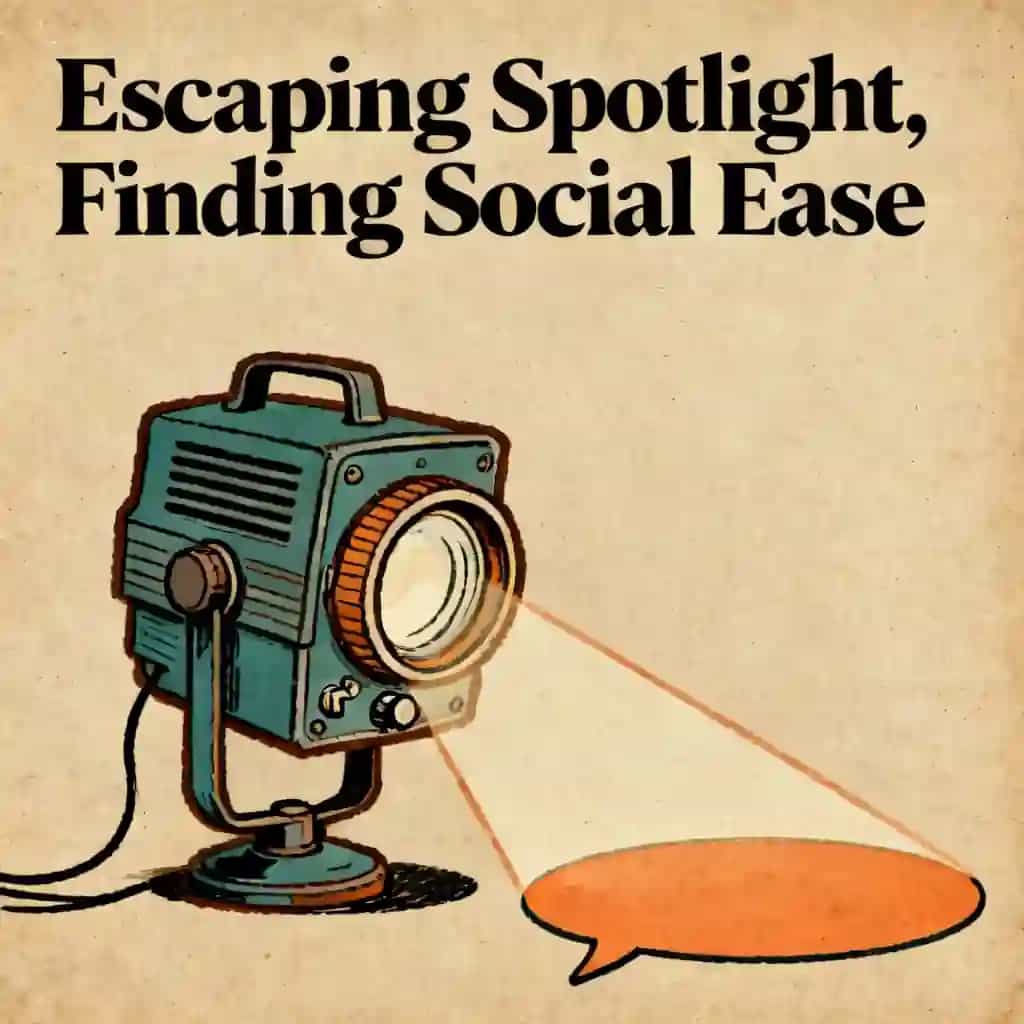
The spotlight effect is a psychological phenomenon where individuals overestimate how much others notice their appearance, mistakes, or social stumbles. In reality, most people are so preoccupied with their own "internal security camera" and how they are being perceived that they lack the mental bandwidth to judge others. Recognizing this effect is freeing because it helps you realize that you are often just a side character in other people's movies rather than the lead actor under a giant neon spotlight.
Safety behaviors are small actions taken to "protect" oneself from perceived social danger, such as staying on a phone to look busy, gripping a drink tightly to hide shaking hands, or asking endless questions to avoid talking about oneself. While these behaviors provide temporary relief, they act as a cage that prevents habituation. By using these crutches, the brain never gets the chance to learn that the social situation isn't actually a threat and that you can survive and thrive without the "armor."
A fear ladder, or exposure hierarchy, is a tool used to gradually build social skills by "right-sizing" challenges. Instead of jumping into a high-stress situation like a public speech, you start with a low-difficulty task, such as making eye contact with a cashier. Once that task feels comfortable, you move up to the next rung, like asking a coworker about their weekend. This method builds "evidence" of success for the brain, allowing you to level up your social attributes without traumatizing your nervous system.
Recovering out loud involves openly acknowledging a social glitch, such as forgetting a name or losing a train of thought, rather than trying to hide it. By saying something like, "Whoops, I totally lost my thread there," you demonstrate that you are comfortable with your own humanity and do not outsource your self-worth to the room. This "power move" actually builds rapport and makes you more relatable, as it signals high emotional intelligence and puts others at ease regarding their own potential mistakes.
Criado por ex-alunos da Universidade de Columbia em San Francisco
"Instead of endless scrolling, I just hit play on BeFreed. It saves me so much time."


"I never knew where to start with nonfiction—BeFreed’s book lists turned into podcasts gave me a clear path."


"Perfect balance between learning and entertainment. Finished ‘Thinking, Fast and Slow’ on my commute this week."
"Crazy how much I learned while walking the dog. BeFreed = small habits → big gains."
"Reading used to feel like a chore. Now it’s just part of my lifestyle."

"Feels effortless compared to reading. I’ve finished 6 books this month already."
"BeFreed turned my guilty doomscrolling into something that feels productive and inspiring."

"BeFreed turned my commute into learning time. 20-min podcasts are perfect for finishing books I never had time for."
"BeFreed replaced my podcast queue. Imagine Spotify for books — that’s it. 🙌"

"It is great for me to learn something from the book without reading it."
"The themed book list podcasts help me connect ideas across authors—like a guided audio journey."
"Makes me feel smarter every time before going to work"
Criado por ex-alunos da Universidade de Columbia em San Francisco
"Instead of endless scrolling, I just hit play on BeFreed. It saves me so much time."
"I never knew where to start with nonfiction—BeFreed’s book lists turned into podcasts gave me a clear path."
"Perfect balance between learning and entertainment. Finished ‘Thinking, Fast and Slow’ on my commute this week."
"Crazy how much I learned while walking the dog. BeFreed = small habits → big gains."
"Reading used to feel like a chore. Now it’s just part of my lifestyle."
"Feels effortless compared to reading. I’ve finished 6 books this month already."
"BeFreed turned my guilty doomscrolling into something that feels productive and inspiring."
"BeFreed turned my commute into learning time. 20-min podcasts are perfect for finishing books I never had time for."
"BeFreed replaced my podcast queue. Imagine Spotify for books — that’s it. 🙌"
"It is great for me to learn something from the book without reading it."
"The themed book list podcasts help me connect ideas across authors—like a guided audio journey."
"Makes me feel smarter every time before going to work"
"Instead of endless scrolling, I just hit play on BeFreed. It saves me so much time."
"I never knew where to start with nonfiction—BeFreed’s book lists turned into podcasts gave me a clear path."
"Perfect balance between learning and entertainment. Finished ‘Thinking, Fast and Slow’ on my commute this week."
"Crazy how much I learned while walking the dog. BeFreed = small habits → big gains."
"Reading used to feel like a chore. Now it’s just part of my lifestyle."
"Feels effortless compared to reading. I’ve finished 6 books this month already."
"BeFreed turned my guilty doomscrolling into something that feels productive and inspiring."
"BeFreed turned my commute into learning time. 20-min podcasts are perfect for finishing books I never had time for."
"BeFreed replaced my podcast queue. Imagine Spotify for books — that’s it. 🙌"
"It is great for me to learn something from the book without reading it."
"The themed book list podcasts help me connect ideas across authors—like a guided audio journey."
"Makes me feel smarter every time before going to work"
"Instead of endless scrolling, I just hit play on BeFreed. It saves me so much time."
"I never knew where to start with nonfiction—BeFreed’s book lists turned into podcasts gave me a clear path."
"Perfect balance between learning and entertainment. Finished ‘Thinking, Fast and Slow’ on my commute this week."
"Crazy how much I learned while walking the dog. BeFreed = small habits → big gains."
"Reading used to feel like a chore. Now it’s just part of my lifestyle."
"Feels effortless compared to reading. I’ve finished 6 books this month already."
"BeFreed turned my guilty doomscrolling into something that feels productive and inspiring."
"BeFreed turned my commute into learning time. 20-min podcasts are perfect for finishing books I never had time for."
"BeFreed replaced my podcast queue. Imagine Spotify for books — that’s it. 🙌"
"It is great for me to learn something from the book without reading it."
"The themed book list podcasts help me connect ideas across authors—like a guided audio journey."
"Makes me feel smarter every time before going to work"