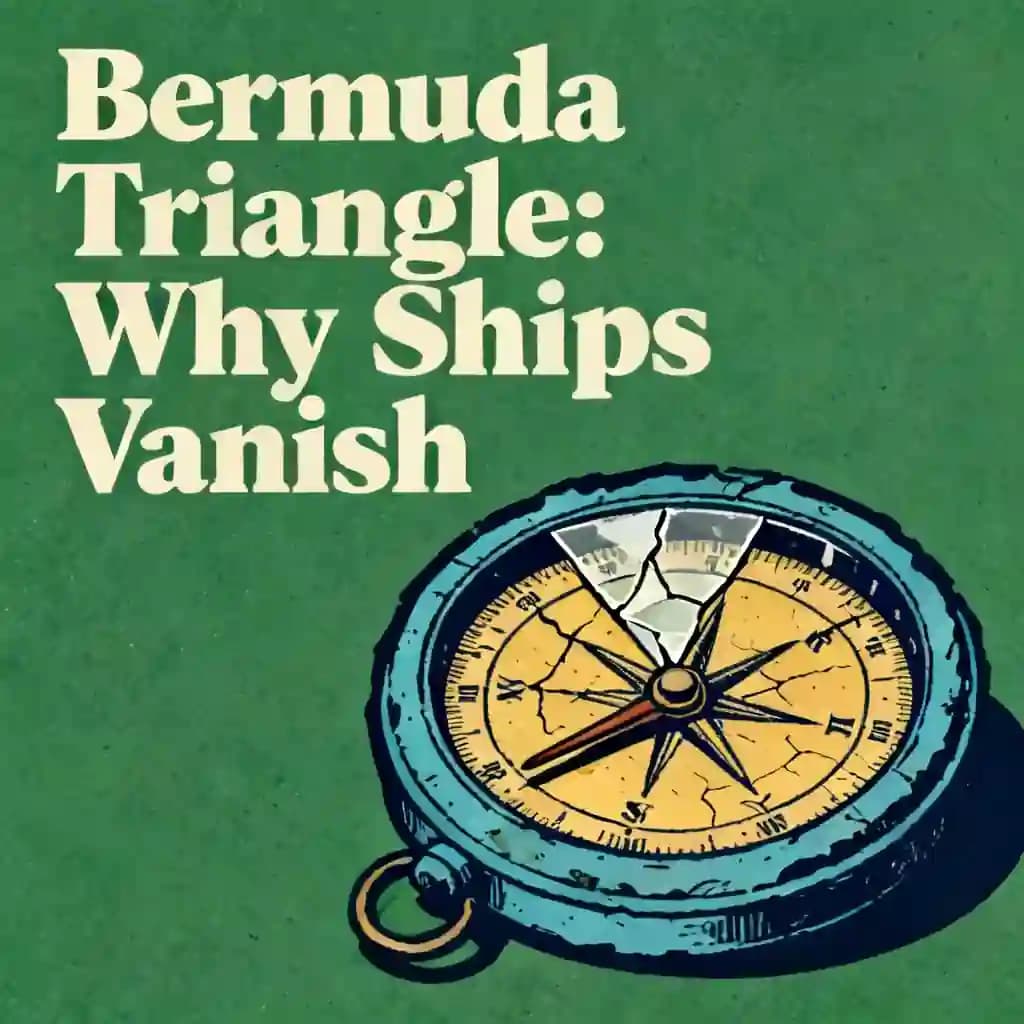
Why do ships and planes disappear in the Atlantic? We explore the truth behind Flight 19 and the science of the Hoodoo Sea to separate myth from reality.
Melhor citação de Bermuda Triangle Mysteries: Why Do Ships Still Vanish?
“
The Bermuda Triangle is a 'manufactured mystery' where folklore is built one misunderstood radio transmission at a time. We'd rather believe in a 'Devil’s Triangle' than admit that sometimes terrible accidents happen for very boring, technical reasons.
”
Е
Generated by Евгений Троцковец
Pergunta de entrada
The hosts begin with a greeting on the Real English channel. The podcast is mysterious and long, in English, about mysteries of the Bermuda Triangle
Vozes dos apresentadores
Lena
Eli
Fontes de conhecimento
Perguntas frequentes
While legend suggests the five Navy bombers vanished into a supernatural portal in 1945, official reports point to a tragic human error. The flight leader’s compasses malfunctioned, leading him to mistakenly believe the patrol was over the Florida Keys when they were actually over the Bahamas. By steering the planes further northeast in a desperate attempt to find land, he led the patrol deeper into the Atlantic until they ran out of fuel during a storm.
The PBM Mariner rescue plane, which vanished with a thirteen-man crew, likely suffered a mechanical disaster rather than a paranormal abduction. These specific aircraft were nicknamed "flying gas tanks" due to their notorious tendency for fuel vapor leaks. A tanker in the area reported seeing a mid-air explosion and a subsequent oil slick at the exact time and location the Mariner would have been flying, suggesting a stray spark or cigarette ignited the plane.
According to maritime insurance data from Lloyd’s of London and a comprehensive study of Coast Guard records from 1982 to 2015, the answer is no. The region does not show an unusually high number of incidents when considering the massive volume of shipping and air traffic it handles. In fact, between 1982 and 2015, there was not a single incident officially classified as a "disappearance" within the Triangle; most accidents were directly correlated with documented adverse weather.
One compelling scientific theory involves methane hydrates—natural gas trapped in a frozen state on the seafloor. If an underwater landslide or earthquake releases this gas, it creates a massive plume of bubbles that reduces the density of the water. A ship caught in this "frothy" water loses its buoyancy and can sink instantly. Once the gas dissipates, the ocean surface returns to normal, leaving no wreckage or debris for rescuers to find.
The Gulf Stream acts as a "river within the sea," moving at a high velocity of about two meters per second. If a boat experiences engine failure or a plane makes an emergency water landing, this powerful current can carry the vessel miles away from its last reported coordinates in a very short time. This often leads search teams to look in the wrong location, creating the illusion that the craft "vanished" when it was simply drifted away by the current.
Criado por ex-alunos da Universidade de Columbia | em San Francisco
BeFreed Reúne Uma Comunidade Global De Mentes Curiosas
4.7
avaliação média
Mais de 7,84 mil avaliações do app
Comunidade BeFreed
Sério, eu ainda nem explorei o app por completo, mas só de usar nos últimos dias já fiquei impressionada… O BeFreed está em outro nível comparado a qualquer outro app de aprendizado que já usei. Ele prende demais a atenção e realmente melhora a concentração — ótimo para quem não larga o scroll!
@ladyInfinity
Comprei o BeFreed há exatamente 23 dias e uso todos os dias desde então. Ele se encaixou por completo na minha rotina de trabalho e nos meus hábitos de estudo.
@jayallen
A verdade é que o app superou todas as minhas expectativas. Posso pedir para gerar áudio sobre qualquer tema, seja qual for, e o resultado é impressionante. Minha área profissional é uma especialização em psicoterapia, bem multidisciplinar; mesmo assim, as respostas são muito precisas.
@Raguipa
O que eu mais valorizo é o quanto ele reduziu meu tempo de scroll: passo menos tempo procurando e mais tempo absorvendo informação. A combinação de audiolivros completos, podcasts e os planos de aprendizado é brilhante.
@colonyofcreatorsNGO
Sou instrutor de aprendizado acelerado PhotoReading há 24 anos… livros, leitura e aprendizado são a minha praia, e o BeFreed fez um ótimo trabalho ao trazer uma abordagem inovadora para entregar informação de um jeito fácil de consumir.
@BeFreed user
Não é só um app de resumo de livros: usei a opção de leitura divertida e é um resumo muito melhor, um jeito mais fácil de captar as ideias do que o tradicional. Só isso já vale o investimento.
@austinakon
Amo este app. Usei por vários dias e não consigo parar de ouvir. Um jeito ótimo de começar.
@jcrules328
Gosto muito do programa; já estou testando há cerca de um mês e sinto que é uma verdadeira joia. Funciona muito bem porque posso usar o BeFreed para criar meus próprios temas, e a voz é ótima, com opções ilimitadas de narração.
@DanielCZ
Sério, eu ainda nem explorei o app por completo, mas só de usar nos últimos dias já fiquei impressionada… O BeFreed está em outro nível comparado a qualquer outro app de aprendizado que já usei. Ele prende demais a atenção e realmente melhora a concentração — ótimo para quem não larga o scroll!
@ladyInfinity
Comprei o BeFreed há exatamente 23 dias e uso todos os dias desde então. Ele se encaixou por completo na minha rotina de trabalho e nos meus hábitos de estudo.
@jayallen
A verdade é que o app superou todas as minhas expectativas. Posso pedir para gerar áudio sobre qualquer tema, seja qual for, e o resultado é impressionante. Minha área profissional é uma especialização em psicoterapia, bem multidisciplinar; mesmo assim, as respostas são muito precisas.
@Raguipa
O que eu mais valorizo é o quanto ele reduziu meu tempo de scroll: passo menos tempo procurando e mais tempo absorvendo informação. A combinação de audiolivros completos, podcasts e os planos de aprendizado é brilhante.
@colonyofcreatorsNGO
Sou instrutor de aprendizado acelerado PhotoReading há 24 anos… livros, leitura e aprendizado são a minha praia, e o BeFreed fez um ótimo trabalho ao trazer uma abordagem inovadora para entregar informação de um jeito fácil de consumir.
@BeFreed user
Não é só um app de resumo de livros: usei a opção de leitura divertida e é um resumo muito melhor, um jeito mais fácil de captar as ideias do que o tradicional. Só isso já vale o investimento.
@austinakon
Amo este app. Usei por vários dias e não consigo parar de ouvir. Um jeito ótimo de começar.
@jcrules328
Gosto muito do programa; já estou testando há cerca de um mês e sinto que é uma verdadeira joia. Funciona muito bem porque posso usar o BeFreed para criar meus próprios temas, e a voz é ótima, com opções ilimitadas de narração.
@DanielCZ
Adoro poder receber informações e ideias úteis e condensadas em um áudio estilo podcast de 8 a 15 minutos. Não sou muito fã de podcasts por causa da enrolação, mas aqui vai direto ao ponto.
@BeFreed user
Estou terminando meu doutorado e preciso ler muito material desconhecido… Com o BeFreed, você só digita um prompt e o app encontra as fontes e gera um podcast em áudio. Acho o processo do BeFreed mais fluido que o do NotebookLM.
@Brad
Costumo procurar no YouTube algo para ouvir enquanto preparo o café da manhã, caminho ou me desloco, e o BeFreed oferece uma abordagem ainda mais certeira, sem anúncios e sem enrolação!
@BeFreed user
A melhor coisa desta plataforma é a versatilidade. Literalmente nenhum assunto fica de fora. Ela dá conta de tudo o que você mandar… É raro encontrar uma ferramenta de aprendizado sem limitações que realmente cumpre o que promete.
@jayallen
O BeFreed é fantástico. O design intuitivo faz com que eu passe menos tempo navegando e mais tempo aprendendo. A mistura de audiolivros, podcasts e planos de aprendizado é uma combinação genial que mudou completamente a minha rotina.
@BeFreed user
No começo, levei um tempo para entender como criar podcasts em italiano e… boom! É incrível! Posso pedir para explicar qualquer assunto e ele explica super bem, com muita inteligência!
@matteo77
O BeFreed virou meu app diário de audiolivros… O que eu mais gosto é que você coloca o seu texto e recebe um áudio para ouvir em qualquer lugar.
@kotanzu1
Adoro poder receber informações e ideias úteis e condensadas em um áudio estilo podcast de 8 a 15 minutos. Não sou muito fã de podcasts por causa da enrolação, mas aqui vai direto ao ponto.
@BeFreed user
Estou terminando meu doutorado e preciso ler muito material desconhecido… Com o BeFreed, você só digita um prompt e o app encontra as fontes e gera um podcast em áudio. Acho o processo do BeFreed mais fluido que o do NotebookLM.
@Brad
Costumo procurar no YouTube algo para ouvir enquanto preparo o café da manhã, caminho ou me desloco, e o BeFreed oferece uma abordagem ainda mais certeira, sem anúncios e sem enrolação!
@BeFreed user
A melhor coisa desta plataforma é a versatilidade. Literalmente nenhum assunto fica de fora. Ela dá conta de tudo o que você mandar… É raro encontrar uma ferramenta de aprendizado sem limitações que realmente cumpre o que promete.
@jayallen
O BeFreed é fantástico. O design intuitivo faz com que eu passe menos tempo navegando e mais tempo aprendendo. A mistura de audiolivros, podcasts e planos de aprendizado é uma combinação genial que mudou completamente a minha rotina.
@BeFreed user
No começo, levei um tempo para entender como criar podcasts em italiano e… boom! É incrível! Posso pedir para explicar qualquer assunto e ele explica super bem, com muita inteligência!
@matteo77
O BeFreed virou meu app diário de audiolivros… O que eu mais gosto é que você coloca o seu texto e recebe um áudio para ouvir em qualquer lugar.
How does a ship stay perfectly intact while its crew disappears? Explore the maritime mystery of the Mary Celeste and the theories behind the ghost ship.
A seaworthy ship was found drifting and empty in 1872. We explore the cargo and theories behind this ghost ship mystery to uncover what really happened.
From Pentagon investigations to NASA's new UAP office, the conversation about unidentified aerial phenomena has gone mainstream. Drawing from pilot testimonies, physics research, and declassified documents, we separate extraordinary claims from extraordinary evidence in this cutting-edge exploration of what Harvard's Avi Loeb and SETI's Jill Tarter call our greatest mystery.
Dive into the world's most baffling cold cases, from D.B. Cooper's daring hijacking to other mysteries that have stumped investigators for decades. Explore the science, psychology, and modern tools used to crack seemingly impossible cases.
When a stranger vanishes from a locked car, a simple ride becomes a mystery. Explore the origins of this urban legend and why we still fear the unknown.
Join Nia and Miles as they explore America's most baffling cold cases, from the Zodiac Killer to JonBenét Ramsey. Discover why these mysteries remain unsolved decades later and how they've shaped our cultural landscape.