Apple: From Garage to Global Icon | The Story of Jobs and Wozniak
Explore the history of Apple, from its 1976 garage beginnings to a global icon. Learn how Steve Jobs and Steve Wozniak revolutionized personal computing.

Melhor citação de Apple: From Garage to Global Icon | The Story of Jobs and Wozniak
Apple's success has never been about having the most features—it’s about having the most integrated, human-centric design and the courage to decide that what not to do is as important as deciding what to do.

Esta aula em áudio foi criada por um membro da comunidade BeFreed
This lesson is part of the learning plan: 'Apple's Strategy: Design to Ecosystem'. Lesson topic: Apple: From Garage to Global Icon Overview: How did a hobbyist project become a multi-trillion-dollar empire? Explore Apple’s journey from the first 'killer app' to the radical 1997 turnaround. Key insights to cover in order: 1. Apple was founded on the principle of making computing accessible to individuals rather than just large institutions. 2. The early success of the Apple II was driven by the first 'killer app,' VisiCalc, which unlocked the business market. 3. Steve Jobs' return in 1997 marked a radical simplification of the product line, focusing on just four core quadrants. Listener profile: - Learning goal: 学习苹果公司的商业策略 - Background knowledge: 我对苹果公司的产品设计理念有了解。 - Guidance: 重点关注苹果公司商业策略的演变,结合产品设计理念如何影响其商业决策。 Tailor examples, pacing, and depth to this listener. Avoid analogies or references that assume knowledge outside this listener's profile.






Perguntas frequentes
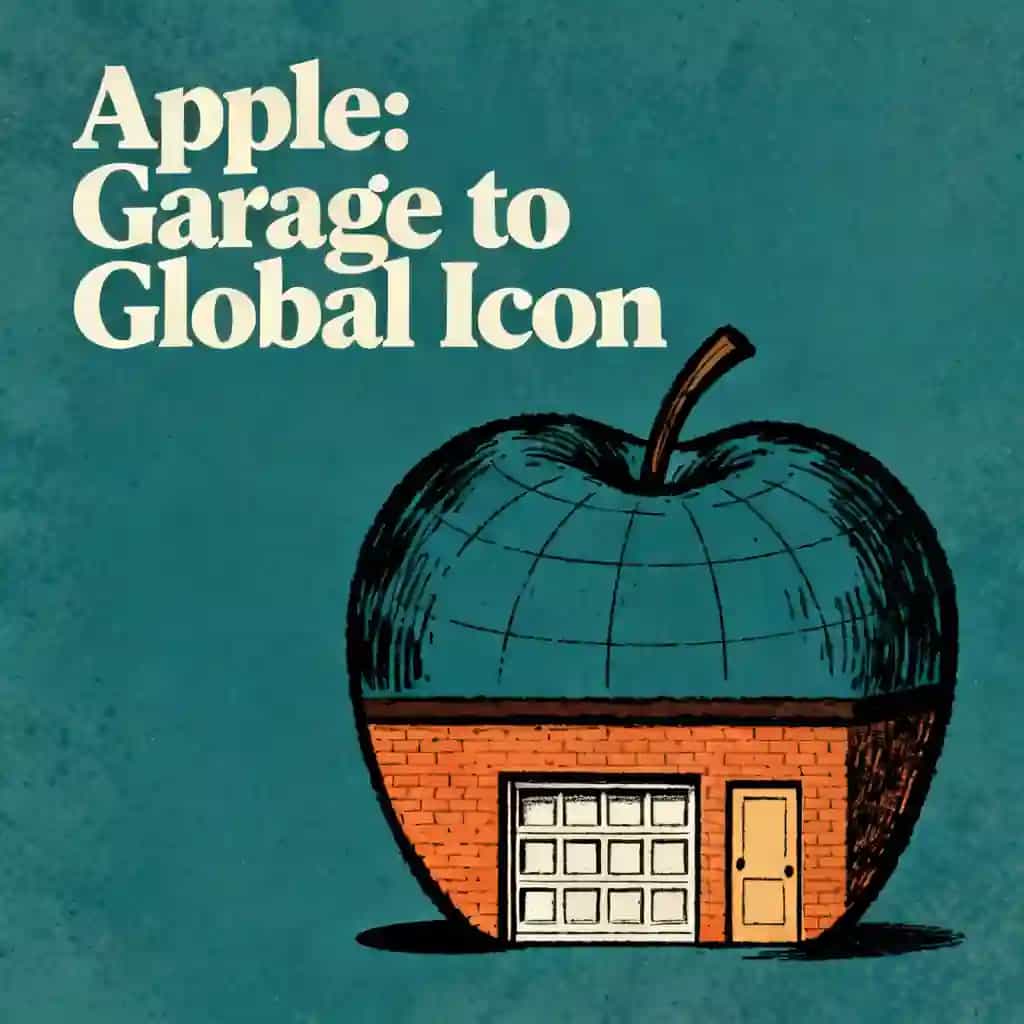
Apple was founded on April 1, 1976, by three friends: Steve Jobs, Steve Wozniak, and Ronald Wayne. Operating out of a garage in Los Altos, California, the trio aimed to make computing accessible to individuals rather than just large corporations. While Wozniak provided the engineering genius and Jobs provided the marketing vision, they worked together to move beyond hobbyist projects and establish a radical new business strategy for personal empowerment.
The company's first product was a bare circuit board known as the Apple I. At a time when computers were massive machines owned by governments or giants like IBM, the Apple I represented a shift toward personal computing. To fund the first batch of these circuit boards, Steve Jobs famously sold his VW bus, demonstrating his belief in the commercial potential of Wozniak’s technical designs and their shared vision for the future.
The Homebrew Computer Club was a pivotal setting where Steve Wozniak initially wanted to share his computer designs for free. However, Steve Jobs recognized the commercial potential of these designs and convinced Wozniak to turn their hobby into a business. This partnership combined technical innovation with a unique marketing strategy, moving away from the counterculture idea of free sharing toward building a brand that emphasized the 'specialness' of the individual user.
Apple’s early business strategy was rooted in the idea that computing should be a tool for ordinary people with ordinary budgets. Instead of just selling silicon and solder, Jobs and Wozniak sold the concept of personal empowerment and 'specialness.' By positioning the user as the hero against the industry behemoths, Apple used design and branding to influence the market, transforming a garage-based project into a foundational force in the personal computing industry.
Descubra mais

苹果公司
苹果公司
苹果公司不仅是科技巨头,更是创新与商业美学的代名词。本方案适合企业家、产品经理及设计爱好者,旨在揭示其从产品设计到生态战略的成功密码。

Build and Scale a Billion-Dollar Tech Empire
Build and Scale a Billion-Dollar Tech Empire
This learning plan is designed for ambitious entrepreneurs and tech leaders aiming to transcend traditional startup success. It provides a strategic roadmap for navigating the journey from initial genesis to global market dominance through capital engineering and advanced platform strategies.

Books Recommended by Steve Job
Explore the favorite reading list recommended by Steve Jobs—books on innovation and disruption that shaped one of history’s boldest thinkers.
Equipe BeFreed

Make an app
Make an app
This comprehensive plan bridges the gap between technical coding skills and commercial product success. It is ideal for aspiring entrepreneurs and developers who want to take a project from the first line of code to a profitable market launch.
Design successful apps that users love
Design successful apps that users love
In today's competitive app market, user experience often determines which products thrive and which fail. This learning plan equips designers and product managers with essential UX principles and psychological insights to create apps that users genuinely want to use repeatedly.
Tech, Innovation, History & Memoirs
Tech, Innovation, History & Memoirs
This plan offers a comprehensive journey through the past, present, and future of technology, blending historical context with strategic business insights. It is ideal for aspiring leaders, entrepreneurs, and tech enthusiasts who want to understand the human stories and disruptive frameworks that drive global innovation.
Основать величайший айти стартап в истории
Основать величайший айти стартап в истории
This comprehensive roadmap is designed for ambitious entrepreneurs who aim to disrupt the global tech landscape. It bridges the gap between a raw idea and a massive enterprise by combining lean execution, venture strategy, and elite leadership.

Zero to Tech Creator: Master, Build, Impact
Zero to Tech Creator: Master, Build, Impact
This path is essential for aspiring entrepreneurs and career-shifters who want to transition from consuming technology to building it. It bridges the gap between raw coding skills and strategic product growth, making it ideal for anyone looking to launch a digital business or lead tech-driven innovation.
Criado por ex-alunos da Universidade de Columbia em San Francisco
"Instead of endless scrolling, I just hit play on BeFreed. It saves me so much time."


"I never knew where to start with nonfiction—BeFreed’s book lists turned into podcasts gave me a clear path."


"Perfect balance between learning and entertainment. Finished ‘Thinking, Fast and Slow’ on my commute this week."
"Crazy how much I learned while walking the dog. BeFreed = small habits → big gains."
"Reading used to feel like a chore. Now it’s just part of my lifestyle."

"Feels effortless compared to reading. I’ve finished 6 books this month already."
"BeFreed turned my guilty doomscrolling into something that feels productive and inspiring."

"BeFreed turned my commute into learning time. 20-min podcasts are perfect for finishing books I never had time for."
"BeFreed replaced my podcast queue. Imagine Spotify for books — that’s it. 🙌"

"It is great for me to learn something from the book without reading it."
"The themed book list podcasts help me connect ideas across authors—like a guided audio journey."
"Makes me feel smarter every time before going to work"
Criado por ex-alunos da Universidade de Columbia em San Francisco
"Instead of endless scrolling, I just hit play on BeFreed. It saves me so much time."
"I never knew where to start with nonfiction—BeFreed’s book lists turned into podcasts gave me a clear path."
"Perfect balance between learning and entertainment. Finished ‘Thinking, Fast and Slow’ on my commute this week."
"Crazy how much I learned while walking the dog. BeFreed = small habits → big gains."
"Reading used to feel like a chore. Now it’s just part of my lifestyle."
"Feels effortless compared to reading. I’ve finished 6 books this month already."
"BeFreed turned my guilty doomscrolling into something that feels productive and inspiring."
"BeFreed turned my commute into learning time. 20-min podcasts are perfect for finishing books I never had time for."
"BeFreed replaced my podcast queue. Imagine Spotify for books — that’s it. 🙌"
"It is great for me to learn something from the book without reading it."
"The themed book list podcasts help me connect ideas across authors—like a guided audio journey."
"Makes me feel smarter every time before going to work"
"Instead of endless scrolling, I just hit play on BeFreed. It saves me so much time."
"I never knew where to start with nonfiction—BeFreed’s book lists turned into podcasts gave me a clear path."
"Perfect balance between learning and entertainment. Finished ‘Thinking, Fast and Slow’ on my commute this week."
"Crazy how much I learned while walking the dog. BeFreed = small habits → big gains."
"Reading used to feel like a chore. Now it’s just part of my lifestyle."
"Feels effortless compared to reading. I’ve finished 6 books this month already."
"BeFreed turned my guilty doomscrolling into something that feels productive and inspiring."
"BeFreed turned my commute into learning time. 20-min podcasts are perfect for finishing books I never had time for."
"BeFreed replaced my podcast queue. Imagine Spotify for books — that’s it. 🙌"
"It is great for me to learn something from the book without reading it."
"The themed book list podcasts help me connect ideas across authors—like a guided audio journey."
"Makes me feel smarter every time before going to work"
"Instead of endless scrolling, I just hit play on BeFreed. It saves me so much time."
"I never knew where to start with nonfiction—BeFreed’s book lists turned into podcasts gave me a clear path."
"Perfect balance between learning and entertainment. Finished ‘Thinking, Fast and Slow’ on my commute this week."
"Crazy how much I learned while walking the dog. BeFreed = small habits → big gains."
"Reading used to feel like a chore. Now it’s just part of my lifestyle."
"Feels effortless compared to reading. I’ve finished 6 books this month already."
"BeFreed turned my guilty doomscrolling into something that feels productive and inspiring."
"BeFreed turned my commute into learning time. 20-min podcasts are perfect for finishing books I never had time for."
"BeFreed replaced my podcast queue. Imagine Spotify for books — that’s it. 🙌"
"It is great for me to learn something from the book without reading it."
"The themed book list podcasts help me connect ideas across authors—like a guided audio journey."
"Makes me feel smarter every time before going to work"