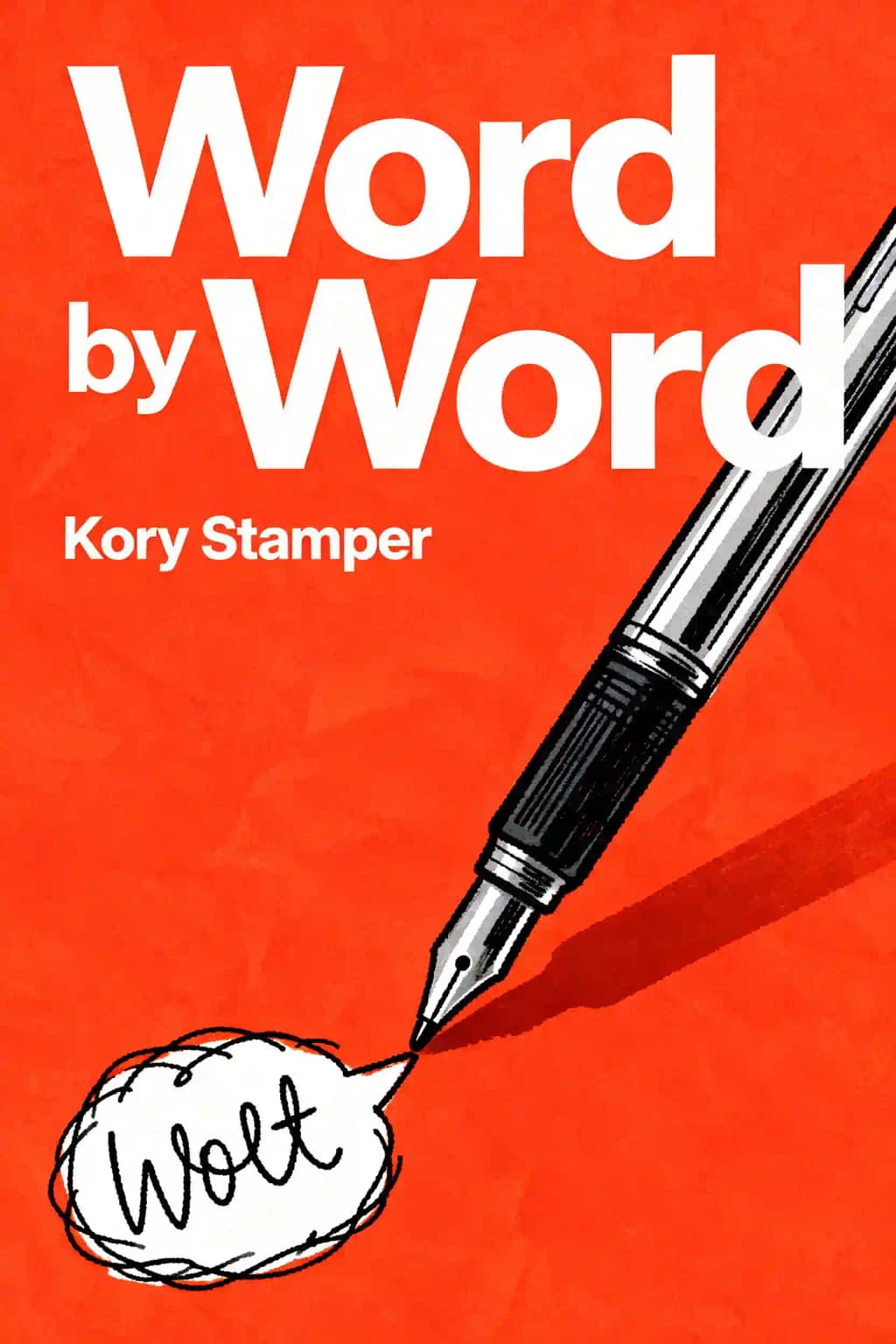
Ever wonder what happens when "covfefe" breaks the internet? Kory Stamper's insider tour of Merriam-Webster reveals how dictionaries secretly shape culture, sparked political firestorms over "marriage," and why The New Yorker calls it "both memoir and expose" of our evolving language.
Kory Stamper, author of Word by Word: The Secret Life of Dictionaries, is a celebrated lexicographer and language authority renowned for her insider perspective on dictionary-making. A medieval studies graduate of Smith College, Stamper spent two decades at Merriam-Webster (1998–2018), where she crafted definitions for words like the "F-bomb" and demystified linguistic controversies.
Her debut book blends memoir and linguistic exploration, offering a witty, behind-the-scenes look at how dictionaries capture the ever-evolving English language. Themes of cultural nuance, etymology, and the democratic nature of language shine through her work, informed by her career editing entries and engaging with public queries via Merriam-Webster’s "Ask the Editor" video series.
Stamper’s writing has graced The New York Times, The Guardian, and The Washington Post, and her lectures—including a notable appearance at the Chautauqua Institution—highlight language’s dynamic relationship with society. Now freelancing for Cambridge Dictionaries, she continues to advocate for lexicography’s relevance in the digital age. Word by Word earned acclaim from The New Yorker as a "lexicographical bildungsroman" and remains a staple for word enthusiasts, available in paperback and hardcover. Stamper owns more dictionaries than she admits and credits coffee as her primary lexicographical tool.
Word by Word by Kory Stamper is a humorous, insider’s look at lexicography, revealing how dictionaries are crafted. Stamper, a former Merriam-Webster editor, explores the painstaking process of defining words (like “is”), debates over controversial terms (e.g., “nude”), and the social impact of language evolution. Blending memoir with linguistics, it demystifies the meticulous, often absurd world of dictionary-making.
This book is ideal for language enthusiasts, writers, and curious readers fascinated by word origins, grammar debates, or the hidden labor behind reference books. It appeals to those interested in descriptivism (how language is used) vs. prescriptivism (how it “should” be used) and anyone who enjoys witty, accessible nonfiction about niche professions.
With a 4.8/5 Amazon rating, Word by Word is praised for its engaging blend of humor, humility, and expertise. Reviewers highlight Stamper’s knack for transforming technical lexicography into relatable stories, making it a standout for readers seeking intellectual depth without dryness.
Stamper details the years-long process: lexicographers analyze thousands of citations to track word usage, define nuanced meanings, and update entries. For example, defining “take” required nine months. The book emphasizes that dictionaries reflect real-world usage, not dictate “correct” language.
Notable quotes include:
Stamper discusses heated debates over adding “marriage” for same-sex unions and defining “nude” in fashion contexts. These examples show how dictionaries mirror societal shifts, often sparking backlash from prescriptivists.
Kory Stamper is a lexicographer who worked at Merriam-Webster for 20 years. A Smith College medieval studies graduate, she combines linguistic rigor with irreverent humor, demystifying lexicography through videos, essays, and this debut book.
Key lessons:
Unlike dry linguistics texts, Stamper’s memoir-style narrative aligns with popular science hybrids like The Etymologicon or Between You & Me. It’s more personal than David Crystal’s academic works but shares The Dictionary of Lost Words’ focus on lexical storytelling.
Some readers find its niche focus too narrow or its humor overly casual. However, most praise its balance of levity and rigor, noting it’s “for word lovers, by a word lover”.
As digital communication evolves (emojis, AI slang), the book’s insights into language adaptation remain vital. Stamper’s discussions of inclusivity and linguistic bias resonate amid ongoing debates about gender-neutral terms and dialect representation.
Stamper uses self-deprecating anecdotes (e.g., defining “bitch”) and witty footnotes to humanize lexicography. Her tone makes complex ideas accessible, turning topics like pronunciation keys into entertainment.
Sinta o livro através da voz do autor
Transforme conhecimento em insights envolventes e ricos em exemplos
Capture ideias-chave em um instante para aprendizado rápido
Aproveite o livro de uma forma divertida e envolvente
Dictionaries aren't created by all-knowing language gods.
We're not antisocial. We're just social in our own way.
English grammar isn't nearly as tidy as we're taught.
English is lousy with articles.
The battle over good grammar is relatively recent.
Divida as ideias-chave de Word by Word em pontos fáceis de entender para compreender como equipes inovadoras criam, colaboram e crescem.
Destile Word by Word em dicas de memória rápidas que destacam os princípios-chave de franqueza, trabalho em equipe e resiliência criativa.

Experimente Word by Word através de narrativas vívidas que transformam lições de inovação em momentos que você lembrará e aplicará.
Pergunte qualquer coisa, escolha a voz e co-crie insights que realmente ressoem com você.

Criado por ex-alunos da Universidade de Columbia em San Francisco
"Instead of endless scrolling, I just hit play on BeFreed. It saves me so much time."
"I never knew where to start with nonfiction—BeFreed’s book lists turned into podcasts gave me a clear path."
"Perfect balance between learning and entertainment. Finished ‘Thinking, Fast and Slow’ on my commute this week."
"Crazy how much I learned while walking the dog. BeFreed = small habits → big gains."
"Reading used to feel like a chore. Now it’s just part of my lifestyle."
"Feels effortless compared to reading. I’ve finished 6 books this month already."
"BeFreed turned my guilty doomscrolling into something that feels productive and inspiring."
"BeFreed turned my commute into learning time. 20-min podcasts are perfect for finishing books I never had time for."
"BeFreed replaced my podcast queue. Imagine Spotify for books — that’s it. 🙌"
"It is great for me to learn something from the book without reading it."
"The themed book list podcasts help me connect ideas across authors—like a guided audio journey."
"Makes me feel smarter every time before going to work"
Criado por ex-alunos da Universidade de Columbia em San Francisco

Obtenha o resumo de Word by Word como PDF ou EPUB gratuito. Imprima ou leia offline a qualquer momento.
Who gets to decide what words mean? Behind every dictionary definition lies a hidden world-a windowless office in Springfield, Massachusetts, where word lovers sit in near-monastic silence, wrestling with language's beautiful chaos. These aren't ivory tower academics or language police; they're ordinary people with coffee-stained desks who spend their days debating whether "irregardless" deserves respect or "literally" can mean figuratively. They're lexicographers, and their work is far stranger and more fascinating than you'd imagine. What makes dictionaries remarkable isn't their authority but their humility-they don't create rules, they simply watch how we use words and write down what they see. Step inside Merriam-Webster's headquarters and you'll find something unexpected: silence. While marketing teams buzz downstairs, the editorial floor remains eerily quiet, populated by people who communicate primarily through email despite sitting ten feet apart. This isn't antisocial behavior-it's professional necessity. Lexicographers need concentration to perform their peculiar work: reading everything from cereal boxes to Supreme Court opinions, marking interesting word usage, and filing away millions of examples for future reference. The job requirements seem deceptively simple-a college degree and native English fluency-but the real qualification is harder to measure. Germans call it "sprachgefuhl," a feeling for language that makes you obsess over the difference between "shimmer" and "glimmer" at dinner parties.