Are You an Overthinker?
Visão geral de Are You an Overthinker?
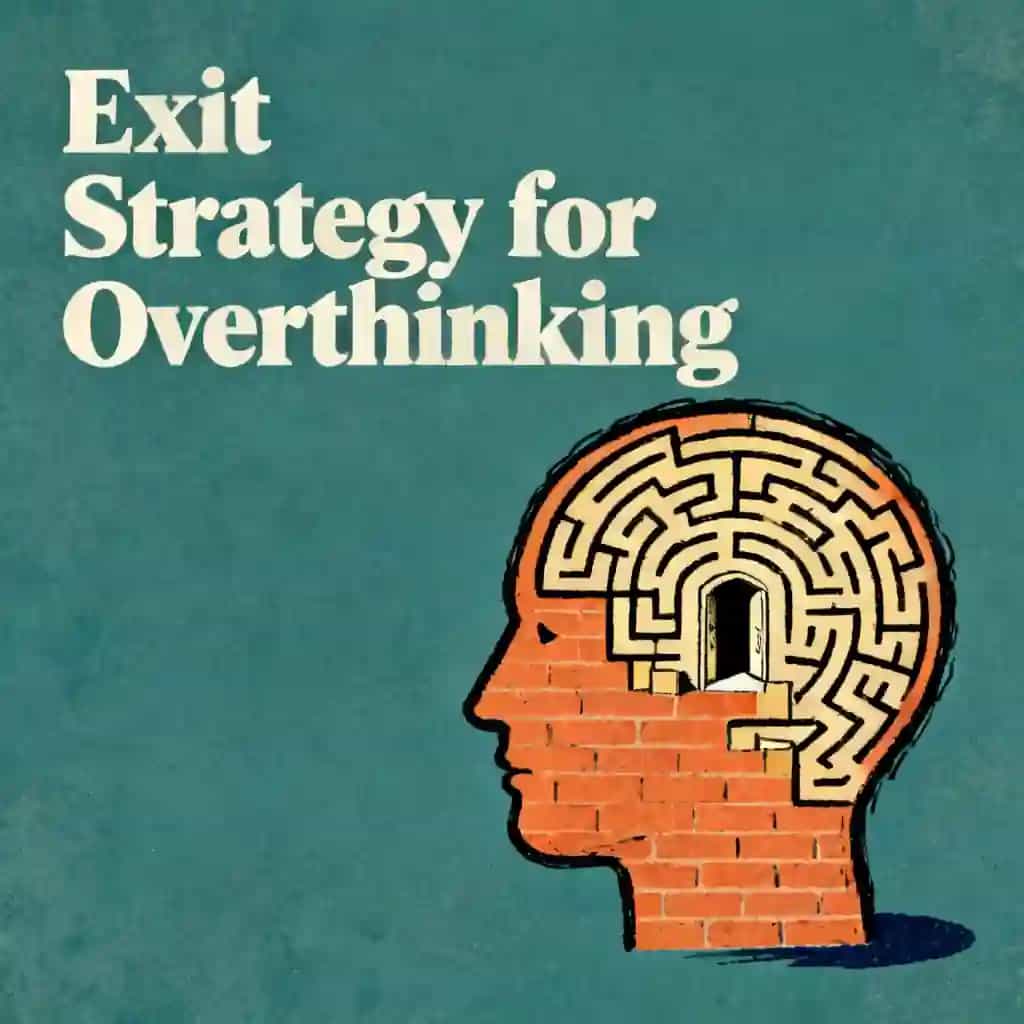
Break free from the overthinking trap that USA Today calls "groundbreaking research" by Yale psychologist Dr. Nolen-Hoeksema. Why do women's minds spiral when men's don't? Discover the surprising neuroscience behind rumination that's helping thousands reclaim their mental freedom.

Temas principais em Are You an Overthinker?
- rumination cycles
- negative memory networks
- emotional regulation strategies
- cognitive distortion
- gendered mental health
Citações de Are You an Overthinker?
Overthinking isn't simply worrying-it's a toxic cycle.
Overthinking distorts reality through the 'distorted lens effect.'
We obsessively search for deeper meaning in every emotional fluctuation.
Women remain twice as likely as men to develop depression.
We lack the clear moral and social guidance systems.
Personagens de Are You an Overthinker?
- Susan Nolen-HoeksemaAuthor and psychologist who researched rumination
- Gordon BowerStanford psychologist who studied memory networks
Sobre o Autor
Sobre o autor de Are You an Overthinker?
Susan Nolen-Hoeksema was a renowned psychologist and the bestselling author of Women Who Think Too Much: How to Break Free of Overthinking and Reclaim Your Life. She pioneered research on gender differences in depression and the role of rumination in mental health.
A Yale professor and founder of the Annual Review of Clinical Psychology, Nolen-Hoeksema bridged academic rigor with public accessibility. She accomplished this by writing seminal self-help books like The Power of Women and co-authoring leading textbooks such as Atkinson and Hilgard’s Introduction to Psychology.
Her work on emotion regulation reshaped clinical psychology, earning her accolades like the American Psychological Association’s Leadership Award and the James McKeen Cattell Fellow Award. Nolen-Hoeksema (1959–2013) frequently appeared in major media outlets to advocate science-backed strategies for overcoming anxiety and depression.
Women Who Think Too Much remains a cornerstone of mental health literature, translated into multiple languages and cited in over 3,000 studies for its transformative insights into breaking cyclical negative thinking.
Baixar resumo de Are You an Overthinker?
Obtenha o resumo de Are You an Overthinker? como PDF ou EPUB gratuito. Imprima ou leia offline a qualquer momento.
Perguntas Frequentes Sobre Este Livro
Women Who Think Too Much explores chronic overthinking in women, linking it to anxiety, depression, and reduced life satisfaction. Susan Nolen-Hoeksema identifies societal pressures and biological factors as key drivers, offering evidence-based strategies to break free from rumination cycles. The book challenges pop psychology’s emphasis on emotional hyper-analysis, advocating instead for actionable steps to redirect negative thought patterns.
This book is ideal for women struggling with repetitive negative thoughts, caregivers, or mental health professionals seeking evidence-based insights. It’s particularly relevant for those navigating life transitions, perfectionism, or societal expectations that fuel overthinking. Nolen-Hoeksema’s accessible style makes it suitable for both self-help readers and academic audiences.
Yes—the book combines rigorous research with practical tools, making it a standout resource for managing overthinking. Nolen-Hoeksema’s groundbreaking work on rumination’s mental health impacts has been widely cited, and her strategies for reclaiming productivity and emotional stability remain widely applicable.
Key strategies include:
- Distraction techniques: Redirect focus through physical activity or creative tasks.
- Cognitive reframing: Replace catastrophic thoughts with balanced perspectives.
- Social support: Engage trusted individuals to interrupt rumination cycles.
- Behavioral activation: Shift from analysis to problem-solving actions.
The book categorizes overthinking into three types:
- Rant-and-rave: Fixating on frustrations without resolution.
- Life-of-their-own: Uncontrollable intrusive thoughts.
- Chaotic: Disorganized worries impairing decision-making.
Nolen-Hoeksema emphasizes these patterns often stem from cultural norms encouraging excessive self-analysis.
The book highlights societal expectations for women to prioritize others’ needs, perfectionism in roles (career, family), and normalized emotional labor. These pressures create fertile ground for rumination, as women often internalize criticism and undervalue self-compassion.
Unlike generic advice, Nolen-Hoeksema’s work is rooted in clinical research and specifically targets gendered experiences of overthinking. It rejects superficial “positive thinking” solutions, instead providing structured methods to disrupt rumination cycles and address root causes.
Some readers note the strategies require consistent practice and may feel challenging during acute stress. Critics also suggest deeper exploration of systemic issues (e.g., workplace inequality) contributing to women’s mental burdens.
As a Yale psychology professor and NIMH grant recipient, Nolen-Hoeksema drew from decades of research on women’s mental health. Her studies on rumination’s link to depression and substance abuse underpin the book’s evidence-based approach.
Yes—the book addresses workplace perfectionism, decision paralysis, and imposter syndrome. Techniques like behavioral activation and cognitive reframing help readers transition from over-analysis to proactive problem-solving, enhancing professional confidence.
- “Overthinking is not your friend”: Highlights rumination’s destructive role.
- “Follow your heart”: Encourages prioritizing inner values over external expectations.
- “Move to higher ground”: Metaphor for shifting focus from problems to solutions.
Its insights on digital-age stressors—like social media comparison and remote work isolation—align with modern anxiety triggers. The book’s emphasis on mindfulness and deliberate action adapts well to today’s fast-paced, uncertainty-driven world.