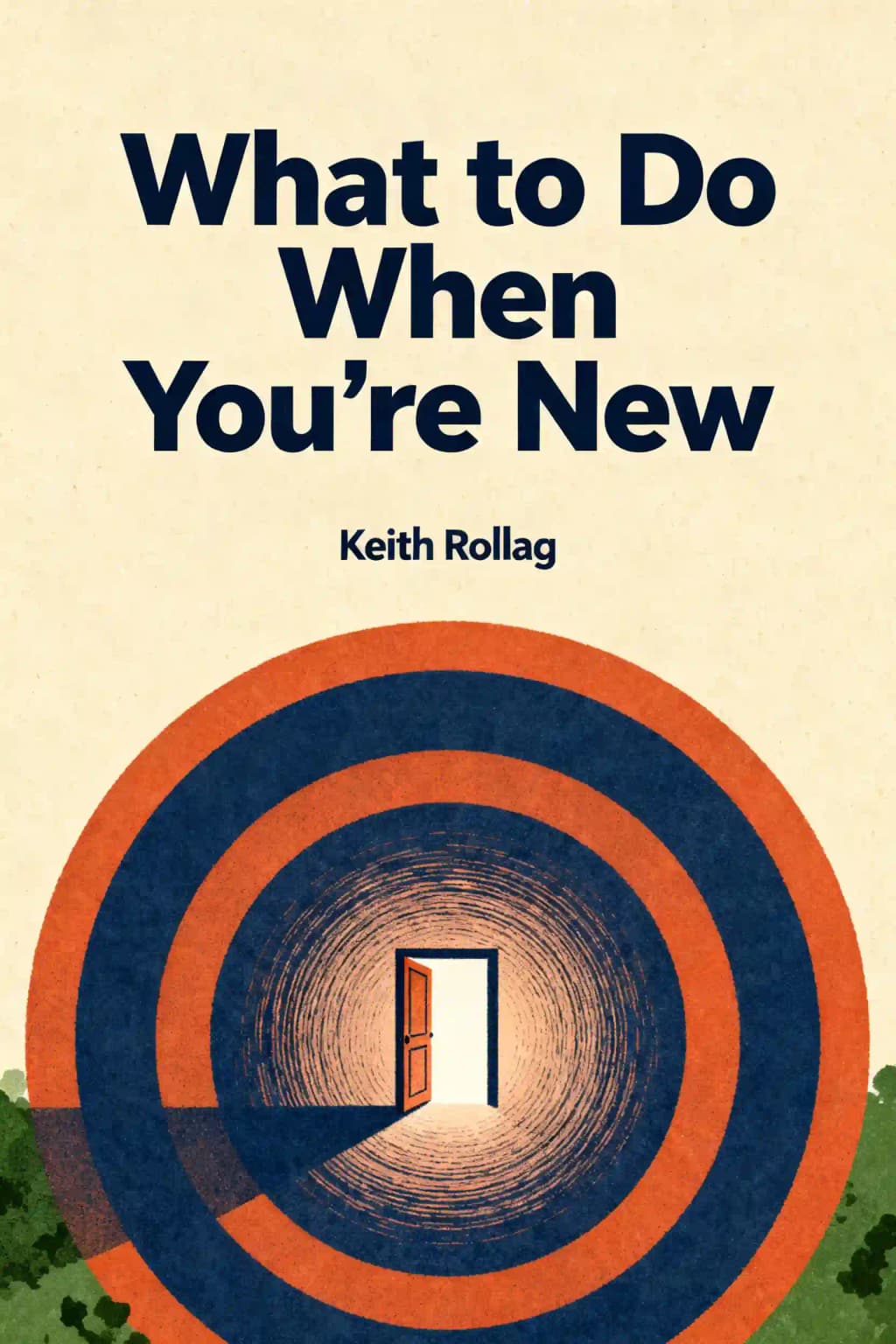
What to do when you're new
how to be comfortable, confident, and successful in new situations
Visão geral de What to do when you're new
Master the art of being new with Keith Rollag's research-backed guide, featured in Harvard Business Review and Forbes. Learn three transformative mindsets that turn anxiety into opportunity. What's the one skill that determines success in every new situation? The answer will surprise you.

Temas principais em What to do when you're new
- social anxiety management
- onboarding success
- evolutionary psychology
- stranger interaction
- professional networking skills
Citações de What to do when you're new
The difference isn't whether we feel the anxiety, but how we manage it.
The paradox is clear: the very actions most critical to our success as newcomers are the ones our brains most strongly resist.
The actual risk of introducing yourself is far lower than we imagine.
Personagens de What to do when you're new
- Keith RollagAuthor and researcher of newcomer success
Baixar resumo de What to do when you're new
Obtenha o resumo de What to do when you're new como PDF ou EPUB gratuito. Imprima ou leia offline a qualquer momento.
Perguntas Frequentes Sobre Este Livro
What to Do When You’re New provides evidence-based strategies to overcome the anxiety of new social and professional situations. Keith Rollag, a Babson College leadership professor, combines 20+ years of research with practical advice on introducing yourself, remembering names, asking questions, and building relationships. The book emphasizes actionable steps to transform discomfort into confidence, making it a guide for thriving in unfamiliar environments.
This book is ideal for professionals navigating career transitions, students starting college, relocators adapting to new cities, or anyone facing social interactions where they feel “new.” Rollag’s insights are particularly valuable for introverts, remote workers, and leaders managing team newcomers.
Yes—readers praise its blend of academic rigor and relatable advice. Featured in Success Magazine’s “Best Books of 2015” and endorsed by The New York Times, it offers timeless tools for building social confidence. The 5-step framework for introductions and networking alone makes it a standout resource.
Key concepts include:
- The Five Newcomer Challenges: Introducing yourself, remembering names, asking questions, starting new relationships, and performing new tasks.
- The “Risk-Reward” Paradox: Why avoiding social risks (e.g., not asking questions) harms long-term success.
- The 90-Second Rule: Making strong first impressions through prepared self-introductions.
Rollag’s “Newcomer’s Roadmap” framework includes:
- Prepare a “personal pitch” for introductions.
- Use association techniques to remember names.
- Ask open-ended questions to build rapport.
- Identify “connectors” who ease social integration.
- Embrace deliberate practice to master new roles.
- “New situations are opportunities, not threats.”
- “The quicker you take initiative, the faster you’ll feel at home.”
- “Confidence comes from action, not the other way around.”
These quotes underscore the book’s theme of proactive adaptation.
While both address transitions, Rollag focuses on social and emotional hurdles, whereas Watkins emphasizes strategic career moves. What to Do When You’re New offers more psychological tools for immediate interpersonal challenges, making it complementary to Watkins’ organizational strategies.
Yes—it addresses digital-first onboarding, virtual introductions, and building trust remotely. Rollag’s “micro-connections” concept (e.g., brief video calls) aligns with hybrid work dynamics, helping newcomers establish visibility in dispersed teams.
Some reviewers note the advice leans toward common sense, but supporters argue its strength lies in synthesizing research into actionable steps. A minority suggest more case studies would enhance practicality.
With workplace turnover and global mobility rising, the book’s strategies for rapid adaptation remain critical. Rollag’s emphasis on “soft skill” mastery aligns with LinkedIn’s 2025 trend data citing relationship-building as a top career competency.
Rollag’s experience as a Procter & Gamble expat in Japan and 20-year Babson College researcher grounds the book in real-world and academic insights. His work on organizational socialization and leadership training lends credibility to the methods.
- Pre-write introductions: Craft a 15-second “hello” script.
- Use the “2-Question Rule”: Ask two openers in conversations to reduce awkwardness.
- Track progress: Journal small wins to build momentum.