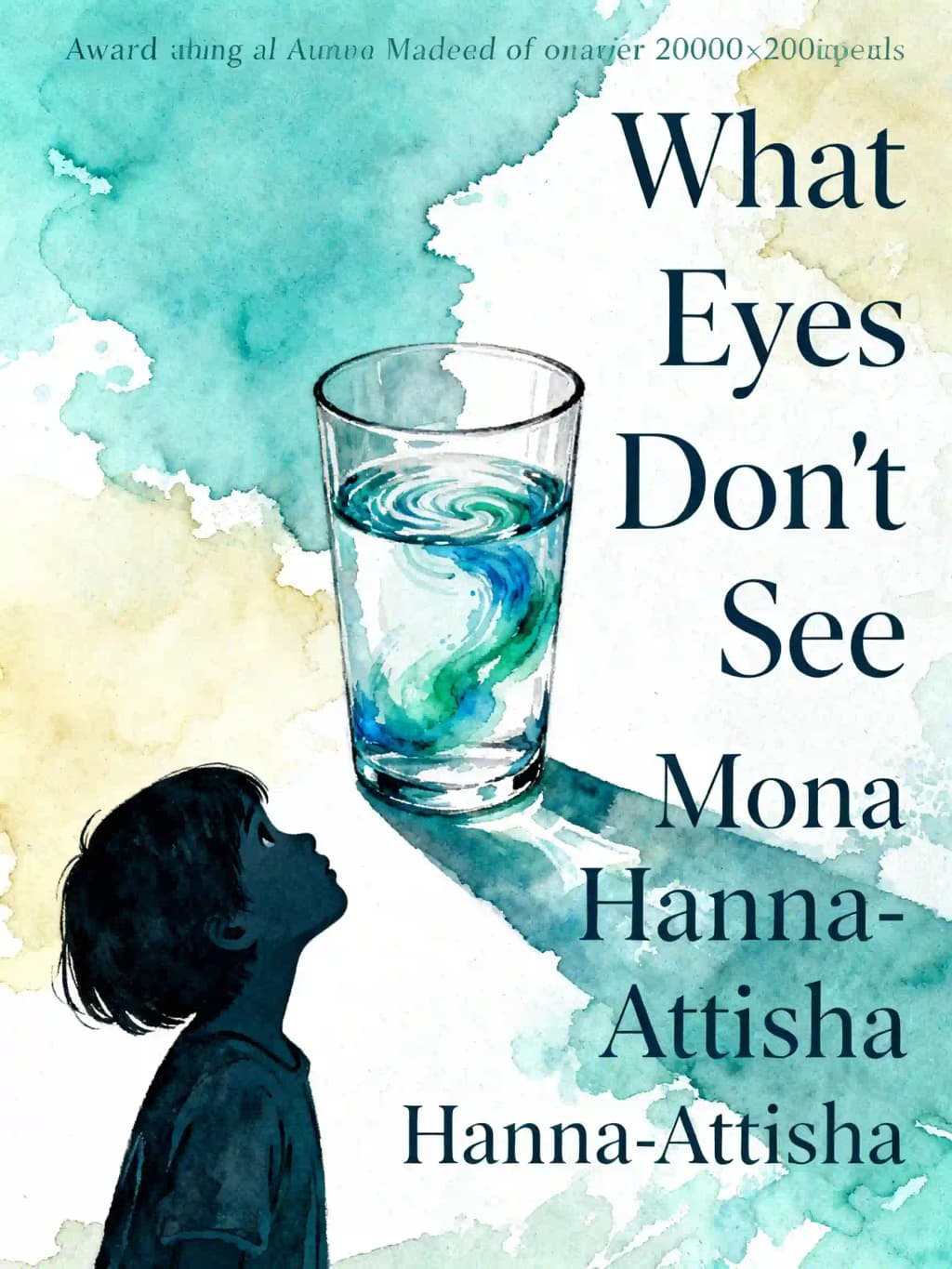
What the Eyes Don't See
Visão geral de What the Eyes Don't See
A pediatrician's fight against government lies exposed the Flint water crisis, earning praise from Erin Brockovich and Michael Moore. "What the Eyes Don't See" reveals how one woman's detective work uncovered environmental racism that poisoned an entire city's children.

Temas principais em What the Eyes Don't See
- environmental justice
- lead poisoning prevention
- public health advocacy
- government accountability
- medical whistleblowing
Citações de What the Eyes Don't See
"You can do this."
"The eyes don't see what the mind doesn't know."
Don't waste your money on bottled water. They say it is fine to drink.
Personagens de What the Eyes Don't See
- Dr. Mona Hanna-AttishaPediatrician who uncovered the Flint water crisis
- ElinHigh school friend who alerted Mona to EPA leaks
- HajiMona's grandfather and moral inspiration
- Miguel Del ToralEPA scientist who investigated Flint's water
- LeeAnne WaltersFlint resident whose home had high lead levels
Baixar resumo de What the Eyes Don't See
Obtenha o resumo de What the Eyes Don't See como PDF ou EPUB gratuito. Imprima ou leia offline a qualquer momento.
Perguntas Frequentes Sobre Este Livro
What the Eyes Don’t See chronicles Dr. Mona Hanna-Attisha’s pivotal role in exposing the Flint water crisis, blending memoir, investigative journalism, and a call to action. The book details her scientific detective work to prove lead contamination in Flint’s water supply, the systemic failures that allowed the crisis, and the resilience of the community fighting for justice.
This book is essential for readers interested in public health, environmental justice, or grassroots activism. It appeals to those seeking a firsthand account of scientific advocacy, policymakers examining institutional racism, and anyone inspired by stories of courage against bureaucratic negligence.
Key themes include environmental injustice, institutional racism, community resilience, and the ethical responsibility of professionals. The narrative underscores how marginalized communities bear the brunt of policy failures and the power of collective action to demand accountability.
Notable lines include Erin Brockovich’s praise: “Mona Hanna-Attisha is a true American hero” and the titular phrase inspired by D.H. Lawrence: “The eyes don’t see what the mind doesn’t know.” These emphasize the book’s focus on overlooked truths and moral courage.
The book combines data analysis, personal stories of affected families, and a timeline of bureaucratic failures. Dr. Hanna-Attisha reveals how state officials dismissed evidence of lead poisoning and how grassroots efforts forced accountability, offering a blueprint for combating public health disasters.
Some reviewers note deviations into the author’s family history, which, while enriching her personal motivation, occasionally distract from the central crisis narrative. Others highlight repetitive passages about systemic inequities.
Unlike purely journalistic accounts, this memoir intertwines Hanna-Attisha’s Iraqi immigrant heritage with her scientific rigor, offering a unique lens on activism. It parallels works like Silent Spring in blending personal narrative with urgent public health advocacy.
The title reflects the adage “The eyes don’t see what the mind doesn’t know,” emphasizing how willful ignorance enabled the Flint crisis. It challenges readers to confront hidden injustices and question institutional narratives.
As the daughter of Iraqi dissidents, Hanna-Attisha draws parallels between Flint’s struggle and her family’s defiance against oppression. Her upbringing instilled a commitment to speaking truth to power, shaping her approach to advocacy.
The book advocates for vigilance in holding institutions accountable, leveraging data for grassroots change, and centering marginalized voices in policymaking. It underscores the role of individuals in driving systemic reform.
Yes, it’s a nonfiction account of the Flint water crisis, detailing Hanna-Attisha’s research, the community’s resistance, and the ongoing fight for clean water. The book includes photographs, timelines, and citations to reinforce its factual basis.
The book remains a critical resource for understanding environmental racism, public health failures, and community empowerment. Its lessons apply to ongoing crises, from contaminated water systems to climate justice disparities.


