Capítulo 4
The Body's Response to Threat: Fight, Flight, or Freeze
Our bodies constantly process information to keep us regulated, with stress-response systems activating in different ways when we're pushed out of balance. The familiar "fight or flight" response increases heart rate and pumps adrenaline, focusing attention on threats. But when fighting or fleeing isn't possible-especially for small children-dissociation becomes the adaptive strategy. Heart rate decreases, natural opioids release, and the person psychologically retreats to their inner world.
Dr. Perry introduces a detailed continuum of these responses: Calm (accessing the cortex, our smartest brain region), Alert (focused attention), Alarm (more emotional thinking as lower brain systems dominate), and Fear (deteriorated problem-solving). Children who experience chronic unpredictability and threat become permanently stuck in fear states, causing hypervigilance (mistaken for ADHD), resistance (labeled as oppositional defiant disorder), and fight-or-flight behaviors that lead to school suspension or assault charges.
These stress responses create unique "fingerprints" in each person, with responses depending on timing, nature, pattern, and intensity of traumatic experiences. Some trauma cues trigger avoidance and shutdown; others provoke rage and activation. This explains why two people with similar trauma histories might have completely different symptoms-one becoming aggressive while another withdraws.
For those with histories of unpredictable stress and chaos, these sensitized stress-response systems create what Russell Brand called an "internal storm." When introduced to substances, they may experience a calm they've never known before. The pleasure from relief of distress becomes powerfully rewarding, which is why addiction treatment must focus on "what happened to you" rather than punishment, which only increases distress and perpetuates the cycle.
Every day, people need to "fill their reward bucket" through various sources-relationships, activities aligned with values, or substances. While healthy relationships provide the most sustainable reward, those with trauma histories often turn to less healthy options when disconnected from supportive relationships.
Understanding these biological responses helps us recognize that many behaviors we label as problematic-from addiction to aggression to withdrawal-are actually adaptive responses to past trauma. The body is doing exactly what it learned to do to survive.
Capítulo 5
Transgenerational Transmission: How Trauma Travels Through Time
Trauma doesn't just affect individuals-it can be transmitted across generations through multiple pathways. Epigenetic changes occur when environmental factors turn genes on or off without changing the DNA itself. During starvation, the body sends chemical signals to activate dormant genes to use resources more efficiently. Similarly, trauma can trigger epigenetic changes that can be passed through generations.
An enslaved person's adaptive stress responses could be transmitted to descendants, potentially creating children born with stress systems already primed for threat-even when that threat no longer exists. The encouraging news is that these epigenetic changes are reversible; just as trauma can create these changes, nurturing relationships can reverse them.
Beyond biology, trauma transmits through emotional contagion, observation, and direct teaching. Children absorb the emotions, beliefs and values of those around them, particularly their caregivers, and these transmissions shape their developing brains. This explains why fear patterns often run through families-not because specific fears are genetically inherited, but because they are "transmissible" through these various pathways.
Oprah shares a personal example of this transmission-her inexplicable fear of being alone at night, even in her secure high-rise apartment. This fear was so overwhelming that she once left her condo to check into a neighboring hotel. Reading about a school shooting triggered a long-buried childhood memory: sleeping in her grandmother's bed when her grandfather, who had dementia, attempted to choke her grandmother. After this incident, her grandmother secured their bedroom door with a chair and hung cans that would rattle if disturbed-leaving young Oprah trying to sleep while vigilantly listening for any movement.
This experience taught her how connecting traumatic events to current behaviors can be healing. By understanding the source of her fear, she could begin to address it rather than being controlled by it. This process of connecting past experiences to present reactions is central to healing transgenerational trauma-both on personal and societal levels.
Capítulo 6
The Sequence of Engagement: How Our Brains Process Experience
Our brain processes experiences sequentially, with lower regions responding to sensory input before higher regions analyze it. This creates problems when past trauma gets triggered-like Mike's brain matching motorcycle backfires to war sounds, or Oprah's nighttime solitude triggering memories of her grandfather's attack. The brain can't "tell time," so it reacts as though past traumas are happening now.
When communicating with others, our ideas must travel from our cortex through the lower brain's emotional filters before reaching another person's cortex. This creates many opportunities for distortion, especially when someone is dysregulated and their cortex is partially shut down.
Dr. Perry illustrates the "sequence of engagement" through his work interviewing Joseph, a three-year-old who witnessed his sister's abduction. By carefully managing the power differential, using brief repeated interactions to build safety, and getting physically on Joseph's level, Dr. Perry established enough regulation and connection that Joseph could access his cortical memory and identify his sister's murderer.
This sequence-regulate, relate, then reason-proves essential for effective communication in any context. When a person is in a fear state (dysregulated), higher brain areas like the cortex experience a partial shutdown, making it difficult to access narrative memory. A common example is test anxiety-the information is stored in memory, but retrieval becomes impossible in the moment due to stress. However, when someone feels regulated, connected and safe, stored memories become accessible and easier to retrieve.
This principle explains why traditional talk therapy often fails with trauma survivors-asking people to discuss traumatic experiences before they're regulated activates stress responses that shut down the very brain regions needed for processing. Instead, healing comes through thousands of brief therapeutic moments where the person feels safe and in control.
People naturally process trauma this way-talking about difficult experiences for short periods before stepping back when it becomes too painful. These "therapeutic doses" allow for gradual healing through relationships with trusted others who provide validation, reassurance, and regulation. As Oprah realizes, these connections help affirm that one's reactions are reasonable responses to trauma, not signs of insanity.
Capítulo 7
The Devastating Impact of Neglect on Development
While trauma and neglect often co-occur, neglect specifically deprives the brain of necessary experiences required for normal development. The Romanian orphanage crisis demonstrated how prolonged early deprivation leads to persistent deficits in cognition, motor skills, and relationship formation. Even as adults, these individuals struggle with employment, health problems, and social relationships.
Similar cases in the United States, like "Dani, the girl in the window," show how children raised in extreme neglect develop without basic social skills, appearing almost feral. The timing, pattern, severity, duration of neglect, and presence of any buffering factors all determine its impact.
The most common form is "chaotic neglect"-inconsistent caregiving that creates an unpredictable world for the developing child-while "splinter neglect" occurs when specific developmental domains are deprived, as with the mother who kept her five intellectually advanced children physically restrained, preventing normal motor development.
Even wealthy families can inflict emotional neglect when parents "outsource" childcare without understanding the importance of relational consistency. Just as a child needs consistent exposure to one language to develop speech properly, they need consistent caregivers to develop healthy relational capabilities. The infant brain requires repetitive experiences with a few safe, stable relationships during the first year to build the neurobiological foundation for future relationships.
This helps explain why two twelve-year-old boys with identical diagnoses might present completely differently. Thomas, despite physical abuse from his father, had received consistent love in his early years and maintained healthy relational capabilities that enabled him to respond well to treatment. James, however, experienced profound neglect as an infant when his mother abandoned him, leaving him with a disengaged grandmother. His dissociative adaptations-emotional emptiness, disengagement, and inability to connect-made healing much more difficult.
This reveals a crucial insight: neglect can be as damaging as trauma, and "what didn't happen" for a child can be as important as what did happen. Our increasingly distracted society compounds this problem-parents physically present but emotionally absent, constantly checking phones instead of engaging with their children. This partial attention sends the message "I'm not important" to developing brains, potentially creating emotionally hungry adults with an unquenchable thirst for love.
Capítulo 8
Building Resilience Through Connection and Rhythm
Resilience isn't innate but something we can build in people. The key lies in connectedness to others who are present, supportive, and nurturing. Our core regulatory networks (CRNs) become stronger through controllable, predictable, moderate challenges. This process begins in infancy when caregivers meet a child's needs, and continues as children explore their world with the safety of returning to their "safe base."
Proper "dosing" of challenges is crucial-they must be neither too difficult nor too easy, but just right to activate moderate stress responses that build coping capacity. Children who've experienced trauma often live in persistent fear, making seemingly moderate challenges overwhelming.
Rhythm plays a vital role in regulation, whether through dancing, walking, massage, or other repetitive activities that can help regulate even those with PTSD. Our ancestors understood this, using four pillars of traditional healing: connection to clan and nature, regulating rhythm through dance and music, meaningful belief systems, and occasionally plant-derived substances with elder guidance. Modern trauma treatment often overemphasizes medication and cognitive approaches while undervaluing connectedness and rhythm.
The story of four-year-old Ally demonstrates how resilience emerges not from innate traits but from quality relationships and community support. After witnessing her parents' deaths, Ally healed through the support of extended family, church, sports, and trauma-sensitive teachers. This developed into "post-traumatic wisdom"-the ability to find meaning and growth through hardship.
Dr. Perry's work with traumatized Branch Davidian children showed that healing happens primarily through predictable routines, choices that provide control, and brief therapeutic moments throughout the day rather than formal therapy sessions. Modern society's expectation that single parents can provide all developmental needs is unrealistic and harmful-humans evolved with a 4:1 ratio of caregivers to children, not today's inverted ratios. Community connection remains essential for weathering trauma and building resilience.
This understanding challenges our view of resilience as an innate quality. Children aren't born resilient like Nerf balls that return to their original shape after pressure; they're born malleable like metal hangers that permanently change when bent. While people can demonstrate and build resilience after trauma, no one emerges completely unscathed or returns to being exactly the same.
Capítulo 9
Creating Trauma-Informed Systems for Healing
Our current systems-education, mental health, criminal justice-often retraumatize those they're meant to help. Dr. Perry explains how trauma creates a toxic mismatch between children's capabilities and education system expectations. Children with developmental delays and trauma symptoms get labeled (hypervigilance as ADHD), medicated, excluded, and punished. Their self-regulation efforts are prohibited, leading to frustration and behavioral problems.
Between 30-50% of public school children have three or more ACEs, with trauma memories easily activated by innocent classroom cues. A student might react aggressively to a teacher who resembles an abusive parent without consciously understanding why. These seemingly unprovoked outbursts lead to suspensions and mental health referrals, creating the school-to-prison pipeline.
When schools implement trauma-aware approaches like the Neurosequential Model in Education (NME), they see dramatic improvements in academic achievement and decreased behavioral problems. Effective trauma-informed schools emphasize regulation and connection before reasoning, allowing regulatory activities like movement, fidgeting, and rhythmic activities that help balance overactive stress-response systems.
Dr. Perry emphasizes that activities often considered "elective"-sports, music, and art-should be central to education because they provide regulatory, relational, and cognitive benefits that engage the whole brain, unlike passive classroom lectures where children sit motionless in rows.
Effective healing involves using healthy relationships to revisit traumatic experiences in controlled ways. While therapists can be valuable, they aren't required for healing-having access to caring people is actually a better predictor of good outcomes than therapy alone. The "therapeutic web" of positive relational opportunities throughout one's day is crucial, ideally including connectedness to family, community, and culture.
Indigenous and traditional healing practices effectively address trauma by creating mind-body experiences that influence multiple brain systems through cognitive, relational, and sensory elements. These practices incorporate repetitive, rhythmic, relevant, relational, respectful, and rewarding experiences that alter neural stress-response systems. In contrast, Western policies like colonization and slavery destroyed these healing connections, creating traumatized individuals through disconnection.
Dr. Perry explains that implicit bias exists in everyone due to how our brains develop early associations. He distinguishes between implicit bias (unconscious associations in lower brain regions) and racism (overt beliefs about racial superiority stored in the cortex). Addressing implicit bias requires recognizing its existence, reflecting on when biases emerge, spending time with different people, and forming meaningful relationships. Cultural sensitivity training alone is insufficient without real experiences and relationships.
Capítulo 10
Reconnecting in a Disconnected World
Our brains evolved for 250,000 years in small hunter-gatherer bands of 60-100 people with diverse age groups living in close proximity. Our sensory systems developed to monitor natural rhythms and social cues within these intimate groups. Modern life, with its rapid technological changes, bombards us with sensory overload-urban environments, artificial light, processed foods, and constant exposure to strangers. This taxes our stress-response systems as our brains continuously assess safety.
Household sizes have dramatically shifted-in 1790, 63% of households had five or more people, while today 60% have two or fewer. Combined with excessive screen time (over 11 hours daily), declining family meals, and fading conversational skills, these changes have produced a more anxious, depressed and less resilient population.
Empathy development requires repetitive caring interactions, much like language fluency requires verbal stimulation. Modern life isn't providing children these opportunities. Without consistent nurturing care, the capacity to form healthy relationships won't develop properly. Studies show college-age adults are 30% less empathic than twenty years ago, with a 40% increase in psychopathology over thirty years.
Our brains evolved to manage about 80-100 relationships-the size of a hunter-gatherer band-but modern urban life forces us to continuously assess hundreds of strangers daily. This constant monitoring of potential threats is exhausting, consuming emotional bandwidth and leading many to disengage completely.
Dr. Perry advocates for developing "techno-hygiene" rules-social practices governing technology use similar to how we developed hygiene protocols after understanding bacteria and disease. He recommends no-phone zones, screen time limits, and proper "dosing" of technology, especially for young children. Our visually-biased brains are captivated by colorful, moving screen content, which can prevent infants and toddlers from exploring their world through all senses.
The fraying social fabric of our society has made us more vulnerable to adversity. Harvard research shows connectedness is the most powerful protective factor against depression, even for those with genetic vulnerability or early trauma history. Childhood relational health is as important as, if not more important than, adversity history in determining mental health.
Dr. Perry's experience with the Maori community in New Zealand revealed a holistic approach to healing that emphasized cross-generational connections and whanaungatanga-reciprocal relationships creating connection and belonging. The elders valued Western medicine but believed it missed the core element of health: connectedness. As Perry departed, an elder placed her hand over his heart saying "We are healers"-a lesson he later understood meant that healing happens collectively through community.
Capítulo 11
From Understanding to Transformation
Breaking the cycle of trauma requires first understanding how our past shapes our present. Our brains naturally gravitate toward familiar patterns-even negative ones-which we often don't recognize in ourselves. Dr. Perry's Neurosequential Model helps identify developmental disruptions by examining a person's history, allowing clinicians to create targeted "rebuilding" plans that address trauma in the proper sequence-regulating lower brain networks before addressing higher functions.
Self-care isn't selfish but essential-dysregulated adults cannot regulate children. As Oprah notes, we must "take care of ourselves so we can bring our best selves," especially when we have our own trauma histories. Perry concludes that adversity and trauma can ultimately become gifts that develop empathy and wisdom, though the cost of this wisdom can be high.
Oprah shares the story of her mother Vernita Lee's passing in 2018. Despite providing financially for her mother, Oprah struggled with their disconnected relationship. When her mother was dying, Oprah initially couldn't find the right words during her visit. After leaving, she realized she would regret not finishing this emotional work and returned. Inspired by Mahalia Jackson's "Precious Lord" playing unexpectedly on her phone, she had a friend sing it to her mother, creating an opening for meaningful conversation. Oprah thanked her mother for keeping her despite difficult circumstances and assured her that "it is well with my soul." This sacred moment allowed Oprah to forgive her mother by seeing her as a scared young girl unprepared for parenthood.
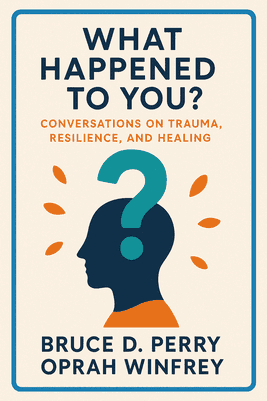
She concludes that forgiveness means giving up hope that the past could have been different, and that our pain can become our power. This transformation-from trauma to wisdom-represents the ultimate healing journey, both for individuals and for society. By asking "what happened to you?" instead of "what's wrong with you?", we open the door to deeper understanding, greater compassion, and ultimately, collective healing.