Capítulo 1
Behind the Curtain with the World's Greatest Rock Band
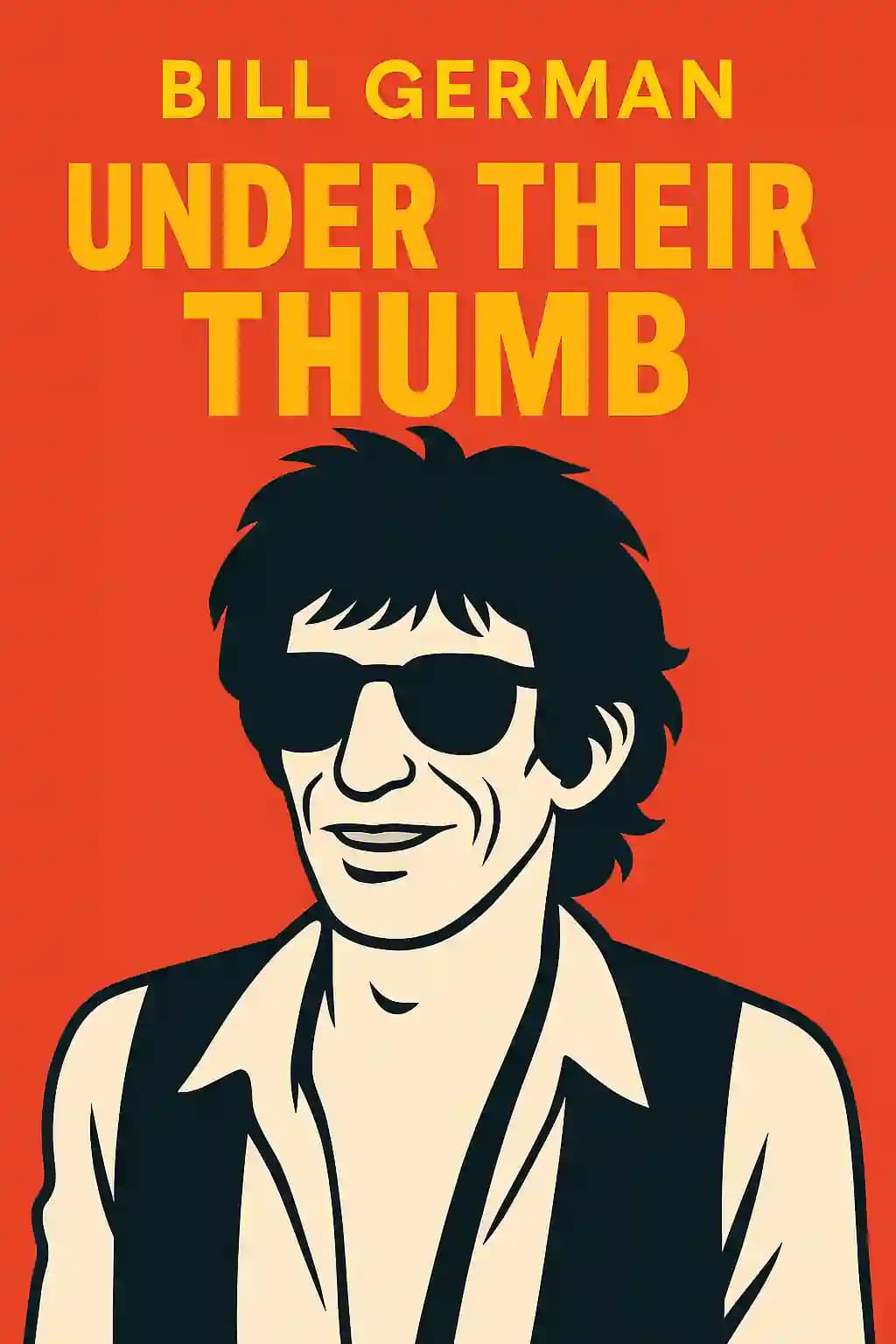
The story begins with a sixteen-year-old boy who made a decision that would alter the course of his life forever. In September 1978, Bill German created a homemade fanzine dedicated to the Rolling Stones called "Beggars Banquet." What started as a teenage obsession in Brooklyn would evolve into a seventeen-year odyssey that took him from mimeographing copies in his high school's supply room to cleaning up Mick Jagger's spills, drinking bourbon with Keith Richards, and cooking with Ron Wood. German's journey represents perhaps the most extraordinary fan-to-insider transformation in rock history. The book has become required reading for music journalists and a favorite among celebrity Stones fans like Jimmy Fallon and Howard Stern. Even Keith Richards himself has been spotted with a copy, reportedly telling his inner circle, "This kid got it right." Unlike most rock memoirs that sanitize the chaos, German's unflinching account reveals the band's complex humanity-their brilliance, their pettiness, their loyalty, and their betrayals-all witnessed firsthand by someone who was neither employee nor enabler, but something far more unique: a passionate fan who somehow found himself with the ultimate backstage pass.
Capítulo 2
From Fanzine to Official Newsletter
In 1978 Brooklyn, Bill German was a cultural outlier. While his classmates embraced disco fever, sporting gold chains and Farrah Fawcett hairstyles, German's long hair and "Free Keef" button marked him as different. His self-published Rolling Stones newsletter found no audience among peers who divided themselves between "Floydies" and "Styx Chicks." Despite rejection at school and local record shops, German persisted, developing sources and gaining subscribers through classified ads.
His breakthrough came at age seventeen when he began staking out Manhattan nightclubs and recording studios hoping to spot the Stones. Fortune smiled on him when the band chose New York as their home base during what fans call their "New York period." Unlike other rock stars who isolated themselves in castles or compounds, the Stones integrated into the city's fabric, frequenting local clubs and even jamming impromptu on stage. They referenced the city in their songs, with Mick singing about Central Park and using Yiddish terms like "schmatta."
German's persistence paid off at the "Emotional Rescue" release party where he finally met Ron Wood, who accepted his fanzine with Keith Richards looking on-a triumphant moment just days after his high school graduation. This encounter led to regular visits to the Rolling Stones Records office at 75 Rockefeller Plaza, where German began delivering his newsletter to executives Earl McGrath and Art Collins, and even to Mick Jagger's doorman.
The ultimate validation came when Art Collins invited German to interview Ian Stewart, the "Sixth Stone." Despite his nervousness meeting the musical purist who called the Stones his "showers of shit," Stewart proved friendly and candid, discussing the band's early days. The interview was a major accomplishment for German's growing publication, which now had nearly a thousand subscribers. By 1983, his persistence and quality reporting had so impressed the band that Gordon Bennett called with an incredible offer-to make Beggars Banquet the official Rolling Stones newsletter, potentially reaching thousands of fans worldwide and being advertised in the next Stones album. For a young fan from Brooklyn, this was an opportunity "beyond anything he ever dreamed."
Capítulo 3
The Price of Access: Contracts and Compromises
What seemed like a dream opportunity quickly revealed its labyrinthine complications. Within weeks of Gordon Bennett's unexpected call, German found himself deeply immersed in the Stones' inner circle-spilling orange juice on Mick's expensive Oriental rug in his Manhattan apartment and watching Keith pull a silver switchblade on his ginger ale bottle when no opener could be found. These intimate moments, while thrilling for a lifelong fan, were merely the glamorous facade of a much more complex arrangement.
The business reality proved surprisingly harsh and disillusioning. When the contract finally arrived after weeks of delays, its terms were staggering: German would have to surrender complete ownership of Beggars Banquet magazine, which he'd built from scratch, for essentially no compensation-just a modest $2,500 per-issue salary guaranteed for only six issues. More troublingly, the Stones' organization would gain ownership of all his back issues, comprehensive rights to the magazine's name, and could terminate him after the sixth issue, leaving him with nothing to show for years of work. The contract was with Musidor BV, the Stones' Dutch-based merchandising company jointly owned with Prince Rupert Loewenstein, their sophisticated financial advisor who had initially championed Bennett's fan club concept.
Despite hiring an experienced music industry attorney who charged him $2,000-money he could barely afford-German remained unpaid for months of work. In an unexpected twist, Keith Richards emerged as his unlikely advocate, pulling him aside during a recording session to tell him bluntly that he didn't have to sign anything and that he held significant leverage-the potential PR nightmare if he walked away would be considerable for the band. Bennett eventually paid German after bassist Bill Wyman personally intervened, but the relationship remained tense and adversarial throughout the six bimonthly issues, which stretched to eighteen months due to constant delays and disputes.
The editorial challenges proved equally daunting. Despite initial promises of complete editorial freedom, German had to submit every issue for multiple rounds of approval before publication. Each band member had particular demands and sensitivities-Mick would arbitrarily reject cover photos he'd previously approved, Bill strictly prohibited any photos featuring girlfriends to maintain his public image and hide his numerous affairs, and Keith's manager Jane Rose meticulously scrutinized text to remove words like "stumbled," "dozed," or "tired" that might imply Keith was under the influence.
German also received an education in the band's byzantine tax arrangements. Keith was officially listed as a "resident of Jamaica" for tax purposes, requiring careful language in articles-his properties in New York or England could never be referred to as "homes," only as "houses" or "properties." He discovered that the Stones' recording locations, from Rotterdam to Nassau, and their touring schedules were primarily determined by tax considerations and offshore banking arrangements rather than artistic inspiration-a particularly disappointing revelation for someone who'd spent years analyzing their creative process.
The experience, though ultimately painful and financially draining, brought German unprecedented access and closer personal relationships with band members, particularly Keith and Ron Wood. However, it taught him a valuable lesson about the music industry: intimate access to his heroes came with significant compromises to both his journalistic integrity and financial independence, forcing him to balance his fan's devotion with professional survival.
Capítulo 4
Inside the Fractured Band: Mick vs. Keith
By 1985, the Rolling Stones were effectively breaking up administratively. Each Stone had separate management and offices, making German's reporting work much more complicated. When they returned to Paris for recording sessions in April, tensions were at an all-time high. Mick was more focused on his solo album "She's the Boss" than the Stones' work, while Keith and Woody, feeling betrayed, wrote aggressive songs with telling titles like "I Wanna Fight," "Had It with You," and "Knock Yer Teeth Out"-many secretly directed at Mick.
To complete their "Dirty Work" album, the Stones booked RPM Studio on 12th Street under the pseudonym "Runny Noses." Keith and Woody nicknamed Mick "Brenda"-a code name only a handful of people knew. As Woody explained, "Mick Jagger is a nice bunch of guys... He changes his accent every time you speak to him, and you never know which Mick you're going to get."
The band's fracture was evident in their studio schedule-Mick would arrive at dusk and leave around midnight, while Keith and Woody would show up after midnight and work until sunrise. Their interactions were limited to "pass the salt" remarks about the album.
Live Aid became a major point of contention. Initially, the Stones agreed not to participate, questioning whether aid would reach Ethiopian famine victims and preferring to keep their charitable work private. However, promoter Bill Graham publicly pressured them, creating a situation where non-participation would make them look heartless.
Mick caved first, arranging to perform solo with Tina Turner. When Keith learned Mick was rehearsing "Beast of Burden"-a song Keith felt possessive about-he was furious. Meanwhile, Woody orchestrated a situation where he and Keith would back Bob Dylan at the concert.
At Live Aid, Mick performed in prime time with Tina Turner, creating a spectacle when he ripped off her skirt during "It's Only Rock 'N Roll." Keith, Woody, and Dylan followed with an under-rehearsed acoustic set of lesser-known but thematically appropriate Dylan songs about hunger and suffering. While the public saw Mick as stealing the show, Keith felt morally superior for staying "on message" with relevant material rather than self-promotion.
The stark differences between Mick and Keith's personalities were on full display in Los Angeles, where their backstage hospitality tents revealed their divergent social circles. Keith hosted music people like Phil Spector and Tom Petty, while Mick entertained Hollywood royalty including Barbra Streisand and Michael Douglas. These differences reflected their contrasting ambitions: Mick courting Hollywood's elite as he sought new frontiers beyond rock 'n' roll, while Keith remained devoted exclusively to music, considering himself the Stones' number one fan.
Capítulo 5
The Entourage: Characters Behind the Curtain
The Stones' world was populated by an extraordinary cast of characters who facilitated their lifestyle and protected them from outside intrusion. Freddy Sessler, an unlikely Rolling Stones insider, was a Holocaust survivor decades older than the band who possessed the coveted All Access laminate. Despite his thick accent and eccentric appearance, Freddy had been with the Stones since their earliest days. He earned his permanent place in Stones lore during the "Fordyce Four incident" in 1975, when he took the fall for Keith and Woody after their car was searched in Arkansas and drugs were found.
Though Mick merely tolerated him, Keith considered Freddy a father figure, bonding over their shared World War II experiences. Freddy was Keith's constant companion-loud, opinionated, and fearless, telling Keith when shows "sucked" and standing up to tour management. His wild life story included escaping concentration camps, working as a translator during WWII, and befriending jazz legends before meeting the Beatles and Stones in the early 60s.
On the Steel Wheels tour, Freddy epitomized everything Mick despised about "Keith Campers"-a drug-dealing boor who undermined discipline. Despite numerous health crises including strokes, heart attacks and cancer, nothing could keep Freddy from a Stones tour-a true rock 'n' roll Rasputin who couldn't be killed off.
Then there was Svi, Keith's assistant, who was both a licensed pharmacist and Talmudic scholar. He had met the Stones in 1979 while traveling through Europe in a decommissioned British taxi, smuggling hash. After initially walking out on the Stones when they kept him waiting at Pathe-Marconi Studio in Paris, Svi eventually became Keith's supplier and later his official "Personal Assistant" on the 1982 European tour. His duties ranged from fetching guitar strings and panty hose to serving as the tour's unofficial pharmacist and drug tester.
Since moving to Manhattan, German had become like a doctor on call for Stones sightings. At Matt Dillon's visit to Woody's townhouse, he discovered the other guests were mostly Woody's drug connections-dealers who went by nicknames and had mysterious jobs. The house buzzed with genuine electricity-some high on creativity, others on drugs, and Woody on both.
Despite the cocaine being passed around, German always declined-partly because he had no experience with it and partly because he wanted to stay alert as both fan and reporter. This abstinence sometimes created tension, with some guests suspecting he might be an undercover cop. German became a valuable companion to Woody since he could actually discuss the Stones with him, unlike his dealer friends who knew little about the band's music.
Capítulo 6
Life on Tour: The Reality Behind the Glamour
The Stones' Steel Wheels tour in 1989 revealed the complex machinery behind rock's greatest touring act. German discovered a strict backstage hierarchy at Shea Stadium where dozens of self-important people with various passes realized their "backstage" credentials didn't actually grant true backstage access. A rock 'n' roll caste system emerged with at least eight different pass types-round, square, oval, triangular-labeled "VIP," "Hospitality," "Guest" or even "Steal Meals," each corresponding to different buffets sponsored by MTV, CBS Records, or Budweiser.
From his unique vantage point in a cubbyhole next to the backup singers, German experienced the overwhelming intensity of performing before 60,000 screaming fans. This position gave him an extraordinary perspective-when Mick and Woody came down the stage-right ramp, he could literally grab their ankles. The cubbyhole revealed the behind-the-scenes machinery: dozens of crew with headsets, the "blow-job team" inflating giant balloons, and even the band members casually chatting during the dramatic opening of "Sympathy for the Devil" while Mick performed high above.
German discovered the Stones used a teleprompter for stage directions and witnessed the subtle nonverbal communication between band members-Keith deliberately throwing off Mick's timing cues and making faces to Woody. After concerts, family members were whisked away before the finale, with the band racing out in police-escorted vans like a military operation.
The Mick-Keith divide extended beyond social circles to their musical approaches on the Steel Wheels tour. Mick insisted on rigid arrangements that faithfully reproduced the original album versions-a business decision aimed at giving baby boomers exactly what they remembered. Keith preferred improvisation and risk-taking, fighting to include more new material. Keith's passive-aggressive rebellion manifested in subtle ways-deliberately dragging out chord introductions or delaying strikes to throw off Mick's timing.
The Steel Wheels tour happened because Michael Cohl, a relatively unknown Canadian promoter, made an offer the Stones couldn't refuse-$65 million guaranteed plus profits, regardless of ticket sales. This deal revolutionized the concert industry. In exchange, the Stones sold BCL licensing rights to everything related to the tour. Cohl recouped his investment through unprecedented $30 tickets (double previous prices), corporate sponsorships, and $450 Steel Wheels jackets at department stores.
The Stones hired Shelley Lazar, "the Ticket Lady," to sell tickets to friends and family members-not give them away. Under their deal with Michael Cohl, there were absolutely no freebies on this tour. Even the Stones' wives had to pay for seats in the regular audience.
Capítulo 7
The Surreal Life: Celebrities and Excess
German's years with the Stones exposed him to increasingly surreal situations that blurred the line between fan experience and celebrity lifestyle. After a Los Angeles concert in 1994, he found himself at a Virgin Records party at the American Legion Hall. Despite compiling Virgin's Voodoo Lounge press kit (for which they still owed him $300), he needed Jane's help to get invited. At the party, he witnessed Mick Jagger's handler physically move him out of Mick's path-depositing him "out of Mick Jagger's sight line" before escorting him inside.
When Woody and Jo arrived at 2:30 AM, they couldn't get drinks due to California's liquor curfew, sending Woody into a rage: "I'll get my own fuckin' drinks!" He stormed behind the bar, poured a drink for actor Harry Dean Stanton, and nearly got into a physical altercation before leaving.
Back at the Four Seasons, German joined Woody (now calmer), Jo, Harry Dean Stanton and Sean Penn in their suite. Harry immediately grabbed Woody's guitar and began playing flamenco and yodeling in Spanish, while Sean paced the room talking to himself. The night evolved into an impromptu jam session with Bobby Keys and Bernard Fowler joining at 5 AM. Sean eventually revealed he was composing poetry, which Woody turned into a song with everyone contributing except German.
By 8 AM, everyone was still jamming while Sean and Jo had moved to the bedroom for a deep conversation. When Sean called German in, he asked why America "always has to Hitlerize someone" like Saddam Hussein or Noriega. Jo tried repeatedly to silence him, insisting "It's got nothing to do with you, Sean! Relax!" While German suggested America might "always need an enemy" now that "we don't have the Russians anymore," Jo grew increasingly frustrated, reminding Sean he was "in Beverly Hills" not "Paneema" and should focus on his immediate surroundings.
In Las Vegas, the Stones played the MGM Grand for October 14-15 shows in 1994. These concerts marked a pivotal moment for concert pricing-orchestra seats cost $300 face value, testing whether the market would bear such prices (it did, establishing a new standard). During the weekend, 71-year-old Freddy was caught scalping tickets and later arrested for publicly snorting cocaine in the MGM lobby. In a bizarre scene, he was handcuffed alongside JC (head of Stones security) after they played "hot potato" with a vial of cocaine. While JC was quickly released, Freddy claimed he called notorious defense attorney Oscar Goodman and was mysteriously released within three hours-without charges.
Capítulo 8
The End of the Affair: Breaking Free
By 1993, German was struggling with the psychological toll of his unusual relationship with the Stones. Despite his unparalleled access and dedication-sacrificing his personal life for a year while covering 34 concerts across multiple continents-Jane Rose rejected his proposal to write the official tour book, as Mick wanted someone else for the project. The commissioned book ended up as glossy fluff, omitting significant moments like the Stones' historic Prague concert where 107,000 fans watched them in driving rain after Czechoslovakia's Velvet Revolution.
Though his newsletter was doing well, German hit a glass ceiling financially and professionally, unable to write his book about the tour while seeing cautionary tales in others who'd been cast aside by the Stones. Combined with his meager $14K annual income despite 90-hour workweeks, VH1 mocking his dedication, authors stealing his firsthand accounts for their books, and his girlfriend threatening to leave him, he felt completely overwhelmed. He began contemplating suicide, possibly at Keith's upcoming Beacon Theatre shows, feeling he'd spent his entire adult life celebrating other people's accomplishments instead of pursuing his own.
In December 1993, German attended Keith's surprise 50th birthday party at Metropolis, where Keith made a comment that would change everything: "Hey, man, I didn't ask ya to. No one's makin' ya." Though seemingly harsh, his words with a supportive hand on German's shoulder felt like absolution-he was free to go if he wanted.
Keith's words struck German as both a challenge and permission to leave-the exact clarity he needed during his darkest moments. After fifteen years documenting the Stones, he realized he had choices he'd been ignoring. Keith had once told him in an interview that personal responsibility was key to surviving one's demons: "Anything you thrown yourself into, you better get yourself out of." The next move was his.
After covering the European leg of the Voodoo Lounge tour, German finally ended Beggars Banquet in January 1996. Keith's first words to him in his post-Beggars Banquet life were perfectly insightful: "You look like a great weight has been lifted off you."
After seventeen years and 102 issues-more than half his life at age 33-he announced the end with the headline "BB: The Last Time." The response was overwhelming, with hundreds of previously silent subscribers pouring out their hearts. Some admitted crying when they read the news. One Austrian fan told him, "It is from Beggars Banquet that I learned to speak English."
Capítulo 9
Legacy of a Rock and Roll Witness
German's seventeen-year journey with the Rolling Stones represents one of the most unique perspectives in rock history. Unlike other insiders who were employees, enablers, or romantic partners, German maintained his position as a passionate fan who somehow found himself with the ultimate backstage pass. His story reveals not just the mechanics of how the world's greatest rock band operates, but the psychological toll of proximity to fame. From witnessing the intricate dynamics between band members to observing the endless parade of hangers-on, German documented the delicate balance between artistic genius and human frailty.
After Beggars Banquet, German tried writing a novel but found himself constantly distracted by Rolling Stones memories. He collected these thoughts in a shoebox before eventually organizing them into his memoir. The process took years, as he struggled to make sense of his experiences and separate truth from myth. As the Stones continued touring (Licks in 2002, A Bigger Bang in 2005), he maintained sporadic contact with Keith and Ronnie, who became like "long-lost uncles" as they added more layers of management and security around themselves. The band's evolution from accessible rock stars to corporate entertainment entity fascinated German, who watched as spontaneous backstage parties gave way to carefully orchestrated meet-and-greets.
German's story is ultimately about the complicated relationship between fans and their idols. His journey took him from teenage obsession to intimate access to eventual disillusionment and finally to a healthy perspective. He discovered that his heroes were indeed extraordinary but also deeply flawed human beings navigating their own complex relationships, addictions, and business pressures. He witnessed Mick's perfectionism during rehearsals, Keith's struggles with sobriety, and Charlie's quiet dignity amidst the chaos. These observations helped him understand the true cost of maintaining the Rolling Stones machine decade after decade.
When asked if he regrets giving so much of his life to following the Rolling Stones, German reflects that despite the sacrifices and dark moments, those seventeen years provided experiences few others could imagine. From cleaning up Mick's spills and drinking bourbon with Keith to witnessing historic performances and private moments of genuine humanity, German's journey represents the ultimate fan fantasy-and its unexpected consequences. He recalls intimate moments: Keith teaching him guitar riffs at 3 AM, Ronnie sketching his portrait during downtime, and Charlie discussing his jazz collection in quiet dressing rooms. These personal interactions revealed the band members as multifaceted individuals rather than mere rock gods.
As he puts it in the closing lines of his memoir: "I'm not sure anything will ever be as exciting as those seventeen years, but I know I'm headed in one direction-forward, brother." This conclusion reflects both his gratitude for the experience and his recognition that true growth meant moving beyond the role of professional fan. German's legacy isn't just his eyewitness account of rock history, but his insight into the complex dynamics between artists and their most devoted followers, and the thin line between access and obsession in the world of celebrity culture.