Capítulo 1
When Wall Street Crumbled: The Epic Tale of Financial Armageddon
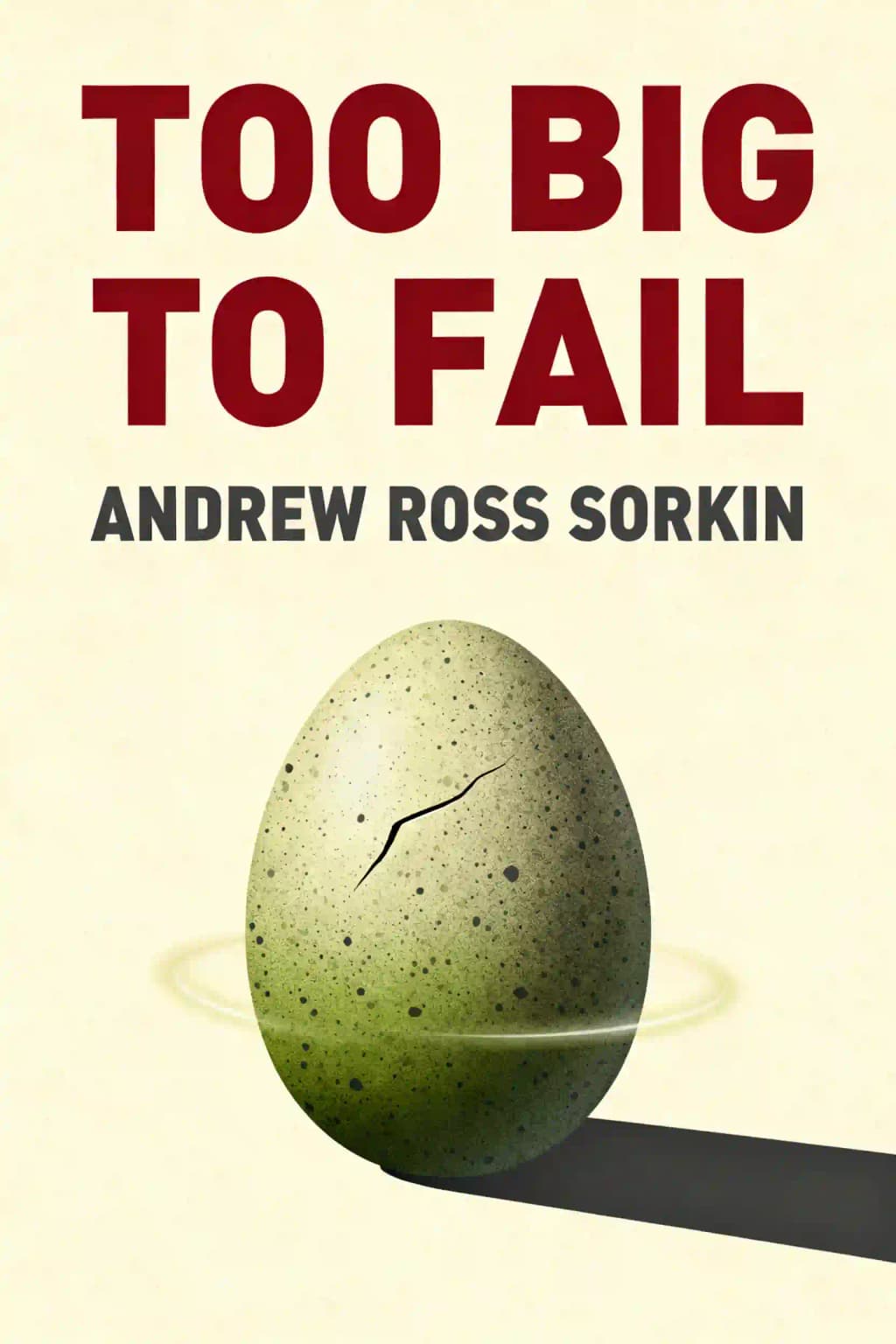
In the autumn of 2008, Jamie Dimon stood in his Park Avenue kitchen nursing a headache-not from last night's champagne, but from what he knew was coming. "You are about to experience the most unbelievable week in America ever," the JP Morgan Chase CEO warned his management team on a 7:30 a.m. conference call. Within days, century-old institutions would vanish, the government would seize control of the world's largest insurance company, and the entire financial system would teeter on collapse. Andrew Ross Sorkin's "Too Big to Fail" offers an unprecedented fly-on-the-wall account of this financial catastrophe, quickly becoming required reading in boardrooms and policy circles worldwide. The book spent over six months on bestseller lists and earned Sorkin a Gerald Loeb Award for excellence in financial journalism. Even a decade later, it remains the definitive insider account of how hubris, regulatory failures, and interconnected risk brought the global economy to its knees-and how a handful of powerful figures worked frantically behind closed doors to prevent complete disaster.
Capítulo 2
The House of Cards: How Wall Street Built Its Own Destruction
Wall Street had transformed from celebrating record profits to facing extinction in just eighteen months. The roots of this disaster stretched back decades, as financial deregulation and innovation created increasingly complex products that even their creators barely understood. Investment banks had leveraged themselves 32-to-1, meaning for every $32 they lent or invested, they held just $1 in capital. This precarious structure worked beautifully during the housing boom but proved catastrophically fragile when the market turned.
By 2007, the $2 trillion subprime mortgage market had imploded, paralyzing markets as institutions couldn't value these toxic assets. Bear Stearns had already fallen in March 2008, but the interconnectedness between institutions meant one major failure could trigger a catastrophic chain reaction. Unlike previous financial crises that were contained within specific sectors, this one threatened the entire system.
At the center of this storm stood Richard "Dick" Fuld, Lehman Brothers' CEO. Known as "The Gorilla" for his intimidating presence, Fuld had transformed Lehman from a bond trading house into a diversified investment bank. His fierce loyalty to the firm was legendary-he once screamed "Eat shit and die!" at a stranger who mocked an asthmatic child during a company hiking trip. After 9/11 damaged Lehman's headquarters, Fuld relocated 6,500 employees within a month, maintaining operations as if nothing had happened.
Despite his talk of change, Fuld maintained Lehman's combative culture. "Every day is a battle," he told executives. "You have to kill the enemy." Under his leadership, Lehman expanded aggressively into commercial real estate, mortgages, and leveraged lending-risky bets that initially drove record profits but eventually threatened the firm's survival.
By March 2008, as Bear Stearns collapsed, Fuld found himself racing back from India after a hastily interrupted trip. Treasury Secretary Henry Paulson had called with alarming news: Bear Stearns would either be sold or bankrupt by Monday, and Lehman would surely feel the impact. Upon arriving at Lehman's Times Square headquarters, Fuld discovered futures markets predicting a 21% drop in Lehman shares before markets even opened.
Fuld and his team, including CFO Erin Callan, launched a media blitz emphasizing Lehman's liquidity and stability. Their efforts initially paid off-the stock recovered somewhat, closing down only 19%. But outside Lehman, skeptics remained unconvinced, with hedge fund manager David Einhorn betting against the firm and preparing to share his opinion publicly.
Capítulo 3
The Reluctant Savior: Hank Paulson's Impossible Choice
Henry "Hank" Paulson never wanted to be Treasury Secretary. He had already held what he considered the best job in the world-CEO of Goldman Sachs-where he traveled globally as an unofficial "Ambassador of Capitalism." When approached about the Treasury position in 2006, he declined twice, concerned about serving in what many considered a "failed administration."
His family initially opposed the move-his wife Wendy couldn't stand Bush's politics despite Paulson being a campaign "pioneer" who raised over $100,000 for Bush's reelection. His mother cried, asking why he would "start with Nixon and end with Bush." Only after his wife's support and friend John Bryan's advice-"Life is not a dress rehearsal. You don't want to be sitting around at eighty years old telling your grandchildren you were once asked to be secretary of the Treasury"-did Paulson accept.
Before joining Treasury, Paulson divested his 3.23 million Goldman shares worth $485 million, saving over $100 million in taxes through IRS rules for executives entering government service. He inherited a demoralized Treasury Department with a surprisingly small financial staff. Though mindful of conspiracy theories about Goldman's influence in Washington, he brought in Wall Street veterans who knew how to work hard.
By March 2008, Paulson found himself managing the Bear Stearns crisis. When Jamie Dimon called to inform him JP Morgan was raising its offer from $2 to $10 per share, Paulson exclaimed, "That makes me want to vomit!" He had privately instructed Dimon to pay only "something nominal, like one or two dollars per share," believing Bear was essentially insolvent without government support.
The Bear Stearns bailout became a political football in an election year. Democratic candidate Hillary Clinton criticized the rescue, linking it to problems in Iraq. House Financial Services Committee Chairman Barney Frank turned it into an indictment of Republican deregulation. Even Republicans were divided-conservatives believed markets should handle failures without intervention, while moderates faced angry constituents questioning why Wall Street deserved taxpayer money.
Paulson hated the term "bailout," believing he had saved the American economy. While President Bush publicly supported him, privately the president was livid, knowing the political fallout would be severe. "We're gonna get killed on this, aren't we?" Bush had asked Paulson.
Capítulo 4
The Boy Wonder: Tim Geithner and the Federal Reserve's Dilemma
Timothy Geithner, president of the New York Federal Reserve, found himself at the center of the financial storm. Despite his impressive credentials, Geithner had struggled to earn Wall Street's respect. Peter G. Peterson, who led the search for the New York Fed presidency, was initially unimpressed, exclaiming "He's twelve years old!" upon meeting him.
Geithner's adaptability stemmed from his "army brat" childhood, moving between countries as his father worked in international development. During the Asian financial crisis of 1997-98, he played a crucial role in the "Committee to Save the World," helping arrange over $100 billion in bailouts for developing countries.
At the New York Fed, Geithner educated himself on derivatives markets and became skeptical of risk dispersion theories, warning in 2006 that financial innovations "have not eliminated risk" or "ended the tendency of markets to occasional periods of mania and panic." His prescience about Wall Street's eventual downturn would soon be tested by the events of 2008.
When testifying before the Senate Banking Committee about the Bear Stearns rescue, Geithner compared the circumstances to 1907 and the Great Depression, drawing a direct connection between Wall Street's stability and the economic health of ordinary Americans: "Absent a forceful policy response, the consequences would be lower incomes for working families; higher borrowing costs for housing, education, and the expenses of everyday life; lower value of retirement savings; and rising unemployment."
Meanwhile, Federal Reserve Chairman Ben Bernanke brought his academic expertise on the Great Depression rather than Alan Greenspan's market mystique. Unlike Greenspan, Bernanke believed the Fed had caused the Great Depression by not immediately providing cheap cash to stimulate the economy.
Bernanke had underestimated the severity of the situation, having stated in June 2007 that "troubles in the subprime sector seem unlikely to seriously spill over." He failed to account for how mortgage-backed securities and exotic derivatives had created complex interconnections throughout the global financial system.
Capítulo 5
The Ticking Time Bomb: AIG's Hidden Catastrophe
While Lehman Brothers captured headlines, an even larger disaster was brewing at American International Group (AIG). What began modestly in Shanghai in 1919 had grown into a global financial behemoth worth $80 billion by 2008, with over $1 trillion in assets. This phenomenal expansion was primarily driven by Maurice "Hank" Greenberg, a hardscrabble D-Day veteran who joined the company in 1960.
Under Greenberg's imperial leadership, AIG expanded to 130 countries, diversifying into aircraft leasing and life insurance. The intimidating CEO ate only fish and vegetables for lunch, worked out religiously, and was known for his short fuse and obsessive control. His attempt to establish a dynasty instead created a blood feud when both sons left the company after clashes with their father, later becoming CEOs of rival insurance firms.
AIG Financial Products, created in 1987, operated almost like a hedge fund from a windowless Manhattan office. The unit's success depended on AIG's triple-A credit rating, which Greenberg guarded fiercely, warning executives he'd come after them "with a pitchfork" if they endangered it.
After Greenberg's ouster in 2005 amid regulatory troubles, Joseph Cassano pushed AIG deeper into writing credit default swaps. By 2005, AIG had become a dominant player in this market, with Cassano boasting they couldn't "even see a scenario within any kind of realm of reason" where they'd lose money.
By August 2008, new CEO Robert Willumstad discovered the horrifying truth: AIG had insured $500 billion in assets, including $61 billion in subprime mortgages-mostly for European banks seeking to circumvent regulatory debt limits. Despite having $89 billion more in assets than liabilities, most were held in state-regulated insurance subsidiaries that couldn't be easily liquidated.
AIG's executives remained confident despite market concerns about their CDO exposure. When Goldman Sachs demanded billions in additional collateral, Cassano dismissed the request, boasting: "We have, from time to time, gotten collateral calls from people. Then we say to them: 'We don't agree with your numbers.' And they go, 'Oh.' And they go away." Privately, Cassano was less composed, railing at a board meeting: "Everyone thinks Goldman is so fucking smart. Just because Goldman says this is the right valuation, you shouldn't assume it's correct just because Goldman said it. My brother works at Goldman, and he's an idiot!"
By September 2008, AIG faced imminent credit rating downgrades that would trigger massive collateral calls. A one-notch downgrade from either rating agency would require $10.5 billion in additional collateral; downgrades from both would necessitate $13.3 billion. The company was quietly running out of cash.
Capítulo 6
The Last Weekend: Lehman's Final Days
By Thursday, September 11, 2008, Lehman Brothers was in free fall. Its stock had plummeted 42 percent amid false rumors about $200 billion exposure to AIG. Hedge funds were demanding nearly $50 billion in redemptions while competitors like Deutsche Bank tried poaching clients.
Treasury Secretary Paulson summoned Wall Street's top executives to the Federal Reserve for an emergency meeting on Friday, September 12. As they arrived at the imposing limestone building, Paulson delivered a stark message: "There is no political will for a federal bailout." The government would not rescue Lehman as it had Bear Stearns.
The executives were divided into three working groups: one to value Lehman's toxic assets (quickly dubbed "ShitCo"), another to develop a bank investment structure, and a third to plan for a potential bankruptcy. Geithner emphasized: "There is no political will for a federal bailout." Before dismissing them, Paulson issued what sounded like a threat: "This is about our capital markets, our country. We will remember anyone who is not seen as helpful."
Two potential saviors emerged: Bank of America and Barclays. Bank of America CEO Ken Lewis initially showed interest but demanded the government absorb $40 billion in Lehman's toxic assets as a condition for any deal. Barclays faced a different obstacle-any Lehman acquisition would require Barclays shareholder approval, taking 30-60 days. During this period, Barclays could legally guarantee only $3.5 billion of Lehman's trades without shareholder permission-far from enough to maintain market confidence.
Meanwhile, Merrill Lynch CEO John Thain recognized his firm might be "next" if Lehman failed. He arranged a secret meeting with Bank of America's Lewis, initially proposing selling a 9.9 percent stake in Merrill with a liquidity facility. Lewis immediately countered: "I'm not really interested in buying 9.9 percent of the company. But I am interested in buying all the company."
By Saturday afternoon, both potential Lehman deals were collapsing. The British Financial Services Authority refused to waive shareholder approval requirements for Barclays, effectively killing that option. When Paulson pressed British Chancellor Alistair Darling about waiving the requirement, Darling instead asked about U.S. contingency plans for Lehman's bankruptcy, saying "Well, if Lehman is going into administration, we need to know because it will have implications over here."
A stunned Paulson told Geithner that Darling "didn't want to 'import our cancer.'" Geithner, raising his voice for the first time that weekend, asked "Why didn't we know this earlier? This is fucking crazy." They agreed to move to Plan B: pressing banks to unwind trading positions with Lehman in a way that minimized market impact.
When Paulson announced to the assembled bankers that the Barclays deal was dead because "the British are not allowing for this type of guarantee," the room erupted. "But we have the money!" Jamie Dimon protested. Paulson declared the British had "grinfucked us" and outlined contingency plans: Lehman's holding company would file for bankruptcy that day.
Capítulo 7
The Weekend That Changed Everything: System-Wide Collapse
As Lehman prepared for bankruptcy, Bank of America shifted its focus to acquiring Merrill Lynch in a historic $29-per-share all-stock transaction. Greg Fleming, Merrill's president, had secured Bank of America's agreement with virtually airtight MAC provisions preventing Bank of America from backing out if Merrill's business deteriorated further.
Meanwhile, AIG's situation had become dire. Chris Flowers and Paul Achleitner of Allianz presented Willumstad with a lowball offer valuing the company at $40 billion. Their proposal required $10 billion in equity from their firms, $20 billion from banks they hadn't yet secured, and $10 billion in asset sales. After they left, Willumstad told his team, "Don't let those guys back in the building!"
At the Fed, Willumstad reported AIG's situation had worsened to a $60 billion hole. Despite his insistence that he was "proposing a transaction, not a bailout" with collateral backing, Geithner and Paulson remained firm in their refusal to help.
On Sunday night, September 14, Lehman Brothers formally filed for bankruptcy-the largest in American history. The next morning, markets plunged as the Dow dropped 504.48 points, its largest decline since trading resumed after 9/11. The Reserve Primary Fund "broke the buck," falling below the sacred $1-per-share value after losing $785 million on Lehman paper, threatening the stability of money market funds nationwide.
By Tuesday, AIG faced imminent collapse. At the FOMC meeting, Bernanke and Warsh passed notes about AIG while Geithner insisted a "private-market solution is dead." He urged using Federal Reserve Act Section 13(3) to lend under "unusual and exigent" circumstances. AIG had become a linchpin of the global financial system with $300 billion in credit default swaps and 81 million life insurance policies worth $1.9 trillion.
Despite his earlier resistance to bailouts, Paulson recognized AIG's failure could trigger global panic. The government announced an $85 billion rescue package for AIG in exchange for a 79.9% ownership stake. The loan carried punishing terms-LIBOR plus 8.5 percentage points, totaling over 11% interest, with all AIG assets as collateral and government veto power over dividends.
Capítulo 8
The Aftermath: Government Takes Control
As panic spread throughout the financial system, Morgan Stanley and Goldman Sachs faced mounting pressure. Morgan Stanley's stock plummeted 42 percent amid rumors about $200 billion exposure to AIG. Hedge funds were demanding nearly $50 billion in redemptions while competitors tried poaching clients.
Desperate for stability, both firms applied to become bank holding companies, fundamentally transforming their business models. This gave them permanent access to the Federal Reserve's discount window but subjected them to stricter capital requirements and oversight.
Meanwhile, Treasury Secretary Paulson developed the Troubled Asset Relief Program (TARP), initially designed to purchase "the illiquid assets that are weighing down our financial system." The program's cost was set at $700 billion-a number Neel Kashkari essentially fabricated using "mathematical voodoo" to justify the largest amount they thought Congress might approve.
Despite TARP's passage, markets continued falling. By October, Paulson shifted strategy, deciding to make direct investments in banks rather than buying toxic assets. On October 13, he summoned the CEOs of America's nine largest financial institutions to the Treasury Building.
In an unprecedented move, Paulson announced all nine banks would participate in the $250 billion TARP capital injection program whether they wanted it or not. The amounts were specified: $25 billion each for Bank of America, Citigroup, JP Morgan and Wells Fargo; $10 billion each for Goldman Sachs and Morgan Stanley.
Wells Fargo's CEO Dick Kovacevich protested vehemently: "This is un-American!" Others raised concerns about compensation restrictions. Despite their objections, all nine CEOs ultimately signed the agreements, accepting government capital in what Treasury official David Nason called crossing "the Rubicon."
Capítulo 9
The Reckoning: Could It Have Been Prevented?
The $1.1 trillion question might be answered with "perhaps," but preventive action would have needed to come years before the crisis peaked. The disaster's roots reached back to the 1990s bank deregulation, particularly the repeal of the Glass-Steagall Act in 1999, which had separated commercial and investment banking since the Great Depression. The push to increase homeownership led to increasingly relaxed mortgage standards, with "no-doc" loans and adjustable-rate mortgages becoming commonplace. Historically low interest rates under Federal Reserve Chairman Alan Greenspan created unprecedented liquidity bubbles, while Wall Street's compensation structure heavily rewarded short-term risk-taking without accountability for long-term consequences.
Despite Treasury Secretary Paulson and New York Fed President Geithner's early warnings about market vulnerabilities in 2006 and 2007, Washington demonstrated its typical pattern of responding only to actual crises rather than potential threats. The President's Working Group on Financial Markets identified risks in the subprime mortgage market, but regulatory action remained minimal. While government intervention ultimately prevented total market collapse, officials contributed to market turmoil through inconsistent decision-making - rescuing Bear Stearns with a $29 billion guarantee and later committing $85 billion to AIG, while allowing Lehman Brothers to fail, creating profound confusion about the rules of engagement.
Lehman's failure, while not solely responsible, clearly accelerated the economic collapse. CEO Richard Fuld's errors appeared driven less by personal greed than by an almost religious determination to save the 158-year-old firm he had spent his career building. Despite Treasury Secretary Paulson's later claims about lacking legal authority, fear of public backlash against another Wall Street rescue heavily influenced the Lehman decision, with one senior official privately admitting they "would have been impeached" for attempting another bailout.
The international impact proved more devastating than anticipated. While the Federal Reserve wisely kept Lehman's U.S. broker-dealer operating post-bankruptcy, different regulatory frameworks in the UK and Japan forced immediate shutdowns of overseas units, instantly freezing billions in client assets. This triggered widespread hedge fund margin calls, forcing massive asset sales that depressed prices further in a destructive cycle. The collapse of Lehman's $2 trillion balance sheet sent shockwaves through global money market funds, leading to the first "breaking of the buck" since 1994.
Despite ongoing debates about Paulson's decisiveness, his tireless efforts during a lame-duck administration laid crucial groundwork for eventual market stabilization. The controversial Troubled Asset Relief Program (TARP) initially requested $700 billion, with many recipients like Goldman Sachs and JPMorgan Chase eventually repaying funds with profit. However, billions directed to AIG and Citigroup may never fully return to taxpayers. As House Financial Services Committee Chairman Barney Frank notably observed, Paulson faces politics' fundamental dilemma: "You don't get any credit for disaster averted." The crisis ultimately demonstrated how interconnected global financial markets had become, and how the failure of one significant institution could threaten the entire system's stability.
Capítulo 10
The New Normal: Has Anything Really Changed?
The financial crisis fundamentally transformed Wall Street. The Big Five investment banks disappeared in their original form, mortgage giants and AIG came under government control, and the Treasury became part-owner of America's largest financial institutions.
Yet the disconnect between Wall Street and Main Street has only widened. While unemployment hovered near 10% through 2009, banks returned to profitability-Goldman Sachs reported record $13.4 billion profits and paid $498,000 per employee in bonuses. Even troubled firms hastened to repay TARP funds to escape bonus restrictions.
Finance was meant to support the broader economy, but it became the main show, generating fees for itself rather than serving clients. Reform proposals have been tepid at best, with Wall Street deploying 1,400 lobbyists and spending $30 million to fight significant changes.
Most disturbing is that Wall Street's ego remains intact-those who survived the crisis feel invulnerable rather than humbled. Risk is returning to the system, with funds raising money anticipating the next collapse. Unless financial regulations change radically-with stricter leverage limits, curbs on risk-encouraging pay structures, and crackdowns on market manipulation-there will continue to be firms too big to fail.
As Warren Buffett testified before the Financial Crisis Inquiry Commission: "When there's a delusion, a mass delusion, you can say everybody is to blame... There's plenty of blame to go around. There's no villain."
Whether an institution is too big to fail depends as much on the people running these firms and their regulators as on any policy. The crisis revealed not just systemic weaknesses but human ones-hubris, short-sightedness, and the fundamental challenge of balancing profit with prudence. Until these deeper issues are addressed, we remain vulnerable to the next financial storm.