Capítulo 1
A Tapestry of Parallel Lives in an Elusive Paradise
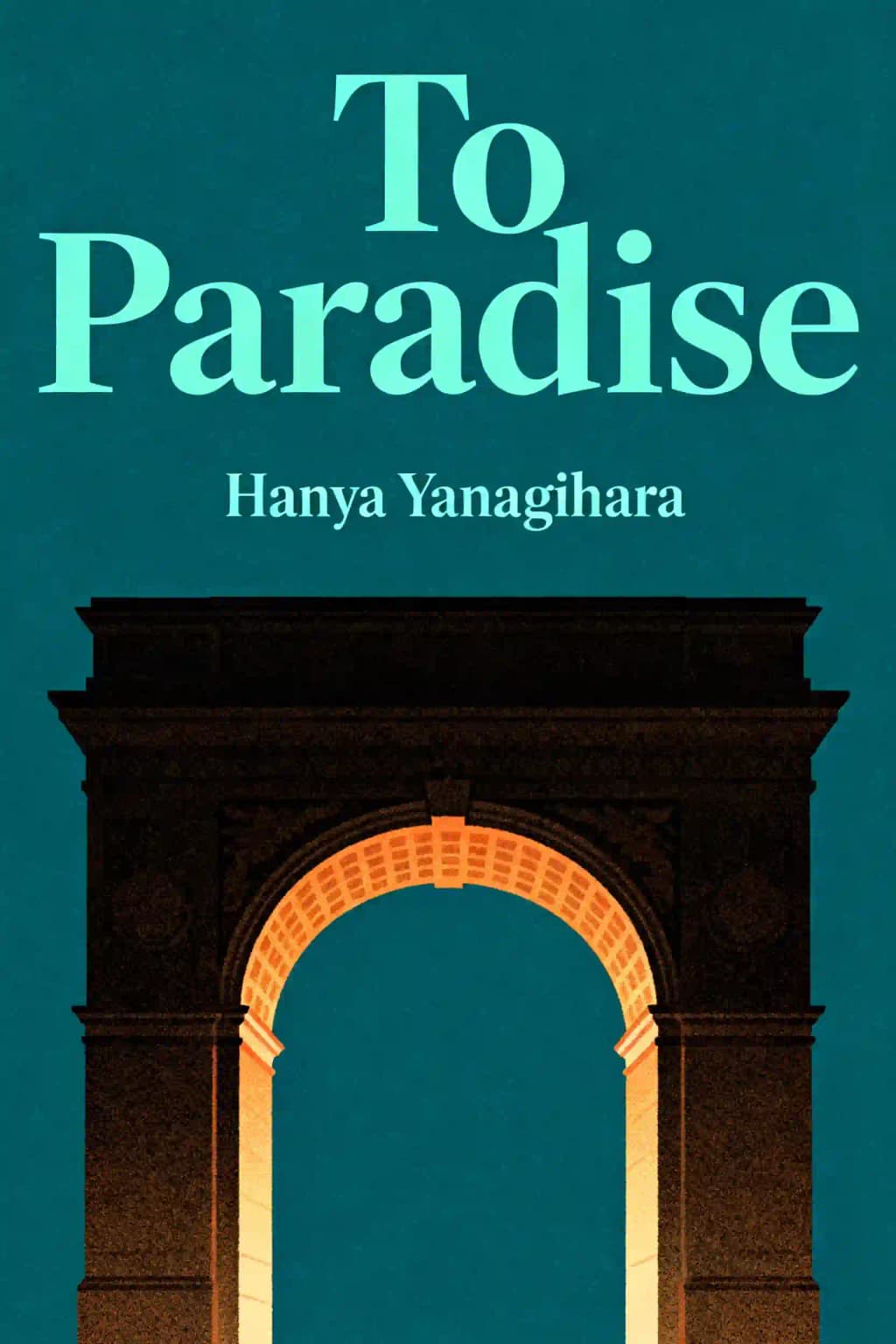
To Paradise stands as Hanya Yanagihara's most ambitious work to date, a sprawling triptych spanning three centuries that explores the eternal human quest for belonging, identity, and love. Since its 2022 release, the novel has captivated readers with its intricate narrative structure and emotional depth, earning a spot on Barack Obama's favorite books list and becoming a fixture in literary discussions. Yanagihara, already celebrated for her devastating bestseller A Little Life, further cements her reputation as one of our most fearless contemporary novelists with this work that The New York Times called "a masterpiece that will endure." The book's exploration of alternative Americas resonates particularly in our politically divided times, asking profound questions about freedom, sacrifice, and what constitutes paradise in a world where such concepts remain perpetually out of reach.
Capítulo 2
Washington Square: An Alternative America's Gilded Cage
In the opening book, we're transported to an alternative 1893 America where the northeastern states form an independent nation called the Free States - a realm of stark contradictions. While progressive in its acceptance of same-sex marriage, this society maintains rigid class hierarchies and pervasive racial discrimination that mirror the historical Gilded Age. The Free States' capital, New York, serves as both beacon of liberty and monument to inequality, with Washington Square standing as its architectural and social centerpiece.
At the heart of this world stands David Bingham, a wealthy young man whose life epitomizes these contradictions. Living with his grandfather in a magnificent Washington Square mansion, David enjoys material comforts beyond imagination - from imported silks to rare books and daily fresh flowers. Yet his privileged existence is fundamentally a gilded cage, his movements and choices circumscribed by his family's expectations and his own history of "nervous trouble" - a condition that has required multiple retreats to private sanitariums and constant medical supervision.
The Bingham family represents not just wealth but foundational power in Free States society. Their history literally adorns the walls of their bank in massive murals depicting their contributions to the nation's founding and prosperity - scenes of ships launching, contracts signing, and cities rising. Each image carefully omits the exploitation underlying their success. Their family motto - "Civility, Humility, Humanity" - is carved in marble above the bank's entrance, standing in stark ironic contrast to the exploitation that funds their lifestyle. David, more perceptive than his relatives, notes the suffering in the Colonies that provides their luxuries: the coffee plantations, cotton fields, and mining operations that generate their wealth through others' toil.
During formal weekly family dinners with his siblings John and Eden, conversation remains deliberately superficial - focusing on social engagements and property values while studiously avoiding mention of labor strikes, colonial uprisings, and political tensions "storming and burning" outside their protected enclave. The Binghams have perfected the art of elegant denial, maintaining their carefully curated world through selective attention and strategic silence.
When Grandfather announces his estate plans, David inherits the Washington Square mansion - a mixed blessing that feels simultaneously like sanctuary and prison. The house represents both protection from the world's harsh realities and confinement within social expectations. "The house might possess me as much as I possess it," David reflects, capturing the novel's recurring theme of belonging versus confinement. This tension intensifies when Grandfather arranges a marriage proposal from Charles Griffith, a respectable 41-year-old widower whose Nantucket estate promises another gilded cage. The prospect of leaving Washington Square fills David with visceral panic: "How could I leave the walls that have witnessed all my states, the floors upon which my grandfather walked late at night bringing me broth when I was ill?" His attachment to the house reveals both the comfort of familiar constraints and the fear of unknown freedoms.
Capítulo 3
The Transformative Power of Forbidden Love
David's carefully ordered world unravels when he meets Edward Bishop, the charismatic new music teacher at the Bingham-supported orphanage where David volunteers. Their first encounter is electric - Edward transforms a maudlin popular song into something bright and unexpected on the piano, his fingers dancing across the keys with a passion that seems to ignite the very air. David stands transfixed by the performance, watching Edward's shoulders move with each crescendo, noting how the afternoon light catches his profile. This moment symbolizes how Edward will reshape David's existence, playing the same life but with entirely different notes, turning the mundane into something extraordinary.
Their subsequent meetings reveal stark differences in their backgrounds that fascinate David as much as they unsettle him. Edward's worn books - their spines cracked and pages dog-eared with frequent use - and his peeling trunk with its brass fixtures dulled by time expose his poverty. These details shock David, who "only sees what confirms his worldview while ignoring contradictory evidence." Yet these differences prove irresistible, like a window into another world. David finds himself "strangely proud to be in this unfamiliar world, surrendering to the enchantment of experiencing something beyond his privileged existence." He notices everything: the ink stains on Edward's fingers, the careful way he mends his clothes, the creative solutions he finds for making do with less.
Their relationship quickly becomes physical, stolen moments in the music room after hours, brief touches that linger too long to be casual, but it's the emotional intimacy that truly transforms David. For the first time, he experiences "the reckless, wild intensity of affection" that had previously eluded him. In Edward's presence, David's careful facade crumbles - he laughs louder, speaks more freely, feels more deeply. Having always felt oddly separate from others at social gatherings - like an actor in a play he hadn't quite learned the lines for - David now feels profound relief that "there was nothing wrong with him after all - he had simply needed to find the person who would awaken his capacity for pleasure."
Edward represents everything David's sheltered life lacks: adventure, authenticity, and the possibility of a different future. His stories of life in the Colonies - specifically Georgia - captivate David with their vivid details of plantation life and the harrowing tale of his family's escape north. Edward describes midnight flights through swamps, secret supporters along the way, and the constant fear of discovery, each word drawing David deeper into his world. When Edward reveals his plan to move to California - a land of gold rushes and new beginnings - and wants David to join him, it presents the novel's central dilemma. David must choose between safety and freedom, inheritance and independence, the known and the unknown. The decision weighs heavily, made more complex by his family's expectations and his own awakening sense of self.
Capítulo 4
Deception, Betrayal and the Price of Trust
As David's relationship with Edward intensifies, his arranged courtship with Charles Griffith continues in parallel. Charles represents safety and stability-qualities David's grandfather values after witnessing David's previous heartbreak. When Charles writes a moving letter about witnessing a young man's drowning, David feels momentarily ashamed for having forgotten him. Yet when they become intimate, David uses these encounters to "punish himself, measuring Charles against Edward and finding him wanting," treating Charles with increasing coolness despite his declarations of love.
The narrative takes a devastating turn when David's grandfather reveals he's been intercepting Edward's letters and presents David with a damning investigative report. Edward, it seems, is actually Edward Martins Knowlton, a con artist with a history of seducing wealthy men for financial gain. According to the report, Edward and his sister Belle, along with accomplices called the Cookes, planned to use David's money to start a silk-weaving business in California.
Despite the evidence, David declares, "I do not believe it," choosing love over security. His grandfather reminds him of his previous heartbreak with Andrew, which had led to months of confinement and a pattern of "nervous trouble" that made him dependent and unmarriageable except to someone like Charles Griffith. The confrontation forces David to choose between his family legacy and his heart's desire.
When David confronts Edward with the report, Edward offers explanations for everything, calling David his "poor innocent" and even offering to forgo marriage to prove he doesn't want David's fortune. Though David never makes a definitive decision to trust Edward, each day he ignores letters from his family marks his silent commitment to their new life. In a painful final encounter with his grandfather, who pleads "I can still keep you safe," David chooses love over security, walking away from his inheritance as his grandfather cries out in anguish, calling him a fool.
Capítulo 5
The Haunting Echoes of Paradise Lost
The novel's second book transports readers to Hawaii in the 1950s, introducing a character who appears to be a descendant of David Bingham. This section centers on a failed utopian community called Lipo-wao-nahele ("forest of the wao trees"), where a troubled father has retreated with his young son Kawika (Hawaiian for "David"). Now blind, institutionalized, and speaking from the confines of a state facility, the father narrates directly to his absent son, recalling their midnight walks through the lush valleys of Manoa. He frequently returns to Edward's fateful promise that at Lipo-wao-nahele, he could "raise David however he wanted, without interference" - a promise that would ultimately prove both alluring and destructive.
Through a series of fragmented memories, we learn of the father's complicated Hawaiian heritage and the deep-seated insecurities that shaped his choices. His mother's claim to nobility was perpetually questioned, driving her to become obsessively involved with Kaikamahine ku Hawai'i (the Daughters), a society for those with noble lineage. She spent countless hours documenting genealogies and attending ceremonies, desperately defending her status against whispered doubts. This childhood experience of contested identity profoundly influenced the father's later retreat from society.
The narrative reveals how he met Edward at university, where they bonded over shared disillusionment with modern Hawaiian society and its commercialization. Together they envisioned Lipo-wao-nahele as more than just a commune - it would be a return to pre-contact Hawaiian values, a rejection of tourist culture, and a space where traditional knowledge could be preserved. They purchased remote land, built simple structures, and attracted a small group of like-minded seekers. However, their paradise gradually unraveled as isolation bred paranoia, leadership conflicts emerged, and resources dwindled.
The father's relationship with Kawika becomes increasingly strained as the boy grows older, questioning the wisdom of their isolated existence. The narrative painfully details how Kawika eventually abandoned him, unable to bear the burden of caring for his increasingly difficult and delusional parent. "Try to see it his way," Uncle William explained during a rare visit, "being with you is too difficult for the young man - your demands, your fears, your need to control everything." Though devastated, the father felt a complex pride that Kawika refused to waste his own life, that his son would "leave everything else as well: the island, the state, history, who you were meant to be."
This section powerfully explores how paradise can become a prison, how utopian dreams can devolve into isolation, and how the desire to escape history can itself become a trap. The father's increasing delusions - imagining elaborate escape plans from the facility to find Kawika, convinced that "It's not too late after all... I'll start walking... all the way to paradise" - poignantly capture the novel's central theme of paradise as an ever-receding horizon. His story serves as a warning about the dangers of seeking perfect isolation and the cost of attempting to separate oneself entirely from society and history.
Capítulo 6
A Dystopian Future Where Freedom Becomes Memory
The final book propels us into a dystopian 2093 America ravaged by pandemics and authoritarian control. Charlie, a scientist living in "Zone Eight" (formerly Manhattan), navigates a society where citizens are constantly monitored, relationships are state-arranged, and dissenters are publicly punished. Through her perspective and letters from her grandfather Charles (potentially the same Charles from Book I), we witness the gradual erosion of American freedoms over decades.
Charlie's daily life is regimented and lonely-she works in a laboratory, lives in an assigned apartment, and maintains a loveless marriage arranged by the state. When she discovers hidden notes to her husband suggesting a secret relationship, she's disturbed but also awakened to possibilities beyond her controlled existence. Her chance meeting with a curly-haired man named David who asks for her name-"no one has asked her name out of genuine interest in years"-further disrupts her acceptance of this dehumanized world.
Through flashback letters, we learn how America's collapse happened gradually: "freedoms disappear, infrastructure is dismantled, and the signs of oppression become normalized." Charlie's grandfather Charles, who helped create this system before recognizing its horrors, laments that "America was not for everyone; that it was not for people like me, or people like you; that America is a country with sin at its heart." His attempts to secure Charlie's escape failed, as the government used her as leverage to keep him working for them.
The narrative builds toward Charlie's desperate escape attempt, orchestrated by David who reveals he's actually from New Britain and came specifically to find her. As Charlie leaves her apartment forever, sliding her keys under the door and heading toward the river where a boat waits, she realizes "regardless of what happens next, her old life is over." The section ends with uncertainty as another boat approaches, leaving Charlie's fate ambiguous.
Capítulo 7
The Cyclical Nature of History and Desire
Throughout its three interconnected narratives, To Paradise explores how history repeats itself across generations, with characters facing similar dilemmas despite vastly different circumstances. Each section features a character named David/Kawika/David struggling with questions of identity and belonging, a character named Charles/Charlie representing stability and compromise, and a character named Edward embodying both temptation and possibility. These parallel characters serve as echoes across time, their struggles reflecting universal human experiences despite the centuries that separate them. Their recurring names create a sense of eternal return, suggesting that certain fundamental human conflicts - between security and passion, tradition and freedom, duty and desire - persist regardless of era or circumstance.
The Washington Square mansion serves as a physical anchor throughout all three timelines - first as the grand Bingham family home symbolizing old wealth and tradition, later referenced nostalgically in Hawaii as a symbol of lost grandeur, and finally as part of "Zone Eight" in the dystopian future where it stands as a remnant of a vanished world. This architectural constant amid changing worlds emphasizes how places retain their power even as their meanings transform. The mansion's evolution from a symbol of privilege to one of survival mirrors the larger transformations in society, while its persistent presence suggests how the past continues to haunt the present. The building's changing role reflects how each generation reinterprets and reimagines its inheritance.
The concept of "paradise" undergoes its own evolution throughout the novel, taking on increasingly complex and darker meanings. In the Free States, paradise represents an imperfect attempt at social equality, though one still marked by class distinctions and prejudices. In Hawaii, Lipo-wao-nahele's failed utopia reveals how dreams of paradise can lead to isolation and cultural loss. The final section's dystopian world shows paradise reduced to mere survival - clean air, uncontaminated food, and freedom from disease become the new definition of heaven.
The novel's treatment of love weaves through these themes with increasing complexity. In the first section, David's choice of passionate love with Edward over security with Charles - despite numerous warnings about Edward's true nature - explores how desire can override judgment and self-preservation. The second section examines how parental love can become destructively possessive, as a father's determination to protect his son ultimately drives him toward the very dangers he feared. In the third section, Charlie's discovery of genuine connection in a world designed to prevent it suggests both the persistence and fragility of human bonds. Each narrative interrogates whether love represents salvation or delusion, freedom or another form of captivity, with the answer becoming more ambiguous as the novel progresses. These relationships demonstrate how personal choices ripple through generations, creating patterns that repeat and evolve across time.
Capítulo 8
The Illusion of Choice in a Predetermined World
A central tension in To Paradise revolves around the complex interplay between individual agency and predetermined destiny. The novel explores this theme through multiple characters who believe they're exercising free will, only to discover the profound ways their choices are circumscribed by external forces. David Bingham's seemingly bold rejection of his inheritance for love exemplifies this dynamic - while he views his decision as a radical act of self-determination, the narrative reveals how Edward's calculated manipulation may have orchestrated this very choice. Similarly, the father in Hawaii constructs what he believes to be an independent paradise, yet remains inextricably bound by generational trauma, cultural conditioning, and his own psychological limitations.
The dystopian future timeline presents the most extreme exploration of constrained choice through Charlie's experiences. In her heavily regulated world, where even basic freedoms have been stripped away, she discovers that resistance exists in microscopic decisions - choosing when to take her medications, deciding which memories to preserve, and determining how to interpret her reality. These small acts of defiance become powerful assertions of humanity in a world designed to eliminate individual agency.
The novel weaves together multiple examples of how external forces shape our perceived choices: family legacy in Washington Square, colonial history in Hawaii, and authoritarian control in the future timeline. Yet within these constraints, characters continue to seek spaces of authentic self-determination. When David abandons his prestigious position and family expectations, when Kawika chooses to leave the isolated community of Lipo-wao-nahele, and when Charlie makes her final escape from surveillance - these departures represent more than mere physical movement. They embody fundamental human resistance against predetermined narratives.
The poignant letter from Charlie's grandfather before his execution adds another layer to this exploration of choice and destiny. His wish to return as a carrion bird searching for Charlie reflects both the persistence of human will and its limitations. The image of this hypothetical flight "across the sea toward London, to my loves, to freedom, to safety, to dignity - to paradise" carries multiple meanings: it represents both the eternal human quest for autonomy and the possibility that true freedom might exist only in imagination or death.
Through these interconnected narratives, the novel suggests that while complete freedom may be impossible - constrained as we are by genetics, history, society, and circumstance - the very act of striving for autonomy defines our humanity. Paradise, whether conceived as a place, a state of being, or a condition of perfect freedom, remains perpetually out of reach. Yet the novel argues that it is precisely this gap between aspiration and reality, between the choices we imagine and the choices available to us, that generates meaning in human existence.
Capítulo 9
The Enduring Quest for Belonging in an Imperfect World
To Paradise ultimately poses a profound philosophical question: whether paradise exists as a tangible place, an internal state of being, or simply an aspirational concept that propels humanity forward. Through its three masterfully interconnected narratives - spanning an alternative past, our troubled present, and a dystopian future - the novel explores how the perpetual search for paradise, whether defined through the lens of personal freedom, romantic love, or communal belonging, often proves more transformative than any imagined destination.
The novel's diverse cast of characters share a common yearning for authentic belonging - a space where historical burdens might dissolve, where identity can flourish uninhibited, where the self might fully emerge. Yet these idealized sanctuaries remain persistently elusive. The Free States, while promising legal equality and social liberation, unconsciously perpetuates the very hierarchical structures it claims to reject. Lipo-wao-nahele offers an escape from societal constraints but transforms isolation into its own form of confinement. In the dystopian future, even the mere possibility of escape becomes increasingly uncertain, haunted by surveillance and biological threats.
What emerges as constant throughout these narratives is humanity's remarkable capacity for forging meaningful connections despite - and perhaps because of - these imperfections. David's passionate yet complicated relationship with Edward transcends class boundaries and social expectations. The fractured but enduring bond between father and son, despite their painful estrangement, speaks to love's resilience across generational divides. Charlie's unexpected connection with David from New Britain reveals how authentic relationships can flourish in the most unlikely circumstances, offering temporary shelter from external chaos.
These relationships, though often marked by uncertainty and impermanence, provide fleeting glimpses of paradise within our imperfect world. As David contemplates in the novel's opening section, abandoning his inheritance for an uncertain future: "Paradise lies not in my grandfather's world but somewhere ahead - a place I must be brave enough to seek." His words echo through subsequent narratives, suggesting that paradise might exist not in perfection but in the courage to imagine and pursue it.
Through its ambitious historical sweep and emotional complexity, To Paradise suggests that while the ideals of perfect freedom and unconditional belonging may remain forever just beyond reach, the very act of pursuing them - risking security for possibility, choosing love over safety, imagining better worlds despite historical trauma - represents humanity's most noble endeavor. The novel posits that paradise might not be found in arrival but in the perpetual journey toward it, in the connections we forge along the way, and in our unwavering capacity to envision better worlds despite overwhelming evidence of human limitation.