Capítulo 1
The Ultimate Guide to Retirement Planning After 50
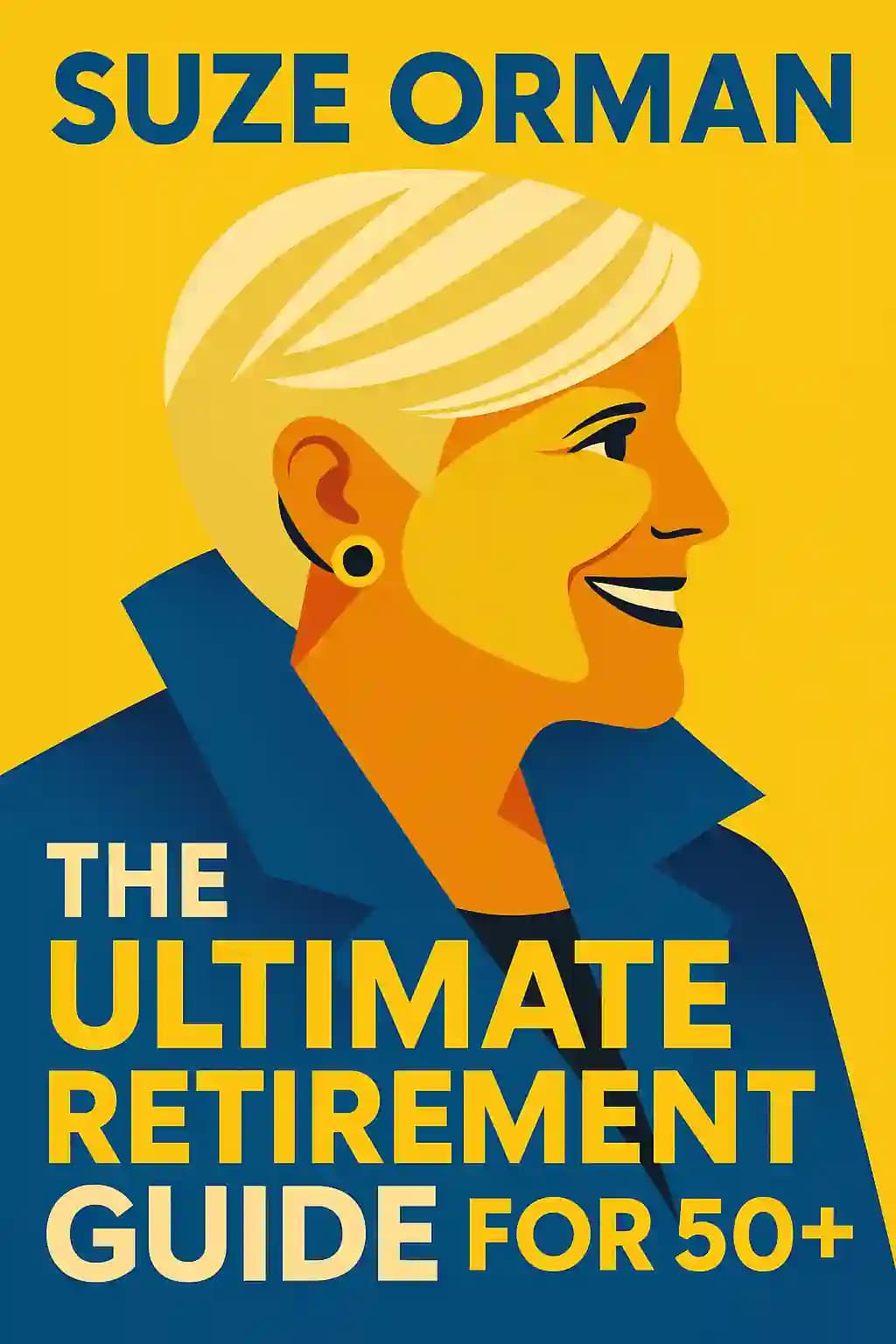
Imagine standing at the edge of retirement, a horizon that once seemed distant but now looms large before you. Suze Orman's "The Ultimate Retirement Guide for 50+" arrives like a trusted friend who's already navigated these waters. This isn't just another financial planning book-it's consistently ranked among the top retirement guides on Amazon, with over 500,000 copies sold since its 2020 release. Oprah Winfrey herself called it "the only retirement guide you'll ever need," and countless readers credit it with transforming their retirement outlook from anxiety to confidence. What makes this guide so powerful is Orman's ability to blend technical expertise with emotional intelligence, addressing not just your portfolio but your deepest fears about the future.
Capítulo 2
Your Warrior Spirit: The Most Valuable Retirement Asset
Retirement planning has transformed dramatically over the past four decades. Gone are the days of 15% Treasury bonds, 18% money market accounts, and guaranteed company pensions with health benefits. Today's retirees face complex challenges: self-funded 401(k)s instead of pensions, difficult withdrawal decisions, minimal interest rates, market volatility, and uncertainty about Social Security.
Yet amid these challenges, Orman emphasizes that your most valuable retirement asset isn't your money or home equity-it's your attitude and energy. She encourages readers to embrace a warrior spirit, looking in the mirror and affirming: "I am a warrior, and I will not turn my back on the battlefield." This mindset becomes the foundation for tackling whatever financial challenges lie ahead.
The ultimate retirement isn't defined by wealth but by freedom from financial stress. Whether you're still working or already retired, Orman provides a framework for organizing your retirement puzzle into a cohesive plan. From establishing healthy financial boundaries with family to making strategic housing decisions, from maximizing your working years to creating reliable income streams-each piece contributes to a secure and fulfilling retirement.
No one cares about your money more than you do, and you possess the inner strength to navigate this journey. By letting go of fear, shame, and anger about past financial decisions and focusing instead on what you can control right now, you can create the future you deserve.
Capítulo 3
Family Ties: Balancing Love and Financial Security
The path to retirement security often begins with setting appropriate financial boundaries, especially with family members. Many parents continue supporting adult children well into their 50s and 60s, not realizing how these expenses undermine their own retirement security. What seems like minor support-cell phone bills, car insurance, occasional rent help-can collectively drain thousands of dollars annually from retirement savings.
Consider this: just $300 monthly, if saved instead for 10 years at a 5% return, would grow to nearly $47,000. This money could fund long-term care insurance, help pay off your mortgage before retirement, or allow you to delay Social Security until age 70 for maximum benefits.
Adult children living at home should contribute to household expenses through automated monthly transfers. This isn't just about financial help but respecting them as adults. For children living independently, avoid helping with rent if you have credit card debt or an unpaid mortgage. Never help children buy new cars or lease vehicles-the average new car payment exceeds $500 monthly for nearly 70 months, which is financially unsustainable for young adults who should be prioritizing independence and their own retirement contributions.
When it comes to grandchildren, prioritize your own financial security before offering help. Remember: "There are loans for college, but no loans for retirement." For gift-giving, consider shared experiences rather than material items, as studies show experiences deliver more lasting happiness.
Caring for elderly parents presents another financial challenge. Before becoming a full-time caregiver, carefully weigh the financial implications beyond lost salary-health insurance premiums, reduced retirement savings, lost employer matches, and lower future Social Security benefits. If you do become a caregiver, you should be compensated through a formal Personal Care Agreement drafted by an elder law attorney, specifying payment terms and ensuring regular breaks.
True generosity must benefit both the giver and receiver. Financial assistance that compromises your retirement goals isn't truly generous, as it may eventually force you to depend on your children. Your family would likely prefer you secure your own future rather than risk becoming financially dependent on them later.
Capítulo 4
Making the Most of Your Working Years
If you're still working, you have a significant advantage in improving your retirement outlook because you still have income to direct toward various financial goals. The key is prioritizing debt elimination before retirement, particularly your mortgage. Having monthly debt payments puts tremendous pressure on retirement finances, reducing the amount available for your needs and wants.
Living below your means but within your needs isn't punishment-it's the path to financial freedom. This isn't about deprivation but about distinguishing between wants and needs, like buying a less expensive car that meets your needs rather than spending more on what you want. Even wealthy people find pleasure in practical money-saving measures like eliminating landlines, keeping cars for 10 years, bundling insurance, and using cash-back credit cards.
For those with high schoolers at home but behind on retirement savings, prioritize your retirement over paying for their college. While your kids might not appreciate this at 18, they'll be grateful years later when they don't need to support you in retirement. Work with your children to focus on affordable colleges where federal student loans can cover any shortfall.
Car expenses can derail retirement savings. Commit to purchasing used vehicles with loan terms no longer than 36 months, and drive them for at least 10 years. Once the loan is paid off, redirect those payments to retirement savings. Leasing should be avoided as it traps you in perpetual car payments.
Housing costs consume a significant portion of monthly cash flow. While emotionally difficult, downsizing can transform your retirement outlook by reducing monthly housing costs and freeing up equity for savings. Making such a move sooner rather than later is both emotionally and physically less stressful than waiting until your 70s.
While still working, maximize retirement account contributions and consider tax diversification. Most people have done the bulk of their retirement investing in pretax traditional accounts, where every dollar withdrawn is taxed as ordinary income. Rather than assuming tax rates will be lower in retirement, Orman recommends adding tax-free retirement accounts: Roth 401(k), Roth IRA, and Health Savings Accounts (HSAs).
Planning to work until 70, perhaps in a less demanding role, gives retirement funds more time to grow, provides income while delaying Social Security, and reduces the years your savings must support you. At 55, start planning your 60s career strategy-whether maintaining your current position or transitioning to consulting, part-time work, or turning a hobby into income.
Finally, consider long-term care insurance in your 50s. Medicare only covers the first 20 days in a skilled nursing facility fully, with limited coverage thereafter. A 55-year-old couple might pay about $5,000 annually for LTC insurance, potentially $150,000-$200,000 over 30 years, but could recoup this in just a few years of care.
Capítulo 5
Where to Live: The Housing Decision That Shapes Retirement
Aging in place sounds appealing-staying in the home you love with all its memories and comfort. But this chapter challenges you to carefully evaluate whether staying put truly makes financial, physical, and emotional sense for your retirement years.
If you plan to stay in your current home, Orman insists you must pay off your mortgage before retirement-ideally by age 65. Unfortunately, about one-third of homeowners between 65-74 still carry mortgage debt, creating significant financial strain. Having a mortgage payment on top of property taxes, insurance, and maintenance costs consumes too much of your retirement income.
Even with a paid-off mortgage, carefully evaluate whether staying in your current home makes financial sense long-term. Consider ongoing property taxes and insurance costs, which will rise with inflation. Remember your home is aging too-anticipate major maintenance expenses like roof and HVAC replacement if you plan to stay 20+ years. Also factor in services you may need to hire as you age-snow removal, gardening, housekeeping, and general upkeep.
Orman recommends that all essential living costs-housing, groceries, utilities-should come from guaranteed income sources like Social Security, pension payouts, or retirement income annuities. This ensures stability regardless of market fluctuations.
Think carefully about how your current home will serve you at 80 or 85. If driving becomes difficult, is public transportation available? How far are you from friends, shopping, and activities? Social isolation can devastate your retirement quality of life. Evaluate your home through the lens of your future self-steps, narrow hallways, and bathtubs can become significant barriers with age.
For those considering moving, downsizing your home creates a double payoff: improving immediate cash flow and reducing retirement housing costs. A 25% reduction in housing expenses could eliminate debt, build emergency savings, pay for long-term care insurance, allow you to delay Social Security until 70, increase travel funds, or build tax-free retirement savings.
Though emotional ties to your current home may seem overwhelming, memories and traditions travel with you-it's the people, not the place, that matter. Moving to a right-sized home without a mortgage can be a gift to your children, who worry about your future security.
Continuing Care Retirement Communities (CCRCs) offer evolving housing options to address changing needs as you age. You begin as an independent resident in a condo-like apartment with amenities like dining rooms, gyms, and pools. The key advantage is that the same campus includes assisted living facilities, memory care, and nursing home options if your needs change.
Don't dismiss the idea of living with adult children, siblings, or friends. Beyond sharing costs, this arrangement combats the social isolation and depression that often accompany aging. New home designs increasingly accommodate multi-generational living with private spaces for all adults. For those without children, consider roommates-especially relevant for women, over half of whom between 65-84 are unmarried, divorced, or widowed.
Capítulo 6
Power Moves for Your 60s
Your 60s bring a sense of disbelief about the passage of time-suddenly approaching 70 when it feels like you just celebrated 50. This decade is full of transitions: Medicare at 65, potential job changes, and possibly relocating. Working into your 70s offers significant advantages: it allows your retirement savings to grow untouched, enables smaller withdrawals if needed, and makes it possible to delay Social Security until 70-potentially your smartest retirement decision.
The most crucial factor in retirement planning is your life expectancy. If you're in good health, plan for living to at least 95 or even 100. The statistics are compelling: a 65-year-old woman in average health has a 44% chance of reaching 90, while a 65-year-old man has a 33% chance. For married couples both aged 65, there's a 62% probability one spouse will reach 90.
When considering whether to consolidate multiple 401(k)s through rollovers, weigh the advantages against potential drawbacks. Consolidation offers a clearer view of your investments, potentially lower costs through access to low-fee index funds, and simplified withdrawal management. However, keeping money in your existing 401(k) might make sense if it already offers great low-cost investment options or provides a sense of security with familiar investments.
While retirement demands more conservative investing than your younger years, keeping some money in the stock market remains essential. Remember that while you're retiring, your portfolio isn't-it still needs to work for you for potentially 25+ more years.
Waiting until 70 to claim Social Security is one of the smartest financial moves you can make. The payoff is substantial-claiming at 70 versus 62 results in a benefit that's 76% higher, equivalent to a guaranteed 7% annual return that no investment can match. For married couples, it's particularly important for the higher earner to delay, ensuring the surviving spouse receives the maximum possible benefit. While some worry about "losing out" by dying before collecting, the focus should be on maximizing income for a potentially long life-by age 82, lifetime benefits from delaying equal those from claiming early.
A monthly pension payout offers guaranteed income, while a lump sum carries investment risks. Taking a lump sum might make sense only if you're building a legacy and don't need the money for living expenses. Consider cognitive decline risks too-monthly pension payments require no management and protect against elder financial abuse.
Medicare is vital for retirement healthcare but isn't free-you'll pay about 30% of your retirement healthcare costs through premiums, deductibles, and co-pays. Enrollment timing is crucial-sign up at 65 if you're not working or you'll face permanent 10% penalties for each 12-month delay. Review your Medicare plans annually during Open Enrollment, particularly focusing on prescription drug tiers, as plans can change their "formularies" yearly.
Bear markets in early retirement pose a unique risk as withdrawals from a declining portfolio can deplete funds needed for decades. If a bear market hits before retirement, consider delaying retirement or working part-time to avoid withdrawals while stocks are down. Never sell stocks during market downturns-this requires timing the market twice. Instead, develop a bear-market income strategy: either cover essential expenses with guaranteed income or take withdrawals only from the bond portion of your portfolio.
Capítulo 7
How to Pay Yourself in Retirement Without Running Out of Money
After decades of saving, you must now convert your savings into reliable income that will last through your 90s. The goal is creating steady income that covers expenses monthly, even during market downturns, while ensuring your money lasts potentially to age 100. There's no one-size-fits-all approach-your comfort level with different strategies matters most, as anxiety defeats the purpose of retirement planning.
Most people underestimate their monthly spending by $500 or more by forgetting less frequent expenses like insurance premiums, vacations, and gifts. While some costs disappear in retirement (retirement savings, FICA taxes, commuting), new expenses often emerge, especially for travel in early retirement.
A smart retirement strategy balances the need for guaranteed income with inflation protection. The ideal approach is covering all essential living expenses through guaranteed income sources that aren't affected by market fluctuations: Social Security, pensions, and income annuities. This stability provides peace of mind during market downturns while allowing you to confidently invest remaining funds in stocks for inflation protection.
Income annuities-not variable or fixed indexed annuities-function as personal pensions you create for yourself. While many retirees resist annuities due to perceived loss of control, Orman encourages viewing them as insurance against longevity risk rather than merely investments. For those concerned about outliving their money, longevity annuities offer a solution. These specialized deferred income annuities begin payments much later in life-typically at age 80 or 85.
Beyond your standard eight-month emergency fund, maintain a separate bear-market emergency fund with two to three years of living expenses. This cash reserve gives you confidence to weather market downturns without selling investments at a loss. While keeping your checking account at a local bank for convenience, move your savings to online banks or credit unions that typically offer significantly higher interest rates.
Required Minimum Distributions (RMDs) from traditional retirement accounts must begin by April 1 following the year you turn 72 (for those born after June 30, 1949). The annual withdrawal percentage increases with age-starting around 3.65% at age 70 and rising to 6.76% by age 85. Just because you must withdraw money doesn't mean you should spend it all. After paying taxes, you can reinvest portions of your RMD in taxable accounts.
While the traditional 4% withdrawal rule has been popular, Orman recommends starting with just 3% in today's environment. This conservative approach addresses the likelihood of lower stock and bond returns in the coming decade. Flexibility is essential-during market downturns, consider suspending inflation adjustments or reducing withdrawals by 10%. Conversely, if you're fortunate enough to retire during a bull market that keeps your portfolio growing despite withdrawals, allow yourself to increase spending later on things that truly matter to you.
Capítulo 8
How and Where to Invest for Retirement Security
Creating a retirement strategy that covers your monthly living costs from guaranteed income sources is the surest way to reduce financial stress. But many retirees also have investment accounts they'll tap in retirement-money that isn't guaranteed and will fluctuate with market conditions.
Investing in retirement isn't fundamentally different from what you've been doing for decades. You'll continue using the same approach as with your workplace retirement plans and IRAs-maintaining a diversified portfolio with a mix of stock and bond funds, keeping costs low. The key is striking the right balance between long-term growth to combat inflation and safety as you age.
Though it may be difficult to envision yourself at an advanced age, planning for longevity is crucial. Even at a modest 2% annual inflation rate, you'll need nearly $1,650 to cover what $1,000 buys today after 20 years. At 3% inflation, that same $1,000 of expenses will cost $2,430 in 30 years. The most effective hedge against inflation? Stocks. While they experience volatility, stocks historically deliver returns that outpace inflation, unlike cash or even bonds.
Your stock-bond allocation is a personal decision that should bring confidence and peace of mind. A useful starting point: subtract your age from 110 to determine your stock percentage (e.g., at 65, keep about 45% in stocks). This provides stability through bonds while maintaining inflation-beating potential through stocks.
For stock investments, Orman recommends a straightforward approach: allocate 85% to a broad "total market" U.S. index fund or ETF and 15% to an international index fund or ETF. Total market funds provide exposure to thousands of companies across all sizes-large caps like Microsoft and Amazon, plus mid-cap and small-cap companies. Dividend stocks can be valuable in retirement portfolios, but only as a complement to broader market funds, not as your entire strategy.
The bond portion of your retirement portfolio serves as a safety net, particularly crucial when making withdrawals. U.S. Treasury bonds represent the safest option, considered the global "flight to safety" asset during market turmoil. While Treasury yields may seem frustratingly low, resist chasing higher yields through riskier bonds like high-yield (junk) bond funds, which behave more like stocks during economic downturns.
For retirement portfolios, intermediate-term bonds (with durations around five years) offer the best balance between yield and price stability. Beyond standard Treasury bonds, consider Treasury Inflation-Protected Securities (TIPS) to safeguard against rising prices. TIPS automatically adjust their value higher when inflation increases, helping ensure your portfolio keeps pace with living costs over time.
Capítulo 9
Finding the Right Financial Advisor for Your Retirement Journey
The best financial advisor is ultimately yourself-the person in the mirror who knows your needs and concerns best. However, professional guidance can provide confidence and reduce financial stress during retirement. Managing money shouldn't be the centerpiece of retirement, and seeking help is appropriate when the complexity of retirement planning feels overwhelming.
Anyone can call themselves a financial advisor, but many are merely salespeople focused on selling products that earn them commissions. You need a qualified professional with extensive financial education who acts in your best interest. The gold standard is an advisor who puts your goals first, not someone with inherent conflicts of interest.
Financial advisors are paid either through set fees (hourly, project-based, or percentage of assets) or commissions (earned when you buy or sell investments they recommend). Always choose fee-only advisors, not fee-based. Fee-based advisors sometimes charge set fees but also earn commissions, creating potential conflicts of interest. Fee-only advisors provide the most unbiased, unconflicted advice truly in your best interest.
The fiduciary standard requires advisors to put your interests above their own-always choosing what's best for you, not what makes them more money. Ask two non-negotiable questions: "Will you always act as a fiduciary?" and "Will our client agreement include a written statement signed by you that you will always act as a fiduciary?" Accept nothing less than an immediate, unqualified "yes" to both questions.
A quality advisor will ask about your personal situation: whether you have a spouse/partner (who should attend meetings), outstanding debts, health status, financial dependents, long-term care insurance, expected work timeline, estate planning documents, and beneficiary designations. These questions demonstrate the advisor is focused on your complete financial picture, not just investable assets.
Capítulo 10
Protecting Yourself and Those You Love
The most important pre-retirement task is protecting yourself and your family through proper estate planning. Many people avoid this topic because it means confronting mortality and aging, but failing to prepare creates unnecessary hardship for loved ones. Taking these steps now provides immediate peace of mind and ensures your legacy includes thoughtful planning.
Create four essential documents: a living revocable trust, a will, an advance directive with durable power of attorney for health care, and a financial power of attorney.
A living revocable trust isn't just for the wealthy-it's for everyone. Unlike a will that only takes effect after death, a trust allows someone you appoint to manage your assets if you become unable to do so. Additionally, assets in a trust avoid probate court, saving your heirs time, money, and privacy concerns that come with the public probate process.
With a living revocable trust, you remain completely in control. You can spend money from the trust, control all assets within it, and change any details whenever you want-that's what "revocable" means. As the trustee (or co-trustee with your spouse), you maintain signing authority while appointing a successor trustee who can step in if you become incapacitated or when you die.
Even with a trust, you need a will to specify who receives personal treasures like jewelry, art, and collectibles. Have conversations with your children about what items they hope to inherit-often sentimental value outweighs monetary worth. Your will also functions as a "pour-over will" for assets not in your trust, though these must go through probate. Most importantly, if you have minor children, a will designates their guardianship.
An advance directive (living will) lets you maintain control over end-of-life decisions even when you can't communicate. It specifies your wishes about life support, resuscitation efforts, and feeding tubes. A durable power of attorney for health care appoints someone as your "health care proxy" to speak for you. These documents are acts of love that spare your family from guessing your wishes or arguing about your care.
Planning for your capabilities at 80 or 90 requires bringing someone into your financial life sooner rather than later. The person designated as your power of attorney for finances should understand your accounts and serve as an extra pair of eyes on statements. Setting up online accounts and automated bill payments provides protection as you age.
Write down your preferences for burial or cremation and be specific about funeral arrangements. Taking care of these matters is an expression of love that will survive you, making things easier for your family when the time comes.