Capítulo 1
When Walls Have Eyes: A House of Secrets and Shadows
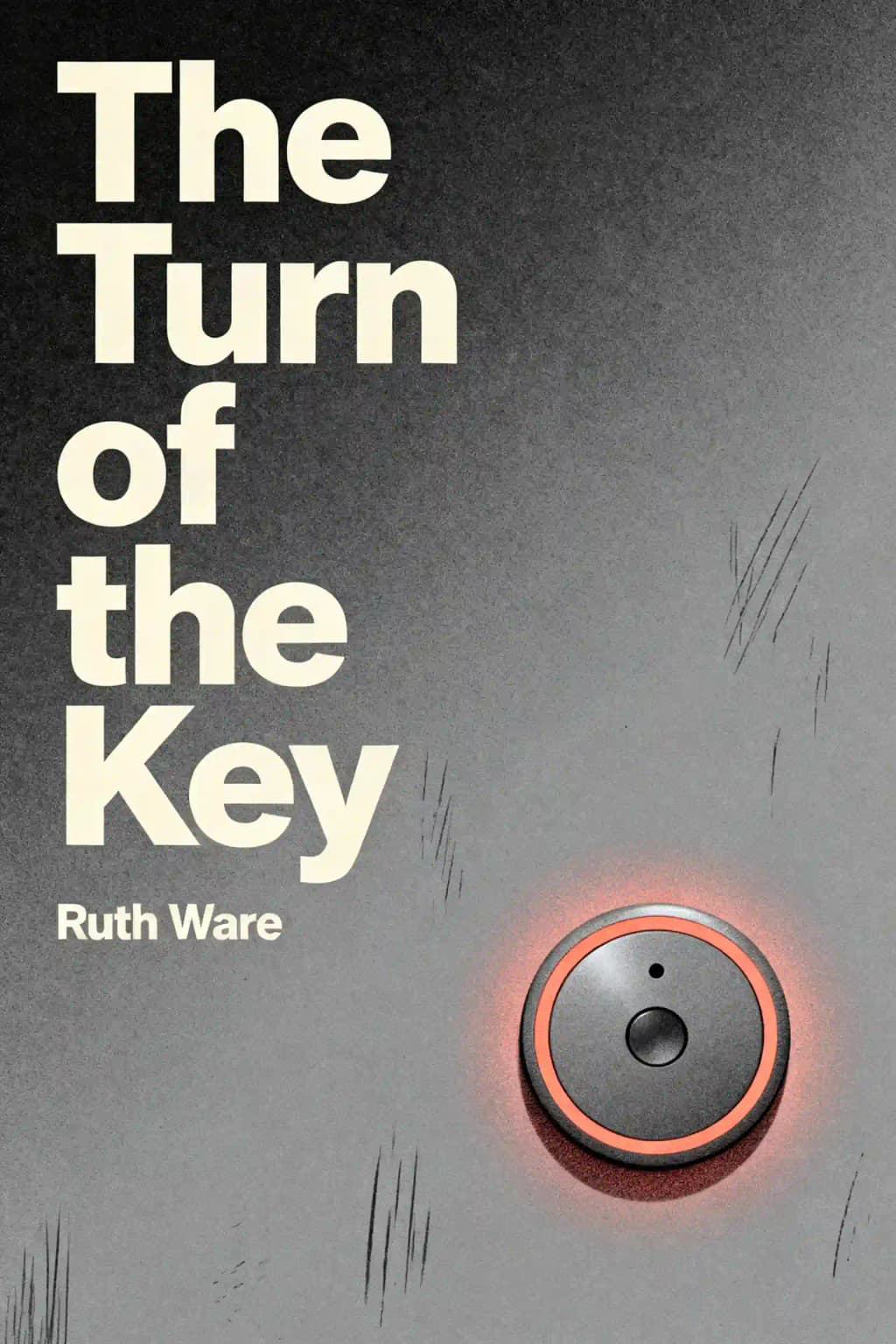
The Turn of the Key by Ruth Ware is a modern gothic thriller that has captivated millions with its clever reimagining of Henry James' classic ghost story. Since its 2019 release, this psychological suspense novel has become a fixture on bestseller lists worldwide, with over two million copies sold and translations in more than 40 languages. Celebrities like Reese Witherspoon and Stephen King have praised its nail-biting tension, with King calling it "one of the year's most chilling thrillers." The novel brilliantly taps into contemporary anxieties about technology and surveillance, asking whether the real danger comes from ghosts or the very real people watching our every move. As smart homes become increasingly common, Ware's exploration of how technology can be weaponized against us feels particularly relevant. What begins as a simple nanny-takes-job-at-remote-mansion story transforms into something far more sinister, leaving readers questioning who to trust until the final shocking revelation.
Capítulo 2
A Desperate Plea from Behind Bars
The story opens with a series of increasingly frantic letters from HMP Charnworth, a stark women's prison facility nestled in the Scottish highlands. The writer, who introduces herself as Rowan Caine, pens multiple attempts to reach Mr. Wrexham, a London-based barrister known for handling complex criminal cases. Her desperate plea echoes through each correspondence: "Please help me. I didn't kill anyone." Through these fragmentary communications, we learn she stands accused of murdering a child while employed as a nanny at Heatherbrae House - an isolated Victorian mansion on a remote Highland estate that holds its own dark secrets.
Rowan's letters grow progressively more urgent and revealing. She expresses mounting frustration with her court-appointed solicitor, describing how he cuts her off during meetings, seems disinterested in crucial details, and appears to have already decided her guilt. During their brief consultations, she feels rushed and misunderstood, prevented from explaining the nuanced circumstances that led to her arrest. She's particularly distressed about her police interview statements, where panic and confusion led her to phrase things in ways that now seem devastatingly incriminating.
Life in HMP Charnworth proves especially challenging for Rowan. As an educated, middle-class Englishwoman, she stands out sharply among the predominantly working-class Scottish inmates. Her accent marks her as different, her mannerisms draw unwanted attention, and her background makes her a target for both inmates and guards who view her with suspicion and contempt. She describes sleepless nights in her cell, the constant background noise of prison life, and the crushing weight of isolation as she awaits trial.
The raw authenticity of these opening letters creates an immediate emotional hook. Rowan acknowledges the skepticism her claims might invite - she's keenly aware that proclamations of innocence are standard fare in prison. Yet there's something compelling about her willingness to admit to her mistakes and flaws, her offer to reveal uncomfortable truths about herself if someone would just listen to her complete story. She hints at darker elements lurking beneath the surface of her case - strange occurrences at Heatherbrae House, unexplained events, and circumstances that don't align with the prosecution's narrative.
These letters serve as both a framing device and a psychological puzzle. They establish the high stakes of the narrative while raising provocative questions about truth, perception, and reliability. Is Rowan Caine truly an innocent woman caught in a tragic misunderstanding, or is she methodically constructing an elaborate defense? As the story unfolds, readers will discover that the truth encompasses something far more complex and unsettling than either possibility suggests.
Capítulo 3
Too Good to Be True: The Perfect Job Opportunity
When Rowan stumbles upon an advertisement for a live-in nanny position with the Elincourt family-four children, a remote Highland house, and an astounding 55,000 salary-it seems too perfect to be true. And indeed, it is. The timing couldn't be better: she's just been passed over for promotion at Little Nippers nursery, her flatmate is away traveling, and she's feeling lonely and vulnerable. Though the salary is suspiciously generous, Rowan insists money wasn't her true motivation.
After carefully preparing her application (and asking them not to contact her current employer), Rowan receives an invitation to interview. Sandra Elincourt's email comes with an unusual warning: the house has a reputation for being haunted, causing four nannies to resign in fourteen months. The high salary is meant to attract someone who will commit long-term despite these rumors.
The interview process reveals the first glimpses of the Elincourts' wealth. Jack Grant, their handsome odd-job man, picks Rowan up from the station in a Tesla. As they drive through extensive grounds, crossing a bridge and passing through pine trees, Rowan begins to grasp just how wealthy her potential employers must be. When Heatherbrae House finally appears, it isn't the ostentatious mansion she expected but a modest Victorian lodge that looks impossibly perfect-like a nostalgic illustration.
Inside, the house exudes understated luxury-Persian rugs, a grandfather clock, everything conveying wealth without ostentation. Sandra explains that her husband Bill is away working, and they desperately need a nanny who can start immediately. The contrast between this life and Rowan's cheerless suburban upbringing creates a deep longing. Looking at herself in the mirror later, she recognizes "a hungry desperation" in her eyes-she wants this job, this house, this life.
This section brilliantly establishes the novel's central tension: when something seems too good to be true, it usually is. Yet our desire for beauty, wealth, and belonging can override our better judgment. Rowan sees the warning signs but chooses to ignore them, setting the stage for the nightmare to come.
Capítulo 4
The Smart House with a Dark History
Heatherbrae House is a study in contrasts-a Victorian exterior with an ultra-modern interior. The back of the house has been transformed into a startlingly modern space with soaring metal beams, glass roof, and polished concrete floors. But what truly distinguishes it is the sophisticated smart technology system controlling everything from lights to music to security.
Sandra proudly demonstrates how she can dim lights, play music, and even use voice commands through her phone, though she admits finding the latter "a bit creepy." The entire house is wired with cameras that allow the parents to monitor the children remotely-a surveillance system that immediately unsettles Rowan, though she tries not to show it.
This technological marvel has a dark history. Originally called Struan House, it contained one of the UK's few "poison gardens," created by analytical chemist Dr. Kenwick Grant in the 1950s. His daughter Elspeth died in 1973 at age eleven, supposedly from accidentally ingesting a plant from the garden. After her death, Dr. Grant closed the garden to the public, and after his death in 2009, the house was sold and renamed.
The locals share even darker rumors. Mrs. Andrews, a tea shop proprietor, mentions the house's history of tragedy-one owner drowned his wife and child in the bath, another shot himself. She claims Dr. Grant poisoned his daughter, though the official story was an accidental poisoning. Few locals would have lived in "Struan" regardless of money because of its history.
This juxtaposition of cutting-edge technology and gothic history creates a uniquely modern haunted house. The smart home features that should provide convenience and security instead become tools for manipulation and surveillance. The poison garden-beautiful but deadly-serves as a perfect metaphor for Heatherbrae itself: an attractive facade concealing lethal danger. The house embodies the novel's central question: is the real threat supernatural or human? Are we more at risk from ancient ghosts or modern technology that allows others to watch our every move?
Capítulo 5
Children of Shadows and Secrets
The Elincourt children form a complex, often disturbing portrait of a family in dysfunction. There's Maddie (8), a manipulative child with a talent for psychological warfare; Ellie (5), caught between loyalty to her sister and her own gentler nature; baby Petra (18 months), who throws porridge with impressive accuracy; and Rhiannon (14), a rebellious teenager whose bedroom door is marked "FUCK OFF, KEEP OUT OR YOU DIE" in lipstick.
From the beginning, Maddie establishes herself as Rowan's primary antagonist. During their first morning together, she refuses to get dressed, lies face-down on her bed, and when Rowan finally manages to dress her "like a rag doll," Maddie asks her to brush her teeth only to twist away and spit toothpaste directly in Rowan's face. In a moment of white-hot rage, Rowan's hand shoots out to slap her but stops inches from the child's face. Maddie laughs joylessly, knowing how close she's come to provoking violence.
Their relationship quickly becomes dysfunctional-"not about caregiving but about winning, dominance and war." Maddie arranges alphabet spaghetti letters on her plate to spell "WE HATE YOU" and lures Rowan into the poison garden, then tells her mother about it in an attempt to get her fired. Yet Rowan sees something of herself in Maddie-"a prickly child with emotions too big to contain." They share physical similarities too-both dark-haired among blondes, both determined women with plans.
Ellie, meanwhile, makes cryptic comments that hint at darker forces at work. "He's gone, hasn't he?" she says mysteriously one morning. "I like it better when he's gone. He makes them do things they don't want to do." When pressed, she retreats into denials: "Nothing. I don't remember. I made it up. Maddie told me to say it."
The children's behavior grows increasingly disturbing. Rowan discovers a drawing Maddie has made-a little girl trapped behind the poison garden gate, clutching berries, with blood on her face and dress, encircled by spiraling black lines. Later, she finds a child's drawing showing a house with blackened windows and one pale face peeping out. On the back is an unfinished note: "To the new nanny, My name is Katya. I am writing you this note because I wanted to tell you to please be"-then nothing.
These children, particularly Maddie, embody the novel's exploration of innocence and malevolence. Are children naturally innocent, or can they harbor genuine evil? The novel refuses easy answers, showing instead how children can be both victims and perpetrators, shaped by the dysfunctional adult world around them yet capable of their own calculated cruelty.
Capítulo 6
Ghostly Footsteps and Modern Hauntings
Strange occurrences begin almost immediately after Rowan's arrival. On her first night, she hears slow, deliberate footsteps on the wooden floor above-though there shouldn't be any room there. She discovers a locked door in her bedroom but can't find a key that fits. When she peers through the keyhole, she sees only darkness but feels a cool breeze-confirming there's a space beyond.
These disturbances escalate night after night. Rowan wakes to find her window mysteriously open though she didn't leave it that way. The doorbell rings in the middle of the night, but no one is there when she checks. Most terrifying is when she's jolted awake by deafening music blasting through the house's speaker system, all lights blazing at maximum brightness.
Personal items begin to disappear-her silver "R" necklace vanishes from her bedside table. Later, she finds a creepy doll's head from the attic has somehow appeared with her on the couch while she slept. When she confronts Ellie about placing it there, the child denies it, claiming "another little girl" had done it.
The attic itself becomes the focus of Rowan's terror. When Jack finally helps her access it, they discover a nightmarish scene-broken furniture, smashed dolls, and black feathers everywhere. Most disturbing are the walls covered in childish writing: "WE HATE YOU"-the same phrase Maddie had spelled with her Alphabetti Spaghetti.
What makes these hauntings particularly effective is their ambiguity. Are they supernatural manifestations or elaborate psychological warfare? The novel brilliantly blends traditional ghost story elements with modern technology, creating a unique form of haunting where smart home features become weapons. The house's sophisticated system can be hacked and manipulated, turning lights, music, and even security features against the protagonist.
This technological haunting speaks to contemporary anxieties about our increasingly connected homes. When we surrender control to smart systems, who else might gain access? The footsteps in the attic may be ghostly, but the cameras watching Rowan's every move are very real-and potentially more dangerous. The true horror isn't what might be hiding in the darkness but who might be watching from the other side of the screen.
Capítulo 7
Secrets Within Secrets: Identity and Deception
As the novel progresses, we discover that almost everyone at Heatherbrae House is hiding something. The first major revelation comes when Rhiannon confronts "Rowan" with two words that stop her cold: "Rachel. Gerhardt." The protagonist isn't Rowan Caine at all-she's Rachel Gerhardt, who borrowed her flatmate's credentials to secure the position.
Rachel's deception wasn't as elaborate as it might seem. She simply used Rowan's credentials, which had no photos attached. She had similar qualifications and experience, just not quite as impressive. She was lucky that Sandra hadn't contacted Little Nippers directly or required her to present ID in person.
But Rachel's true secret goes much deeper. Bill Elincourt is her father-a father who abandoned her pregnant mother years ago. Rachel had been searching for him for years, tracking him to Crouch End before discovering he'd moved to Scotland with his wife Sandra. When she saw their nanny advertisement online, she couldn't resist the opportunity to finally meet the family he'd chosen over her.
The only thing she had from him was a necklace with her initial 'R' that he'd sent for her first birthday-his last contact with her. Despite her mother calling it "cheap, nasty rubbish," she wore it constantly as her sole connection to her absent father.
Other characters harbor their own secrets. Jack Grant, the handsome groundskeeper who becomes Rachel's confidant and lover, turns out to be married with a two-year-old son in Edinburgh. Rhiannon reveals that Holly, the previous nanny, had been having an affair with Bill for two years. Rhiannon had discovered this by planting a baby monitor in his study, hearing their intimate conversations and plans to leave Sandra. She'd framed Holly by provoking her on camera until Holly hit her, then threatened to post the footage unless Holly left.
Even the house itself keeps secrets-the locked attic door, the poison garden, the hidden history of death and madness. This layering of deceptions creates a narrative where nothing and no one can be trusted. Each revelation forces us to reevaluate everything we thought we knew, creating a dizzying sense of instability that mirrors Rachel's increasingly precarious position.
The theme of identity-who we really are versus who we pretend to be-runs throughout the novel. Rachel's impersonation of Rowan reflects her deeper desire to reinvent herself, to escape her painful past and become someone new. Yet her deception ultimately traps her, becoming evidence against her when tragedy strikes.
Capítulo 8
The Final Night: Death and Accusation
The novel builds to a devastating climax. After Rhiannon discovers Rachel's true identity, Rachel plans to call Sandra the next morning and explain everything, knowing she'll likely be sacked but doubting Bill would sue his estranged daughter.
When Rachel opens her bedroom door that night, she finds the window mysteriously open, letting in cold air. Alarmed, she checks on the children. Petra is asleep, but when she checks Ellie and Maddie's room, she discovers Maddie's bed contains only a pillow arranged to look like a sleeping child.
Panic-stricken, Rachel searches the house calling for her, waking both Rhiannon and Petra. Fearing Maddie might have followed her outside or wandered into the poison garden, she runs out into the night. Rounding the corner of the house, she finds Maddie lying crumpled beneath her bedroom window, her nightdress soaked with blood. She is dead.
The police arrive, and Rachel is questioned repeatedly. They believe Maddie came to her room, discovered something incriminating, and that Rachel threw her from the window. The lack of security footage-because Rachel had covered her bedroom camera-becomes evidence against her. Despite her protestations of innocence, she can't explain what happened.
Rachel's case looks increasingly hopeless. Her fake identity, her connection to Bill as his estranged daughter, her sexual relationship with the married Jack Grant-all become evidence of her deceptive character. Even telling the truth about the strange occurrences in the house-the footsteps, the cold room, the doll's head-only makes her sound unstable or like she's fabricating a supernatural defense.
This section powerfully demonstrates how circumstances can conspire to make an innocent person appear guilty. Rachel's many deceptions, though not malicious, create a pattern that makes her final protestations of innocence seem hollow. The smart home that was meant to provide security instead becomes her prison, with its cameras and sensors creating a digital record that seems to confirm her guilt while missing the crucial moment that would exonerate her.
Capítulo 9
The Truth Revealed: Innocence and Guilt
The novel's final twist comes not through Rachel's letters but through correspondence found hidden in a prison wall years later. Jean McKenzie writes to Rachel expressing sorrow over what happened, saying she now believes Rachel wouldn't have hurt Maddie and told the police so. She forwards a sealed letter from Ellie, which contains a shocking confession: Ellie pushed Maddie to her death.
Ellie explains that Maddie had been sabotaging previous nannies using their mother's old phone to play YouTube videos through the Happy system, making it sound like footsteps in the attic. Maddie placed the doll's head on Rachel's lap and had been planning to poison her with berries.
The night Rachel was out, Maddie intended to climb into the attic window to set off alarms and get Rachel in trouble. When Ellie tried to stop her, arguing that Rachel was nice, Maddie insisted she would make Rachel leave like the others. As Maddie climbed up, Ellie pushed her, not meaning for her to fall.
This revelation forces us to reevaluate everything we thought we knew. The ghostly footsteps, the mysterious appearances and disappearances, the threatening messages-all were Maddie's elaborate campaign to terrorize Rachel into leaving, just as she had done with previous nannies. The "haunting" was entirely human, a child's cruel psychological warfare against the adults who threatened her sense of security.
Yet the novel resists simple moral judgments. Maddie's behavior was monstrous, but she was also a child acting out of fear and insecurity. Ellie's fatal push wasn't premeditated murder but a moment of childish anger with tragic consequences. And Rachel, though innocent of murder, had committed her own deceptions that made her vulnerable to accusation.
The final letters reveal that Mrs. Elincourt has left her husband and moved south with the children, while Mr. Elincourt faces a lawsuit involving an intern. The house will likely be sold to cover legal fees. This epilogue suggests a kind of justice-Bill's predatory behavior finally catches up with him, the toxic family is dissolved, and the truth about Maddie's death is revealed, though perhaps too late for Rachel.
The novel's conclusion is both satisfying and disturbing. The mystery is solved, but the resolution brings little comfort. A child is dead, another bears the guilt of causing that death, and an innocent woman remains imprisoned for a crime she didn't commit. The letters revealing the truth were hidden in a wall, never reaching their intended recipient. This bittersweet ending reinforces the novel's themes of miscommunication, hidden truths, and justice delayed or denied.
Capítulo 10
The Modern Gothic: Technology and Terror
Ruth Ware's The Turn of the Key masterfully reimagines the classic gothic novel for the digital age. Traditional gothic elements-the isolated house, the mysterious noises, the tragic history, the vulnerable young woman-are all present, but with modern twists that make them feel fresh and relevant.
The smart home technology transforms the traditional haunted house into something more insidious. Instead of creaking floorboards and rattling chains, we get blaring music and blazing lights controlled by unseen hands. The cameras that should provide security instead create constant surveillance, making Rachel feel watched and judged at all times. The poison garden-beautiful but deadly-serves as the perfect gothic setting for the novel's exploration of appearances versus reality.
Even the classic gothic trope of the young governess possibly imagining supernatural events gets a contemporary update. Rachel isn't suffering from sexual repression or religious mania like her Victorian counterparts; she's experiencing a sophisticated gaslighting campaign orchestrated by a child using modern technology.
The novel also explores thoroughly modern anxieties. Our increasing dependence on technology makes us vulnerable in new ways. The same systems that promise convenience and security can be weaponized against us. The boundaries between public and private blur when cameras record our most intimate moments. And our digital footprints-Rachel's Facebook connection to the real Rowan, for instance-make it increasingly difficult to escape our past or reinvent ourselves.
Through these elements, Ware creates a psychological thriller that feels both timeless and urgently contemporary. The Turn of the Key reminds us that while the trappings of horror may evolve with technology, the fundamental human fears-of being watched, of losing control, of being alone with something malevolent-remain unchanged across generations. In the end, the most frightening aspect isn't the possibility of ghosts but the very real capacity for human cruelty, deception, and manipulation-whether from adults abusing their power or children wielding unexpected weapons.