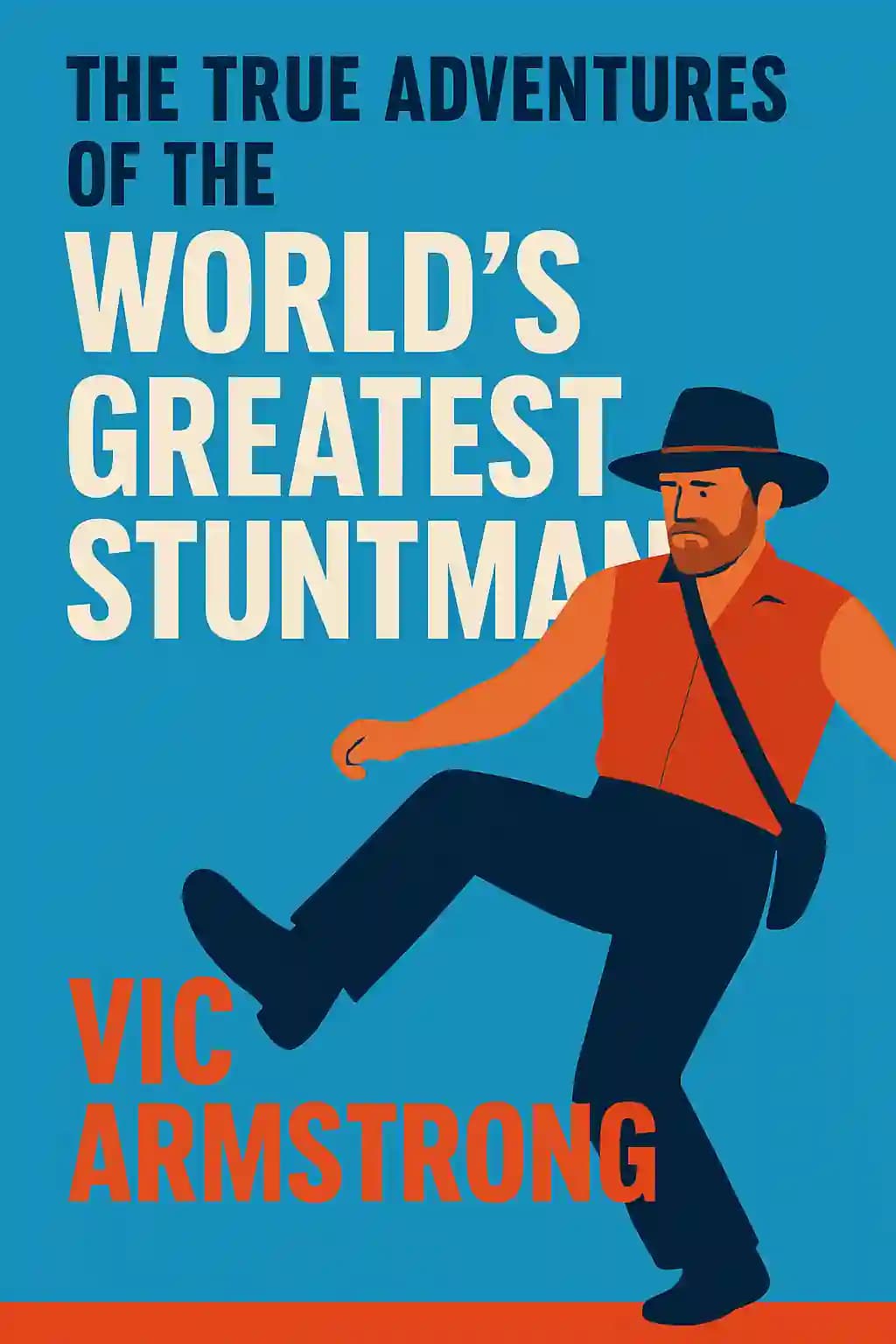
The True Adventures of the World's Greatest Stuntman
My Life as Indiana Jones, James Bond, Superman, and Other Movie Heroes
Visão geral de The True Adventures of the World's Greatest Stuntman
Before CGI ruled Hollywood, Vic Armstrong risked everything as Harrison Ford's double in Indiana Jones and Superman's stunt performer. Steven Spielberg insists "No CGI can match what Vic can accomplish" in this legendary memoir Martin Scorsese calls "the work of a true legend."

Temas principais em The True Adventures of the World's Greatest Stuntman
- practical stunt coordination
- action filmmaking history
- cinematic risk management
- stunt double techniques
- hollywood technical innovation
Citações de The True Adventures of the World's Greatest Stuntman
I can do that ten times better.
Being young was my greatest asset.
Employ the best people because you're only as good as those who work for you.
Personagens de The True Adventures of the World's Greatest Stuntman
- Vic ArmstrongThe world's most prolific stuntman and author
- Robert ArmstrongVic's father and a celebrated Olympic farrier
- Harrison FordActor for whom Armstrong famously doubled
- Richard AttenboroughDirector of the film A Bridge Too Far
- George LazenbyJames Bond actor doubled by Armstrong
Baixar resumo de The True Adventures of the World's Greatest Stuntman
Obtenha o resumo de The True Adventures of the World's Greatest Stuntman como PDF ou EPUB gratuito. Imprima ou leia offline a qualquer momento.
Perguntas Frequentes Sobre Este Livro
The True Adventures of the World's Greatest Stuntman is Vic Armstrong’s memoir chronicling his 50+ years in Hollywood as a stuntman, stunt coordinator, and director. The book details his work on iconic films like Indiana Jones, James Bond, and Superman, including daring stunts like Harrison Ford’s tank jump in Indiana Jones and the Last Crusade and Sean Connery’s horseback dive in Never Say Never Again. It blends career highlights with behind-the-scenes anecdotes and insights into stunt innovation.
Film enthusiasts, aspiring stunt performers, and fans of classic action cinema will find this book invaluable. It offers a rare glimpse into Hollywood’s stunt industry, with practical wisdom for filmmakers and adrenaline-fueled stories for casual readers. Those interested in Harrison Ford’s stunt work or James Bond filming techniques will gain unique perspectives.
Yes, for its firsthand accounts of Hollywood’s most dangerous stunts and its historical insights. Armstrong’s stories—like dislocating his ankle during a Bond stunt or improvising Superman’s flying sequences—are gripping. The book also addresses ethical advancements, such as training horses humanely instead of using cruel methods common in early cinema.
- Risk and Resilience: Armstrong’s near-fatal injuries and rapid recovery, like returning to work after breaking his ankle on Never Say Never Again.
- Innovation: Pioneering techniques for stunts, such as designing Superman’s flying rig.
- Industry Evolution: Shifts from hazardous practices (e.g., tripping horses with ropes) to trained animal stunts.
Armstrong doubled for Harrison Ford in all three original Indiana Jones movies, performing stunts like the tank roof slide in The Last Crusade. He recounts Ford’s hands-on approach, Spielberg’s trust in his expertise, and how he seamlessly filled in when Ford needed surgery during Temple of Doom.
- Ninja sliding in You Only Live Twice: Firing a machine gun while descending a rope one-handed.
- Horseback dive in Never Say Never Again: A 40-foot plunge into water, which caused a severe ankle dislocation.
- Stunt coordination for Pierce Brosnan’s Bond films: Designing high-risk sequences with modern safety protocols.
Armstrong discusses transitioning from stunts to directing action units for films like Terminator 2: Judgment Day and Mission: Impossible III. He highlights collaborations with George Lucas on Young Indiana Jones and overcoming challenges on lower-budget projects like Left Behind.
Some reviewers note the memoir prioritizes professional anecdotes over personal life details. While packed with stunt stories, it offers limited introspection into Armstrong’s relationships or struggles beyond his career.
Unlike actor-centric autobiographies, this focuses on technical filmmaking and stunt coordination. It shares similarities with No Time to Die: The Making of the Film but emphasizes physical artistry over celebrity gossip.
Armstrong underscores his Guinness World Record as the “most prolific stuntman” and his Academy Technical Achievement Award. He also details mentoring modern stunt performers and advocating for safer industry practices.
It traces his roots as a teenage jockey in England, his initial film work on Arabesque (1966), and mentorship under stuntman Jimmy Lodge. His equestrian background proved pivotal for early horse-riding stunts in Westerns and Bond films.
- On risk: “You’re so focused [during stunts] that everything becomes very slow… it burns a lot of adrenaline.”
- On adaptation: “The quicker you let go of old methods, the sooner you find new solutions”—a philosophy applied to both stunts and career shifts.