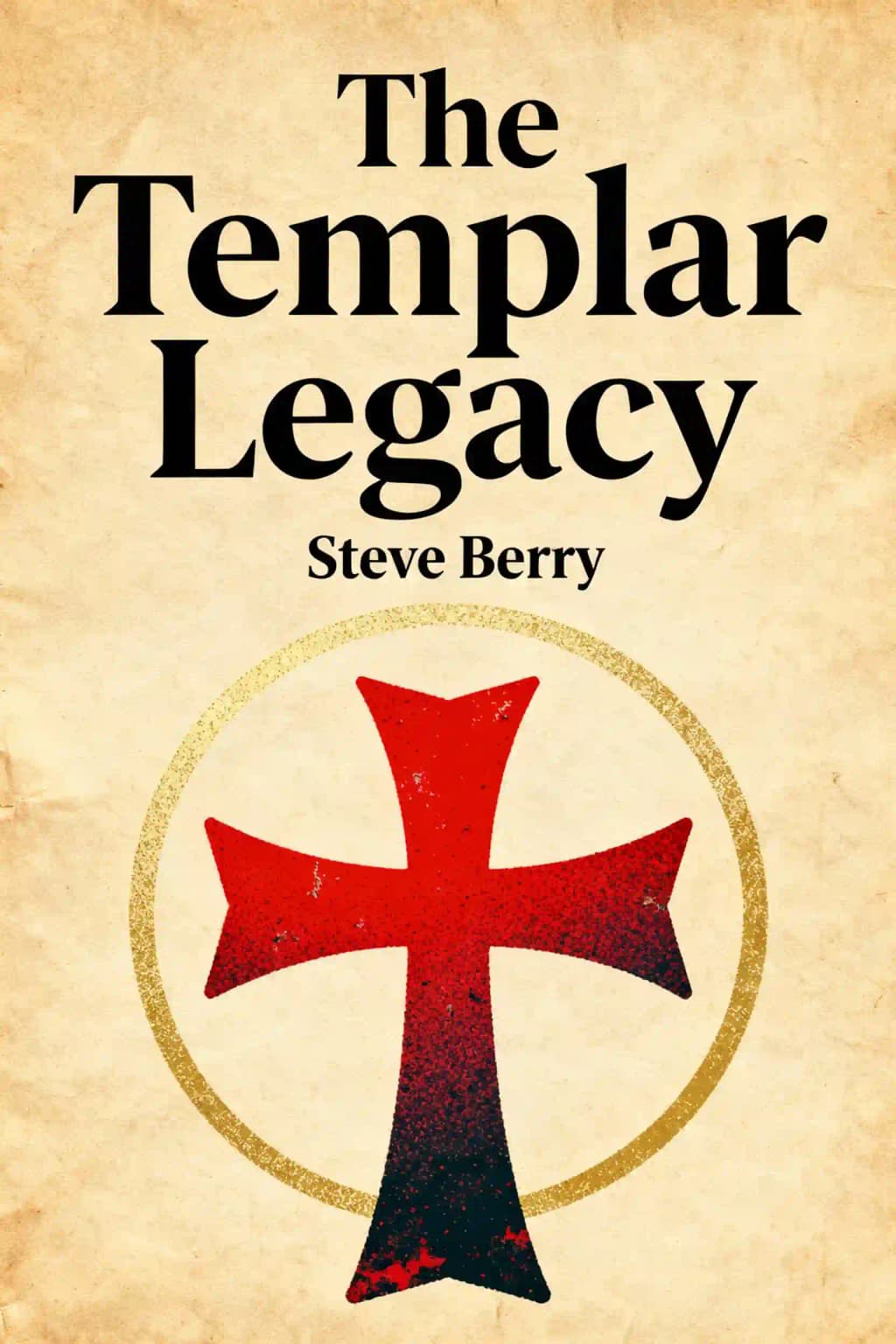
Capítulo 4
Rennes-le-Chateau: A Village of Secrets
The mystery deepens when Malone and Stephanie arrive at Rennes-le-Chateau, a small French village perched dramatically atop a steep hill in the Languedoc region. This remote settlement became the epicenter of international conspiracy theories after its parish priest, Berenger Sauniere, mysteriously acquired enormous wealth in the 1890s. Despite a meager parish income of only 250 francs annually - barely enough to survive on - Sauniere somehow managed to spend over 700,000 francs renovating the church and constructing elaborate living quarters, including Villa Bethania, a Gothic revival mansion complete with a medieval-style tower.
The Church of Mary Magdalene, meticulously renovated under Sauniere's direction, contains an array of bizarre and symbolic elements that Mark identifies as carefully placed clues. Most striking is the unusual statue of the demon Asmodeus - traditionally known as the keeper of secrets - crouching beneath a holy water stoup, while four angels above perform the sign of the cross in an unconventional manner. The church entrance features an enigmatic inscription reading "By this sign ye shall conquer him," which Mark notices contains a subtle but significant alteration from Constantine's original phrase. The interior decoration scheme combines gaudy imagery with esoteric symbolism, creating what Malone aptly describes as "a theological fun house" - complete with stations of the cross that seem to contain coded messages and a devil's head that appears to watch visitors from the church entrance.
Lars Nelle's obsession with Rennes-le-Chateau ran deep, manifesting in his purchase of a house in the village and years of meticulous research. His work focused particularly on establishing connections between Sauniere's discovery and the Knights Templar through the influential de Blanchefort family. The Blancheforts had not only provided sanctuary to fugitive Templars during the infamous purge of 1307 but maintained secret connections with the order for generations afterward. A central piece of evidence in Lars's research was Marie d'Hautpoul de Blanchefort's elaborately carved tombstone, which contained the coded inscription "ET IN ARCADIA EGO." This phrase, when rearranged, forms the anagram "I TEGO ARCANA DEI" - Latin for "I conceal the secrets of God" - and becomes a crucial element in their expanding investigation.
As Malone and Stephanie delve deeper into Lars's extensive research materials, they uncover intricate connections between several key elements: a mysterious glass vial discovered by Sauniere in 1891, a series of coded parchments found hidden in altar pillars, and an elaborate cryptogram that might finally reveal the location of the lost Templar treasure. Their investigation takes on greater urgency when they learn of the recent murder of Ernst Scoville, a researcher Stephanie had contacted about Lars's journal. This death appears to be part of a broader pattern of killings targeting those who probe too deeply into these ancient mysteries, suggesting that powerful forces are still actively protecting whatever secrets lie buried in Rennes-le-Chateau's past.
Capítulo 5
The Hunt for Ancient Clues
The investigation leads Malone and Stephanie to the historic papal city of Avignon, where they locate Royce Claridon - a former colleague of Lars Nelle who has ingeniously concealed himself in a sanatorium. Claridon, feigning mental illness to protect himself from those hunting him, occupies a sparse room in the facility's east wing. His calculated deception has kept him alive while others connected to Lars's research have met violent ends. Most shocking is his revelation about Stephanie's son Mark, whom she believed perished in an avalanche years ago. The truth about Mark's apparent death represents just one thread in a complex tapestry of deception.
Within the magnificent papal palace archives - a labyrinthine repository of centuries-old documents - they uncover a significant artifact: a detailed lithograph titled "Don Miguel De Manara Reading the Rules of the Caridad." The artwork proves rich in symbolic elements that point toward ancient secrets. The central image shows a man wearing religious vestments making a deliberate gesture toward a smaller figure in monk's robes. This second figure sits precariously on a wooden stool, his feet positioned in a precise diagonal arrangement across a chessboard floor - a position that mirrors the movement of the Fool (bishop) in French chess. The positioning appears too deliberate to be coincidental, suggesting a carefully encoded message.
Their analysis is cut short when Raymond de Roquefort and his armed contingent of Paris Templars surround the archive chamber. In this moment of crisis, an unexpected ally emerges - Cassiopeia Vitt, a sophisticated and wealthy Muslim businesswoman who has been discretely monitoring their investigation while overseeing the reconstruction of a medieval castle in the region. Her perfectly timed intervention creates enough chaos to allow Malone and Stephanie to slip away, though Claridon falls into enemy hands during the escape.
Just as the investigation appears to have reached an impasse, a breakthrough occurs at Rennes-le-Chateau. There, in the shadow of the enigmatic church that has puzzled historians for centuries, they encounter Mark Nelle - very much alive and accompanied by Geoffrey, a young knight of the modern Templar order. Mark's survival story proves remarkable: after being caught in an avalanche that nearly claimed his life, he was rescued by a secret enclave of Templars. Over time, he rose through their ranks to become seneschal to their previous master.
Mark's revelations about the Templars shatter conventional historical assumptions. The order's true power, he explains, never lay in material wealth or military might, but in closely guarded knowledge. At the heart of their secrets lies the "Great Devise" - explosive proof concerning Christ's crucifixion that was discovered in chambers beneath Jerusalem's Temple Mount. This evidence was secretly transported to France, where it has remained hidden for centuries, protected by an intricate system of codes and guardians.
Capítulo 6
Challenging Faith's Foundations
As the group assembles at Cassiopeia Vitt's ancestral chateau in the French countryside, including Henrik Thorvaldsen who has been secretly collaborating with her for months, the novel ventures into increasingly controversial theological territory. Thorvaldsen, drawing on decades of historical research, methodically dissects the New Testament's numerous inconsistencies, particularly focusing on the fundamental contradictions between the four Gospels regarding crucial events in Jesus's life - from the different accounts of his birth in Bethlehem versus Nazareth, to varying details of his crucifixion, to discrepancies in the resurrection narratives.
Mark delivers perhaps the most provocative revelation: through careful analysis of historical documents and advanced textile testing, he presents compelling evidence that the Shroud of Turin actually bears the image of Jacques de Molay, the last Templar Grand Master - not Jesus Christ. The image was created when de Molay was tortured by the Inquisition and wrapped in ceremonial burial cloth, a common practice for martyred religious figures. De Roquefort's ultimate goal becomes clear: he intends to reclaim the shroud and expose what he considers centuries of deliberate deception by Church authorities.
Cassiopeia, drawing from her extensive archaeological background, systematically challenges Malone's ingrained skepticism by presenting a series of historical inconsistencies in the traditional crucifixion narrative. She points out that despite thousands of documented crucifixions during the Roman period, only one crucified skeleton has ever been discovered in archaeological excavations. Furthermore, Roman practice dictated that crucifixion victims were typically left unburied as a deterrent - making Jesus's burial unusual. She notes that Jesus's remarkably quick death (within hours rather than the usual days) raises questions, while John's unique account of the lance piercing Jesus's side - absent in other Gospels - suggests later theological additions.
The group's painstaking research reveals that the Templars had accessed and preserved texts deliberately excluded from the canonical Bible during the Council of Nicaea. These included the Gospel of Philip with its alternative view of Mary Magdalene, the Gospel of Thomas containing Jesus's secret teachings, and the Gospel of Mary suggesting a more prominent role for women in early Christianity. These documents, the group theorizes, contained Jesus's actual teachings - far more human and revolutionary than later Church doctrine - and represented the true source of Templar power and influence. This knowledge, threatening to undermine established Church authority, ultimately led to their brutal persecution and near extinction.
Through their investigation, they uncover evidence suggesting that early Church theologians, following established patterns from Egyptian and Greek religions, deliberately transformed Jesus from a revolutionary human teacher into a divine figure - a process that required careful editing of historical records and the suppression of contradictory texts.
Capítulo 7
The Final Revelation
Malone's breakthrough comes when he notices an intricate numerical pattern woven through Sauniere's clues - the recurring numbers 7 and 9 appear with remarkable consistency. The pattern first emerges in the upside-down Visigoth pillar bearing the inscription "Mission 1891" (precisely 7 letters) followed by "Penitence, Penitence" (9 letters each). This numerical signature continues in Marie d'Hautpoul's gravestone, where the deliberately incorrect date 1681 yields 1+6+8+1=16, and 1+6=7, while 1+6+8+1=16, 1+6=7, creating the sequence 7,9. Even the church stations contain dice showing 3,4,5 - numbers that, when combined, produce the same mysterious 7,9 pattern.
Working methodically through the night, Malone applies this numerical sequence to a complex cryptogram, ultimately decoding the message: "TEMPLIER TRESOR EN FOUI AU LAGUSTOUS." The French phrase translates to "Templar treasure can be found at lagustous" - which Malone realizes is an ingenious anagram for St. Agulous, site of an ancient castle later transformed into a Benedictine abbey. The team discovers that beneath the abbey's main altar lies a precise geometric arrangement: seven stones across and nine down, concealing a weathered wooden hatch that opens to reveal a network of medieval underground passages.
Their discovery is short-lived when Geoffrey reveals his true allegiance, betraying them to de Roquefort. The antagonist takes Henrik Thorvaldsen hostage, using him as leverage to force Mark into the treacherous underground labyrinth. The passages lead them to two remarkable chambers - the first contains an astounding collection of Templar artifacts, including religious relics, ceremonial objects, and ancient documents preserved in specialized containers. The second chamber houses a vast library of hundreds of ancient texts, many predating known Christian writings.
The most significant find lies within a specially crafted ossuary bearing an Aramaic inscription: "Jesus, son of Joseph." Inside, they discover not only perfectly preserved human remains but also an extraordinary manuscript - "The Testimony of Simon," written on remarkably well-preserved parchment using first-century ink and materials.
Simon's testimony presents a profoundly human account of Christianity's origins, describing Jesus as an extraordinary but mortal teacher whose message transformed those around him. Simon, Jesus's earliest follower, provides intimate details of Jesus's ministry, culminating in his crucifixion. The text reveals that Simon experienced a profound spiritual awakening at Jesus's burial site - not witnessing a physical resurrection, but rather understanding that Jesus's essence and teachings transcended his physical death. This spiritual revelation, rather than a literal rising from the dead, became the catalyst for Simon's dedication to preserving and spreading Jesus's message. The testimony describes how Simon and several other disciples later recovered Jesus's remains, preserving them along with this written account to maintain both the human truth and spiritual significance of Jesus's life and teachings.
Capítulo 8
Resolution and New Beginnings
In the climactic final confrontation deep within the ancient tunnels beneath the Abbey, Mark orchestrates an elaborate trap for de Roquefort, using his intimate knowledge of the monastery's defensive systems. The confrontation culminates when de Roquefort, pursuing Mark through the darkness, plunges into a carefully concealed pit lined with ancient bronze stakes - a medieval defense mechanism designed centuries ago to protect the Abbey's secrets. As de Roquefort meets his end, Mark grapples with the weight of taking another life, yet recognizes the grave necessity of his actions. De Roquefort's zealotry and determination to use Simon's testimony would have sparked a religious crisis, potentially destabilizing both the Catholic Church and the fragile relationships between modern Christianity and Islam.
The conclave's election of Mark as the new master represents a pivotal moment in the Order's thousand-year history. In the Abbey des Fontaines' grand chapter hall, where centuries of decisions have shaped the brotherhood's path, the assembled knights unanimously choose Mark to lead them into a new era. His acceptance speech acknowledges the Order's ancient roots as the Poor Fellow-Soldiers of Christ while outlining a progressive vision for their future. Mark emphasizes transparency over secrecy and service over power, promising to redirect the Order's vast resources and network toward humanitarian causes.
Geoffrey's burial ceremony in the hallowed Hall of Fathers marks a significant break from tradition. This sacred space, previously reserved exclusively for masters who died in office, now welcomes a knight who exemplified the Order's highest ideals through his sacrifice. The ceremony, conducted with full medieval ritual, includes the ancient Templar burial rites not witnessed in centuries, as Geoffrey's body is laid to rest among the Order's most revered leaders.
As the adventure draws to a close, Malone, Stephanie, Henrik, and Cassiopeia prepare for departure from the Abbey. The ancient stones that witnessed so much bloodshed now stand witness to promises of renewal. Mark shares detailed plans for transforming the Order's extensive financial networks and property holdings into foundations supporting education, poverty relief, and conflict resolution. Stephanie, reflecting on the harrowing events they survived, acknowledges her deep gratitude to Malone for his guidance and protection. As Malone drives away through the mist-shrouded French countryside, he senses that the threads of destiny connecting him to the Order and its mysteries remain unbroken - a prescient feeling that foreshadows future entanglements in the continuing saga of Cotton Malone.
Capítulo 9
The Blurred Lines Between Fact and Fiction
Berry masterfully weaves historical facts with imaginative fiction, creating a rich tapestry where reality and speculation become intricately intertwined. The Knights Templar's documented history, including their dramatic rise to power and eventual downfall in 1307, serves as a solid historical foundation. The mysteries surrounding Rennes-le-Chateau, particularly Berenger Sauniere's inexplicable acquisition of wealth in the 1890s, remain historically verified yet unexplained phenomena. The contradictions present in the four canonical Gospel accounts - especially regarding the events surrounding the crucifixion and resurrection - have been subjects of theological debate for centuries and are thoroughly documented in historical records.
The controversial theory regarding Jacques de Molay's image appearing on the Shroud of Turin, drawn from Knight and Lomas's scholarly work "The Second Messiah," adds another layer of historical intrigue. Their research suggests the shroud might actually depict the torture of the last Templar Grand Master rather than Jesus Christ - a theory that exemplifies how historical artifacts can yield multiple interpretations.
While the Abbey des Fontaines exists purely in Berry's imagination, his attention to geographical and architectural detail in Danish locations grounds the narrative in reality. Roskilde Cathedral, with its twin spires and royal tombs, stands as Denmark's most important architectural monument. The Round Tower (Rundetaarn) in Copenhagen, built as an astronomical observatory in the 17th century, maintains its historical significance. The d'Hautpoul family's documented connections to the Templars, the unsolved murder of Abbe Gelis in 1897, and Sauniere's extensive church renovations all represent verifiable historical events that Berry skillfully incorporates into his narrative.
Berry's original contributions - including the symbolic significance of the numbers 7 and 9 and the fictional Gospel of Simon - while invented, are carefully constructed to align with established theological scholarship about resurrection concepts and early Christian writings. His fictional elements draw from actual debates within religious studies about lost gospels and alternative Christian traditions that existed in the early church.
The novel challenges readers to question established narratives while delivering an action-packed adventure that spans centuries and continents. Through meticulous research combined with compelling fiction, Berry creates a thought-provoking exploration of faith, history, and humanity's tendency to reshape truth to serve various purposes. The story's enduring appeal lies not just in its entertainment value but in its ability to encourage readers to consider alternative perspectives on historical and religious certainties - particularly how accepted truths might be reexamined through different lenses. This delicate balance between fact and fiction leaves readers contemplating the fluid nature of historical truth and the ways in which legends often contain kernels of forgotten realities.
Capítulo 10
Cotton Malone: A Reluctant Hero with a Photographic Memory
Harold Earl "Cotton" Malone emerges as a compelling protagonist whose personal history shapes his approach to the Templar mystery. Standing 6'0" with burnished blond hair and green eyes, Malone carries the emotional burden of his father's mysterious death aboard a classified naval submersible, leaving him with unresolved anger toward the Navy despite his own military career.
His eidetic memory proves invaluable throughout the investigation, allowing him to recall crucial details from books he's encountered and connect seemingly unrelated clues. After graduating from the Naval Academy, joining the JAG Corps, and earning a law degree from Georgetown, Malone served twelve years as one of the original twelve agents in the Magellan Billet under Stephanie Nelle before retiring to open his antiquarian bookshop in Copenhagen.
Though officially retired, Malone maintains his combat skills and emergency supplies, demonstrating remarkable resourcefulness when confronting de Roquefort's men. His relationship with Stephanie is complex-he respects her professional competence while recognizing her personal shortcomings, particularly in how she handled her relationships with Lars and Mark.
As Malone navigates the dangerous world of Templar conspiracies, he forms an uneasy alliance with Cassiopeia Vitt, whose intelligence and combat skills match his own. Their verbal sparring reveals mutual respect beneath the surface tension, suggesting potential for deeper connection in future adventures.
Through Malone's eyes, we experience the thrill of historical discovery alongside the moral ambiguity of uncovering truths that could destabilize religious foundations held sacred by billions. His pragmatic approach to the investigation-neither blindly accepting nor dismissing the theological implications-provides readers with a balanced perspective on the novel's provocative revelations.