Capítulo 1
Magical Wisdom Between the Lines: A Journey Through Wizarding Tales
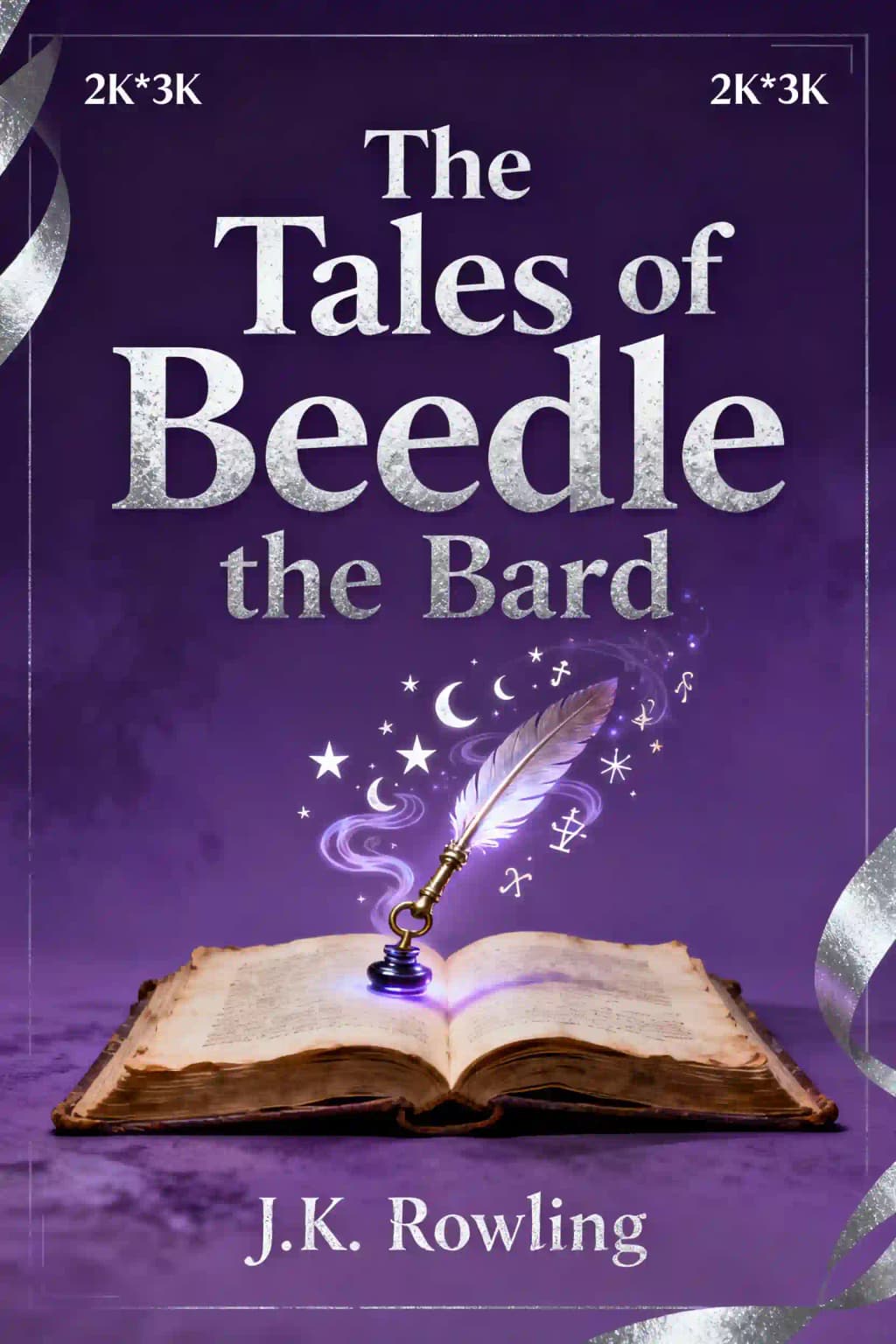
J.K. Rowling's "The Tales of Beedle the Bard" offers a fascinating glimpse into the wizarding world's literary tradition-a collection that has shaped magical childhoods for centuries just as the Brothers Grimm or Hans Christian Andersen have influenced Muggle culture. What makes this slim volume extraordinary is not just its place in wizarding homes, but its cultural significance that transcends the Harry Potter universe. The book became a publishing phenomenon when Rowling hand-wrote and illustrated just seven copies initially-six as gifts to those instrumental in bringing Harry Potter to life, while the seventh sold at auction for $3.98 million to benefit her children's charity. Beyond its real-world impact, these tales reveal something profound about magical society: unlike Muggle fairy tales where magic creates problems, Beedle's stories show that even with magical powers, wizards face the same human struggles as everyone else-greed, heartbreak, fear, and ultimately, death.
Capítulo 2
The Kindly Wizard's Legacy: Compassion Over Magical Prowess
"The Wizard and the Hopping Pot" introduces us to a fundamental tension in wizarding society that resonates throughout the entire Harry Potter series-the relationship between those with magical abilities and those without. The tale centers on a generous old wizard who uses his powers secretly to heal his non-magical neighbors, disguising his magic as remedies from his "lucky cooking pot" to avoid persecution. When he dies, his son inherits everything, including a mysterious slipper with a cryptic note: "In the fond hope, my son, that you will never need it."
This son represents the darker side of wizarding attitudes-contemptuous of "Muggles" (non-magical folk), he slams his door on neighbors seeking the same help his father once provided. What follows is both comical and profound: the cooking pot sprouts a brass foot and begins hopping after him, accumulating the ailments of each rejected villager. First warts, then a braying noise, then uncontrollable crying-each symptom representing the suffering he refuses to alleviate.
The brilliance of this tale lies in how it transforms magical consequence into moral lesson. The pot doesn't simply punish the wizard; it forces him to experience the very suffering he ignores. When a baby's crying is added to the pot's cacophony, keeping him awake all night, we see how indifference to others' pain ultimately becomes our own torment. Only when the wizard finally relents, racing through the village casting healing spells, does the pot quiet-allowing him to place the mysterious slipper onto its brass foot.
What makes this story particularly significant is its historical context, as Dumbledore's notes reveal. Written during the 15th century when witch persecution was intensifying, the tale advocated for compassion toward Muggles at a time when many wizards were retreating into isolation. This progressive stance made it controversial-so much so that by the 16th century, a revised anti-Muggle version circulated where the pot protected wizards by swallowing threatening villagers instead.
The tale's enduring relevance speaks to how societies handle difference and fear. Just as some wizarding families like the Malfoys viewed pro-Muggle sentiment as evidence of "weak magic," we see similar prejudices throughout human history, where compassion for outsiders is mistaken for betrayal of one's own kind. The hopping pot reminds us that our humanity isn't measured by our powers, but by how we use them to ease suffering.
Capítulo 3
The Fountain's Illusion: Finding Fortune Within Ourselves
"The Fountain of Fair Fortune" presents perhaps the most psychologically sophisticated of Beedle's tales, exploring how the pursuit of external solutions often blinds us to the resources we already possess. The story follows three witches-Asha (suffering from incurable illness), Altheda (robbed of wealth and home), and Amata (abandoned by her beloved)-who seek the legendary Fountain of Fair Fortune, said to grant good fortune to one person annually.
When the garden walls part at sunrise, allowing entry, the witches find themselves unexpectedly joined by a fourth seeker-a hapless knight named Sir Luckless. Their journey up the enchanted hill presents three challenges that brilliantly mirror internal transformations. First, they encounter a blind white Worm demanding "proof of pain." After failed attempts at magical solutions, it's Asha's tears-the physical manifestation of her suffering-that satisfy the creature. This first lesson suggests that acknowledging our pain, rather than fighting it, often becomes our first step toward healing.
Halfway up the hill, they face words carved in stone requiring "the fruit of your labours." Sir Luckless's coin proves worthless here-external wealth cannot buy progress. Instead, it's Altheda's sweat from her determined climbing that satisfies this demand. The message becomes clear: effort and perseverance, not shortcuts, create genuine value.
The final obstacle-a stream demanding "the treasure of your past"-requires Amata to extract her memories of her faithless lover, creating stepping stones that allow them all to cross. By literally letting go of what cannot be changed, she creates a path forward not just for herself but for her companions.
The tale's masterful twist comes when they reach the Fountain. Before Asha can bathe in its waters, she collapses from exhaustion. Altheda, using her knowledge of herbs, quickly brews a potion that completely cures Asha's disease. In this moment of triumph, Altheda realizes she possesses healing skills that will bring her greater wealth than she lost. She no longer needs the Fountain's blessing. Similarly, Amata, freed from her heartbreak by literally removing those memories, discovers she no longer pines for her former lover.
Only Sir Luckless bathes in the Fountain, emerging with newfound confidence to propose to Amata. The four leave together for long, happy lives, "never realizing that the Fountain's waters carried no enchantment at all."
This brilliant conclusion reveals the tale's deeper wisdom: the challenges themselves were the true magic, forcing each character to discover their inner resources. Asha found health through Altheda's discovered talents; Altheda found purpose through helping others; Amata found freedom by letting go of painful attachment. Even Sir Luckless discovered courage not through magic but through witnessing the determination of his companions.
The tale's controversial history-having faced censorship attempts for depicting wizard-Muggle marriage-speaks to how threatening such messages of self-reliance and integration can be to those invested in maintaining hierarchies of power. As Dumbledore notes in his commentary, the tale's enduring popularity despite such opposition testifies to how deeply its message resonates with the wizarding community's better instincts.
Capítulo 4
The Warlock's Fatal Pride: Love's Necessity and Magic's Limits
"The Warlock's Hairy Heart" stands as Beedle's darkest tale-a Gothic horror story warning against the dangers of emotional suppression and magical hubris. Unlike his other stories, which end with redemption or wisdom gained, this tale spirals into tragedy with disturbing imagery that has given generations of young wizards nightmares.
The story centers on a handsome, talented young warlock who, disgusted by how love makes his friends "foolish" and undignified, uses Dark Arts to remove his own heart, protecting himself from such "weakness." His family laughs at his coldness, predicting he'll change when he meets the right person, but he remains untouched by romance despite many attempts to win him. As his peers marry and have children, he sneers at their "shriveled hearts" while congratulating himself on his wisdom.
What makes this tale particularly effective is how it portrays the warlock's isolation not as immediate punishment but as a gradual poisoning. After his parents die, he lives alone in their castle, surrounded by luxury but devoid of connection. His pride is wounded only when he overhears servants pitying him for being unloved. Notice how his motivation to find a wife stems not from genuine longing but from wounded vanity-he seeks to prove his superiority by acquiring a beautiful, talented, wealthy witch as a trophy.
When such a witch coincidentally arrives in the neighborhood, the warlock courts her with "stolen words" from poets-unable to generate authentic emotion, he can only mimic it. The pivotal moment comes when the puzzled maiden tells him she would welcome his attention if she thought he had a heart. This moment of truth forces him to reveal his darkest secret: in his dungeon, he keeps his actual heart, removed long ago, now shrunken and covered in black hair from disuse.
The horror escalates when, at the maiden's urging, he restores the heart to his chest. Rather than bringing redemption, this reunification proves catastrophic. His heart, having grown "strange and savage" during its exile, awakens with "powerful, perverse appetites." When guests search for the missing couple, they find a scene of nightmarish brutality: the maiden dead with her chest cut open, and beside her the mad warlock holding her scarlet heart, vowing to exchange it for his own.
The tale's gruesome conclusion-the warlock cutting out his own hairy heart and falling dead holding both hearts-serves as a stark warning about tampering with nature's deepest laws. As Dumbledore notes in his commentary, this story endures because it speaks to a universal temptation: the quest for invulnerability. Though such a quest is ultimately foolish-no person, magical or not, escapes injury-wizards seem particularly prone to believing they can bend existence to their will.
The warlock's removal of his heart parallels the creation of Horcruxes (objects in which Dark wizards hide fragments of their souls to achieve immortality), violating what magical theorist Adalbert Waffling called the "First Fundamental Law of Magic" about tampering with life's deepest mysteries. By seeking to become superhuman, the warlock becomes inhuman-his heart growing hair symbolizes his descent into beasthood.
This cautionary tale reminds us that even in a world of magic, certain fundamental truths cannot be circumvented. Love may bring vulnerability, but without it, we become something worse than merely human-we become monstrous. The phrase "to have a hairy heart" has entered wizarding language as a description of cold, unfeeling people, showing how deeply this lesson has penetrated magical culture.
Capítulo 5
Babbitty's Clever Deception: The Limits of Magic and Muggle Understanding
"Babbitty Rabbitty and Her Cackling Stump" introduces a delightful trickster figure who uses her wits as much as her magic to navigate a dangerous situation. The tale begins with a foolish king who decides to keep all magic for himself by capturing and controlling all the wizards in his kingdom. To accomplish this, he seeks an instructor in magic, attracting a charlatan who claims wizarding abilities he doesn't possess.
As the charlatan pretends to teach the king magic (while pocketing gold and jewels), the king's washerwoman, Babbitty, watches from the bushes and laughs at their foolishness. When the king announces a public demonstration of his new magical powers, the terrified charlatan plans to flee, but the king threatens beheading if he does. In desperation, the charlatan spies on Babbitty performing real magic in her cottage and blackmails her into helping with the demonstration.
During the public performance, Babbitty hides in bushes, secretly performing magic to make it appear the king succeeds at simple spells. The clever twist comes when an audience member suggests the king resurrect his dead dog. When Babbitty refuses to assist (knowing resurrection is impossible), the king's waving produces nothing. The charlatan accuses Babbitty of sabotage, claiming a "wicked witch" blocks the king's magic.
When the charlatan points at Babbitty's hiding place, she flees, transforming into a rabbit (revealing herself as an Animagus-a witch who can turn into an animal at will). After the Brigade of Witch-Hunters cuts down a tree where she supposedly hid, Babbitty's voice emanates from the stump, declaring: "No witch or wizard can be killed by being cut in half!" She cleverly challenges them to prove this by cutting the charlatan in half, forcing him to confess his deception.
Using the stump as her mouthpiece, Babbitty warns the king he's unleashed a curse-every harm inflicted on witches and wizards will feel like an axe stroke in his own side. The frightened king promises to protect magical folk and allow them to practice freely. As final proof of his commitment, Babbitty demands a golden statue of herself be erected on the stump as a reminder of the king's foolishness. After everyone leaves, a whiskery old rabbit with a wand in her teeth emerges from beneath the stump and hops away to safety.
What makes this tale particularly interesting is how it plays with the limitations of both magic and Muggle understanding. As Dumbledore notes in his commentary, this story introduces many children to the harsh truth that magic cannot resurrect the dead-a disappointment to those who believed their parents could revive deceased pets with a wand wave. Despite centuries of magical advancement, wizards still cannot reunite body and soul after death.
The foolish Muggle king represents typical non-magical ignorance, believing wizardry requires merely incantations and wand-waving rather than innate ability. Babbitty's clever manipulation of this ignorance allows her not only to escape but to secure protection for all magical folk in the kingdom. Rather than using direct magical confrontation, she employs psychological warfare-using the king's superstition against him.
This tale also provides one of literature's earliest mentions of an Animagus-a rare magical ability requiring extensive study. The Ministry of Magic maintains an Animagus registry since this magic particularly benefits those engaged in covert activities. Historians debate whether Babbitty was based on French sorceress Lisette de Lapin, who escaped execution in 1422 when a rabbit mysteriously fled to England.
Through Babbitty's cunning, we see that sometimes the cleverest use of magic isn't in grand displays of power, but in understanding human nature and using that knowledge strategically. Her golden statue on the stump becomes not just a monument to her escape, but a constant reminder that wisdom often trumps raw power.
Capítulo 6
The Three Brothers' Choices: Confronting Death with Wisdom
"The Tale of the Three Brothers" stands as the collection's most profound offering-a meditation on mortality that resonates far beyond the wizarding world. The story follows three wizard brothers who, traveling at twilight, encounter a river too dangerous to cross. Using their magic, they conjure a bridge, only to find Death himself blocking their path midway across.
Angry at being cheated of victims who normally drown, Death feigns congratulations and offers each brother a prize. Their choices reveal their characters: the eldest, combative brother requests an unbeatable wand, which Death crafts from an elder tree. The second, arrogant brother asks for power to recall the dead, receiving a riverbank stone with this ability. The youngest, wisest and most humble brother, distrusting Death, requests something to prevent Death from following him-reluctantly, Death gives him his own Cloak of Invisibility.
The brothers part ways, and their fates unfold according to their choices. The eldest travels to a village, defeats an old enemy in a duel with the Elder Wand, and boasts of his invincibility at an inn. That night, another wizard steals the wand and slits his throat. The second brother returns home alone, uses the stone to summon the girl he once hoped to marry, but finds her cold and separated as by a veil. Driven mad with longing, he kills himself to truly join her.
Death claims both brothers quickly, but searches in vain for the third for many years. Only in old age does the youngest brother remove the cloak, give it to his son, and greet Death as an old friend, departing life as equals.
This tale's brilliance lies in its layered symbolism. The three brothers represent different human responses to mortality: the first seeks to defeat death through power, the second through denial, while only the third accepts death's inevitability with grace. The Elder Wand, Resurrection Stone, and Invisibility Cloak-collectively known as the "Deathly Hallows"-embody these approaches.
What elevates this story beyond simple allegory is how it acknowledges the temptation of each path. The Elder Wand's bloody history through notorious wizards like Emeric the Evil, Godelot, Barnabas Deverill, and Loxias shows how the pursuit of unbeatable power inevitably attracts violence. The Resurrection Stone's failure to truly return loved ones reminds us that death creates a separation no magic can fully bridge. Only the Invisibility Cloak-representing not immortality but a wise relationship with death-brings its owner peace.
As Dumbledore notes in his commentary, a legend contradicting the story's message has emerged in wizarding culture. This legend claims Death's gifts actually exist in the real world and that whoever unites all three becomes "master of Death," commonly interpreted as achieving invulnerability. This ironic misreading-seeking immortality from a tale warning against such pursuit-reveals how deeply humans resist mortality's lessons.
Dumbledore's admission that even he would find it easiest to refuse only the Invisibility Cloak, proving that despite his cleverness, he remains "just as big a fool as anyone else," adds poignant humanity to his analysis. This confession foreshadows revelations in the Harry Potter series about Dumbledore's own tragic pursuit of power in his youth.
The tale's enduring power comes from its universal truth: we all face Death eventually, and our choices lie not in if we meet him, but how. The third brother's greeting of Death "as an old friend" offers a vision of mortality not as defeat but as completion-the natural conclusion to a well-lived life.
Capítulo 7
Beedle's Enduring Legacy: Magical Morality for the Ages
Throughout "The Tales of Beedle the Bard," we find a consistent moral framework that transcends the magical elements. Unlike many Muggle fairy tales where magic itself is often the problem (think of cursed spinning wheels or poisoned apples), Beedle's stories show magical characters struggling with very human problems despite their powers. This fundamental difference reveals something profound about how wizarding culture views magic-not as an escape from life's challenges, but as a tool that comes with its own responsibilities and limitations.
Beedle's witches actively seek their fortunes rather than waiting to be rescued, as seen in Babbitty's clever manipulation of the king's fears and the three witches' determined climb toward the Fountain of Fair Fortune. His stories consistently celebrate kindness, ingenuity, and wisdom over raw magical power. The kindly wizard using his magic to help neighbors, Altheda discovering her healing talents, and the third brother's humble request for the Invisibility Cloak all demonstrate that true magic lies in how we use our gifts, not in the gifts themselves.
These tales have shaped wizarding childhoods for centuries, just as the Brothers Grimm or Hans Christian Andersen have influenced Muggle culture. But Beedle's stories do more than entertain-they establish a moral foundation for young wizards and witches, teaching them that magic carries responsibility. The hopping pot tormenting its owner until he helps others, the warlock's hairy heart punishing his emotional detachment, and Death claiming the arrogant brothers all reinforce that magical power without moral guidance leads to destruction.
What makes these tales particularly fascinating is their evolution and reception throughout wizarding history. From Lucius Malfoy's censorship attempts to Beatrix Bloxam's saccharine rewrites that caused children to "retch uncontrollably," we see how these stories have been battlegrounds for competing visions of wizarding society. Should wizards help Muggles or remain separate? Should magical power be celebrated for its own sake or tempered with compassion? These debates mirror our own cultural struggles over the stories we tell children and the values they instill.
Professor Dumbledore's commentary throughout the collection adds another layer of meaning, revealing how these seemingly simple tales connect to complex magical theories and historical events. His personal reflections-particularly his admission about which Deathly Hallow would tempt him most-humanize the legendary wizard while demonstrating how these children's stories continue to challenge even the wisest adults.
In the end, Beedle's enduring legacy lies in how his tales bridge the magical and the moral. By showing that even the most powerful wizards face the same fundamental human challenges-pride, grief, fear, and ultimately death-these stories remind readers that true magic isn't found in wands or spells, but in the choices we make and the compassion we show. Whether wizard or Muggle, we all face the same essential questions about how to live well in a world where suffering exists and death awaits. Beedle's answer, across centuries and magical traditions, remains consistent: with wisdom, courage, and love.
Capítulo 8
The Wisdom Beyond Wands: Universal Truths in Magical Tales
What makes "The Tales of Beedle the Bard" so compelling is how these stories, ostensibly written for young witches and wizards, contain profound insights that resonate across the magical divide. Each tale, beneath its fantastical elements, addresses universal human experiences-the struggle between selfishness and generosity, the temptation to avoid emotional pain, the fear of death, and the consequences of pride.
The collection's framework-presented as Hermione Granger's translation with Albus Dumbledore's scholarly notes-cleverly positions these stories as cultural artifacts rather than mere entertainment. This approach invites us to consider how the stories we tell children shape societies across generations. Just as Muggle fairy tales evolved from grim warnings to sanitized Disney versions, we see Beedle's tales facing similar pressures-from Brutus Malfoy's anti-Muggle propaganda to Beatrix Bloxam's saccharine rewrites.
What's particularly fascinating is how these tales reveal the wizarding world's relationship with its own power. Despite their magical abilities, wizards face the same fundamental limitations as Muggles-they cannot truly resurrect the dead, escape the consequences of cruelty, or avoid mortality. The hopping pot's torments, the warlock's hairy heart, and Death's inevitable claim on the brothers all reinforce that magic has boundaries. This humbling recognition echoes through wizarding history, from Adalbert Waffling's "Fundamental Laws of Magic" to the Ministry's regulation of magical practices.
The tales also illuminate the ongoing tension between magical isolation and integration with the non-magical world. "The Wizard and the Hopping Pot" advocates compassion toward Muggles during a time of increasing persecution, while "The Fountain of Fair Fortune" depicts a happy wizard-Muggle marriage-both positions that remained controversial centuries later. These debates mirror our own struggles with difference and fear of the "other."
Perhaps most powerfully, these stories challenge the very notion of what constitutes true power. The Elder Wand, despite its fearsome reputation, brings its owners only brief triumph before violent ends. The Resurrection Stone offers not true reunion but painful half-presence. Even the Fountain of Fair Fortune works its magic not through enchanted waters but through the challenges that transform its seekers. True power, Beedle suggests, comes not from magical objects or abilities, but from wisdom, compassion, and acceptance.
Dumbledore's commentary adds poignant depth, particularly his reflection that despite his intellectual understanding of these lessons, he would still be tempted by the Deathly Hallows-revealing how even the wisest among us struggle with fundamental human weaknesses. His admission that we consistently "choose what is worst for us" speaks to the universal challenge of aligning our actions with our better knowledge.
In presenting these tales as beloved classics that have shaped countless magical childhoods, Rowling invites us to consider how the stories we cherish reveal our deepest values and fears. Whether wizard or Muggle, we are all shaped by the narratives we inherit and the ones we choose to pass on. The enduring power of Beedle's tales-surviving censorship, reinterpretation, and centuries of cultural change-testifies to how deeply their wisdom resonates across magical and non-magical worlds alike.