Capítulo 4
The Dead Girls of Fell: A Town's Dark Legacy
Fell, New York harbors a terrible secret-a pattern of murdered young women whose cases remain unsolved or questionably closed. Betty Graham, a 24-year-old schoolteacher killed in 1978, was found at the construction site of what would become the Sun Down Motel. Cathy Caldwell, a young mother, was stabbed to death in 1980 and left under an overpass. Victoria Lee was strangled on a jogging path in 1981, with her boyfriend initially convicted but later released when evidence didn't match. Tracy Waters, an 18-year-old high school senior, disappeared while bicycling home in November 1982, her body found in a ditch two days later.
These women, referred to as "the dead girls of Fell," haunt the town's collective consciousness. They become cautionary tales passed from mothers to daughters: "Don't take up jogging or you'll end up like that girl!" Their deaths create an atmosphere of fear that shapes how women move through the world. Jenny, Viv's roommate, explains how she and Viv discussed the dangers of being young women working nights. They knew the risks they were taking simply by existing in public spaces after dark.
What connects these seemingly separate murders is a pattern only Viv begins to recognize-a traveling salesman who appears in each victim's life shortly before their death. Simon Hess, selling door locks for Westlake Lock Systems, uses his legitimate business as cover to scout for victims. The cruel irony isn't lost on Viv-he sells security devices to women he plans to murder.
The "dead girls" aren't just statistics or plot devices; St. James gives them humanity and dignity. Through Viv's investigation, we learn about their lives, their habits, their relationships. Betty fought fiercely against her attacker. Cathy was a devoted mother. Victoria was "just a girl trying to stay slim" who went running while angry after an argument. Tracy was shy and sang in the choir. These details transform them from faceless victims into real women whose lives were violently cut short.
The novel explores how female murder victims are treated by media, police, and society. Initial interest fades quickly, investigations grow cold, and the women become footnotes in town history-except to those who refuse to forget them. Viv and later Carly become their advocates, determined to bring justice even when official channels have moved on.
Capítulo 5
Hunting the Hunter: Viv's Dangerous Investigation
What transforms Viv from a directionless runaway into a determined investigator is her haunting encounter with Betty Graham's ghost. When Betty appears in her flowered dress - the same one she wore the night of her death - bearing the terrible wounds of her murder and asking repeatedly "How did this happen?", Viv can no longer look away. The visceral nature of these supernatural encounters, combined with Betty's desperate pleas for justice, ignites something fierce in Viv. She becomes obsessed with connecting the dots between the murdered women of Fell, meticulously documenting her findings in a weathered notebook she keeps with her at all times, even sleeping with it under her pillow.
Viv's investigation is all the more remarkable for its pre-internet, analog methodology. She visits crime scenes at different times of day to understand their geography and visibility, noting how streetlights cast shadows and where a killer might hide undetected. She makes dozens of phone calls posing as different people - a journalism student, a concerned relative, a census worker - to extract information from reluctant sources. She follows Simon Hess's silver Buick through the winding streets of Fell, mapping his routine and identifying potential hunting grounds. Her detective work extends to countless hours in the library, studying yearbooks and microfiche newspapers, piecing together a pattern of disappearances that stretches back nearly a decade.
The most chilling moment comes when Viv watches Simon Hess spot a teenage girl on a bicycle outside Thompson's Drug Store. The girl - Tracy Waters - is wearing a red windbreaker and has her honey-blonde hair in a ponytail, matching the profile of his previous victims. Viv recognizes immediately what she's witnessing: "He's hunting." The predatory tilt of his head, the way his hands tighten on the steering wheel, the calculated casualness of his surveillance - all confirm her worst fears. In that moment, Viv transitions from investigator to protector, desperately trying to warn Tracy Waters and her family about the danger. She leaves anonymous notes in their mailbox, makes late-night phone calls, and even attempts to speak directly to Tracy after school. Despite these frantic efforts, her warnings go unheeded, dismissed as pranks or paranoia, and Tracy becomes Simon's next victim.
What makes Viv's investigation particularly poignant is her crushing isolation. When she presents her evidence to Officer Alma Trent - newspaper clippings, witness statements, timeline correlations - she's met with professional skepticism and personal caution. Alma explains she needs concrete evidence - eyewitnesses or confessions - to risk her hard-won career by pursuing the case. As the department's only female officer who fought for years to reach her position, she can't jeopardize everything on circumstantial evidence, no matter how compelling. Even Marnie Clark, a local photographer who briefly assists Viv by sharing crime scene photos and witness accounts, eventually withdraws from the investigation, explaining, "I have more to lose than you do." Her words highlight Viv's unique position as someone with nothing left to lose.
This profound isolation forces Viv to make a fateful decision when Simon Hess checks into the Sun Down Motel on the stormy night of November 29, 1982. With no institutional support and haunted by her failure to save Tracy Waters, Viv decides to confront the killer herself. Armed only with a hunting knife stolen from a local hardware store and her desperate determination to end his killing spree, she prepares to face evil incarnate in Room 213.
Capítulo 6
Ghosts as Witnesses: The Supernatural Element
The ghosts that haunt the Sun Down Motel serve as more than mere spectral attractions - they're silent witnesses to the town's most heinous crimes and darkest secrets. Betty Graham emerges as the most prominent spirit, her presence manifesting through a series of distinct supernatural markers: doors that swing open without human touch, lights that flicker in specific patterns, and the persistent scent of Virginia Slims cigarettes that seems to follow her ghostly form. Her attempts to communicate grow increasingly desperate throughout the narrative, first silently mouthing "Run" to Viv during their initial encounter, then appearing with progressively more visible injuries - bruises darkening her neck, blood staining her uniform, her face contorted in eternal anguish as she repeatedly asks "How did this happen?"
The motel harbors other lost souls, each trapped in their own tragic loop. The young boy who drowned in the pool appears regularly, his small form dripping phantom water across the concrete, eternally dressed in faded blue swimming trunks. His plaintive "I don't feel good" echoes through the property, particularly on humid summer nights. The middle-aged man who suffered a fatal heart attack while checking in manifests in the office chair, his presence announced by a sudden drop in temperature and the bitter mutter of "Goddamn bitch" before he dissolves into the air. Each spirit seems bound to the specific circumstances of their death, replaying their final moments like a broken record.
The novel's treatment of these supernatural elements stands out for its pragmatic approach. The ghosts are presented as simply another aspect of the motel's deteriorating landscape, as real and mundane as the crackling ice machine or the perpetually buzzing fluorescent lights. Viv's adaptation to their presence is particularly noteworthy - she moves from initial terror to almost casual interaction, addressing them directly and with surprising compassion. "I'm sorry," she tells the ghost boy during their third encounter, her voice gentle. "I can't help you." When Betty appears, displaying the full horror of her murder, Viv's response is raw and emotional: "Tell me who killed you so I can fix it. Please, I need to know."
The ability to perceive the ghosts creates a distinct division among the characters. Those who can see them - Viv, Carly, and Nick - share a common thread of personal trauma. Viv lost her mother under mysterious circumstances, Carly grew up without knowing her aunt, and Nick carries the weight of his sister's disappearance. This shared experience of loss seems to act as a supernatural antenna, allowing them to perceive what others cannot. The connection between grief and ghostly sensitivity adds another layer to the narrative, suggesting that personal pain might open channels to understanding deeper truths.
The ghosts evolve from mere supernatural elements into active participants in the story's unfolding mystery. Betty's appearances intensify dramatically when Simon Hess returns to the motel - lights exploding, doors slamming with increasing violence, and her form materializing more frequently and with greater clarity. During the climactic confrontation with Hess, the supernatural presence reaches a fever pitch - the click of phantom heels echoes through empty corridors, the temperature plummets to freezing, and an otherworldly moan reverberates through the building. While the ghosts never directly intervene in physical events, their growing agitation creates an atmosphere of mounting dread that propels the living characters toward their final confrontation with evil.
Capítulo 7
Female Rage and Reckoning
At its core, The Sun Down Motel is about female rage-justified, righteous anger at a world that treats women as disposable. This rage manifests differently across characters but stems from the same source: the recognition that the systems designed to protect women often fail them completely.
Viv's rage builds slowly as she connects the murders of Betty, Cathy, Victoria, and Tracy. When Simon Hess admits to killing them because "no one ever stopped me," her fury becomes action. The difficulty she experiences stabbing him-"It was harder than I thought it would be to pierce his chest"-underscores both the physical and psychological barriers women must overcome to fight back against male violence.
Carly's rage is more subtle but equally powerful. It's directed not just at whoever harmed her aunt but at the family silence that erased Viv from their history. Her mother's refusal to discuss her sister while alive left Carly with a legacy of unanswered questions and unacknowledged grief. Her determination to uncover the truth is a form of rebellion against this enforced forgetting.
Even peripheral female characters carry this theme. Jenny, Viv's roommate, expresses anger at how quickly Viv's disappearance was dismissed. Alma Trent's carefully controlled demeanor masks frustration at the limitations placed on her as a female officer. Marnie Clark's initial reluctance to help Carly stems from years of being ignored when she tried to raise concerns about Simon Hess.
What's remarkable is how the novel validates this female rage rather than pathologizing it. When Viv confronts and kills Simon Hess, it's presented as justice rather than vengeance. When Alma and Marnie help cover up the killing, it's portrayed as a necessary correction to a system that would have allowed Hess to continue murdering women. Even thirty-five years later, when Viv turns herself in, there's a sense that her actions, while illegal, were morally justified.
The novel asks uncomfortable questions about justice: What happens when the systems designed to protect us fail? Is taking justice into one's own hands ever justified? The answers aren't simple, but the narrative suggests that women's rage in the face of systemic failure isn't just understandable-it's inevitable.
Capítulo 8
The Price of Truth: Sacrifice and Survival
Both Viv and Carly pay heavy prices for their pursuit of truth. Viv must sacrifice her entire identity, disappearing from her life and family to escape prosecution for killing Simon Hess. She creates a new persona as Christine Fawcett, complete with false identification documents, and lives in hiding for thirty-five years. Though she briefly mentions marrying once after her lover Jamie, the relationship only lasted eleven months because she "couldn't let anyone in." Her life becomes defined by secrecy and isolation.
Carly's pursuit costs her the conventional path she was following. She drops out of college, moves to a strange town, and eventually decides to make Fell her permanent home despite her family's confusion. She trades a predictable future for an uncertain one, driven by her need to understand what happened to Viv and, by extension, to understand herself.
Other characters make similar sacrifices. Alma Trent risks her career and freedom by helping cover up Hess's murder. Marnie Clark lives with the knowledge of her complicity for decades. Nick Harkness returns to the town where his family tragedy occurred, facing painful memories to confront his past.
What's striking is how these sacrifices are presented not as defeats but as necessary costs for survival and integrity. Viv doesn't regret killing Simon Hess-she regrets not stopping him sooner. When she finally turns herself in thirty-five years later, saying "My name is Vivian Delaney, and I disappeared thirty-five years ago. I'd like to make a confession," there's a sense of relief rather than remorse.
Similarly, Carly's decision to stay in Fell and study criminology represents not a derailment of her life but a discovery of her true purpose. Her relationship with Nick offers the possibility of connection without requiring her to abandon her newfound path. As she watches snow fall after their ninth date, there's a sense of peace that was absent at the beginning of her journey.
The novel suggests that truth, however painful, offers a kind of freedom. Viv's confession, Carly's investigation, and even the ghosts' persistent manifestations all represent attempts to bring hidden things to light. The final demolition of the Sun Down Motel symbolizes this theme-the physical structure that housed so many secrets is finally laid bare, allowing both the living and the dead to move toward resolution.
Capítulo 9
Cycles Broken: Finding Peace in the Aftermath
The novel concludes not with perfect justice or complete resolution but with cycles being broken and new beginnings emerging from tragedy. Viv's cancer has returned, and she awaits trial for Simon Hess's murder, but she's finally free from decades of hiding. Her confession brings closure not just to her own story but potentially to the families of Betty, Cathy, Victoria, and Tracy, whose murders can now be definitively linked to Hess through DNA evidence.
Carly has found purpose in studying criminology and researching at the library. Her relationship with Nick offers healing for both of them-two people shaped by family tragedies finding connection in their shared understanding of grief and loss. The demolition of the Sun Down Motel suggests the town might finally be ready to address its dark history rather than continuing to ignore it.
Even the ghosts seem to find some measure of peace. After Hess's body is discovered and Viv confesses, there's no mention of further supernatural manifestations. While the novel doesn't explicitly state that the ghosts have moved on, their absence from the final chapters suggests their purpose-bearing witness to injustice-has been fulfilled.
The novel's ending acknowledges that healing is neither quick nor complete. Victoria's case is being reinvestigated, suggesting there are still unanswered questions about Hess's crimes. Alma maintains her secretive demeanor about her connections to the case, hinting at more secrets yet to be revealed. Viv faces legal consequences for her actions despite their moral justification.
Yet there's hope in these imperfect resolutions. Carly watches snow fall after being intimate with Nick, finding beauty and peace in the present moment despite the complicated past that brought them together. Viv, despite facing trial, has reclaimed her true identity after decades of living as someone else. The truth, however painful, has finally emerged from the shadows.
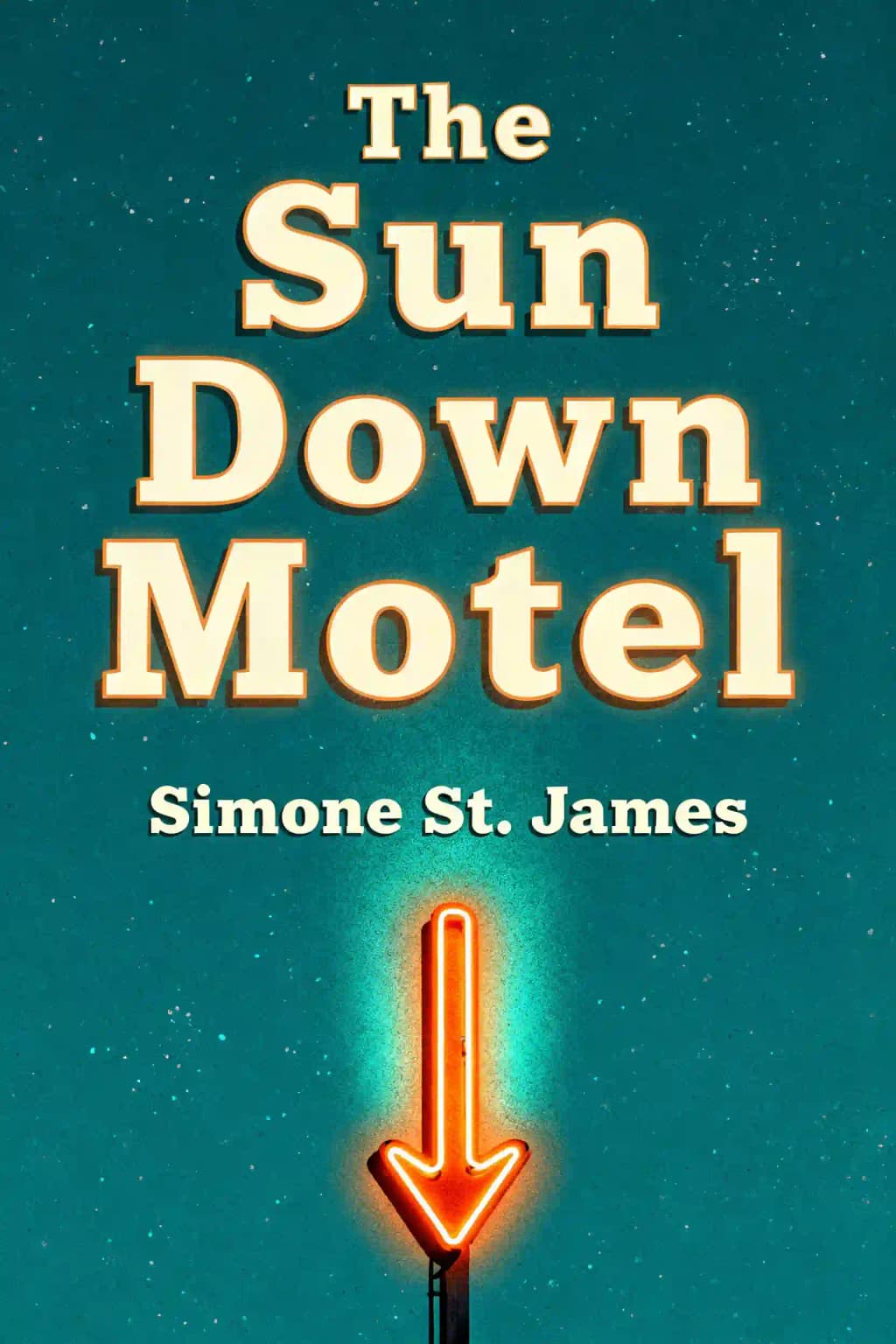
The Sun Down Motel ultimately suggests that confronting our ghosts-both literal and metaphorical-is necessary for moving forward. Only by acknowledging the past, however dark, can we hope to create a different future. As the novel's dedication states, this story belongs to "the odd girls, the nerdy girls, and the murderinos"-those who refuse to look away from darkness and instead shine a light directly into it, demanding truth no matter the cost.