Capítulo 4
Living Between Two Worlds
Freeman becomes the last trainee standing, finishing the course alone after others leave without goodbyes. During a three-week break, he creates two distinct personas. In Washington, he plays the role expected of him-the token Negro pioneer at the CIA. But in New York, he briefly reclaims his true self, visiting jazz clubs, Broadway shows, and art galleries. He meticulously manages these separate identities, knowing whites "saw in most Negroes exactly what they most wanted to see."
The CIA investigates Freeman by questioning his Washington prostitute, who defends him against insinuations about drug use, gambling, or unusual sexual preferences. The investigator's prurient interest in these details reveals more about him than about Freeman.
After a year in his windowless basement office as "the highest-paid copy clerk in Washington," Freeman receives a promotion when the general needs someone to give senators a tour. During the tour, he impresses Senator Hennington, who had helped get him the job. Following this successful interaction, Freeman is appointed special assistant to the director-essentially to be "black and conspicuous" as proof the CIA was integrated.
This position gives him access to most of the general's briefings and meetings. Freeman maintains his cover meticulously while secretly practicing combat skills, becoming "the best undercover man the CIA had." His double life extends to his personal relationships as well. With Joy, a former girlfriend from Michigan State University, he maintains a weekly relationship while seeing the "Dahomey queen" regularly.
Joy challenges Freeman about his career, wanting him to pursue law or politics rather than return to social work in Chicago. Freeman realizes she desires the status of being "Mrs. Lawyer Freeman" or "Mrs. Congressman Freeman," while he rejects abandoning his principles. Their relationship deteriorates when Freeman discovers Joy seeing a light-skinned medical student from a prominent Detroit family, teaching her that her background would always limit her acceptance in black society.
Freeman's double consciousness-living simultaneously as the CIA's token Black employee and as a revolutionary planning liberation-takes a psychological toll. He must constantly monitor his behavior, speech patterns, and emotional responses. The exhaustion of this performance reveals the burden many Black professionals carry in predominantly white institutions, where authenticity often comes at the cost of advancement.
Capítulo 5
The Education of a Revolutionary
Freeman becomes the general's trusted administrative assistant, though still primarily used as a showpiece. He masters the art of making simple tasks appear difficult while performing them flawlessly. The general takes him on domestic and international trips, and Senator Hennington uses Freeman to bolster his liberal reputation by occasionally lunching with him in the Senate dining room.
Freeman moves through Washington like an invisible man, occasionally invited to Georgetown cocktail parties for African diplomats but never to formal dinners. He avoids Washington's black society entirely, dating rarely and maintaining only brief relationships.
Meanwhile, Freeman studies guerrilla warfare tactics from Algeria, the Philippines, Malaya, and Vietnam, analyzing the theories of Giap and Mao Tse-tung. He accompanies the general to Saigon four times, staying at the Hotel Caravelle and learning to navigate the war-torn city. Through his travels across Asia, he acquires both material goods and cultural knowledge, becoming adept with chopsticks and expanding his sexual education "oriental style."
Though enjoying the job's privileges and the satisfaction of "putting on so many white people," a lunch with the general reveals the limits of his acceptance. During a meal at a steak house, the general reveals his deeply patronizing views, praising Freeman as "a credit to your race" while suggesting Black people are naturally athletic but intellectually inferior. He claims African development lagged "centuries behind" Europeans, framing civil rights activism as needless agitation.
Freeman maintains his composure through sheer will, excusing himself only to become violently ill in the restaurant bathroom, his mask of calm nearly breaking as he confronts the general's true beliefs. Afterward, Freeman returns to his apartment, drinks scotch in a hot bath while watching news footage of police violence against civil rights protesters. Resolving to stop procrastinating, he writes to Chicago social welfare agencies about job openings and requests a meeting with the general to resign, explaining he wants to work among his people.
This pivotal moment crystallizes Freeman's transformation. Despite years of education, international travel, and professional achievement, he remains just a "credit to his race" in the general's eyes-never fully human, never an equal. The general's casual racism, delivered over lunch as if discussing the weather, represents the final straw that propels Freeman from passive infiltrator to active revolutionary.
Capítulo 6
The Mask Slips: Freeman's Departure
Freeman leaves the CIA with quiet dignity, carrying only an attache case with his personal belongings. Standing in the Virginia sunshine, he reflects on the government building as "an ugly abscess" in the beautiful woods. His carefully cultivated appearance-slightly ill-fitting clothes, gold-rimmed tooth, and shuffling gait-has made him well-liked but underestimated.
At the White House, Freeman meets briefly with the president, who repeatedly mispronounces his name as "Foreman." The president makes patronizing remarks while his nervous aide manages the tightly scheduled four-minute meeting. When presented with a pocket knife-the same gift given to boy scouts earlier-Freeman responds by giving the president his PT boat tie clasp, creating an awkward moment.
After leaving the White House, Freeman finally confronts the hostile chauffeur who flicks a cigarette butt at him. "Nigger, if you had hit me with that butt, it would have been your black ass!" he says, dropping his submissive persona. At the airport, Freeman orders the driver to check his bag and bring him his ticket, a final power reversal.
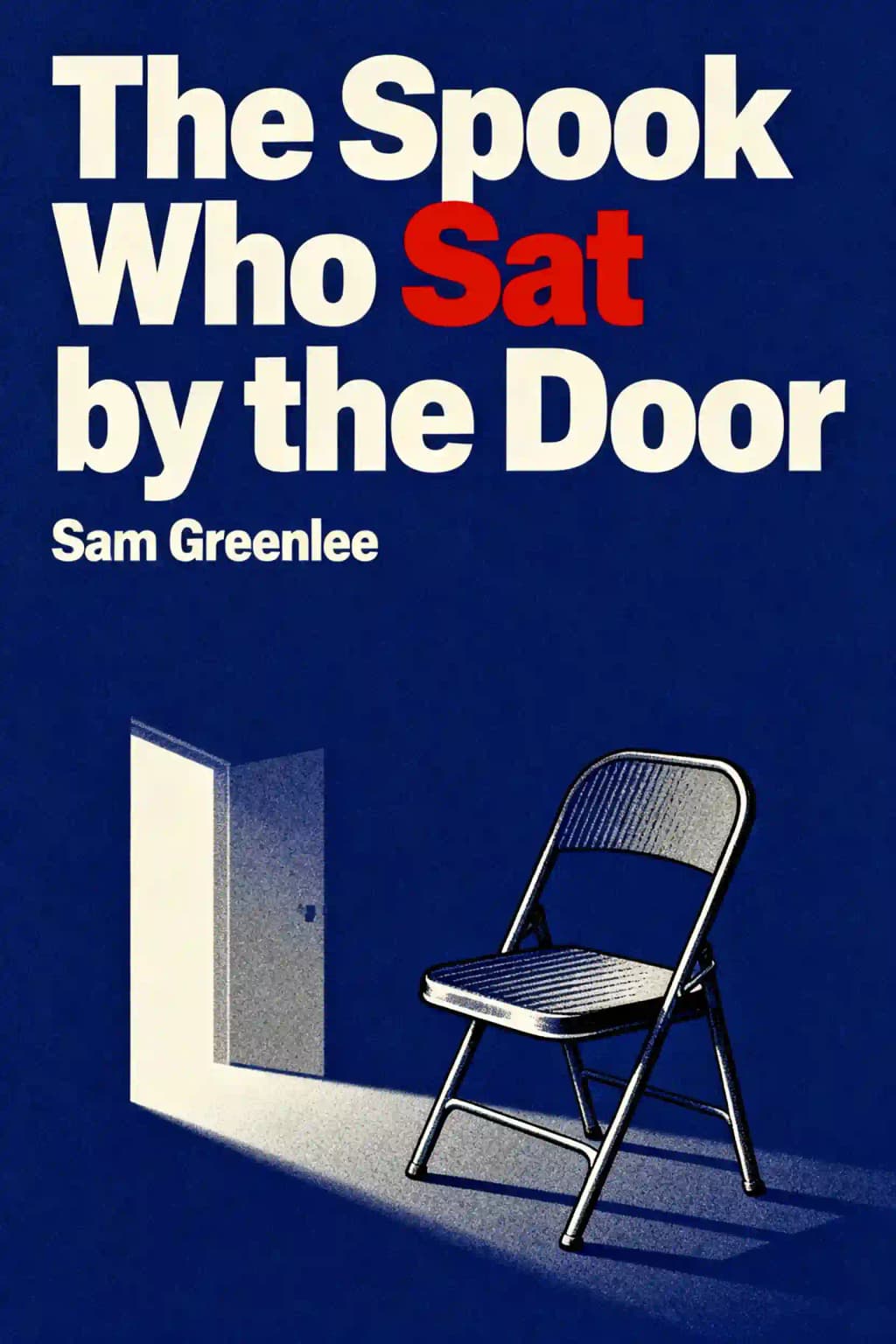
Alone at the bar, Freeman reflects on his five years of deception: "He had conned them all and in his own way had been the best of the spooks and they might never know it. For five years he had been the CIA nigger and his job had been to sit by the door."
This departure scene brilliantly illustrates the psychological liberation that accompanies Freeman's physical departure from the CIA. The White House meeting-where the president can't even remember his name-underscores how invisible Freeman has been despite his position. The confrontation with the chauffeur represents Freeman's first authentic expression of anger after years of strategic submission. His reflection at the airport bar captures both his pride in having successfully infiltrated the CIA and his bitterness at the role he was forced to play.
As Freeman boards his flight to Chicago, he has shed his old cover "like a snake shedding skin." Gone is the insecure shuffle and subservient smile, replaced by the grace of a well-trained athlete. He has completed the first phase of his mission-acquiring the skills and knowledge needed for revolution-and now moves toward the second: building an army.
Capítulo 7
Building the Revolutionary Vanguard
In Chicago, Freeman establishes a new cover identity as a social worker at the South Side Youth Foundation. Within a month, his apartment perfectly reflects this persona-expensive liquor, high-end stereo equipment, designer furnishings. He slips into this role "like a tailored suit," becoming the "white-type, uptight Negro of rising aspirations."
Freeman's first assignment is establishing contact with the Cobras, a street gang resistant to the foundation's outreach efforts. He reveals he was once the Cobra warlord in his youth, known as "Turk." After studying the gang carefully, impressed by their rigid discipline and chain of command, Freeman makes his move. He walks into their poolroom headquarters and deliberately takes their table. When confronted by the three leaders-Do-Daddy Dean, Sugar Hips Scott, and Stud Davis-he suggests talking outside.
In the alley, they attack him, but Freeman skillfully fights them off using martial arts techniques, then holds them at gunpoint with a .38 revolver. He berates them for their amateur tactics during recent riots-making Molotov cocktails, looting stores, and ineffective sniping at police. "You didn't do any more damage than a mosquito on an elephant's ass," he tells them, then offers: "You really want to fuck with whitey, I'll show you how!"
Freeman conducts impromptu training sessions on street corners, teaching the Cobras military skills like calculating sniper ranges using geometry. Sugar, the gang's mathematician, helps others master these calculations. As weather turns cooler, Freeman moves training to the poolroom after closing or his apartment.
Freeman explains how the Cobras' existing underground structure makes them perfect for revolutionary organization. He educates them about their African heritage and the cultural traditions white America destroyed, teaching them about slave revolts and Black heroes absent from standard history books. "We took everything they laid on us-slavery, lynchings, segregation, the worst damn jobs, the worst damn food-and come up swinging. We been on our ass, but never on our knees."
To prevent police suspicion, Freeman orchestrates a deception making authorities believe the gang has become heroin addicts. The police, relieved to see what appears to be a formerly violent gang pacified by drugs, fail to realize the hypodermic scars and dilated pupils are merely props in Freeman's elaborate cover.
Freeman's revolutionary strategy isn't to win outright, but to force white America to choose between "fucking with us and playing Big Daddy to the world." By tying up troops domestically and stretching America economically thin, they'll expose white America's priorities. His ultimate goal is awakening Black pride-that precious thing "wrapped up and put away inside that trunk" for too long.
Capítulo 8
The Spark Ignites: From Riots to Revolution
Spring ends abruptly as hot, moist air from the Gulf of Mexico smothers Chicago, turning the city into a furnace. Ghetto life moves outdoors-onto doorsteps, into air-conditioned bars, and Washington Park where families sleep on blankets under the stars to escape their stifling rooms. As temperatures rise, tempers shorten, and the ghetto becomes a bomb waiting to explode.
The spark comes when a police officer kills a fifteen-year-old boy beneath the El tracks near Fiftieth Street. The shooting occurs after police confront a group drinking beer; someone throws a brick, and the officer draws his gun, claiming the boy advanced with a knife. As word spreads, streets fill with angry people and riot police rush to the scene.
As midnight approaches, the crowd begins dispersing when suddenly a police dog unit arrives against orders. Four white handlers with snarling Alsatians and a Doberman advance into the crowd. "They bringing dogs in! Dogs!" people shout. A dog lunges at a young boy, and Detective Sergeant Dawson confronts the handler with his gun drawn: "Get those dogs out of here!" Though the dogs retreat, rumors spread that one had bitten a three-year-old girl.
The riot's aftermath brings predictable reactions. Senator Hennington warns the violence will hurt civil rights legislation. The president remains silent while his press secretary praises Negroes fighting for Vietnamese freedom. Negro leaders make token requests like sprinklers for fire hydrants and swimming pools. Negro aldermen read identical statements written by the mayor's office condemning "hoodlumism" while praising the mayor.
Freeman calls reporter Victor Feldman to emphasize that the mayor's office bombing was deliberate timing, not a failed assassination attempt. "We blew it when we wanted and as an advertisement that we mean business," he explains, demanding the National Guard leave the ghetto. Though Feldman's column treats the call humorously, Freeman continues his campaign, predicting and executing increasingly bold actions-painting a Negro alderman's car yellow and white, sabotaging National Guard vehicles, jamming their radio frequencies, and broadcasting revolutionary messages as "Uncle Tom" of the Freedom Fighters.
In a daring operation, Freeman and his team infiltrate Colonel "Bull" Evans' command post, kidnap the colonel, dose him with LSD, and leave him in Washington Park fountain with blackface makeup. The humiliated colonel is found babbling that he had met "the most wonderful niggers in the world."
Capítulo 9
The Revolution Expands
The National Guard responds to their commander's humiliation with unbridled violence, roaming the streets with weapons ready, firing at anything that moves. Casualties mount as panicky soldiers fire indiscriminately, once unleashing .50 caliber machine guns on an apartment building over a rumored sniper, killing a mother of four.
Freeman orders sniper teams deployed on rotation with one-third active each night. That night, Stud and Freeman execute their mission flawlessly, killing the quad fifty gunner with synchronized shots before disappearing into the night. Across the city, other Freedom Fighter teams engage in similar operations, killing six and wounding nineteen guardsmen without taking casualties.
Colonel Evans is relieved of command after his kidnapping, though newspapers claim he heroically escaped his captors. The President orders the 82nd Airborne Division to relieve the National Guard in Chicago. Meanwhile, Freeman has been organizing underground units in twelve major cities since January, sending his most adaptable gang members to establish new identities and recruit local street gangs. Nine of these units are now combat-ready, with three others developing.
Freeman has built an extensive intelligence network including bus drivers, taxi drivers, postal workers, medical personnel, and even police officers. The CIA deploys counterinsurgency teams to Chicago under a general's supervision, implementing Operation Law and Order to infiltrate Freeman's organization and eliminate its leader.
One evening, Freeman receives a mysterious phone call from the "Dahomey queen," his former lover from Washington. She reveals she's working for a general hunting the Freedom Fighters-the same general Freeman once worked for. She's come to warn him, having pieced together that Freeman is involved with the resistance.
The Freedom Fighters' rebellion has spread nationwide, with Oakland, Los Angeles, Harlem, and South Philadelphia erupting in coordinated uprisings. Within a week, guerrilla warfare engages police, National Guard, and eventually elite military troops in eight major cities.
Capítulo 10
The Price of Freedom
On a cool autumn evening, Freeman entertains Joy in his apartment, the city lights twinkling beyond his windows like distant stars. The meeting reveals deepening fissures in the black community's response to mounting racial tensions. Joy, elegantly dressed and clearly successful, is bitter about the Freedom Fighters' activities. She articulates the fears of the black middle class, complaining that "decent" black people are losing their hard-won positions in integrated workplaces because of the uprising. Her husband, the only black doctor at a prestigious white hospital, has already lost his position - a casualty of growing white paranoia. Joy herself fears losing her coveted role as a department store buyer, one of the few black women to achieve such a position in retail.
Later that evening, Freeman faces a pivotal confrontation with his longtime friend Dawson, who has risen to police sergeant - a position that symbolizes both progress and compromise. The tension is palpable as Freeman makes an impassioned, desperate plea for Dawson to join the Freedom Fighters. Dawson's refusal is cutting, as he labels Freeman a hypocrite for using the Cobras, seeing them as thugs rather than soldiers for justice. Freeman's raw admission that he is indeed an "Uncle Tom" and will employ any means necessary for freedom marks a crucial moment of self-awareness and determination.
The confrontation escalates rapidly. When Dawson attempts to arrest him, Freeman's training takes over. In the violent struggle that follows, Dawson manages to wound Freeman with his service weapon, but Freeman's superior combat skills prove decisive. With a precise neck strike - a technique learned during his CIA training - Freeman kills his former friend, marking a point of no return in his revolutionary journey.
Understanding that his cover is irretrievably compromised, Freeman springs into action despite his bleeding wound. He summons his lieutenants to remove Dawson's body and initiates "Condition Red" - the signal to activate all attack teams across the nation. His instructions to his men are both tactical and psychological: "hit them everywhere" and "use his strength and cockiness against him," revealing his strategic understanding of both warfare and white America's vulnerabilities.
As his lieutenants depart with Dawson's body, Freeman observes them with a mixture of pride and melancholy, recognizing that they've matured into capable leaders who no longer need his guidance. Wounded and drinking alone in his apartment, he listens to the cascading sounds of combat erupting across the city. He finds solace in Billie Holiday's haunting rendition of "God Bless the Child," its lyrics about self-reliance taking on new meaning as his revolution unfolds. The most powerful nation in history teeters on the brink of unprecedented chaos as the black resistance proves impossible to contain or eliminate.
Greenlee masterfully leaves Freeman's ultimate fate unresolved. The open-ended conclusion poses challenging questions about America's racial dynamics and future. Will Freeman survive his wound? Will his carefully planned revolution succeed in transforming American society? His evolution from CIA infiltrator to revolutionary leader serves as both a stark warning about the consequences of systemic racism and a powerful testament to the human spirit's unquenchable thirst for freedom - regardless of the personal cost.