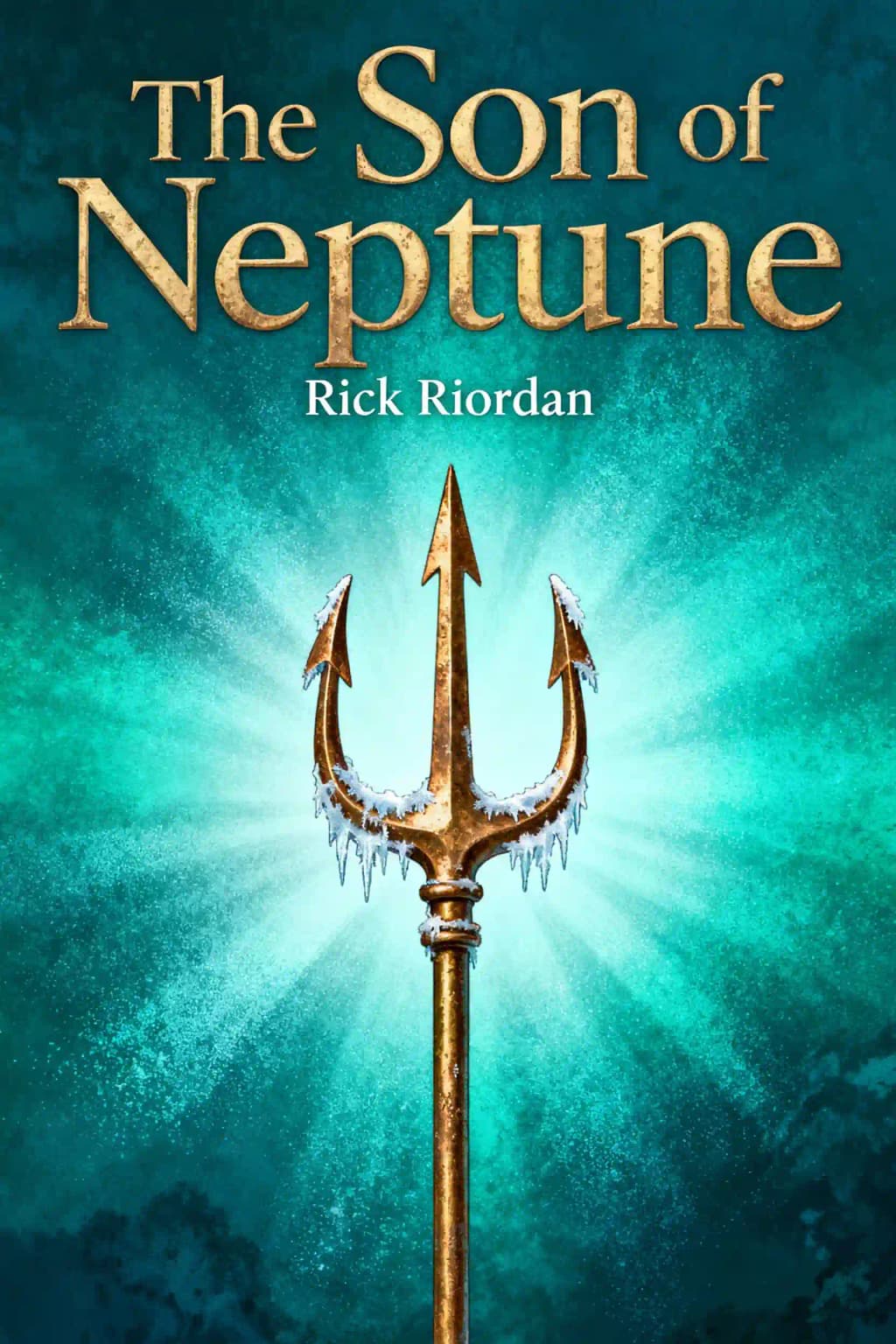
Percy Jackson returns with amnesia in this record-breaking bestseller that sold three million copies on release day. Winner of the 2011 Goodreads Choice Award, this mythological adventure sparked nationwide "Olympian Week" celebrations. What dangerous quest awaits our hero at Camp Jupiter?
Rick Riordan is the #1 New York Times bestselling author of The Son of Neptune and a leading voice in young adult fantasy fiction centered on mythology. Born June 5, 1964, in San Antonio, Texas, Riordan taught middle school English and Social Studies for fifteen years before dedicating himself to writing full-time.
The Son of Neptune is the second book in his Heroes of Olympus series, continuing the Greek and Roman mythology adventures he pioneered with Percy Jackson & the Olympians. He originally created Percy Jackson as bedtime stories for his son Haley, who has ADHD and dyslexia, inspiring Riordan to craft protagonists with similar challenges.
His mythology-driven novels have spent 788 combined weeks on the New York Times bestseller list, and his stories have been adapted into a Disney+ series, Broadway musical, and multiple films. Riordan serves as executive producer on the Percy Jackson television adaptation, bringing hands-on creative control from writers' rooms through final production.
The Son of Neptune is the second book in Rick Riordan's Heroes of Olympus series, following Percy Jackson who awakens with complete amnesia except for one name—Annabeth. The story chronicles Percy's journey to Camp Jupiter, a Roman demigod training camp, where he teams up with Hazel Levesque and Frank Zhang on a quest to free Thanatos, the god of death, from captivity. The trio must succeed before the Feast of Fortuna or face the destruction of both Greek and Roman demigod camps.
Rick Riordan is a #1 New York Times bestselling author born June 5, 1964, in San Antonio, Texas, who taught middle school English for fifteen years before writing full-time. He created the Percy Jackson series after telling bedtime stories to his son about a boy who was half-human and half-god living in modern America. Riordan wrote The Son of Neptune to expand the Percy Jackson universe by blending Greek and Roman mythology, answering his students' requests for more engaging young adult fantasy.
The Son of Neptune is ideal for middle-grade and young adult readers aged 10-16 who enjoy action-packed fantasy adventures rooted in mythology. Fans of the original Percy Jackson series will appreciate Percy's return, while new readers interested in Roman mythology, quest narratives, and diverse characters like Hazel and Frank will find it engaging. The book also appeals to reluctant readers who prefer fast-paced storytelling with humor and relatable demigod characters navigating friendship, loyalty, and identity.
The Son of Neptune delivers an engaging continuation of Rick Riordan's Heroes of Olympus series with Percy Jackson's compelling amnesia storyline and the introduction of strong new protagonists in Hazel and Frank. The book successfully blends Roman and Greek mythology while maintaining Riordan's signature humor and action-packed quest format. For Percy Jackson fans, it's essential reading that bridges the gap between the Greek and Roman worlds, though some readers may find the memory loss plotline temporarily frustrating given their attachment to the original character.
Percy Jackson begins The Son of Neptune with complete amnesia, remembering only Annabeth's name after the goddess Juno (Hera) stole eight months of his memories. He retains his demigod powers and instincts but cannot recall his past adventures, friends from Camp Half-Blood, or why he's being chased by Gorgon sisters. When Percy carries Juno across the Little Tiber river to Camp Jupiter, he loses his Curse of Achilles invincibility but gradually begins recovering fragmented memories throughout the quest.
Hazel Levesque is a daughter of Pluto with the power to summon precious metals from the earth, though anyone who takes her gems experiences cursed bad luck. She died in 1942 after betraying the goddess Gaea but was resurrected by her half-brother Nico di Angelo, causing her to experience periodic blackouts into past memories. Frank Zhang is a son of Mars who carries a magical stick connected to his life force and struggles with self-confidence despite possessing crucial abilities for the Prophecy of the Seven.
Camp Jupiter is the Roman counterpart to Camp Half-Blood, where demigod children of Roman gods train as legionnaires in military-style cohorts. Unlike the more informal Greek camp, Camp Jupiter emphasizes discipline, honor, and Roman military tactics, led by praetors like Reyna who recognize Percy despite his amnesia. The camp includes an auger named Octavian who reads prophecies from stuffed animal entrails and maintains strict traditions separating it from Greek demigod culture.
The central quest in The Son of Neptune requires Percy Jackson, Frank Zhang, and Hazel Levesque to travel to Alaska and free Thanatos, the god of death, from captivity by the giant Alcyoneus. The prophecy demands they "go to Alaska, find Thanatos and free him, come back by sundown on June twenty-fourth or die". Their mission is critical because without Death functioning properly, monsters cannot be permanently killed and continue to reform, threatening the destruction of Camp Jupiter during the Feast of Fortuna.
The Son of Neptune takes place exactly six months after The Lost Hero and bridges Rick Riordan's original Percy Jackson & the Olympians series with the Heroes of Olympus series. The book references Percy's past adventures, including his defeat of Medusa, while introducing the Roman perspective on Greek mythology that Percy previously knew. Nico di Angelo appears as a connecting character who knows Percy's identity but must keep secrets, and the Prophecy of the Seven links both Greek and Roman demigods in an upcoming war.
The Prophecy of the Seven is an ancient prediction stating that seven demigods must unite to battle their way to the Doors of Death to prevent Gaea's rise. Percy Jackson partially recognizes this prophecy written on Camp Jupiter's temple floor despite his amnesia, suggesting his destined role in the upcoming conflict. Mars reveals that each of the seven demigods possesses unique skills and fatal flaws essential to the prophecy's success, with Percy's fatal flaw being his unwavering loyalty.
The Son of Neptune explores identity and memory as Percy struggles to piece together who he is without his past experiences guiding him. The book examines loyalty through Percy's determination to help others despite not remembering why he cares, and friendship as three outsiders—Percy, Hazel, and Frank—form bonds while undertaking an impossible quest. Additional themes include:
While The Son of Neptune works as a standalone adventure with Percy Jackson, reading The Lost Hero first provides important context about the Heroes of Olympus series and the Greek-Roman divide. The Lost Hero introduces Jason Grace, Piper McLean, and Leo Valdez, whose story runs parallel to Percy's journey and will eventually converge. However, Rick Riordan designed The Son of Neptune with Percy's amnesia as a narrative device that allows new readers to enter the series, though understanding references to Camp Half-Blood and Percy's previous adventures enhances the reading experience.
Sinta o livro através da voz do autor
Transforme conhecimento em insights envolventes e ricos em exemplos
Capture ideias-chave em um instante para aprendizado rápido
Aproveite o livro de uma forma divertida e envolvente
Romans build for eternity, just as their historical counterparts did.
You're a Roman first, a demigod second.
Character exists independently of memory.
His moral compass remains true.
The ocean calls to him with mysterious familiarity.
Divida as ideias-chave de The Heroes of Olympus em pontos fáceis de entender para compreender como equipes inovadoras criam, colaboram e crescem.
Destile The Heroes of Olympus em dicas de memória rápidas que destacam os princípios-chave de franqueza, trabalho em equipe e resiliência criativa.

Experimente The Heroes of Olympus através de narrativas vívidas que transformam lições de inovação em momentos que você lembrará e aplicará.
Pergunte qualquer coisa, escolha a voz e co-crie insights que realmente ressoem com você.

Criado por ex-alunos da Universidade de Columbia em San Francisco
"Instead of endless scrolling, I just hit play on BeFreed. It saves me so much time."
"I never knew where to start with nonfiction—BeFreed’s book lists turned into podcasts gave me a clear path."
"Perfect balance between learning and entertainment. Finished ‘Thinking, Fast and Slow’ on my commute this week."
"Crazy how much I learned while walking the dog. BeFreed = small habits → big gains."
"Reading used to feel like a chore. Now it’s just part of my lifestyle."
"Feels effortless compared to reading. I’ve finished 6 books this month already."
"BeFreed turned my guilty doomscrolling into something that feels productive and inspiring."
"BeFreed turned my commute into learning time. 20-min podcasts are perfect for finishing books I never had time for."
"BeFreed replaced my podcast queue. Imagine Spotify for books — that’s it. 🙌"
"It is great for me to learn something from the book without reading it."
"The themed book list podcasts help me connect ideas across authors—like a guided audio journey."
"Makes me feel smarter every time before going to work"
Criado por ex-alunos da Universidade de Columbia em San Francisco

Obtenha o resumo de The Heroes of Olympus como PDF ou EPUB gratuito. Imprima ou leia offline a qualquer momento.
Percy Jackson wakes up with no memory except his name, hunted by gorgon sisters who refuse to stay dead when killed. One bizarrely offers him poisoned cheese samples while trying to murder him - a surreal customer service approach to assassination. These monsters serve the earth goddess Gaea, who's stirring from millennia of slumber. Despite his amnesia, Percy's combat reflexes remain intact - he can fight expertly even when he can't remember learning how. At a crossroads, Percy encounters an old woman who introduces herself as June. She offers him an impossible choice: escape to the safety of the ocean that mysteriously calls to him, or carry her to a nearby camp at great personal risk. The sea beckons with familiar comfort, but something in Percy - some core value that transcends memory - makes him choose to help the stranger. This decision changes everything. June transforms into her true form as Juno, Roman goddess of family, and announces Percy as "the son of Neptune" at Camp Jupiter, a military-style training ground for Roman demigods. Here, Percy must navigate a rigid hierarchy where Neptune's children are considered bad luck, where his instincts clash with Roman discipline, and where his forgotten Greek past creates an identity crisis that will define his journey. What makes us who we are when our memories are stolen? Percy's struggle suggests our core character exists independently of our personal history - we remain ourselves even when we can't remember who that is.