Capítulo 1
The Pursuit of Happiness: A Scientifically-Backed Blueprint
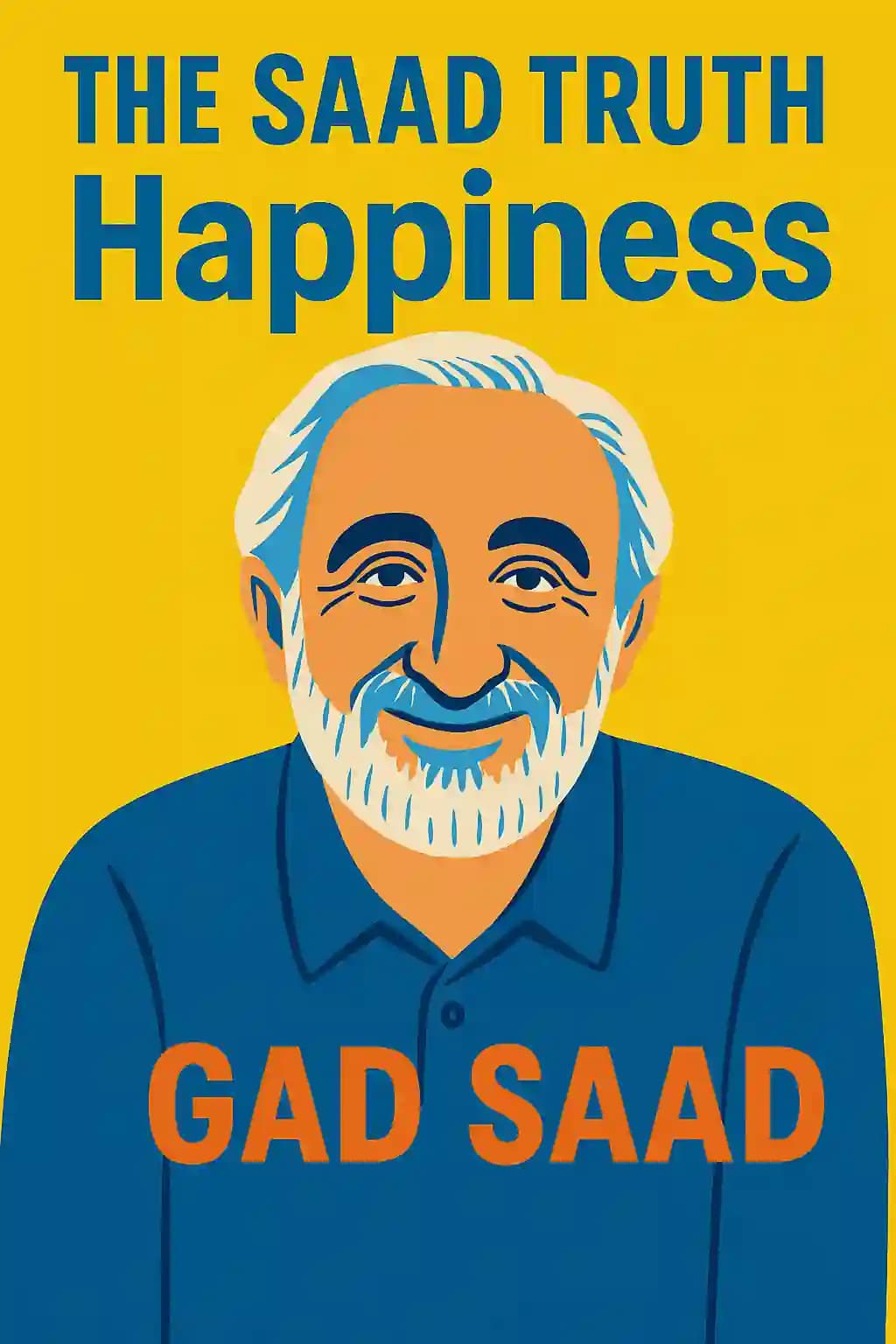
Have you ever wondered why some people seem naturally joyful while others struggle to find contentment? In "The Saad Truth About Happiness," evolutionary psychologist Gad Saad offers a refreshing perspective that blends ancient wisdom with cutting-edge science. This isn't your typical self-help book filled with empty platitudes. Instead, Saad delivers evidence-based strategies for genuine happiness while challenging popular misconceptions. As a survivor of the Lebanese civil war who nearly wasn't born at all, Saad's approach to happiness is grounded in existential gratitude and scientific rigor. His book has garnered praise from diverse audiences, from academics to public intellectuals like Glenn Beck, who noted Saad's naturally joyful disposition. What makes this work particularly valuable is how it bridges the gap between descriptive evolutionary psychology and prescriptive life guidance-showing us not just why we feel what we feel, but how to leverage that understanding for a more fulfilling life.
Capítulo 2
Ancient Wisdom Meets Modern Science: The Foundations of Happiness
For millennia, philosophers and theologians have offered prescriptions for the good life, from Judaism's 613 mitzvot to Christianity's warnings against the seven deadly sins. While ancient Greeks initially viewed happiness as determined by gods, philosophers like Plato and Aristotle recognized human agency in achieving happiness. Today, happiness has become a scientific pursuit studied by psychologists like Martin Seligman and Jonathan Haidt.
The relationship between happiness and health works bidirectionally. Happy people are more likely to exercise, eat healthily, and exhibit better health markers including lower cortisol levels, reduced inflammation, and lower blood pressure. Mentally, happy people tend to be satisfied with "good enough" outcomes rather than maximizing every decision, are less affected by social comparisons, and more adept at finding silver linings-a trainable mindset independent of genetics.
Personality significantly influences happiness. Meta-analyses show clear correlations: extraverted, agreeable, conscientious, open, and honest-humble individuals who score low on neuroticism tend to be happier. This personality diversity persists because different traits are advantageous in different environments-evolution has maintained this variation for good reason.
Wealth's relationship to happiness is nuanced. Some research indicates happiness plateaus at $75,000 annual income, while other studies show continued correlation at all income levels. Lottery winners experience increased life satisfaction but not necessarily happiness, as windfalls provide financial security without purpose or accomplishment. Happiness rooted in intellectual curiosity and discovery proves more enduring than happiness tied to possessions.
Cultural factors significantly influence happiness. The World Happiness Report consistently ranks Scandinavian countries highest, attributing this to well-functioning democracy, effective social welfare, low crime, and high trust. However, happiness isn't merely absolute but comparative. As social beings, we evaluate our happiness relative to others, exemplified by "keeping up with the Joneses." Social media exacerbates this by showcasing everyone's best selves, leading observers to feel inadequate by comparison.
Our assessment of experiences follows Daniel Kahneman's "peak-end" model-we judge experiences by their peaks and endings rather than their average or cumulative pleasure. This seemingly irrational tendency makes evolutionary sense: for survival, the intensity of experiences and how they conclude matter more than their duration.
Much modern unhappiness stems from evolutionary adaptations that once benefited us but now clash with contemporary environments. Urban loneliness reflects the mismatch between modern metropolitan living and our ancestors' small-band environments. We can counteract this by creating small communities within cities and being open to connecting with strangers.
Capítulo 3
Life's Critical Choices: Partners and Professions
Decision-making defines our existence-"I decide, therefore I am." Among countless daily choices, none impact happiness more than selecting a life partner and job. The Harvard Study of Adult Development confirms relationships are crucial for healthy aging and happiness. A meta-analysis of 148 studies showed strong social relationships increase survival rates by 50%.
Finding "the one" isn't about DNA matching as portrayed in Netflix series. Mate selection works through multi-attribute compensatory choice-we can offset shortcomings in one area by excelling in others. Anyone unhappy with their romantic prospects can improve their situation by enhancing their desirable qualities.
Between "birds of a feather" and "opposites attract," research shows people sharing similar values have more successful long-term unions. People generally assort with others of similar overall mating value-a composite score of desirability traits. Marriages face insurmountable stressors when a couple's mating values diverge significantly over time.
Successful marriages require humility. Unlike English, French distinguishes between positive pride (fierte) and negative pride (orgueil). When both partners are too proud to admit mistakes or apologize, marriages accumulate unresolved negativity. Corinthians 13:4 wisely notes that "Love is patient, love is kind. It does not envy, it does not boast, it is not proud."
Finding meaningful employment provides purpose, though not all jobs are equally fulfilling. Studies show that delaying retirement, engaging in "bridge" employment, or volunteering after retirement offers significant physical and mental health benefits, including protection against cognitive decline.
Despite long working hours, the greatest occupational stressor isn't workload but lack of autonomy. Research confirms that happiness, satisfaction, and meaningfulness at work correlate with personal agency and task variety. Jobs with low intellectual discretion and rigid scheduling significantly increase risks of coronary heart disease and all-cause mortality.
Another crucial factor is workplace justice: employees need to feel fairly treated and properly valued. Non-meritocratic environments where achievements go unrecognized create detrimental stress. Finding a job where your talents and contributions are fully appreciated is essential for well-being.
While there are countless ways to contribute positively to the world, the creative process offers perhaps the most fulfilling path to purpose and meaning. Whether you're a chef crafting culinary art or a scientist creating new knowledge, creativity satisfies a visceral human need and provides a form of immortality through memetic proliferation.
Capítulo 4
The Golden Mean: Finding Balance in All Things
Is there an elegant rule for optimal human happiness? While the Golden Rule offers wisdom, Aristotle's concept of the golden mean-finding the sweet spot between extremes-provides the most compelling answer. This principle, captured by "All good things in moderation," forms an inverted-U curve mathematically. Ancient wisdom across cultures converges on this truth: Buddha's Middle Way balances self-denial and self-indulgence, while Confucius taught that the superior person embodies the Mean. The Stoics similarly advocated for measured responses to life's challenges, neither suppressing emotions entirely nor allowing them to run unchecked.
The Yerkes-Dodson law demonstrates how performance follows an inverted-U relationship with arousal-too little stress creates insufficient focus while too much becomes paralyzing. Athletes consistently find their optimal arousal sweet spot differs by sport: gymnasts require higher arousal than archers for peak performance. In exercise science, research shows moderate intensity workouts (65-75% max heart rate) deliver maximum health benefits, while extreme training can suppress immune function and increase injury risk.
In advertising, the repetition effect follows this curve-too few exposures fail to register the message, while too many create consumer annoyance. Studies indicate the optimal exposure range is 3-7 times for most marketing messages. Fear appeals in public messaging also follow this pattern: insufficient fear generates no response, while excessive fear triggers fatalistic resignation. The COVID-19 pandemic illustrated this perfectly-taking no precautions was dangerous, but becoming a fearful shut-in proved equally detrimental to wellbeing, with isolation leading to increased mental health issues.
The inverted-U principle applies critically to parenting and mentoring. Between the extremes of "tiger mother" strictness and laissez-faire permissiveness lies the optimal approach. Studies confirm that intermediate levels of parental supervision yield the highest academic achievement, with students scoring 23% higher than those with either overly strict or completely hands-off parents. In academic mentorship, the sweet spot between disengaged non-guidance and overbearing mentorship produces the most successful outcomes, with weekly check-ins proving more effective than daily oversight or monthly meetings.
Corporate responsibility has evolved through four distinct stages: from production-centric (1920s-1950s), to marketing-centric customization (1960s-1980s), to corporate social responsibility (1990s-2000s), and finally to today's "woke capitalism." The optimal approach balances social responsibility without alienating consumers with excessive politics, as demonstrated by companies like Patagonia that maintain profitability while advancing environmental causes.
The inverted-U effect applies powerfully to consumption patterns. Moderate alcohol intake (1-2 drinks daily) improves cardiovascular health through increased HDL cholesterol, while moderate fish consumption (2-3 servings weekly) enhances cognitive performance through omega-3 fatty acids. Even consumer choice follows this pattern-contrary to economic theory that more options are always better, studies show people become overwhelmed by excessive choices, with optimal satisfaction occurring with 6-10 options rather than dozens.
Modern science reveals that even happiness itself should be pursued in moderation. Excessive striving for happiness can lead to detrimental behaviors like increased gullibility and paradoxically, greater loneliness. Research shows that accepting a natural range of emotions, rather than pursuing constant happiness, leads to better psychological outcomes. The inverted-U curve represents a universal law of optimal functioning at all levels-neuronal, individual, organizational, economic, and political-suggesting that balance, not extremes, leads to peak performance and satisfaction.
Capítulo 5
Life Through Play: The Happiness of Perpetual Wonder
Play isn't just for children-it's a fundamental aspect of human nature that enhances happiness throughout life. As Stuart Brown notes, "When we play, we are engaged in the purest expression of our humanity." Play has deep evolutionary roots and adaptive advantages, helping us develop survival skills, build resilience, foster creativity, and promote cooperation.
Even in the harshest circumstances-like war zones-children find ways to play. Play's healing power extends to medical settings too, as popularized by Patch Adams, who showed how laughter increases catecholamines and endorphins, improving cardiovascular health and immune response. Research confirms that playful adults enjoy greater psychological and physical well-being, with curiosity and zest (both linked to playfulness) among the top character strengths correlated with life satisfaction.
Humor represents anti-fragility in both individuals and societies. Self-deprecating humor signals confidence-a "costly signal" that demonstrates security in oneself. Dictators historically despise humor because it undermines their fragile hold based on force and lies. Laughter has evolutionary roots and documented health benefits-protecting against specific forms of mortality in men (infections) and women (cardiovascular diseases), confirming the adage that "laughter is the best medicine."
The author laments the addictive nature of electronic devices and their negative impacts: obesity, depression, poor diet, anxiety, reduced cognitive development, and disturbed sleep patterns. E.O. Wilson's concept of "biophilia" recognizes humans' innate need to connect with nature, with research showing clear health benefits. Post-surgery patients with nature views recover faster with fewer complications and less pain medication than those facing brick walls.
Scientific research is fundamentally a form of intellectual play. Scientists often hide this playful nature, fearing taxpayers might think they're "acting like kids" with public money. Science creates a "world of make-believe" and represents "the process of playing with rules that enables one to reveal previously unseen patterns."
Finding a partner who shares your playful disposition is crucial for happiness. Research confirms that people who are humorous and playful tend to attract similar partners, and cross-cultural studies show marital satisfaction correlates with a spouse's level of humor.
Life is fleeting and precious, and adopting a playful mindset helps navigate life's challenges. Being playful doesn't mean one isn't serious-rather, many austere moments are enriched by tapping into our inner child with wide-eyed excitement. To be maximally happy requires immersing oneself in perpetual play across countless life domains.
Capítulo 6
Seeking Variety: When Novelty Enhances Happiness
The author explores how pursuing variety can forestall existential monotony while acknowledging that it isn't always beneficial. Both variety and routine have distinct happiness benefits, and the challenge lies in navigating these competing instincts. Research consistently shows that engaging in diverse happiness-inducing activities strongly correlates with overall well-being, though pursuing too many activities simultaneously can be detrimental to focus and satisfaction. Studies indicate that people who engage in 4-6 different types of meaningful activities per week report higher life satisfaction than those who concentrate on fewer pursuits.
The optimal approach lies between extreme specialization and generalization, with research suggesting a "T-shaped" model - deep expertise in one area combined with broad knowledge across multiple domains. Universities increasingly recognize that interdisciplinary approaches are necessary for solving pressing scientific problems. The human genome project serves as a prime example, combining expertise from biology, chemistry, physics, mathematics, and computer science to achieve breakthrough results. Similar interdisciplinary successes can be seen in climate change research, artificial intelligence development, and modern medicine.
Analogical reasoning - applying variety-seeking to logical problem-solving - proves particularly powerful in innovation. Research from major research institutions shows that laboratories with members from diverse disciplines produce stronger analogical reasoning and more innovative solutions. Patent analyses reveal that generalists produce more patents in slow-paced domains where broad knowledge is advantageous, while specialists excel at sophisticated technical inventions requiring deep expertise. Notably, eminent scientists often maintain diverse interests outside their expertise - Nobel laureates are 25 times more likely to have serious arts and crafts avocations compared to the general population.
The biological drive for variety is deeply ingrained, as demonstrated by the "Coolidge effect" - named after an anecdote involving President Calvin Coolidge observing that roosters mate repeatedly with multiple hens but not with the same hen. Evolutionary psychology research shows men consistently desire sexual variety more than women across cultures globally, though women have also evolved variety-seeking behaviors for genetic diversity. Despite these conflicting evolutionary drives for both monogamy and variety, research consistently suggests that marriage improves well-being, with those having fewer pre-marriage partners reporting greater relationship satisfaction and happiness.
From an evolutionary perspective, omnivores naturally crave diverse tastes, smells, and textures as a survival mechanism to ensure varied nutrient intake. Modern research confirms that food variety increases overall intake, potentially leading to weight gain in today's abundant food environment. However, the relationship is nuanced - greater variety within a single meal may cause weight gain through overconsumption, while variety across longer timeframes might actually support weight loss by preventing dietary boredom and maintaining healthy eating habits.
Exercise benefits significantly from variety as well. Studies show having multiple exercise machines at home increases workout frequency by 45% and duration by 15%. Research confirms variety in exercise equipment yields multiple benefits including more repetitions performed, greater cumulative weight lifted, and increased enjoyment of workouts. This variety effect is particularly strong when different muscle groups are targeted on different days.
The impact of activity variety on happiness depends crucially on timeframe. Within short periods (like an hour), variety actually decreases happiness by hindering productivity and flow states. However, over longer periods (a full day or week), variety enhances happiness by providing stimulation and preventing hedonic adaptation. The key is finding the right balance between focused periods of singular activity and broader periods of diverse engagement.
Capítulo 7
The Anti-Fragile Mind: Thriving Through Adversity
Persistence, grit, and resilience in the face of rejection are essential for success and happiness. While rejection is painful, enduring failure and persisting makes one "anti-fragile"-stronger through adversity. Even apex predators like wolves, lions, and tigers experience high failure rates in hunting, demonstrating that failure is natural and inevitable in life.
Stressors are often necessary for optimal functioning in nature. Fine wines come from vines that struggle in harsh environments. Trees in Biosphere 2 grew quickly but failed to mature properly without wind stress, as natural swaying strengthens trees and develops larger trunks. Similarly, children need exposure to certain environmental stressors to develop properly. Those raised in allergen-poor environments often develop respiratory problems because their immune systems weren't adequately challenged.
The author critiques what he calls "Victimology Poker"-a game where people compete for status through victimhood narratives. Drawing on historical examples of Armenians who fled genocide and Jews who built Israel after the Holocaust, he argues that successful groups acknowledge past suffering but look forward with optimism and agency rather than wallowing in resentment.
Rejection is an inevitable part of life's journey toward success. Studies show men face astronomical rejection rates in romantic pursuits-while 75% of men would accept a sexual invitation from a stranger, not a single woman would. This reflects evolutionary psychology: women's higher mating costs demand greater selectivity.
Legendary success stories often begin with rejection: Zinedine Zidane was rejected by Algeria's national team for being "too slow," Lionel Messi was deemed "too small," Michael Jordan was cut from his high school team, and J.K. Rowling's Harry Potter was rejected by twelve publishers before becoming the bestselling book series in history.
Learning from failure requires correctly attributing its causes. The "fundamental attribution error" describes how people typically credit themselves for successes while blaming others for failures. Many entrepreneurs exemplify this pattern, blaming customers, investors, or creditors for their business failures rather than examining their own contributions.
With startup failure rates around 90%, entrepreneurs must embrace failure as the statistical default. Stanford University's "Fail Faster" course teaches students to become comfortable with uncertainty, develop tools for navigating failure, and transform failures into opportunities through resilience and psychological growth techniques.
Capítulo 8
Banishing Regret: Living an Authentic Life
Regret torments our minds, preventing the ancient Greek concept of ataraxia-tranquility and inner peace. Beyond emotional turmoil, regret produces physiological consequences: increased morning cortisol secretion, worse physical symptoms, and higher depression risk, particularly in older adults with fewer opportunities to address their regrets.
Psychological research distinguishes between regrets based on actions versus inactions. Dr. Tom Gilovich discovered that most people consider their greatest regrets to be ones of inaction ("I regret never going to art school"). Short-term regrets typically involve actions, while long-term regrets-those reflecting on one's lifetime-predominantly involve inactions. This pattern appears universal, replicated across diverse cultures.
Facing mortality crystallizes life's important aspects. Near-death experiences often include life reviews where significant events flash before one's eyes. Palliative nurse Bronnie Ware documented the top five deathbed regrets:
1. "I wish I'd had the courage to live a life true to myself, not the life others expected of me."
2. "I wish I hadn't worked so hard."
3. "I wish I'd had the courage to express my feelings."
4. "I wish I had stayed in touch with my friends."
5. "I wish I had let myself be happier."
Authenticity is essential to avoiding existential regret. Authentic people need only remember one script-their true self-allowing them to live honestly. The author would rather interact with an authentic person whose traits he might find disagreeable than someone who reeks of duplicity but seems "nice."
Students often ask if they're too old to pursue new academic paths. The author responds with Dr. Dagobert Broh's story: a Jewish refugee who fled Nazi Germany, began university classes in his sixties, completed his bachelor's degree at retirement age, earned his master's at eighty, and finally his PhD at ninety-one. Similarly, Manfred Steiner obtained his physics PhD at age eighty-nine after already having an MD and biochemistry PhD. His advice: "Follow your dreams whatever they are. You will always regret it if you do not."
Regret, though negative, can be functionally valuable. Jeff Bezos might never have founded Amazon without his "regret minimization framework." In a 2001 interview, he explained projecting himself at age eighty and asking what he'd regret: "I knew that when I was eighty, I was not going to regret having tried this... But I knew the one thing I might regret is not ever having tried. And I knew that would haunt me every day."
Experiences bring greater happiness than material possessions, and this extends to our regrets. Few people look back wishing they'd bought fancier possessions, but many regret missed experiences like travel adventures or learning new skills.
Capítulo 9
The Destination, Not the Journey: Finding Your Happiness
Happiness isn't found through willful pursuit but arrives as a destination reached through optimal decisions and winning mindsets. Viktor Frankl, drawing from his experiences in Nazi concentration camps, observed that success and happiness "cannot be pursued; it must ensue" as a side effect of dedication to something greater than oneself. Though directly chasing happiness can be counterproductive, research from positive psychology pioneers like Martin Seligman shows modest benefits from happiness training programs that teach cognitive reframing, mindfulness, and gratitude expression. These programs typically show a 10-15% improvement in reported well-being scores over 8-12 weeks.
When life's stresses mount, contextualizing troubles within a broader framework helps maintain perspective. This was exemplified by David McCallum, an exonerated man who spent twenty-nine years wrongfully imprisoned yet maintained remarkable grace and forgiveness. During his imprisonment, he developed a daily gratitude practice, focusing on small pleasures like reading and learning. His ability to maintain gratitude despite unjust imprisonment demonstrated how this virtue can inoculate against life's hardships and correlate with happiness even in the most difficult circumstances. Studies show that individuals who practice regular gratitude report 25% higher life satisfaction scores.
Another example is Bijan Gilani, who despite being homeless maintained remarkable optimism by reminding himself daily of his strengths: "I can write. I can think. I'm educated. I'm a moral person." Though living in his SUV, he rejoiced in having a gym membership and library card, embodying stoicism by valuing a healthy body and inquisitive mind above material comforts. His story illustrates the power of cognitive reframing - focusing on assets rather than deficits - a technique proven effective in multiple psychological studies.
While our genetic set point accounts for roughly 50% of our happiness baseline according to twin studies, we can each architect our own happiness through intentional choices and practices. Life's precious moments should be savored, recognizing the infinitesimal probability of our existence - approximately 1 in 400 trillion. The blueprint for maximizing happiness includes: finding the right spouse (which studies show can increase happiness by up to 30%), working in the right profession (job satisfaction correlates with 40% of overall life satisfaction), seeking moderation across life domains, engaging life with playfulness, pursuing variety at times (novel experiences boost dopamine), persisting toward meaningful goals, being anti-fragile when facing failure, and minimizing future regret through authentic living.
Successfully implementing these prescriptions will draw you closer to the summit of Mount Happiness, but research shows the journey requires patience - most sustainable happiness improvements take 6-12 months of consistent practice to become habitual. The key is focusing on the process of building a meaningful life rather than pursuing happiness directly, allowing joy to naturally emerge from purposeful living.