Capítulo 1
The Invisible Divide: How Elite Colleges Fail Their Poorest Students
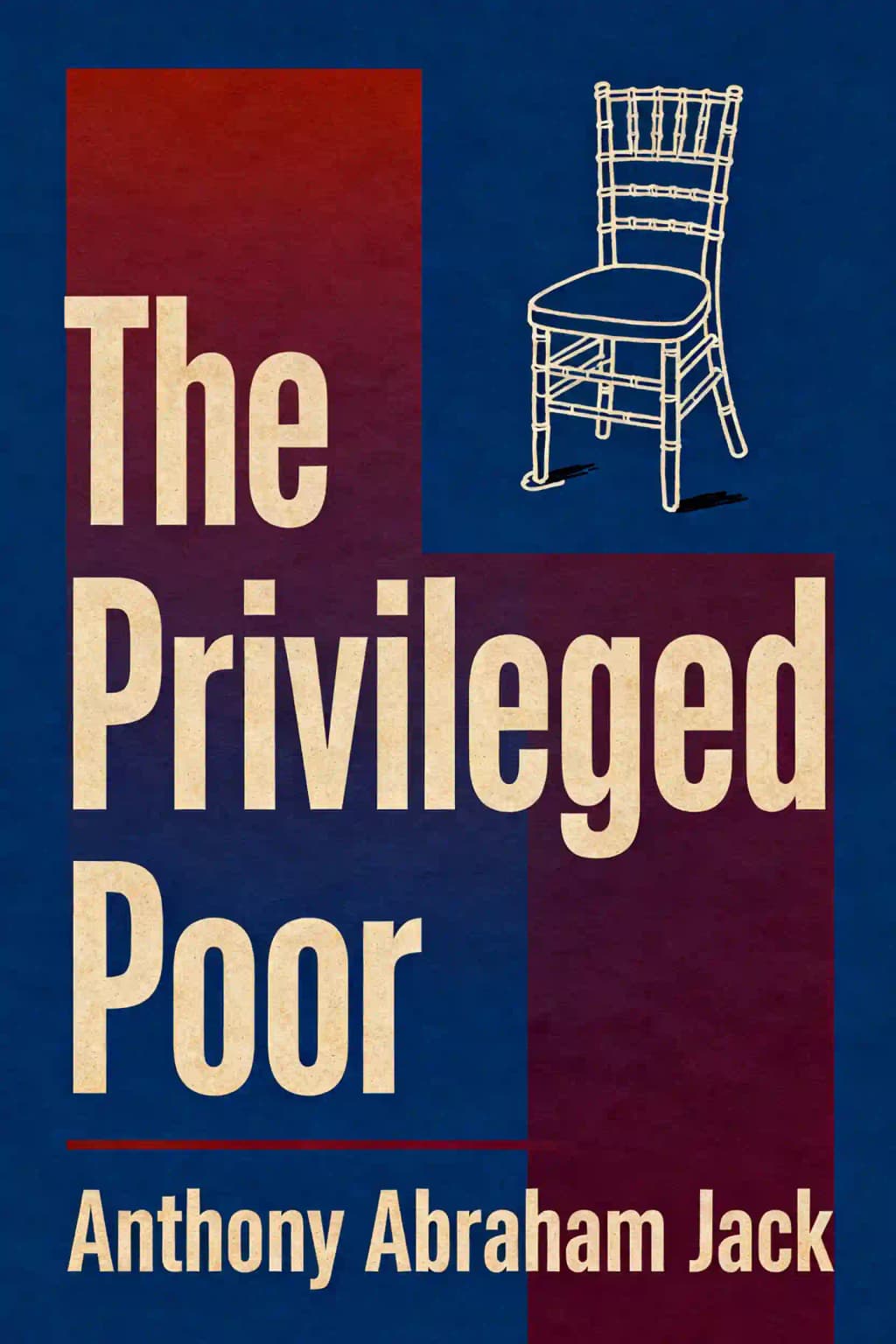
Walking across Amherst College's pristine quad as a freshman from Miami's impoverished Coconut Grove neighborhood, I was struck by the casual conversations around me about private jets and summer homes-not just from white students, but from Black peers as well. This wasn't entirely unfamiliar; my senior year at Gulliver Preparatory had exposed me to wealth. But hearing it from other Black students at college was jarring. That afternoon, I discovered I wasn't alone in this experience. The Black woman sitting next to me at lunch, despite her prestigious day school background and study abroad experience, also came from a single-parent home and was first-generation college. We shared stories of growing up in segregated neighborhoods and doing homework by candlelight when the power was out. Anthony Abraham Jack's "The Privileged Poor" has become required reading at universities nationwide, praised by The New York Times as "an eye-opening expose" that challenges conventional wisdom about disadvantaged students. Through meticulous research at an elite university he calls "Renowned," Jack reveals a crucial distinction among lower-income students that transforms how we understand diversity in higher education.
Capítulo 2
The Hidden Diversity Among Poor Students
Elite colleges have made significant strides in economic diversity, with institutions like Princeton, Amherst, and Harvard pioneering no-loan financial aid policies in the late 1990s. These groundbreaking initiatives have dramatically increased enrollment of Pell Grant-eligible students-Vassar nearly doubled its percentage from 12% to 23% between 2008 and 2015, while similar increases occurred at Yale, Williams, and other top institutions. However, these encouraging statistics mask a critical distinction among lower-income students that Jack's research illuminates through extensive interviews and data analysis.
The "Privileged Poor"-economically disadvantaged students who attended elite private high schools-arrive on campus already familiar with the customs and expectations of wealthy academic environments. Through established pipeline programs like Prep for Prep, A Better Chance, or the TEAK Fellowship, these students gained access to prestigious boarding and day schools before college. These programs typically provide not just academic preparation, but comprehensive cultural and social capital development, including exposure to formal dining etiquette, networking skills, and navigation of institutional relationships with authority figures.
In contrast, the "Doubly Disadvantaged"-poor students from local, often distressed public schools-enter college completely unprepared for its social codes and implicit expectations. These students must simultaneously master academic material while learning unwritten rules about office hours, faculty relationships, and social norms that their more privileged peers internalized years earlier.
This distinction challenges conventional wisdom about class disadvantage in higher education. Over 50 percent of lower-income Black undergraduates and one-third of lower-income Latino students at elite colleges come from private high schools. Their experiences navigating elite spaces during high school fundamentally shape how they experience college life, from classroom participation to extracurricular involvement and career planning.
Consider Patrice and Alice, two Latina students from similar New York City backgrounds-both grew up poor with immigrant mothers on government assistance in unsafe neighborhoods. Patrice was accepted to Prep for Prep and attended a boarding school with a $200 million endowment, receiving comprehensive support including winter clothes, standardized test preparation, college counseling, and even funeral expenses when her grandfather died. Alice, waitlisted for the same program, attended her local public high school where resources were scarce, counselors were overwhelmed with caseloads of 500+ students, and 40% of students dropped out. At Renowned University, Patrice navigated the environment with ease-comfortable approaching professors, joining student organizations, and securing prestigious internships-while Alice struggled with basic interactions, noting that Patrice had "already been through it" and knew "how to work the system."
This distinction remains largely invisible in discussions about diversity and inclusion, yet it fundamentally shapes how students experience campus life, access resources, and build relationships essential for success. Understanding these nuanced differences is crucial for developing more effective support systems and ensuring genuine educational equity beyond simple admission statistics.
Capítulo 3
"Come with Me to Italy!" - The Culture of Casual Wealth
Imagine standing in an elevator with four students casually discussing coffee when one offhandedly suggests, "You should come with me to Italy!" while another offers Argentinean coffee beans from her room. For wealthy students, these exchanges are unremarkable. For poor students, they're painful reminders of vast disparities that shape campus social life.
Despite efforts to diversify through financial aid, elite institutions remain overwhelmingly affluent. During Jack's research at Renowned, roughly one-third of undergraduates came from families making over $250,000 annually, with one in eight from the top 1% (earning at least $630,000 yearly). This wealth permeates everyday interactions, creating an environment where displays of privilege-expensive clothing, international travel, luxury purchases-are normalized.
How students respond to these displays sets the tone for their entire college experience. While some might casually join conversations about travel and luxury, others view such exchanges as painful reminders of isolation, leading them to avoid "people like that" and their gathering spaces. The conventional wisdom suggests that wealthier students naturally feel comfortable at elite institutions while poorer students feel alienated. However, Jack's research reveals a more complex reality.
Upper-income students rarely experience culture shock at Renowned. When asked about unfamiliar aspects of campus social life, affluent Black students often seemed confused by the question itself. Antoinette, from a wealthy family who attended private Manhattan schools before following her mother's footsteps to a prestigious New England boarding school, described her transition to Renowned as "seamless" with "not much at all" feeling alien. Even when affluent students did notice differences-like Kramer observing "ridiculously rich" classmates whose parents owned sports teams-they didn't feel alienated by these encounters.
For the Doubly Disadvantaged, however, the collision with wealthy peers creates profound alienation. Elise was shocked when her wealthy international dormmate treated ambulance rides for alcohol poisoning as minor financial inconveniences. "These people's lives are not real," she exclaimed in frustration. William, from a small farming town, expressed similar alienation when classmates casually discussed $30 lobsters as "cheap" while he couldn't fathom not using his meal plan: "I haven't eaten out or gone shopping. That seems to be a weekly activity. Daily."
Beyond financial constraints, the Doubly Disadvantaged felt pressured to abandon their values. William worried about "the pressure to become one of them," observing how Renowned transformed students who arrived with diverse goals into finance industry recruits. Even those who tried integrating faced humiliating reminders of their outsider status, like Ryan from Appalachian mining country who nearly drank from a finger bowl at a formal dinner, saved only by a friend's intervention.
Capítulo 4
It's Just Like High School: The Privileged Poor Advantage
Unlike their Doubly Disadvantaged peers, the Privileged Poor describe their transition to Renowned with phrases like "fifth year," "next step," and "same old, same old." Having already navigated elite environments in their prep schools, these students find campus culture familiar, allowing them to navigate Renowned much like their affluent classmates.
Virginia, who attended an exclusive all-girls private school, describes Renowned as "just a continuation of high school, but with more people." Having already navigated environments where students casually left expensive electronics and instruments lying around, she feels prepared for "white people and wealthy people" at college. The Privileged Poor's exposure goes beyond observation-they've often participated in wealthy peers' lifestyles, attending sweet sixteen parties at exclusive venues like Cipriani Wall Street or birthdays at the Waldorf-Astoria.
When friends are shocked at someone spending $200 on a scarf, Virginia simply shrugs: "I've seen worse." She explains, "My friends at Renowned are experiencing something I experienced years ago... I'm a little ahead of the game." The Privileged Poor have also often traveled internationally through their prep schools' study abroad programs, allowing them to easily join conversations about European travel.
This doesn't mean college life is easy for them. Growing up in troubled communities means they live with constant anxiety about calls from home-requests for money or news of violence affecting loved ones-that their wealthier peers don't experience. Ogun, while comfortable at Renowned, worries about friends lost to violence, her mother's healthcare needs, and gentrification threatening her family's housing stability.
For the Privileged Poor, culture shock happened years earlier when they first entered private high schools, not when they arrived at Renowned. Michelle described that earlier transition as "terrible" and "the biggest culture shock I've ever had in my life," while Piper found it "awkward" navigating wealthy peers who couldn't understand "challenges that I face as an Asian kid from a poor neighborhood."
The Privileged Poor's familiarity with elite institutions doesn't shield them from painful experiences. Jessie, who joined an exclusive sorority, was horrified when new members were forced to take selfies with homeless people as part of hazing-particularly painful given her own family's housing instability. They also face unique tensions with other lower-income students, as Patrice discovered when her friend dismissed her struggles: "You're Latina, but you're elite," making her "feel less of a Latina" despite her difficult journey to college.
Capítulo 5
"Can You Sign Your Book for Me?" - Faculty Relationships and Success
At an exclusive film screening attended mostly by professors and administrators, Marie-a Black sophomore from an upper-class family-confidently approaches a professor, engages her in conversation, and asks her to sign a book. This interaction reveals how some students naturally navigate relationships with faculty while others struggle with the mere prospect of speaking with professors.
Face time with faculty matters beyond just getting help with assignments-it's a gateway to recommendation letters, on-campus jobs, internships, and special opportunities. These relationships often mean getting the benefit of the doubt when in trouble, better housing assignments, or introductions to recruiters. The earlier students develop these connections, the better their chances at securing coveted benefits.
Yet this expectation to proactively connect with faculty remains largely unspoken, exacerbating existing inequalities. Even the concept of "office hours" is rarely defined properly-professors assume students understand what they are and how to use them. As one dean discovered, some lower-income students interpret "office hours" as private time when professors shouldn't be disturbed-the exact opposite of their intended purpose.
Upper-income students approach interactions with faculty as if they're no big deal. They see college resources as theirs for the taking and enter with the inclination to seek help, comfortable engaging with authority figures. Brittany remarked, "I have no objections asking TAs for help. I never have fear. I'm a very confident person." For them, reaching out is as much a part of their academic enrichment as essays and problem sets.
The Doubly Disadvantaged have a far more difficult time connecting with faculty. For them, college success is about "the work"-coursework is paramount while personal engagement with professors creates anxiety. As Marcia explains, "Some people would call it privilege, but it's ease. A lot of kids here just know how to act in these situations because they don't evaluate, they don't second guess themselves. I do."
These students characterize faculty interactions as tense and anxiety-inducing. Only a third report positive relationships with professors, and even these are often strained. Many intentionally distance themselves from faculty. Shaniqua, who grew up poor and often homeless, explains: "When you're poor and homeless, you get used to taking what is given. You don't complain... It's made it harder for me to advocate for myself." This mindset led her to nearly fail classes rather than reach out to professors.
The Privileged Poor defy this pattern. Unlike the Doubly Disadvantaged, they report feeling at ease with professors and administrators, having learned the expected style of academic exchange at their private high schools. They enter college seeing professors as facilitators to their academic and professional dreams and proactively reach out to them. Ogun developed a "go out and get yours" attitude that prioritizes building support networks. Similarly, Marina contacted professors early, saying "Academically, definitely my first year academic adviser, I went to her for everything."
Capítulo 6
Building Networks or Going It Alone: Divergent Strategies
Beyond comfort with faculty, students' strategies for accessing campus resources reveal another key difference in how they navigate elite college environments. Upper-income students and the Privileged Poor actively build networks with faculty and administrators to support both academic goals and post-graduation plans, while the Doubly Disadvantaged view such networking as morally questionable.
Upper-income students approach faculty relationships strategically and unapologetically, seeking recommendation letters, research positions, and professional connections. Kramer developed relationships with TAs who became "unofficial mentors" and tennis partners. Justin's approach was even more direct: "reach out; I reach out to everyone"-from professors to business people to physicians.
The Doubly Disadvantaged resist networking approaches that contradict their values about merit and hard work. Daniel avoided professors and even his academic dean when on academic probation, refusing to use personal connections for opportunities. Isabel struggled with faculty interactions even as a junior: "I have never felt comfortable speaking to adults as equals...How am I going to build a relationship they say is 'one of a kind' here? I can't even open my mouth." Rather than seeking help during difficult times, she used her family's hardship as a yardstick, thinking, "My father has lived way worse things than I lived."
Unlike the Doubly Disadvantaged, the Privileged Poor approach faculty relationships with confidence similar to wealthy peers, but recognize these skills as acquired rather than inherited. Damion worked with three advisers at Renowned to create support groups for lower-income and first-generation students. Nicole actively sought connections: "I say, 'Let's get coffee.' I have no qualms asking a teacher for help... I make it a point to know my teaching assistants, my professors." Stephanie intuitively reached out to professors when struggling, contrasting her approach with friends who hesitated: "I would very intuitively email the professor and say, 'I'm not doing well. Please meet with me. This is my schedule.'"
Capítulo 7
"I, Too, Am Hungry" - When Institutions Fail Their Poorest Students
While previous sections explored cultural and social differences between student groups, Jack's research also uncovered material inequalities that affect both the Doubly Disadvantaged and Privileged Poor alike. At Renowned University, despite its multi-billion-dollar endowment, all cafeterias closed during spring break, leaving students who cannot afford to leave campus (often the poorest) without access to food.
This policy created a crisis for lower-income students. Food insecurity is a widespread problem affecting 20-36% of college students nationwide, including 20% of California State University students and two-thirds of first-generation students at George Washington University. Some students developed desperate strategies for survival. At a conference for first-generation students, one Columbia University student confessed to increasing her online dating activity before breaks to secure free meals, treating "Tinder as if it were OpenTable."
Spring break policies painfully highlighted class differences. As Callie called it, "pretty terrible... royally unfair," while Valeria quipped, "Spring break is the real Hunger Games," where the odds are never in poor students' favor. After documenting that roughly one in seven students remained on campus during breaks, Jack lobbied administrators to change this policy. Despite resistance-some arguing that more students would stay if food were provided, others claiming financial aid was already generous enough-Renowned finally kept dining halls open during spring break starting in 2015.
Beyond food insecurity, Jack's research identified other institutional practices that marginalize poor students. Community Detail, a janitorial service administered by Renowned, functioned both as a preorientation program for incoming first-years and as a work-study eligible job throughout the academic year. While it paid well and offered flexible hours, many participating students viewed it as the university's way of pushing disadvantaged students into manual labor, creating significant social costs for them.
As summer ends at Renowned, incoming freshmen participating in Community Detail can be seen walking around campus with eleven-pound vacuum cleaner backpacks and buckets filled with cleaning supplies. These students clean dorm rooms recently vacated by summer program participants, encountering revolting conditions-soiled tampons, used condoms, vomit in sinks, and dead vermin. While other preorientation programs like Summit Seekers (hiking), Vamonos Van Gogh (arts), and CiViC (volunteering) focus on enrichment, Community Detail is the only program centered on physical labor and the only one that pays participants.
Poor students, feeling financially constrained, disproportionately choose Community Detail despite its menial nature-they represent 60% of participants despite being only 15% of the student body. The socioeconomic divisions created by Community Detail extend beyond the job itself, affecting students' sense of belonging and identity on campus. Workers like Stacy describe cleaning filthy bathrooms with feces-covered toilets and used condoms on floors, only to be treated dismissively by peers. The job creates particularly painful dynamics for students of color, who must confront racial stereotypes about domestic service.
Capítulo 8
A Separate Line for You: Structural Exclusion in Practice
As colleges increasingly diversify their student populations, institutions implement various support programs like laptop assistance, winter coat funds, and meal plan supplements to help lower-income students navigate campus life. Renowned University created Scholarship Plus, offering five free tickets per semester to campus events - including sports games, theatrical performances, and guest speaker series - for students receiving full financial aid. While intended to foster inclusion and ensure equal access to campus culture, the program's implementation inadvertently created segregated experiences: students had to stand in designated separate lines and publicly announce their Scholarship Plus status to receive tickets. This created what many students described as a "rich line and a poor line," often visibly divided along racial lines as well, with students of color disproportionately represented in the Scholarship Plus queue.
Most students receiving aid viewed Scholarship Plus as both blessing and curse. While deeply grateful for access to events they couldn't otherwise afford - tickets to major campus events could cost $50-100 - many felt stigmatized by the separate lines and public identification as aid recipients. Students like Ogun, a first-generation sophomore, likened it to the shame of visiting welfare offices, saying "Even though I go here just like you, I am vulnerable again." The physical separation made students feel marked as different from their peers. Some administrators compounded these feelings by referring to the program as a "handout" or "charity case," reinforcing students' sense of being devalued within the campus community.
The implementation undermined the very sense of belonging the program aimed to create. Students reported skipping events they wanted to attend to avoid the separate line experience, which many compared to "being on a welfare line" and described as "traumatic." Several recounted overhearing wealthy peers make dismissive comments while waiting in the regular line. These institutional practices, while well-intentioned, often exacerbate class differences in ways that connect to deeper historical legacies of race and exclusion in higher education. The visible segregation of lines echoed broader patterns of spatial and social segregation that many low-income and minority students experienced throughout their educational journeys.
Some students organized to propose alternatives, such as digital ticket distribution or universal access cards, that could provide the same benefits without the public stigma. Their efforts highlighted how seemingly neutral administrative processes can reproduce social hierarchies and how structural changes require examining both policies and their implementation methods.
Capítulo 9
From Access to Inclusion: Building a Better Path Forward
As elite colleges approach twenty years since the first no-loan financial aid policies began, important questions remain about the future for disadvantaged students. Elite colleges have become beacons of hope for determined youth from humble backgrounds, inviting them through their elaborate gates. Yet there remains a painful gap between access and true inclusion.
Diversity shouldn't just be celebrated on admission day only to be forgotten when students arrive. The four years that follow matter tremendously. While no-loan policies boldly removed economic barriers to entry, financial aid doesn't cover all costs, and the absence of loans doesn't solve all problems.
Researchers and college officials too often treat lower-income students as an undifferentiated group "at risk," flattening the vast differences in their social preparation for college. This simplistic view fails to account for their diverse backgrounds. To truly understand students in the present, colleges must first understand their past-where they come from and what they've experienced to reach college-if they hope to make sense of how each navigates life inside the college gates.
Making it into an elite college doesn't guarantee students will fully benefit from available resources and opportunities. While the Privileged Poor like Nicole and Michelle actively build support networks and advocate for themselves, the Doubly Disadvantaged like Valeria and Miguel often become isolated and withdraw from college community life. Elite institutions contain hidden curricula with unwritten rules that reward students already familiar with these norms, amplifying pre-college differences rather than narrowing them.
While some advocate sending poor students to private schools, this approach represents an abdication of responsibility that benefits only a select few. Instead, we need "durable investments" in public education, bringing abundant resources directly to distressed communities. The success of the Privileged Poor proves that when lower-income students access similar resources as wealthy peers, they thrive-not because they're inherently better than other poor students, but because they've worked hard with proper support.
High schools can foster college-going cultures through scaffold advising and curricula promoting self-empowerment. Universities must revise policies that disadvantage poor students, including expanding food access during breaks, defining academic terminology like "office hours," creating employment opportunities connecting students with professors, and addressing nationwide food insecurity through SNAP eligibility expansion and increased Pell Grants.
Students must remember they have the right to criticize their institutions and advocate for themselves, pushing colleges "to reach beyond access and toward inclusion." Only by recognizing the diversity among disadvantaged students and addressing both cultural and structural barriers can elite institutions fulfill their promise as engines of opportunity rather than reinforcing the very inequalities they claim to address.