Capítulo 1
The Faustian Bargain: Beauty's Poisonous Allure
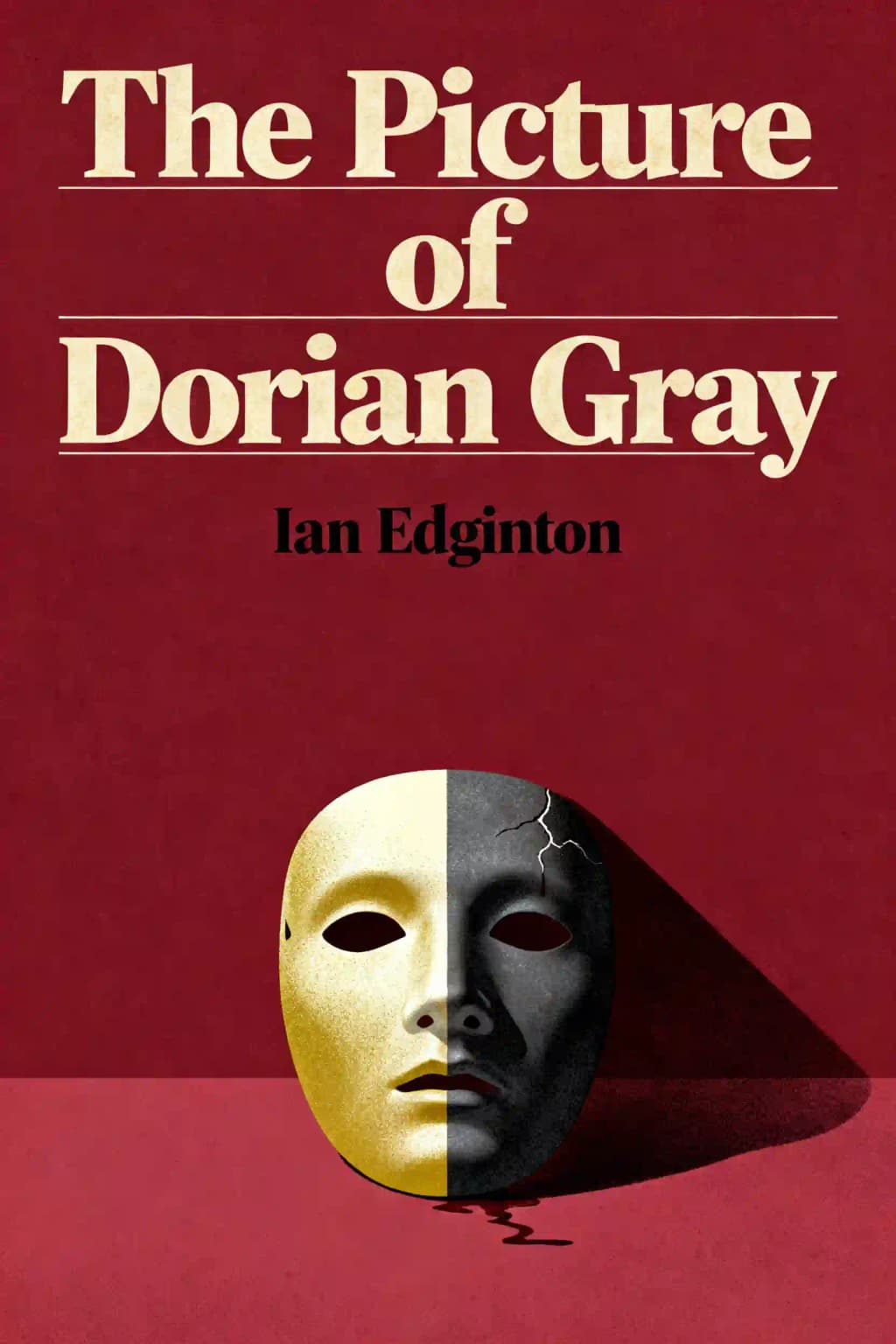
Oscar Wilde's masterpiece has captivated readers for over a century with its seductive exploration of beauty, corruption, and moral decay. First published in 1890, "The Picture of Dorian Gray" shocked Victorian society with its decadent themes and homoerotic undertones. The novel has since become a cultural touchstone, referenced everywhere from Madonna's "Vogue" to countless fashion editorials celebrating "Dorian Gray syndrome"-our modern obsession with preserving youth at all costs. Beloved by artists and intellectuals from David Bowie to Susan Sontag, the book's influence extends far beyond literature into psychology, where the "Dorian Gray effect" describes narcissistic personality traits. At its heart lies a question that feels more relevant than ever in our Instagram-filtered world: what price are we willing to pay for eternal beauty?
Capítulo 2
The Fateful Portrait: A Bargain with Darkness
In a London studio perfumed with roses and lilac, three lives become fatefully intertwined. Basil Hallward, a talented artist, completes what he considers his masterpiece-a portrait of the extraordinarily beautiful young man Dorian Gray. Lord Henry Wotton, a witty aristocrat with dangerous ideas, watches with fascination. When Dorian arrives, his innocence is immediately apparent; he blushes at compliments and sits shyly at the piano playing Schumann.
As Basil works on the portrait's final touches, Lord Henry begins his seduction-not physical, but philosophical. He expounds on his hedonistic worldview: "The aim of life is self-development. To realize one's nature perfectly-that's what each of us is here for." His words affect Dorian like a spell, awakening him to his own beauty and its fleeting nature. "Time is jealous of you," Lord Henry warns, "and wars against your lilies and your roses."
When the portrait is finally revealed, Dorian experiences a moment of terrible clarity. Staring at his own beautiful image, he makes a fateful wish: "If it were I who was to be always young, and the picture that was to grow old! For that-for that-I would give everything! Yes, there is nothing in the whole world I would not give! I would give my soul for that!"
The seemingly innocent exclamation becomes a supernatural contract. While Dorian will remain forever young and beautiful, the portrait will bear the burden of his sins and aging. Basil, horrified by this sudden change in his innocent subject, blames Lord Henry's influence. But it's too late-the corruption has begun, and Dorian chooses to leave with Lord Henry rather than remain with the artist who truly loves him.
This pivotal scene establishes the novel's central metaphor-the externalization of the soul. Dorian's portrait becomes not just a painting but a moral ledger, recording each transgression while his physical form remains pristine. The bargain he strikes resonates deeply with our contemporary anxieties about aging and appearance, making the novel feel startlingly modern despite its Victorian setting.
Capítulo 3
The Corruption Begins: Sibyl Vane's Tragedy
Dorian's first significant act of cruelty manifests through his fateful relationship with Sibyl Vane, a talented young actress performing Shakespeare in a dilapidated theater in London's impoverished East End. For Dorian, Sibyl embodies the pure essence of theatrical art - she transforms nightly into Juliet, Rosalind, or Imogen with such extraordinary conviction that he becomes entranced not by her authentic self but by her remarkable ability to embody these fictional characters. "She is all the great heroines of the world in one," he enthusiastically declares to Lord Henry, his voice filled with aesthetic rapture. "She is more than an individual." Her performances in even the shabbiest of venues take on an almost mystical quality in his eyes.
When Dorian proudly brings his sophisticated friends - Lord Henry and Basil Hallward - to witness Sibyl's talent, an unexpected catastrophe unfolds. Overwhelmed by her genuine love for Dorian (whom she innocently and tellingly refers to as "Prince Charming"), Sibyl finds herself unable to maintain the artistic distance necessary to lose herself in fictional characters. Her performance that evening is wooden and mechanical - a creative disaster that mortifies Dorian before his friends. Rather than showing understanding or compassion for this young woman's emotional awakening, Dorian responds with savage cruelty, delivering the devastating verdict: "Without your art, you are nothing." He abandons her weeping in her dressing room, declaring his love as dead as her art.
The following day brings tragic news when Lord Henry informs Dorian that Sibyl has committed suicide by swallowing prussic acid. Dorian's initial horror and guilt quickly transform into a disturbing aesthetic detachment - he begins to view her death through an artistic lens, describing it as "a wonderful ending to a wonderful play." Even more unsettling is his discovery that the portrait has undergone its first transformation, developing a subtle but unmistakable cruel twist around the mouth that wasn't present before.
This pivotal episode reveals the novel's psychological complexity and moral depths. Dorian's fundamental inability to see Sibyl as a real person rather than merely an artistic object demonstrates his deepening narcissism. He loves her solely as a reflection of his own refined aesthetic tastes, not as a human being with her own identity, dreams, and emotional needs. When she can no longer perform to his exacting standards - precisely because of her genuine feelings for him - she becomes worthless in his eyes, disposable as a broken prop.
The portrait's first transformation marks the crucial beginning of Dorian's moral disintegration. Rather than experiencing genuine remorse for his role in Sibyl's death, he makes a conscious decision to embrace the supernatural bargain he's made: "It had made him conscious how unjust, how cruel, he had been to Sibyl Vane. But was it all irretrievable? No; he was young, his life was before him." The portrait will bear the visible burden of his shame and corruption while he remains eternally youthful and free to pursue pleasure without consequence - a bargain whose true cost he has only begun to comprehend.
Capítulo 4
The Yellow Book: A Poisonous Influence
Lord Henry gives Dorian a mysterious French novel bound in "yellow paper, the cover slightly torn and the edges soiled." Though never named directly, this is clearly Joris-Karl Huysmans' "A Rebours" (Against Nature), the infamous "bible of decadence" that scandalized French society. The book becomes Dorian's personal gospel, a "poisonous" influence that accelerates his moral decay.
The novel tells the story of a young Parisian who devotes himself to collecting exotic experiences and sensations, living entirely for aesthetic pleasure. Dorian becomes obsessed with this character, seeing in him "a kind of prefiguring type of himself." He orders multiple copies bound in different colors to match his changing moods and carries it everywhere.
Under this influence, Dorian develops elaborate aesthetic obsessions. He studies perfumes, believing they can stir the imagination and reveal spiritual mysteries. He collects exotic musical instruments-"the mysterious juruparis of the Rio Negro Indians, that women are not allowed to look at," "the earthen jars of the Peruvians that have the shrill cries of birds," and "flutes of human bones such as Alfonso de Ovalle heard in Chile." He becomes fascinated with ecclesiastical vestments and jewels, each with their own dark histories and superstitions.
What makes this section so compelling is how it illustrates corruption through beauty rather than ugliness. Dorian's aesthetic education becomes a form of moral unlearning. Each exquisite object and refined taste pulls him further from human connection and ethical consideration. His collections are not merely acquisitions but substitutions for genuine experience and relationship.
The yellow book represents the dangerous power of art itself-its ability to shape consciousness and behavior. When Dorian later accuses Lord Henry of giving him the poisonous book, Henry replies, "Art has no influence upon action. It annihilates the desire to act. It is superbly sterile." This is the novel's great irony-art that claims to be separate from morality ultimately has profound moral consequences.
Dorian's obsession with the yellow book reveals how aesthetic appreciation, divorced from ethical consideration, becomes a form of narcissism. He doesn't engage with art to understand others or the world, but only to find reflections of himself and justifications for his increasingly depraved lifestyle.
Capítulo 5
The Secret Room: Portrait of a Corrupted Soul
After Sibyl's death, Dorian becomes increasingly paranoid about his portrait. He moves it from his bright studio to an abandoned schoolroom at the top of his house-a room his grandfather had built for the young Dorian to keep him out of sight. The symbolism is clear: the portrait represents not just Dorian's soul but his buried childhood trauma and the family legacy of cruelty he's inherited.
The ritual of hiding the portrait becomes a pivotal moment. Dorian wraps it in a "purple satin coverlet heavily embroidered with gold" like a sacred relic and carries it upstairs with the help of a frame-maker. Before locking it away, he examines it one final time and is horrified to see the growing corruption in the face-"There was something in its expression that filled him with disgust and loathing."
This secret room becomes the physical manifestation of Dorian's conscience-a space he both fears and is drawn to visit. While his public life continues in beauty and charm, this hidden chamber contains the truth of his moral decay. The portrait grows increasingly hideous with each passing year and each new sin, developing "lines of cruelty round the mouth" and a "loathsome red dew" on the hands after he commits murder.
What makes this concept so psychologically astute is how it captures the compartmentalization that allows people to commit terrible acts while maintaining a positive self-image. Dorian literally locks away the evidence of his corruption, allowing himself to move through society with the appearance of innocence. The portrait becomes both his conscience and the means by which he silences it.
The secret room also represents the Victorian preoccupation with hidden vices. In a society obsessed with propriety and appearances, the idea that one could separate public virtue from private vice was particularly disturbing. Wilde, who knew all too well the cost of keeping secrets in Victorian England, creates in this hidden portrait a powerful symbol of the divided self.
When Dorian shows the portrait to Basil years later, just before murdering him, he says, "Each of us has Heaven and Hell in him." This duality-the beautiful public face and the corrupted private soul-remains one of the novel's most enduring psychological insights.
Capítulo 6
The Descent into Depravity: Dorian's Double Life
As years pass, Dorian's life splits into two distinct realms. In fashionable London society, he remains the beautiful, charming youth who never ages. His home hosts exquisite gatherings where he displays his collections of art and textiles. Women adore him, men seek his friendship, and his opinions on beauty and fashion are treated as gospel.
But rumors begin to circulate about his other life-nocturnal visits to opium dens in the squalid docklands, associations with criminals, and the mysterious ruination of young men from good families who become his companions. Those who fall under his influence suffer terrible fates: a young Guards officer commits suicide, Sir Henry Ashton flees England in disgrace, Adrian Singleton ends up an opium addict, and Lord Kent's son is disgraced.
What makes this descent so disturbing is that Dorian retains his beautiful appearance throughout. His face shows no trace of his debauchery-no lines of dissipation, no marks of age or sin. This creates an unsettling disconnect between appearance and reality that disturbs even those who don't know his secret: "Men who talked grossly became silent when Dorian Gray entered the room. There was something in the purity of his face that rebuked them."
Wilde never explicitly details Dorian's crimes, using suggestion and innuendo instead. This technique makes the corruption more disturbing by engaging the reader's imagination. We know that Dorian's activities involve "dreadful places" and "foul dens," but the specifics remain shadowy. This vagueness also allowed Wilde to hint at taboo subjects-particularly homosexuality-without explicitly naming them.
The psychological insight here is profound: Dorian's immunity from consequences accelerates his moral decay. Without the natural feedback mechanism of seeing his sins reflected in his appearance, he loses all restraint. As Lord Henry observes, "It is only shallow people who do not judge by appearances." When appearance no longer corresponds to reality, moral judgment becomes impossible.
Dorian's double life represents the ultimate Victorian nightmare-the complete separation of public virtue from private vice. His beautiful face becomes not just a mask but a mockery of the social order that relies on visible signs to distinguish good from evil.
Capítulo 7
The Murder of Basil Hallward: Point of No Return
Eighteen years after the portrait's creation, Basil Hallward returns to Dorian's life on the eve of his departure for Paris. The artist has heard disturbing rumors about Dorian's influence on others and confronts him directly: "Why is your friendship so fatal to young men?" He recounts the ruined reputations and tragic ends of Dorian's companions, begging him to deny these accusations.
When Dorian responds with cold indifference, Basil makes a final plea: "I want you to have a clean name and a fair record. I want you to get rid of the dreadful people you associate with." He concludes with the haunting statement, "Only God can see the soul."
This triggers something primal in Dorian-a mixture of rage and terrible pride. "You shall see it yourself, tonight!" he declares, leading Basil upstairs to the locked room. When he unveils the portrait, Basil recoils in horror at the corrupted image that still bears his signature. "Christ! what a thing I must have worshipped!" he exclaims, recognizing his own culpability in creating this monster.
In a moment of uncontrollable hatred, Dorian seizes a knife and stabs Basil repeatedly in the neck, watching with detachment as the painter struggles and dies. The murder marks Dorian's point of no return-a sin so terrible that the portrait now shows blood on its hands.
What makes this scene so powerful is how it brings together the novel's central relationships and themes. Basil, who loved Dorian purely, becomes the sacrifice to Dorian's narcissism. The artist who captured Dorian's soul is destroyed by the monster he helped create. And most disturbing of all, Dorian feels "strangely calm" after the murder, suggesting his complete moral disintegration.
The aftermath reveals Dorian's calculated coldness. He blackmails an old friend, the scientist Alan Campbell, into dissolving Basil's body with chemicals, leaving no trace. When Campbell later commits suicide, it adds another name to the list of lives Dorian has destroyed.
This murder represents the ultimate perversion of aestheticism-killing the creator to preserve the creation. Basil, who believed in beauty's moral power, dies at the hands of beauty divorced from morality. It's Wilde's stark warning about art without ethical foundation.
Capítulo 8
The Haunting: Conscience Returns
Despite his apparent immunity from consequence, Dorian cannot entirely escape his conscience. He begins to experience moments of terror and paranoia. While visiting a country estate, he faints upon seeing the face of James Vane-Sibyl's vengeful brother-watching him through a window. Though he escapes immediate danger when Vane is accidentally killed during a hunting party, these episodes reveal the psychological toll of his crimes.
Dorian seeks escape in opium dens, where he hopes to "cure the soul by means of the senses, and the senses by means of the soul." Yet even there, he cannot find peace. The portrait continues to change, growing more hideous with each new sin, and Dorian becomes obsessed with keeping it hidden.
In a pivotal conversation with Lord Henry, Dorian suddenly asks, "What would you say if I told you that I had murdered Basil?" Henry dismisses the idea as absurd: "My dear fellow, you forget that we are in the native land of the hypocrite... Besides, crime belongs exclusively to the lower orders." This chilling exchange reveals how privilege protects Dorian-his social position makes him literally unimaginable as a murderer.
As his paranoia grows, Dorian becomes increasingly fixated on the idea of confession. He toys with revealing his crimes but realizes no one would believe him. His beautiful face has become his perfect alibi. This is perhaps the most disturbing aspect of Dorian's situation-his appearance has made him unaccountable not just to others but ultimately to himself.
What makes this psychological portrait so compelling is how it captures the disintegration of a personality under the weight of unacknowledged guilt. Dorian remains beautiful externally while experiencing internal collapse. His attempts to escape through drugs, sensation, and travel fail because the corruption is within him, not in his circumstances.
The haunting represents the return of repressed guilt-the psychological truth that we cannot indefinitely separate our actions from our sense of self. Despite the supernatural bargain that allows Dorian's face to remain unmarked by his sins, his consciousness cannot maintain this division forever.
Capítulo 9
The Final Confrontation: Beauty Destroyed
In the novel's final chapter, Dorian experiences a moment of apparent moral awakening. He tells Lord Henry he has "done too many dreadful things" and intends to reform. As evidence of this new path, he mentions sparing a country girl named Hetty Merton whom he might have corrupted. Henry mockingly suggests this "good action" is merely another form of self-indulgence-a new sensation rather than genuine repentance.
Returning home, Dorian wonders if the portrait might have changed to reflect this good deed. Taking a knife (the same one he used to kill Basil), he climbs to the secret room. But the portrait remains hideous, perhaps even more so-now showing hypocrisy around the mouth. In a moment of rage and despair, Dorian stabs the canvas, attempting to destroy the evidence of his corrupted soul.
A terrible cry echoes through the house. When servants eventually break into the locked room, they find an extraordinary scene: the portrait has transformed back to its original beauty, showing Dorian young and innocent as he was eighteen years before. On the floor lies the body of an old man, withered and wrinkled, recognizable as their master only by the rings on his fingers. The knife is plunged into his heart.
This reversal completes the novel's moral logic. In attempting to destroy his conscience, Dorian destroys himself. The division between appearance and reality, soul and body, collapses in this final act. The portrait returns to its original state while Dorian's body suddenly bears the full weight of his years of sin.
What makes this ending so powerful is its ambiguity. Is Dorian's final act one of repentance or merely another form of vanity-an attempt to escape the evidence of his sins rather than truly atone for them? The knife that kills him is the same one he used to murder Basil, suggesting a kind of poetic justice. Yet the portrait's return to beauty might also suggest some form of redemption.
The novel's final image-servants identifying their master only by his rings-emphasizes how completely Dorian's identity had become tied to external markers rather than internal character. In death, he is reduced to his possessions, the ultimate consequence of a life devoted to surfaces rather than substance.
Capítulo 10
The Timeless Warning: Beauty Without Goodness
"The Picture of Dorian Gray" remains startlingly relevant in our image-obsessed culture. Its warning about the dangers of valuing appearance over character speaks directly to a world of Instagram filters and cosmetic surgery. The portrait-aging while its subject remains youthful-has become a powerful metaphor for our collective fear of physical decline.
What makes the novel truly profound, however, is not its supernatural elements but its psychological insights. Dorian's tragedy stems from his belief that he can separate beauty from goodness, appearance from reality, pleasure from consequence. This division ultimately destroys him not through external punishment but through internal disintegration.
Lord Henry's witty epigrams about art, beauty, and pleasure initially seem liberating but reveal themselves as profoundly destructive when put into practice. His philosophy-"The only way to get rid of a temptation is to yield to it"-offers no mechanism for distinguishing between desires that enrich life and those that diminish it. Without this ethical framework, Dorian's pursuit of beauty becomes increasingly hollow and desperate.
The novel also explores how privilege enables corruption. Dorian's wealth, beauty, and social position protect him from the consequences of his actions. Society refuses to believe ill of someone so charming and beautiful, allowing his depravity to grow unchecked. This critique of social hypocrisy feels particularly relevant in an era when celebrity and wealth still often shield the powerful from accountability.
Perhaps most disturbing is how the novel implicates art itself in moral corruption. The portrait, Basil's masterpiece, becomes the mechanism of Dorian's downfall. The yellow book that Lord Henry gives Dorian poisons his mind with its amoral aestheticism. Even Sibyl's theatrical talents create the illusion that captivates Dorian rather than connecting him to genuine emotion. These warnings about art divorced from ethical consideration remain powerful in our media-saturated world.
Ultimately, "The Picture of Dorian Gray" asks us to consider what constitutes a good life. Is it the pursuit of beauty and pleasure, as Lord Henry suggests? Is it artistic creation, as Basil initially believes? Or is it something more complex-an integration of aesthetic appreciation with moral responsibility? The novel offers no simple answers but vividly illustrates the consequences of choosing beauty without goodness, pleasure without conscience, and appearance without reality.