Capítulo 1
A Culinary Journey of Self-Discovery in the City of Light
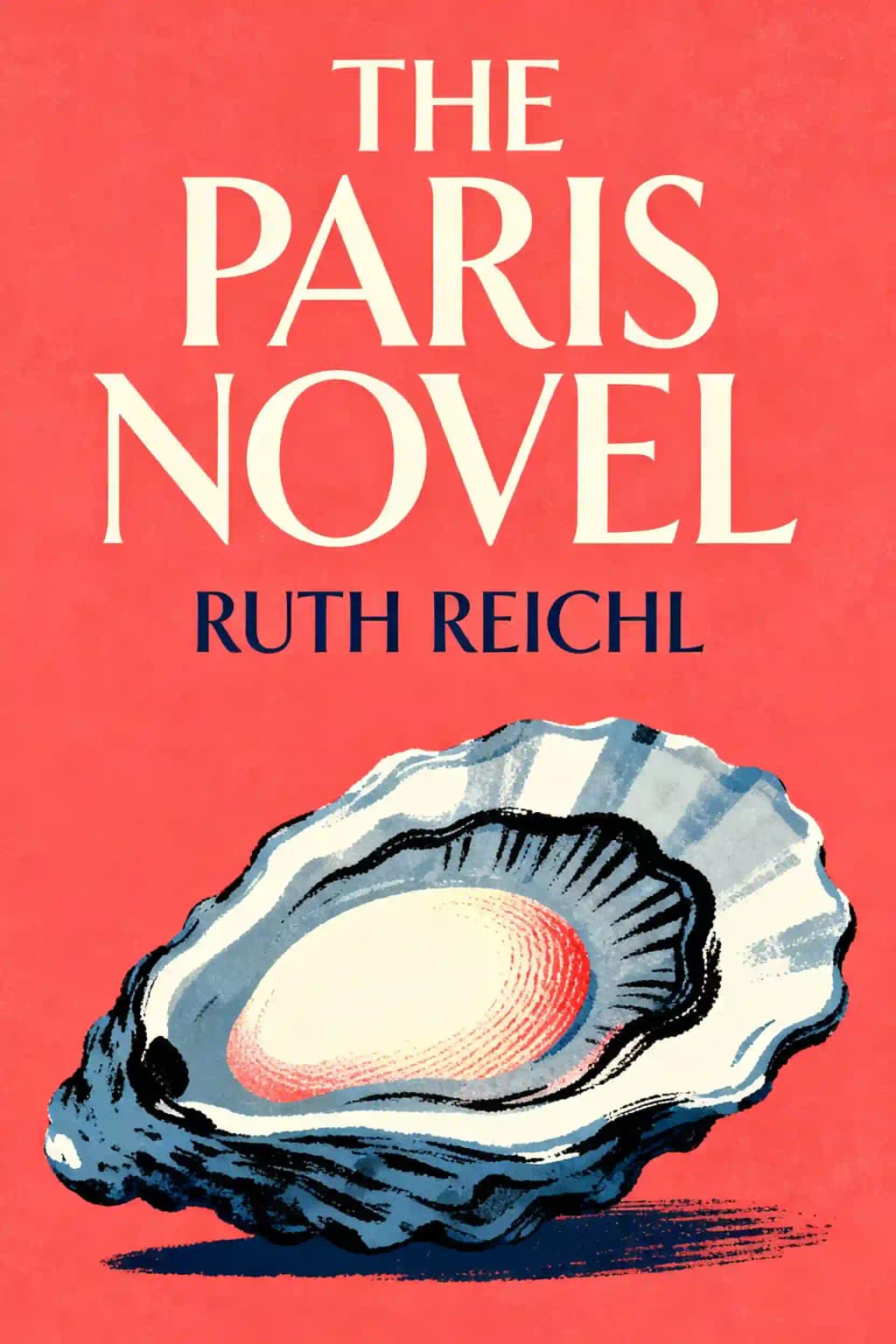
When Stella Knightley first tried on that black chiffon dress in a Parisian boutique, she never imagined it would transform her life. The garment seemed to embrace her, infused with the scent of apricots and vanilla, making her pale, serious face appear touchingly sensual and her gray eyes mysteriously smoky. Though she couldn't justify spending her inheritance on such extravagance, the dress became the first breadcrumb on a path that would lead her to discover not only her family's secrets but her own identity. The Paris Novel has captivated readers since its release, with celebrities like Nigella Lawson and Stanley Tucci praising its sensuous depiction of food and self-discovery. Ruth Reichl, already renowned for her food writing and memoirs, crafts a narrative that Anthony Bourdain called "a love letter to Paris that tastes as good as it reads," weaving together art history, culinary exploration, and the search for belonging in a way that resonates with anyone who has ever felt lost.
Capítulo 2
The Weight of an Absent Mother
Stella's relationship with her mother Celia had always been complicated. From her earliest years, Stella never used maternal terms, only "Celia" - a woman who insisted she "was not born to be anyone's mother." At fifteen, Constanza Vincente had reinvented herself as Celia St. Vincent, leaving behind her Brooklyn accent and boisterous family to become a sought-after personal shopper at Bergdorf Goodman. She created the persona Charlotte Knickerbocker to write a gossip column and fiercely guarded her independence.
When she became pregnant with Stella, Celia acted as if no man had been involved. Later, when Stella asked about her father, Celia claimed she'd named her after Stella Artois beer, adding that she'd "hoped you would be a star," typically followed by a scornful look. Celia provided the basics of motherhood but considered her daughter an ungrateful disappointment.
The most painful betrayal came when Stella was seven. Celia began dating Mortimer Morris, a wealthy businessman who offered to teach Stella painting in his penthouse studio. During these "lessons," Mortimer sexually abused Stella. Eventually, Celia casually asked if Mortimer ever did "anything funny" to her. When Stella nodded, Celia simply asked if she wanted to stop the painting lessons. Though Stella never saw Mortimer again, she suspected her mother continued dating him, unable to resist his money and prestige. Most painfully, Celia never asked another question about what had happened.
Left to her own devices, Stella created rigid routines that Celia mocked. After art appreciation classes at the Metropolitan Museum failed, Stella began wandering alone, discovering she could dream herself into paintings. The museum became her sanctuary, a place to be "alone in a crowd." When Celia died in a taxi accident, Stella refused the acolytes' pleas for a memorial. Her mother's lawyer delivered Celia's final instruction-"Go to Paris"-along with funds for the trip. Though initially resistant, six months later Stella found her carefully constructed life felt hollow without Celia as her counterpoint.
Capítulo 3
Paris: A Reluctant Awakening
Despite her inheritance, Stella lived frugally in Paris, creating rigid schedules and methodically visiting tourist attractions while feeling increasingly isolated. She avoided expensive restaurants, used second-class Metro tickets, and lived like a pauper despite her means. After nearly a month, she revisited the strange dress shop from her first day, drawn by another remarkable garment in the window.
The eccentric shopkeeper remembered her and produced the black Dior dress with "Severine" on its label. Against her better judgment, Stella purchased it with most of her remaining money. The shopkeeper gave her peculiar instructions: walk through the Tuileries, have oysters and wine at Les Deux Magots, visit the Musee du Jeu de Paume, and later dine at Caviar Kaspia.
Transformed by the dress, Stella found herself enjoying the appreciative glances of passersby. Inside Les Deux Magots, the maitre d' treated her with unexpected deference. As she savored her oysters and Chablis, Stella experienced a shocking new pleasure in food, feeling the wine melting her rigid self as the briny oysters transported her. An elegant elderly man at the next table - Jules Delatour - struck up conversation, sharing stories of meeting Picasso and Cocteau during WWI.
At the museum, Jules took Stella's hand and led her to Manet's "Olympia" - a naked woman on a silken bed. Initially uncomfortable, Stella studied the painting deeply, noting the woman's cool, arrogant gaze that seemed to say her body could be purchased but her mind belonged to herself. Jules explained the painting's shocking reception in 1865 and shared the story of the model, Victorine-Louise Meurent, a red-haired woman who modeled for many artists but aspired to be a painter herself. Though she overcame obstacles to exhibit at the Salon of 1876 (while Manet was rejected), none of her paintings survived. Stella felt a personal connection to this overlooked woman artist.
Capítulo 4
The Art of Sensual Awakening
As Stella continued her journey through Paris, she experienced a sensory awakening that challenged her rigid worldview. At L'Ami Louis, Jules introduced her to extraordinary cuisine - foie gras, Sauternes, and tiny ortolans eaten with napkins over their heads. Stella was astonished by the primal experience of consuming the entire bird - bones, organs and all. Though she initially embraced these new experiences, alarm bells rang when Jules invited her to his country home and suggested they might "spend the night." Suddenly suspicious, she questioned everything he'd told her.
The next morning, Stella returned the expensive dress to the shopkeeper, reclaiming her money so she could extend her stay in Paris. With newfound resolve, she developed a mission to discover everything about Victorine Meurent and her lost paintings. Following a tip from a museum clerk, Stella ventured to Robert et Louise, a rustic restaurant where she boldly tried blood sausage and delicious lamb chops. As she savored each bite, she realized how much joy she'd denied herself in life, determined not to be like her mother Celia.
Her culinary education continued as she visited Shakespeare and Company bookshop, where she met the eccentric owner George Whitman. When her hotel reservation ended, George offered her a place as a "Tumbleweed" - one of the wandering souls who stay at the bookshop in exchange for helping out, reading a book daily, and writing an autobiography. During a dinner with James Baldwin, Stella learned her mother had been in Paris with a handsome, exotic chef who might be her father. George urged her to track down Richard Olney in Provence, but Stella resisted, preferring to focus on finding Victorine's paintings.
As Stella's research into Victorine deepened, so did her appreciation for food. Jules took her to L'Esperance restaurant where Chef Marc Meneau served an extraordinary meal that awakened her senses to the poetry of food. The meal stretched from lunch to dinner with increasingly elaborate dishes, including a foie gras preparation inspired by the legendary chef Vatel. For the first time, Stella understood that food could be art, poetry, and pleasure all at once.
Capítulo 5
The Hunt for Victorine's Legacy
Stella's quest to find Victorine's paintings became more than academic research - it became a mission to restore the legacy of a forgotten woman artist. With Lucie, George Whitman's seven-year-old daughter, as her unlikely assistant, Stella methodically searched parish churches throughout Paris for Victorine's baptismal record. Day after day, they visited churches throughout the third arrondissement, turning their search into what Lucie called "a treasure hunt."
Finally, at Sainte-Elisabeth de Hongrie, after enjoying an organ concert, they discovered Victorine's baptismal record from February 1844. Her mother was a milliner and her father a stonemason who lived at 39 rue de la Folie-Mericourt. The librarian Mademoiselle Duseigne, who had initially been cold to Stella, warmed to her upon learning she was researching Victorine as an artist, not just a model. She revealed the street was in Popincourt - once the poorest part of Paris.
Their research led them to the Archives Nationales, where they discovered Victorine lived until March 17, 1927, dying at age eighty-three in a suburb called Colombes. Elated that Victorine outlived Manet by more than thirty years, they celebrated before heading to Colombes the next day. Though they found Victorine's former home, they learned from Madame Bonnet that after Victorine's companion died, neighbors took what they wanted from the house and burned everything else - including paintings - in a massive bonfire.
Just when all seemed lost, they discovered that one painting might have been rescued from the flames. Following this lead to an American named Tom White, they learned he had sold all the paintings he found to a dealer at the Porte de Vanves flea market. In a moment of serendipity at the market, Lucie discovered a portrait of a mature, elegant woman with red hair and the unmistakable gaze of Victorine Meurent, signed faintly "V. Meurent." Unlike the defiant teenage Olympia, this Victorine was a self-assured woman who knew her worth. Jules confirmed it was an important find - possibly the only authenticated Meurent painting in existence.
Capítulo 6
Confronting the Past and Finding a Father
With Victorine's painting finally secured, Stella summoned the courage to seek out the chef who might be her father - a journey that paralleled Victorine's own bold choices a century earlier. Drawing strength from both the painting's influence and Jules's support, she made her way to Enghien-les-Bains wearing the elegant Vionnet dress from Severine's collection, its vintage silk lending her confidence she desperately needed. The restaurant's modern exterior belied its intimate interior, where Chef Alain Passard - whose reputation preceded him - made the pivotal introduction to Django. The moment was electric; Stella instantly recognized him as the mysterious figure from Celia's painting, his distinctive features unchanged despite the decades.
The revelation of Stella's age - thirty-three years that Django knew nothing about - created a raw, emotional scene in the restaurant. Django's breakdown was immediate and genuine, tears flowing as he grappled with the magnitude of what he'd missed. His reaction reflected not just shock but deep regret, the weight of three decades of absence crushing down in a single moment.
Their reunion's awkwardness manifested the very next morning when Django appeared unannounced at her apartment, demanding coffee with the presumption of long-established familiarity. His impetuousness showed as he whisked her to a nearby bistro, ordering for both of them without consultation. The tension peaked when Django began questioning her living arrangement with Jules, invoking paternal rights he'd only just discovered. Stella's resistance was fierce and immediate - thirty-three years of independence made his sudden assertions of authority feel particularly intrusive. Django's self-awareness surprised her though, as he openly acknowledged his past similarities to Celia's self-centered nature. His description of himself as "virevoltant" - a tumbleweed perpetually in motion - revealed a deep self-knowledge and hint of regret for his rootless existence.
Despite Stella's initial attempts to maintain emotional distance, Django's persistent presence began reshaping her world. His charm proved particularly effective at Shakespeare and Company, where he transformed the shop's neglected kitchen into an impromptu culinary studio. Working alongside Lucie, who proved an eager apprentice, Django demonstrated an almost magical ability to elevate humble ingredients. His creative alchemy turned seemingly hopeless combinations - stale cake, sour milk, chocolate past its prime - into extraordinary culinary creations that delighted everyone in the bookshop. Stella found herself drawn to these cooking sessions despite her reservations, recognizing how Django's impulsive nature, so challenging in personal relationships, became a remarkable asset in the kitchen. His intuitive approach to cooking revealed a depth of character that complicated her initial impressions, showing how the same traits that made him an unreliable parent also made him an inspired chef.
Capítulo 7
A Culinary Education and Inheritance
Django's presence in Stella's life awakened a dormant talent she never knew she possessed. When he invited her to cook alongside him at Jules's stunning modernist glass house - aptly named "Le Sauvage" for its wild, untamed setting - Stella spent sleepless nights plagued by anxiety-filled dreams of catastrophic kitchen failures. But when the moment arrived and Django wordlessly handed her fresh leeks to prepare, something remarkable happened: her hands seemed to possess their own inherited wisdom. They moved with natural grace and certainty, as if they had always known these motions. Working beside Django required few words; their minds and movements synchronized in an almost mystical culinary dance.
The revelation of their natural compatibility in the kitchen sparked both joy and regret in Django. He expressed raw anger about their lost years, recognizing in Stella an innate talent that mirrored his own. "You have the touch, the instinct," he told her, his voice tinged with sadness. "We could have built something extraordinary together - a restaurant, a legacy - had I been there to nurture your gift from the beginning." When Stella tentatively asked if it was too late to start now, Django's eyes lit up with possibility. He proposed opening an intimate restaurant where he could transfer his lifetime of culinary knowledge to her. The timely sale of Victorine's portrait to a prestigious Boston museum provided the means to transform their dream into reality.
Django's teaching style was deeply experiential and sensory-driven. He showed Stella how to trust her instincts: touching hot pot sides with bare fingers to gauge meat doneness, identifying perfectly ripe produce through scent and touch, and steadfastly refusing to work with commercially processed ingredients. At Paris's legendary markets, vendors treated Django with a reverence usually reserved for culinary royalty. When he began introducing Stella as "my daughter," the simple phrase filled her with an unexpected surge of belonging and pride.
Together they transformed a modest space into Chez Django - an establishment that managed to be simultaneously casual and elegant, comfortable yet sophisticated. The restaurant possessed what one early visitor described as a "strangely sexy" atmosphere, achieved through Django's insistence on perfect lighting, carefully chosen music, and an open kitchen that allowed diners to witness their culinary choreography.
Their pre-dawn market expeditions became sacred rituals, with Django teaching Stella to spot treasures others might overlook - the last precious morels of the season tucked behind lesser mushrooms, wild ducks still wearing their feathers, fragrant patches of l'ail des ours growing in secret forest spots. He created dishes spontaneously based on the day's discoveries, challenging Stella with increasingly complex tasks like crafting delicate langoustine ravioli with fresh duck egg pasta. On opening day, market vendors - now considering her part of their extended family - surprised Stella with ingredients they'd secretly reserved: spring cepes, the only ones available in Paris that week. As evening service began, the restaurant filled with intoxicating aromas while Django performed his culinary magic, intuiting each guest's desires and creating personalized dishes that seemed to emerge from their very dreams.
Capítulo 8
The Tapestry of Found Family
Throughout her Parisian adventure, Stella discovered that family could be found in unexpected places, often materializing in the moments she least expected connection. Jules became more than just a mentor - he emerged as a true father figure, offering her not only his culinary guidance but also a small apartment on rue Christine that became her first real home in Paris. When his heart problems worsened, his invitation for her to move into Le Sauvage wasn't merely practical; it was an acknowledgment of their deepening bond. His estranged son Jean-Marie, who initially regarded Stella with the cool suspicion of someone who had seen too many opportunists around his father, underwent his own transformation. After discovering his fiancee Charlotte's betrayal - finding she had systematically stolen and sold his mother's prized vintage clothing collection - Jean-Marie found himself reconnecting not only with his father but also forming an unexpected kinship with Stella.
The Shakespeare and Company bookstore evolved into a second home, its cramped quarters and book-lined walls housing a makeshift family that expanded Stella's world. George Whitman, the eccentric owner with his wild white hair and endless stories, saw something in Stella that she hadn't yet recognized in herself. His insistence on calling her a "Tumbleweed" - his term for the wandering souls who found temporary shelter among his books - proved prophetic as she put down roots in Paris. His daughter Lucie, with her boundless energy and passion for both literature and food, became not just Stella's assistant but a sister figure, spending countless hours helping with research and testing recipes in the tiny kitchen above the bookstore. Daniel, another Tumbleweed who had been there the longest, recognized in Stella what the bookstore community needed - someone who could bridge the worlds of art, food, and literature.
The transformation of her professional relationships into personal ones happened gradually but profoundly. Mademoiselle Duseigne, whose stern demeanor at the library initially intimidated Stella, slowly revealed a warm heart beneath her professional exterior. Their shared passion for historical research created an unexpected mentorship, with Mademoiselle Duseigne eventually sharing her private archives and family connections to help Stella piece together Victorine's story. The market vendors at Rue Cler, who had once dismissed her as just another American tourist, began greeting her by name and setting aside the finest ingredients for "Django's daughter" - a title that carried both pride and belonging.
On the opening night of Chez Django, these disparate threads of her Parisian life wove together into a tapestry of belonging. The restaurant hummed with the presence of her chosen family - Jules presiding over the kitchen like a proud father, Jean-Marie charming guests with stories of old Paris, George quoting poetry between courses, and Lucie expertly managing the front of house. Mademoiselle Duseigne arrived with a rare book about 1920s Paris restaurants, while Richard Olney raised toast after toast to Stella's success. The evening's most poignant moment came when Jean-Marie presented Stella with his mother's favorite Dior dress - a gesture that transcended mere clothing. When she examined the label later that night, the discovery of her own name, "Stella," sewn above Christian Dior's signature felt like more than coincidence - it was a confirmation of her place in this intricate web of relationships, a symbol of how completely she had found her home in Paris.
Capítulo 9
The Transformation of Stella Knightley
The Paris that Stella initially approached with rigid schedules and frugal habits became the canvas for her profound metamorphosis. Armed with spreadsheets and a self-imposed daily budget of thirty euros, she arrived in the City of Light clutching her weathered Moleskine planner like a shield. Yet the city had other plans for her - plans that would gradually dissolve her carefully constructed walls through a series of unexpected encounters and revelations.
Through her quest to uncover Victorine's legacy, she discovered her own artistic sensibility. What began as academic research into a forgotten artist's life evolved into an intimate journey of creative awakening. In Victorine's paintings, Stella recognized a kindred spirit - another woman who had fought against society's constraints to claim her artistic voice. Hours spent in the Musee d'Orsay studying Victorine's brushstrokes taught Stella to see the world in colors and textures rather than schedules and spreadsheets.
Django's culinary mentorship transformed her relationship with food and nurturing. In his tiny restaurant kitchen, amid the chaos of clattering pots and sizzling pans, Stella found not just a surrogate father but her own hidden talents. She learned that cooking, like art, was about intuition and courage - about trusting one's instincts and being unafraid to make mistakes. Under Django's guidance, she discovered that food could be more than fuel; it could be an expression of love, creativity, and connection.
The eclectic community at Shakespeare and Company became her chosen family. Among the dusty shelves and creaking floorboards, surrounded by fellow book lovers and wandering souls, Stella experienced the warmth of true belonging. The bookstore's "tumbleweeds" - traveling writers and artists who traded work for lodging - showed her alternative ways of living that prioritized passion over security.
Through Jules's friendship, she learned to appreciate beauty and luxury without guilt. Their afternoon adventures through vintage boutiques and hidden cafes taught her that self-care wasn't selfish, and that pleasure needn't be earned. Jules helped her understand that her mother's austere approach to life wasn't the only way to live authentically.
Most importantly, Stella shed the protective shell she had built around herself after years of her mother's emotional neglect and Mortimer's abuse. The woman who once scrubbed herself raw after traumatic "painting lessons" learned to embrace physical and emotional intimacy. In Paris's gardens, galleries, and bustling markets, she discovered the joy of sensory experiences - the feel of silk against skin, the scent of fresh bread, the texture of oil paint beneath her fingers.
The girl who had been told she was a disappointment discovered she was, in fact, a star - just as her name suggested. Each small act of courage - wearing red lipstick to dinner, ordering in French without apologizing, allowing herself to fall in love - added to her growing luminescence.
When Stella first arrived in Paris, she was haunted by her mother's ghost whispering, "Live up to your name. Be a Stella." By the end of her journey, she had done exactly that - becoming radiant, confident, and connected in ways she never imagined possible. The little black dress that started it all - a $6,000 vintage Yves Saint Laurent for Dior that Stella couldn't initially afford - ultimately brought her something far more valuable: herself. It became a symbol not of extravagance but of transformation, marking her evolution from a woman who denied herself everything to one who understood that true worth couldn't be measured in euros or dollars.