Capítulo 1
A Maid, A Murder, and The Mystery of Identity
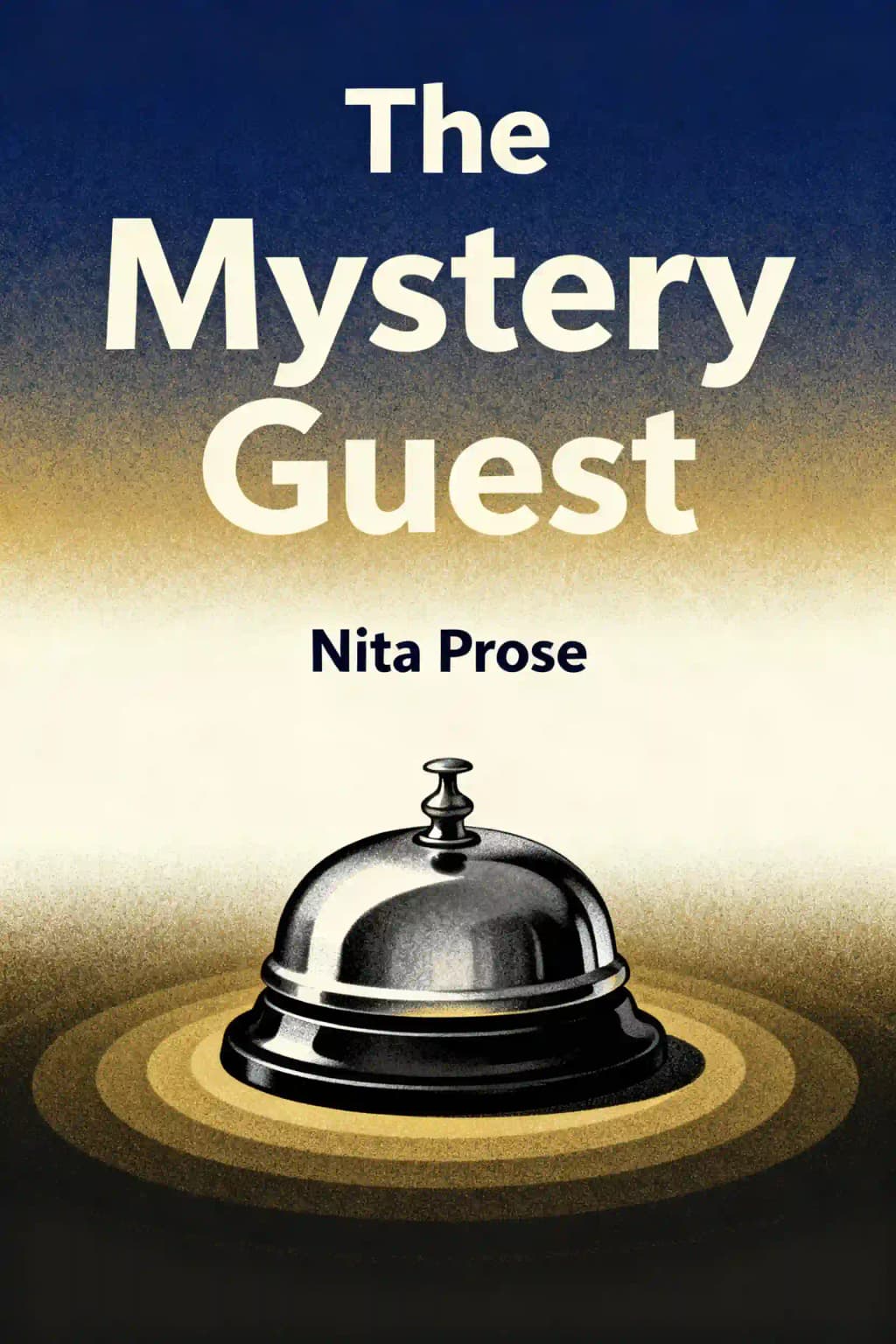
When a famous author collapses at a prestigious hotel's event, what unfolds is far more than a simple death investigation. "The Mystery Guest" by Nita Prose has captivated readers worldwide with its unique protagonist-a detail-oriented hotel maid who sees the world differently. The novel has garnered praise from Stephen King who called it "a delight," while Reese Witherspoon selected Prose's previous work "The Maid" for her book club. With over a million copies sold globally and translations in forty countries, this murder mystery explores themes of identity, prejudice, and the invisible labor of service workers through the distinctive voice of a character who notices everything yet misses social cues that others find obvious.
Capítulo 2
The Peculiar Perspective of Molly Gray
Molly Gray isn't your typical protagonist or hotel maid. She's meticulous, dedicated, and guided by the wisdom of her late grandmother who raised her. As Head Maid at the luxurious Regency Grand Hotel, Molly excels at creating order from chaos, transforming soiled rooms into pristine sanctuaries. What she struggles with are the unwritten rules of human interaction - the subtle cues, expressions, and social norms that come naturally to others. Her precise routines, from the exact way she folds hospital corners to her methodical cleaning patterns, provide a framework for navigating a world that often feels overwhelming and confusing.
"I've always noticed details others miss, while missing what others easily see," Molly reflects, a perfect summation of her unique perspective. Her grandmother's sayings - "Deep cleaning to give life meaning" and "Tidy up to cheer us up" - serve as both practical advice and life philosophy, guiding Molly through a world that often misunderstands her. These mantras, along with her grandmother's detailed instructions for everything from proper vacuuming techniques to social interactions, form the backbone of Molly's daily existence. She relies on these teachings like others might rely on instinct, applying them with unwavering dedication even when circumstances suggest flexibility might be more appropriate.
This perspective makes Molly both an unreliable and extraordinarily reliable narrator. She observes with clinical precision the physical details of her surroundings - a crooked doily, a misplaced spoon, the exact contents of a trash bin - yet frequently misinterprets people's intentions and emotions. This creates a fascinating narrative tension, as readers must piece together what's really happening beneath the surface of Molly's observations. Her attention to detail extends to noting the brand of toiletries guests use, the exact positioning of personal items, and even the specific patterns of wear on shoes, all while missing crucial social cues that might warn of danger or deception.
When famous mystery author J.D. Grimthorpe collapses during a special announcement in the hotel's Grand Tearoom, Molly becomes entangled in the investigation. Having previously been wrongfully accused of murder at the same hotel, she understands the precarious position of service workers when crimes occur: "The maid is always to blame." This awareness shapes her actions as she navigates the mystery, determined to protect herself and her fellow staff from becoming convenient scapegoats. Her unique way of processing information - cataloging physical evidence while sometimes misreading human motivation - proves both a hindrance and an unexpected advantage in unraveling the truth behind Grimthorpe's collapse.
Through Molly's eyes, readers experience the often overlooked complexities of hotel life, from the hierarchical staff structure to the intimate details of guests' lives that only maids are privy to. Her literal interpretation of events and unwavering adherence to routine create situations that are alternatively humorous and heartbreaking, highlighting the challenges faced by those who see the world differently from the majority.
Capítulo 3
A Past That Haunts the Present
The narrative weaves an intricate tapestry between present-day events and Molly's childhood memories, gradually revealing her unexpected and haunting connection to the deceased author. As a young girl, Molly accompanied her grandmother, Eleanor, to work at the sprawling Grimthorpe mansion - a Gothic revival masterpiece that loomed over the countryside like a brooding sentinel. There, she was permitted to polish silver in the vast dining room and spend hours reading in the mahogany-paneled library, where leather-bound first editions lined the walls from floor to ceiling.
"I'm ten years old, riding with Gran to visit a palatial mansion with imposing wrought-iron gates topped with menacing spears," Molly recalls, describing her first visit to the Grimthorpe estate. "The gravel crunched beneath our feet like broken promises." These flashbacks serve as more than mere background information - they're crucial puzzle pieces that gradually reveal the true nature of Grimthorpe, the mysterious origin of his famous books, and the complex web of relationships that ultimately led to his murder.
Through these memories, we witness Grimthorpe's descent into creative paralysis and alcoholism. His study became a fortress of empty whiskey bottles and crumpled manuscript pages. One stormy night, in a drunken rage, he attacked Molly's grandmother with a letter opener, leaving a thin scar across her cheek that would never fully fade. More disturbing still, evidence emerges that his celebrated literary career - including his renowned "Shadow Chronicles" series - might have been built on a devastating fraud involving stolen manuscripts from aspiring writers who worked in his household.
The young Molly, witnessing her grandmother's suffering and discovering the truth about Grimthorpe's deception, took matters into her own hands. She stole a precious Faberge egg from his collection - not out of greed, but as a calculated act of sacrifice. The theft resulted in their immediate dismissal, effectively removing her grandmother from harm's way. The egg, decorated with miniature golden nightingales and worth a small fortune, would later resurface in unexpected circumstances.
These past events create ripples that reach into the present like long shadows, connecting characters in unexpected and often tragic ways. Mr. Preston, the seemingly benign doorman at the Regency Grand with his perfectly pressed uniform and gentle demeanor, turns out to be the former gatekeeper of the Grimthorpe estate. His connection to Molly runs even deeper - a shocking truth that emerges in the novel's final chapters, revealing him as both protector and unwitting catalyst in the chain of events leading to Grimthorpe's death. His knowledge of the mansion's secret passages and Grimthorpe's private habits proves crucial to unraveling the mystery.
Capítulo 4
The Invisible Workers Who See Everything
One of the novel's most powerful themes is the invisibility of service workers and how this paradoxically grants them unique insights. Hotel maids, doormen, bellhops, kitchen staff, and maintenance workers move through spaces largely unnoticed by guests, witnessing intimate details of strangers' lives while remaining functionally invisible themselves. They observe everything from private phone calls to family disputes, from secret liaisons to moments of raw grief - becoming unwitting repositories of guests' most closely guarded secrets.
"Children should not be seen or heard," Mrs. Grimthorpe once instructed young Molly, a rule that extends metaphorically to service workers throughout the story. This directive becomes increasingly significant as the narrative unfolds, highlighting how society conditions certain people to fade into the background. Yet this very invisibility becomes a form of power - Molly observes what others miss precisely because people don't guard themselves around "just a maid." She notices the subtle changes in room arrangements, the misplaced items, the inconsistencies in guests' stories that more prominent figures overlook.
The novel repeatedly highlights how quickly people jump to blame service workers when things go wrong, revealing deep-seated class prejudices. When valuable items disappear from the hotel - jewelry from Room 412, a watch from the pool area, cash from the executive suite - suspicion immediately falls on the housekeeping staff, despite their long records of faithful service. When Grimthorpe dies, Detective Stark's list of suspects prominently features Molly and her trainee Lily, though they had the least apparent motive. Even Lily herself has internalized this prejudice, repeating the mantra: "The maid is always to blame" - a reflection of how society's assumptions can shape one's self-image.
This theme connects powerfully to the prologue's cautionary tale about a maid wrongfully accused of stealing a silver spoon, only for it to be discovered years later in a rat's nest behind the kitchen walls. The story serves as both foreshadowing and metaphor - the "rats" in this mystery aren't the accused maids but those who exploit positions of privilege and power. Through this parallel, the author illustrates how history often repeats itself, with the powerless bearing the burden of others' crimes. The silver spoon incident becomes a haunting reminder of how quick judgment and social bias can destroy innocent lives, while the truly guilty often hide in plain sight.
Capítulo 5
The Complexities of Truth and Deception
Throughout the novel, appearances consistently deceive, creating a rich tapestry of duplicity that drives the narrative forward. J.D. Grimthorpe, the celebrated author of the "Midnight Detective" series, presents himself as a literary genius but is revealed to be a fraud who hasn't written a word of his famous novels - instead paying ghostwriters while claiming sole credit. His carefully constructed facade extends beyond his writing to his manufactured personal history and fabricated war stories, which he uses to charm the wealthy resort guests.
The theme of deception permeates every level of the resort's hierarchy. Cheryl Matthews, a fellow maid with an impeccable employment record, projects competence and reliability while systematically stealing from guests - not just valuables, but seemingly worthless personal items that hold sentimental value. Even Molly's own mother, appearing in poignant childhood flashbacks, isn't the absent wanderer Molly believed her to be, but rather someone who made a conscious choice to abandon her family for a new life in Arizona.
The novel's central mystery - who poisoned Grimthorpe with antifreeze-laced honey - becomes an intricate puzzle box of layered deceptions. Each suspect harbors multiple secrets, from Mrs. Whitaker's hidden gambling addiction to Chef Paolo's falsified culinary credentials. The culprit turns out to be Beulah Henderson, a seemingly harmless member of the Ladies Auxiliary Mystery Book Society (LAMBS), who killed Grimthorpe after discovering he was a fraud and being rejected as his biographer. Her carefully cultivated persona of a sweet, retired librarian masked a vindictive nature and murderous capability.
"A man can be both a man and a monster at the very same time," young Molly realizes after witnessing Grimthorpe's attack on her grandmother - a pivotal moment that shapes her understanding of human nature. This insight applies throughout the story as characters reveal their hidden depths. The charming bartender moonlights as an informant for local criminals. The kindly gardener maintains a secret correspondence with death row inmates. People contain multitudes, wearing masks that hide their true natures, leading the novel to repeatedly question who deserves our trust and how we determine truth in a world of skilled performances.
Even Molly herself engages in deception, albeit reluctantly, when she allows Angela to tell the LAMBS that she's an undercover detective. This falsehood troubles her deeply: "I pretended to be something I'm not, behavior that wouldn't make Gran proud." Yet this very deception helps her uncover the truth, suggesting that sometimes the line between right and wrong isn't as clear as Molly would prefer. Her journey forces her to confront the uncomfortable reality that truth and lies often exist in shades of gray rather than black and white, particularly when deception serves a greater good.
Capítulo 6
The Mystery of Identity and Belonging
At its heart, "The Mystery Guest" is as much about Molly's quest to understand herself as it is about solving Grimthorpe's murder. Throughout her life, Molly has been labeled and misunderstood - "Molly the Mutant," "Roomba the Robot," "Oddball Moll." These cruel nicknames reflect society's tendency to marginalize those who process the world differently. Each label represents a failed attempt to categorize someone whose neurodivergent perspective makes others uncomfortable, highlighting the novel's critique of how society often responds to difference with dismissal rather than understanding.
"Some moments divide life into Before and After," Molly reflects, and the novel traces several such transformative moments in her life. The death of her grandmother - her primary source of unconditional love and acceptance - left her adrift until she found purpose at the Regency Grand. Her relationship with Juan Manuel provided love and acceptance she never thought possible, teaching her that romantic connection doesn't require conforming to neurotypical expectations. The revelation that Mr. Preston is actually her grandfather reshapes her understanding of her family history and identity, forcing her to confront complex questions about forgiveness and the nature of family bonds.
The novel explores different forms of family - those we're born into and those we create. Molly's makeshift family includes Juan Manuel, who sees and celebrates her unique way of viewing the world; Mr. Preston, whose late-life revelation offers a chance at healing generational wounds; and her colleagues at the hotel, particularly Rodney and Cheryl, who provide a supportive professional community. When Juan Manuel returns from visiting his relatives in Mexico, he shares photos of his family who already consider Molly a daughter-in-law, offering her yet another form of belonging. This acceptance stands in stark contrast to her earlier experiences of rejection and misunderstanding.
This theme connects to the broader mystery of authorship and identity surrounding Grimthorpe's books. The revelation that his secretary's mother, Abigail Sharpe, was the true author of his celebrated works raises questions about credit, recognition, and the theft of identity. Just as Grimthorpe stole Abigail's literary identity, others throughout the novel attempt to reduce Molly to simplistic labels that fail to capture her complexity. The parallel between Abigail's stolen voice and Molly's struggle to be heard and understood reinforces the novel's examination of how society often silences or misrepresents those who don't fit conventional molds. Through Molly's journey to solve both the murder and the mystery of Abigail's stolen work, she ultimately finds her own voice and claims her rightful place in both her biological and chosen families.
Capítulo 7
The Power of Observation and Interpretation
Molly's unique observational skills ultimately make her an exceptional amateur detective, despite her social challenges. While Detective Stark initially dismisses her insights as irrelevant or obsessive, Molly's extraordinary attention to detail becomes the key to unraveling the mystery. She notices seemingly insignificant details - a missing honey pot from its usual position, a misplaced silver spoon that disrupts the perfectly aligned place setting, the distinctive ring of silver against fine china during afternoon tea - that others overlook but prove crucial to solving the case. Her intimate knowledge of the hotel's rhythms allows her to spot these aberrations instantly, like a musician who can detect a single wrong note in a familiar symphony.
"It's what you can't see that gives something its shape and meaning," Gran once told Molly, explaining that social interactions are like complex equations with invisible yet essential parts. This wisdom becomes a guiding principle throughout the investigation, where the negative spaces - the things left unsaid or carefully hidden - hold the most significant clues. The invisible elements prove essential: Beulah's carefully concealed obsession with wealth and status, Grimthorpe's elaborate fraud scheme hidden behind his charitable facade, and Serena's true identity masked by years of careful deception. Like a skilled mathematician, Molly learns to solve for these unknown variables.
The novel repeatedly contrasts different approaches to understanding truth and reality. The LAMBS, a self-proclaimed group of "aficionados of mystery," attempt to apply their knowledge of fictional detective work to real life, with comically misguided results - their theories based more on dramatic television plots than actual evidence. Detective Stark represents the traditional investigative approach, relying heavily on forensic evidence, witness statements, and official procedures. Molly, however, employs a unique hybrid methodology, combining her extraordinary observational skills with her intimate knowledge of the hotel's ecosystem. She notices patterns in the staff's behaviors, recognizes when regular guests deviate from their usual routines, and picks up on subtle changes in the hotel's atmosphere that others dismiss as insignificant.
Throughout the investigation, Molly's different way of processing information - often dismissed as a limitation - proves to be her greatest strength. She approaches each clue with methodical precision, free from the preconceptions that cloud others' judgment. Her ability to recall exact details of conversations, notice minute changes in room arrangements, and track the movement of objects throughout the hotel creates a comprehensive picture that others can't see.
By the novel's end, even the initially skeptical Detective Stark acknowledges Molly's exceptional abilities. In a powerful moment of recognition, Stark suggests she would make an excellent detective and offers a respectful curtsy - a gesture that carries particular weight for someone who has spent her life being underestimated and overlooked. This acknowledgment validates not just Molly's role in solving the crime, but her unique way of seeing and understanding the world.
Capítulo 8
The Legacy of Wisdom and Words
Words hold tremendous power in "The Mystery Guest" - both spoken and written - serving as anchors of truth and vessels of memory. Molly navigates life through her grandmother's rich tapestry of sayings, which provide structure and meaning in an often chaotic world. These range from practical advice ("Always check the corners first") to philosophical musings ("Time reveals all truths, dear, like tea steeping in hot water"). Meanwhile, Grimthorpe's books have created a devoted following of mystery enthusiasts who quote passages by heart, despite the works being fraudulent - a testament to how powerful words can be, regardless of their source.
The hotel itself operates on its own carefully crafted language, with cleaning mantras and service protocols that Molly follows religiously. "Precision in presentation" and "Attention creates perfection" are more than mere slogans; they're guiding principles that echo through the halls. These institutional phrases blend with Gran's wisdom in Molly's mind, creating a unique lexicon that defines her approach to both work and life.
The novel explores different forms of authorship and legacy with nuanced complexity. While Grimthorpe built his reputation by stealing credit for Abigail Sharpe's masterful mysteries, Gran's wisdom lives on authentically through Molly, passed down through generations like precious heirlooms. "I hear Gran's voice in my head, guiding me," Molly often notes, demonstrating how loved ones remain present through their words even after death. This spiritual inheritance proves more valuable than any material legacy, shaping Molly's decisions and moral compass throughout her journey.
This theme culminates in the emotionally charged epilogue, where justice is served not through punishment alone but through the restoration of proper authorship. Serena Sharpe's announcement that her mother will finally receive credit and royalties for the books published under Grimthorpe's name represents more than financial restitution - it's the recognition of a voice long silenced. This righting of a literary wrong parallels Molly's personal journey toward understanding her own story and heritage, suggesting that truth, like cream, eventually rises to the top.
The power of inherited wisdom comes full circle in the final scene, as Molly sips tea from Gran's cherished cup. She reflects on the sayings that have guided her life: "Wonders never cease" during moments of discovery, "What doesn't kill you makes you stronger" through trials, and "Good things come to those who wait" in times of patience. These seemingly simple phrases contain profound truths that have sustained her through challenges and will continue to guide her future - a legacy more valuable than any inherited wealth or fame. Each sip from Gran's cup becomes a communion with generations of wisdom, proving that the most enduring inheritance is often found in words passed down with love.
Capítulo 9
Redemption Through Truth and Connection
"The Mystery Guest" ultimately offers a hopeful vision of redemption through honesty and human connection. Characters who embrace truth - like Serena Sharpe acknowledging her mother's authorship of the beloved children's books or Mr. Preston finally revealing his complex relationship to Molly - find peace and purpose in their authenticity. Those who persist in deception - like Beulah with her fraudulent cleaning credentials, Cheryl's manipulation of hotel records, and Grimthorpe's years of exploitation - meet endings that reflect their moral choices. The novel demonstrates how truth, however difficult to face, becomes a liberating force.
Molly's journey illuminates how understanding oneself and being understood by others constitutes the deepest form of redemption. Despite her social difficulties and tendency to interpret situations literally, she builds meaningful relationships that celebrate rather than diminish her unique perspective. Her friendship with Juan Manuel evolves through their shared appreciation for precision and routine. Her connection with Mr. Preston deepens as he recognizes in her the daughter he wished he'd known better. Her colleagues, particularly in housekeeping, come to rely on her exceptional attention to detail and unwavering honesty. When Detective Stark finally acknowledges Molly's exceptional deductive abilities - seeing past his initial dismissal of her social awkwardness - it represents a broader validation of neurodivergent perspectives in a neurotypical world.
The novel elevates cleaning from mere maintenance work to both practical necessity and powerful metaphor for moral redemption. "The only thing to do with dirt is clean it," Molly tells Lily when discussing the hotel's problems - a philosophy that extends beyond physical spaces to human hearts and institutions. Through Molly's methodical approach to cleaning, we see how careful attention and persistent effort can transform both rooms and relationships tarnished by neglect or deliberate wrongdoing. Her dedication to proper cleaning protocols parallels her commitment to uncovering truth, suggesting that both require similar qualities: patience, thoroughness, and respect for proper process.
In the end, the mystery of the guest transcends the immediate question of Grimthorpe's murder to explore how we remain mysterious to one another - complex beings whose true selves emerge only through patient attention and genuine connection. Through Molly's distinctive voice and perspective, the novel illuminates the often invisible workers who maintain our spaces, the unacknowledged creators whose work enriches our lives, and the misunderstood individuals whose unique ways of seeing the world offer valuable insights. The story challenges readers to look beyond surface appearances and social conventions to recognize the extraordinary gifts that emerge when we create space for different ways of being and knowing. Molly's triumph lies not just in solving the murder but in helping others see the value of precision, honesty, and authentic connection in an often messy and deceptive world.