Capítulo 1
The Path to Mental Mastery: Illuminating the Mind Through Meditation
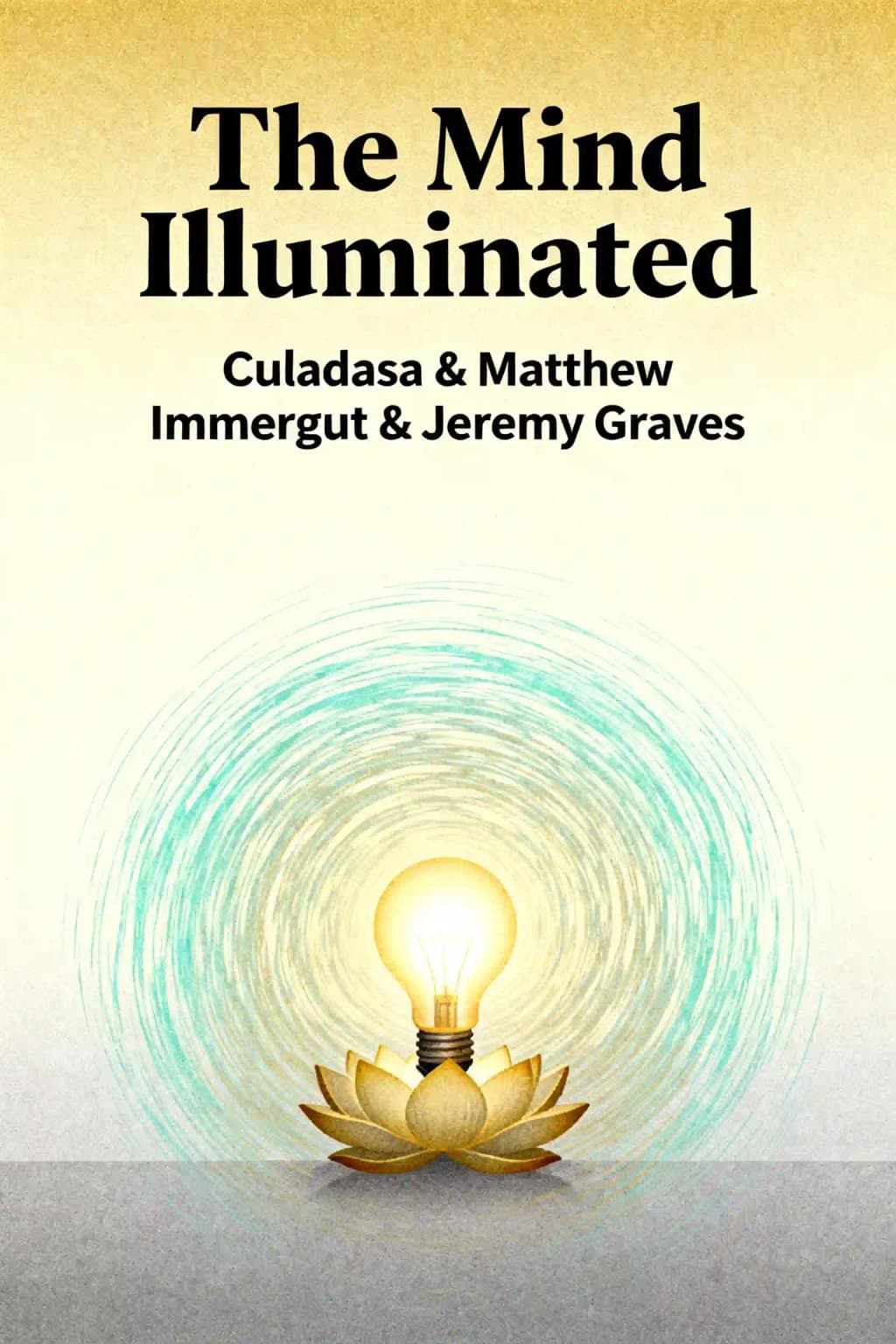
Imagine a journey where your mind transforms from a chaotic, unruly elephant into a perfectly trained companion that follows your every command. This is the promise of "The Mind Illuminated" by Culadasa (John Yates), a neuroscientist turned meditation master whose work has been hailed as revolutionary by practitioners worldwide. The book has garnered praise from spiritual leaders like Shinzen Young who called it "a landmark" and "the most comprehensive meditation manual ever published." Even Sam Harris, the renowned neuroscientist and philosopher, recommends it as essential reading for serious meditators. What makes this work particularly powerful is how it bridges ancient Buddhist wisdom with modern cognitive science, creating a systematic approach that has helped thousands achieve profound mental states once thought accessible only to lifelong monks.
Capítulo 2
The Science of Attention: Understanding Your Mind's Natural Tendencies
The foundation of effective meditation practice lies in understanding how your mind naturally functions. Contrary to popular belief, the mind isn't a single entity that you control-it's a complex system of many interconnected processes that often work at cross-purposes. This explains why simply trying to "concentrate harder" rarely works in meditation.
Your conscious experience consists of two distinct but complementary ways of knowing: attention and peripheral awareness. Attention zooms in on specific objects for detailed analysis, while peripheral awareness provides context and background information. Think of attention as a flashlight illuminating specific objects in a dark room, while awareness is like a lantern providing general illumination of the entire space.
This distinction is crucial because untrained minds suffer from imbalance-either hyper-focused attention with minimal awareness (leading to tunnel vision and poor decision-making) or excessive awareness with scattered attention (causing distraction and inability to complete tasks). Meditation systematically trains both faculties to work together optimally.
The mind's natural tendency is to move attention spontaneously in three ways: scanning (searching for something interesting), getting captured (when something suddenly grabs our attention), and alternating (rapidly shifting between objects, creating the illusion of multitasking). Through meditation, you gradually replace these spontaneous movements with intentional direction and sustained focus.
What makes this process challenging is that we can't directly control attention through willpower. While we can consciously decide where to direct attention, sustaining it involves unconscious processes that weigh the importance of what we're focusing on against other potential objects. This explains why telling yourself to "just focus" doesn't work-you must instead train these unconscious processes through repeated intention.
The ultimate goal is developing mindfulness-the optimal interaction between attention and awareness that allows you to recognize options, choose responses wisely, and take control of your life rather than being driven by unconscious reactions.
Capítulo 3
The Ten Stages: A Roadmap to Mastery
Culadasa's genius lies in mapping the meditation journey into ten distinct stages, each with specific challenges, goals, and techniques. This systematic approach eliminates the confusion that plagues many practitioners who wonder if they're making progress or practicing correctly, providing clear benchmarks and specific practices for each level of development.
In Stage One, you focus simply on establishing a consistent practice-overcoming resistance, procrastination, and self-doubt to meditate daily. This involves creating a sustainable routine, finding an appropriate meditation space, and developing the initial motivation to sit regularly. Many practitioners struggle here with basic logistics like finding the right time of day, dealing with family obligations, or maintaining enthusiasm when results aren't immediately apparent.
Stage Two addresses the fundamental challenge of mind-wandering, teaching you to shorten periods when you forget the meditation object. Here, practitioners learn to recognize when their mind has wandered and develop the skill of gently returning attention to the breath. This stage typically involves working with intervals where attention might stay on the breath for only a few seconds before wandering. By Stage Three, you learn to extend attention and overcome forgetting completely, developing the ability to maintain awareness of the meditation object for longer periods while still experiencing distractions.
Stage Four marks the beginning of skilled meditation, where you work with continuous attention while overcoming gross distractions and strong dullness. This stage often triggers a profound purification process as emotional material from your unconscious surfaces and resolves-equivalent to years of therapy. Practitioners might experience unexpected memories, strong emotions, or physical sensations as the mind begins to process stored experiences. Stage Five focuses on overcoming subtle dullness and increasing mindfulness through body scanning techniques, developing a brightness and clarity of attention that prevents the mind from becoming slightly foggy or dull.
In Stage Six, you learn to subdue subtle distractions and achieve exclusive, single-pointed attention where nothing disturbs your focus. This involves developing metacognitive awareness so refined that you can detect the smallest movements of attention away from the meditation object. Stage Seven represents the transition to effortlessness, where you unify the mind so completely that maintaining exclusive attention requires no effort, marking a significant shift from "doing" meditation to "being" meditation.
The final three stages describe the adept's journey: Stage Eight brings complete pacification of the senses and physical pliancy, allowing practitioners to sit for hours without discomfort while experiencing profound physical and mental pleasure. Stage Nine calms the intensity of meditative joy into tranquility and equanimity, developing a deep stability of attention that remains undisturbed by any experience. Stage Ten makes these qualities persist between meditation sessions, permeating your daily life with mindfulness, clarity, and equanimity.
This progression isn't merely theoretical-it's a practical roadmap confirmed by thousands of practitioners across different traditions and backgrounds. While progress varies based on individual factors like practice consistency, lifestyle, and prior meditation experience, following these guidelines leads to predictable development of attentional skills. The stages also provide clear markers for progress, helping practitioners understand where they are in their journey and what challenges they might expect next.
Capítulo 4
The Mind-System: A Revolutionary Model of Consciousness
To navigate the deeper stages of meditation, Culadasa provides a sophisticated model of how the mind works, drawing from both Buddhist psychology and modern neuroscience. This "Mind-System" model explains consciousness as an information exchange between many unconscious sub-minds, operating in parallel like a complex neural network. The model bridges ancient wisdom with contemporary understanding of brain function, offering practitioners a practical framework for understanding their meditation experiences.
The conscious mind functions like a high-definition screen displaying the contents of moments of consciousness from six sensory categories: the five physical senses (sight, sound, smell, taste, touch) plus the mind sense that processes thoughts and emotions. However, consciousness itself doesn't actually do anything-it's merely the space where information is exchanged, similar to how a theater stage provides the space for actors to perform but doesn't itself participate in the play. Each moment of consciousness lasts only a fraction of a second, creating an illusion of continuity through rapid succession.
The unconscious mind divides into two major components working in constant coordination. The sensory mind processes raw information from the five physical senses, handling everything from basic visual processing to complex pattern recognition. The discriminating mind transforms these sense-percepts into complex perceptions, generating thoughts, emotions, and making meaning from raw sensory data. Each contains many specialized sub-minds - like departments in a large organization - performing specific tasks simultaneously and autonomously. For instance, while one sub-mind processes facial recognition, another handles emotional responses, and yet another manages balance and spatial orientation.
This model explains why meditation works: by repeatedly holding conscious intentions to focus on the meditation object (such as the breath), you gradually reprogram unconscious sub-minds to support this intention. It's similar to training a team to work together toward a common goal. Through consistent practice, these sub-minds begin to align their activities with the meditation objective. Eventually, these sub-minds unify around the meditation intention, making concentration effortless and creating profound mental harmony, much like a well-rehearsed orchestra playing in perfect synchronization.
The model also illuminates how our sense of self arises through a sophisticated psychological mechanism. A specialized "narrating mind" takes information projected by other sub-minds and weaves it into a coherent narrative through binding moments of consciousness. This ongoing chronicle creates the illusion of a continuous "I" experiencing events, when in reality this "self" is merely a convenient fictional construct used to organize separate conscious experiences. This insight aligns with both Buddhist teachings on non-self and modern psychological research on the constructed nature of identity.
Through advanced meditation, you develop metacognitive introspective awareness-the ability to continuously observe not just mental objects but the activity and overall state of the mind itself. This meta-awareness becomes crucial for progress in later stages, ultimately allowing the mind itself to become the object of investigation. Like a scientist observing a complex system, the practitioner develops the ability to witness the entire mind-system in operation, leading to profound insights into the nature of consciousness and the self.
Capítulo 5
The Transformation of Attention: From Effort to Effortlessness
The journey through the Ten Stages transforms how attention functions in profound ways. In early stages, maintaining focus requires constant vigilance and correction-like learning to ride a bicycle, where you must consciously adjust your balance and direction.
By Stage Four, introspective awareness develops to the point where you can detect distractions and dullness before they fully capture attention. This awareness functions like a vigilant sentry, alerting you to potential problems while you maintain focus on the breath. The process becomes more efficient as you learn to "watch the mind while the mind watches the breath."
In Stage Six, you achieve exclusive attention where subtle distractions no longer interrupt your focus. This isn't accomplished through force but through clearly defining your scope of attention and completely ignoring everything outside it. As you sustain this exclusive focus, something remarkable happens-mental objects begin to fade from consciousness, beginning the process of "pacifying the mind."
The transition to effortlessness in Stage Seven represents a fundamental shift in how attention works. Rather than constantly maintaining vigilance against distractions, the mind becomes so unified that competing intentions disappear. This isn't achieved through relaxing effort prematurely but through diligent practice until the mind-system reorganizes itself.
Many practitioners struggle with this transition because it requires complete surrender-stopping all concern about outcomes while simultaneously trusting the process. Our lifelong habits of control and belief in a "self" responsible for making things happen create resistance to letting go. The key is not trying to make anything happen but trusting the natural unfolding of the process.
When effortlessness finally emerges, it comes with a profound sense of joy and ease. Attention remains perfectly stable on the meditation object without any need to maintain it. This represents the culmination of training-what began as a difficult exercise has become the mind's natural state.
Capítulo 6
The Purification Process: Healing the Unconscious Mind
One of meditation's most powerful but least understood aspects is how it facilitates deep psychological healing. As attention stabilizes in Stage Four, significant material from the unconscious surfaces into consciousness. This often begins with feelings of restlessness and impatience-the tip of an iceberg indicating deeper material below. These initial manifestations might appear as recurring thoughts, sudden emotional waves, or inexplicable physical sensations.
When this material becomes conscious, it manifests either as memories, thoughts, or visions with strong emotions, or as raw emotions without any mental object. This material comes from past emotional challenges-from major traumas to subtle difficulties like childhood teasing or internalized conflicting belief systems. Common examples include forgotten childhood incidents, unresolved relationship conflicts, suppressed grief, or deep-seated fears about mortality or self-worth. These may emerge suddenly during meditation, sometimes accompanied by physical sensations like tension, trembling, or spontaneous tears.
The approach to this material differs from typical psychotherapy. Rather than analyzing or working through it intellectually, you simply acknowledge its validity, allow it to be present without judgment, and accept it as a manifestation of hidden parts of yourself. Creating objective distance by using phrases like "anger is arising" rather than "I am angry" helps maintain perspective. This metacognitive stance allows you to observe the content without becoming entangled in it, similar to watching clouds pass across the sky.
The purification process operates through several mechanisms. First, mindful observation and acceptance of thoughts, emotions, and images driving unconscious programming creates a safe space for exploration. Second, the illuminating power of mindfulness communicates to deep unconscious processes that the circumstances responsible for our conditioning no longer exist and the emotional reactions they produce are no longer useful. Third, sustained attention combined with acceptance gradually dissolves the emotional charge of memories and beliefs. This "reprograms" those processes, transforming the structure of our personality and making us less susceptible to destructive emotions.
Physical symptoms often accompany this process - muscle twitches, spontaneous movements, changes in breathing patterns, or waves of heat or cold. These are normal signs of the body releasing stored tension and trauma. The process might also trigger temporary intensification of emotions or recurring thought patterns before they begin to dissolve.
The purification process continues in later stages, particularly Stage Seven, where exclusive focus creates the perfect opportunity for deeply buried material to surface. During this stage, practitioners might encounter core beliefs about existence, death, or identity. This purification is crucial for minimizing psychological trauma that can accompany the profound insights leading to Awakening. It creates a stable foundation of emotional resilience and self-understanding necessary for deeper spiritual development.
Success in this process requires patience, self-compassion, and trust in the natural healing capacity of awareness. Regular practice gradually creates an internal environment where even the most challenging material can be met with equanimity and understanding.
Capítulo 7
Meditative Joy and Physical Pliancy: The Rewards of Advanced Practice
As meditation deepens beyond Stage Seven, practitioners experience remarkable states that traditional texts describe as the "blisses" of physical and mental pliancy. These aren't merely pleasant side effects but integral aspects of the unification process.
Before reaching these states, meditators typically experience bizarre sensory phenomena-warmth or coolness, chills, shivers, skin flushing, itchiness, numbness, tingling, electric-like shocks, waves of pleasure, sensations of lightness or heaviness, and feelings of falling or twisting though no movement occurs. The visual sense may produce colored flashes, bright points or disks, shapeless brightness, or diffuse, smoky light. The auditory sense often generates humming, buzzing, ringing, or sounds resembling crickets, flowing water, or distant music.
These strange sensations aren't the goal but signposts indicating progress toward physical pliancy-a state where ordinary sensations disappear completely. The body may feel empty inside with just a thin membrane at the surface, or like a fine energy field. Most consistently, practitioners experience perfect stillness with a wonderful sense of comfort and pleasure pervading the entire body.
Simultaneously, energy currents move through the body, initially manifesting as electrical tingling or vibrations that develop into full experiences ranging from sudden and intense to continuous and pleasant. Involuntary movements often accompany these energies-twitching, jerking, swaying, muscle clenching, and autonomic reactions like salivating or tears.
These phenomena represent the turbulent flow of newly available energy as the mind begins to unify. Like tethered horses starting to pull in the same direction but still with some resistance, the mental energy increases but remains chaotic until complete unification. By Stage Eight's end, as the mind unifies, involuntary movements stop and energy flows more smoothly.
The culmination is meditative joy-not simply an emotional experience but a comprehensive mental state that influences what we attend to, how we perceive what we attend to, and the feelings generated in response. Unlike ordinary joy triggered by fulfilling worldly desires, meditative joy arises spontaneously from mental training and resolving inner conflicts through purification.
Capítulo 8
Insight and Awakening: The Ultimate Purpose
While the states of concentration and joy described above are remarkable, they remain conditioned experiences that will eventually fade. The ultimate purpose of meditation is achieving Insight (vipassana) that leads to permanent liberation from suffering. This liberation isn't temporary relief but a fundamental shift in how we experience reality itself.
As the mind becomes increasingly unified and mindful, practitioners naturally have experiences that challenge their understanding of reality. These Insight experiences demonstrate that reality differs from our beliefs in three fundamental ways: what we perceive as stable entities are actually impermanent processes in constant flux (anicca); what we experience as objective reality consists entirely of mental constructs fabricated by our minds (sankhara); and what we identify as our "self" is as empty and constructed as everything else (anatta). For example, what appears to be a solid table is actually atoms in constant motion, and our perception of it is constructed from countless mental processes of sensation, memory, and interpretation.
When these insights penetrate deeply enough, they produce a profound cognitive shift called Awakening. This isn't merely an intellectual understanding but a complete transformation in how we perceive and relate to experience. The illusion of being a separate self that must protect its interests against a threatening world dissolves, replaced by a direct recognition of interconnectedness and emptiness. This shift can occur gradually or suddenly, but its effects are permanent and irreversible.
This transformation doesn't make one passive or indifferent - quite the opposite. Paradoxically, when self-centered craving falls away, compassion and loving-kindness naturally arise. Without the constant need to protect and enhance the self, we become more responsive to others' needs and more effective in our actions. Practitioners often report feeling more engaged with life, not less, as the energy previously consumed by self-concern becomes available for genuine connection and service.
The beauty of Culadasa's approach is that it integrates concentration practice (samatha) with insight development (vipassana). The joy, tranquility, and equanimity developed through concentration create ideal conditions for confronting the challenging insights that lead to Awakening. Without this foundation, insights into emptiness and impermanence can trigger what contemplative traditions call the "dark night of the soul"-feelings of despair, meaninglessness, anxiety, frustration, and anger. The stability of concentration provides a secure base from which to explore these profound truths.
Traditional texts describe several stages of Awakening, each marking a progressively deeper understanding and liberation. These range from stream-entry (sotapanna), where the practitioner first glimpses the truth of non-self, through to full enlightenment (arahant), where all traces of self-centered craving and aversion are permanently eliminated. Each stage brings its own challenges and rewards, but all represent steps toward complete freedom from suffering.
Capítulo 9
Integrating Practice with Daily Life: The Complete Path
What distinguishes "The Mind Illuminated" from many meditation manuals is its emphasis on integrating practice with daily life. Culadasa repeatedly stresses that meditation isn't just what happens on the cushion but extends to every aspect of living.
For beginners, this means finding motivation and inspiration through reading, attending lectures, practicing with friends, or joining meditation groups. As practice deepens, integration becomes more crucial-compartmentalizing meditation from daily life creates a "leaky bucket" effect where progress made during formal practice drains away during daily activities.
By Stage Seven, practitioners can no longer separate meditation from daily life-everything you think, feel, or do influences your practice. Cultivating joy in daily life, avoiding pessimistic thoughts and people, and resolving lingering sources of worry and remorse become essential. Making amends, seeking forgiveness, forgiving yourself, and practicing virtue prevent future regret.
The Mindful Review practice turns daily reflection into a powerful tool for personal change. Each day, you examine several unwholesome events, first recalling how mindful you were during each event and considering how greater mindfulness might have changed the outcome. Then you examine the deeper intentions driving your thoughts, emotions, speech, or actions.
As practice matures into Stage Ten, the qualities developed in meditation-stable attention, mindfulness, joy, tranquility, and equanimity-begin to persist between sessions. Strong desires weaken, negative mental reactions rarely occur, and anger virtually disappears. Others may find you generally happy, easily pleased, relaxed, agreeable, and peaceful. You become relatively immune to disturbing events, and physical pain doesn't particularly bother you.
This integration represents the fulfillment of meditation's promise-not an escape from life but a transformation of how we live. The mind becomes an ideal instrument for navigating life's complexities with wisdom, compassion, and joy, regardless of external circumstances.
Capítulo 10
Beyond Technique: The Heart of Practice
While "The Mind Illuminated" provides detailed techniques for each stage of meditation, Culadasa emphasizes that the essence of practice isn't technique but intention. All we're really "doing" in meditation is forming and holding specific conscious intentions-nothing more.
This understanding transforms how we approach difficulties. Rather than forcing the mind to behave, we learn to work with intention. Just as learning to catch a ball happens through sustained intention rather than direct control, we transform how the mind behaves through intention. Correctly formulated and sustained intentions create the conditions for stable attention and mindfulness. Repeatedly sustained intentions become mental habits that lead to joy, equanimity, and Insight.
Like a skilled gardener, we must sow appropriate intentions, water them with regular practice, and protect them from procrastination, doubt, desire, aversion, and agitation. We learn not to let impatience or frustration stop us from practicing. Getting annoyed with mind-wandering is like tearing up the garden to remove weeds. Forcing attention is like stretching a sapling to make it grow taller. We must be patient and trust the process-everything will flower and fruit in due time.
This approach aligns with the Buddha's original teaching that meditation is both a science and an art of living. While it offers numerous incidental benefits-enhanced concentration, lower blood pressure, better sleep, treatment for various disorders, personal insights, greater awareness of others, and emotional stability-these aren't its ultimate purpose. The true purpose lies in the profound transformation of consciousness that leads to complete freedom from suffering, unaffected by aging, disease, or circumstance.
Through diligent practice guided by clear understanding, this transformation becomes not just possible but inevitable-a natural unfolding of the mind's inherent capacity for wisdom, compassion, and joy.