Capítulo 1
The Silent Crisis in American Education
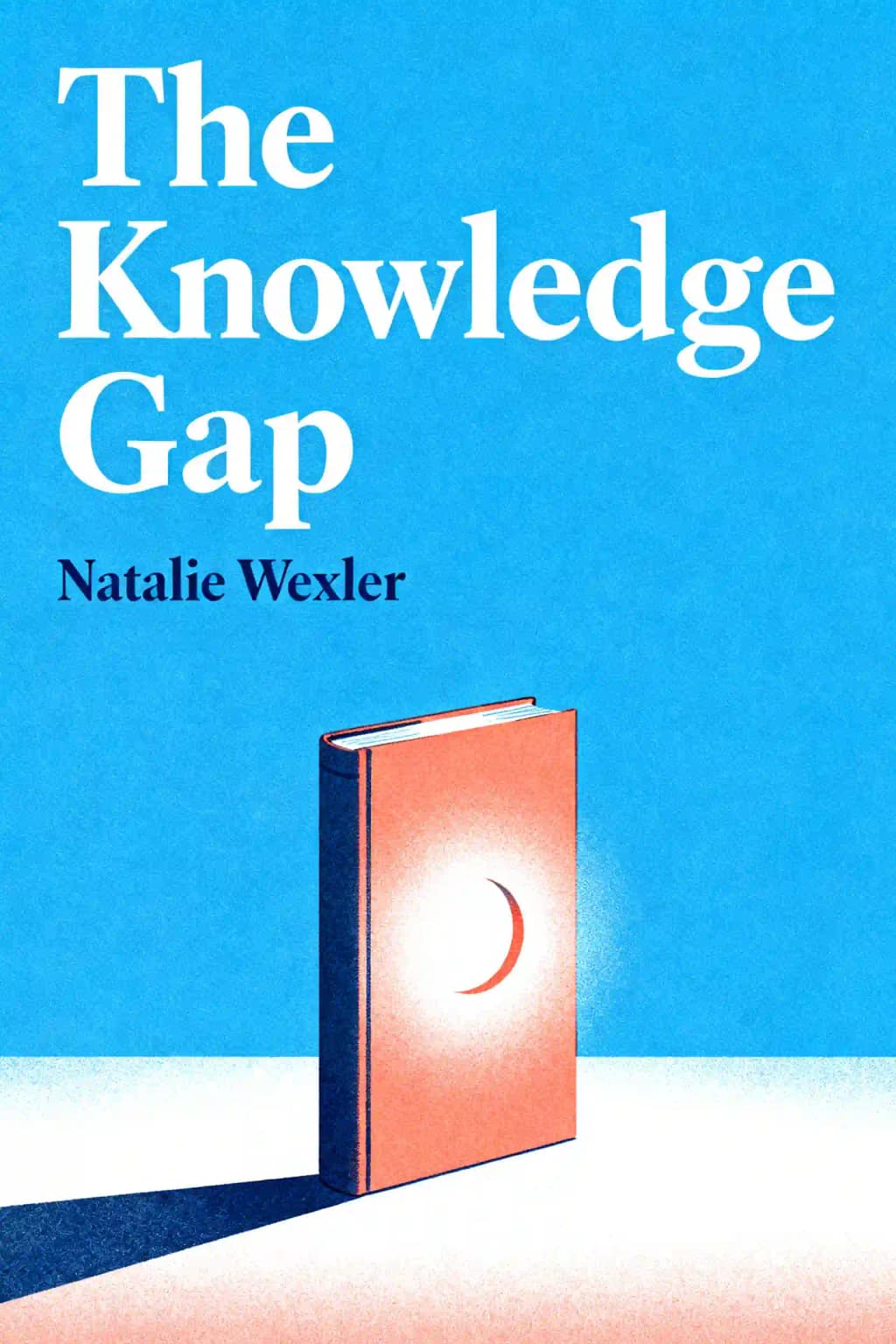
Imagine a classroom where children diligently practice "finding the main idea" using texts about random topics like penguins one day and the Titanic the next. They're learning to read, right? Wrong. This approach-standard in American elementary schools-is actually creating a knowledge gap that grows wider each year, particularly for disadvantaged students. Natalie Wexler's groundbreaking book exposes this fundamental flaw in our education system that has gone largely unnoticed despite billions spent on reform. As a New York Times bestseller that's transformed how educators think about literacy instruction, this work has been embraced by school districts nationwide and cited by education leaders as the missing piece in America's educational puzzle. The shocking revelation at its core: we've been teaching children how to read without giving them anything worth reading about.
Capítulo 2
The Skills-Focused Illusion
Walk into almost any American elementary school classroom today and you'll witness a familiar scene: children divided into "ability groups" practicing reading skills like "finding the main idea" or "making inferences" using short, disconnected texts on random topics. In one corner, a teacher guides students through a story about birds, while in another, children independently complete worksheets about text features. Down the hall, another class might be using reading comprehension software, clicking through passages about volcanoes one day and basketball the next. This approach-focused on teaching abstract reading comprehension skills rather than building knowledge-has become so pervasive that most educators can't imagine teaching any other way.
The typical elementary school day reflects this skills obsession. Reading and math dominate the schedule, with science and social studies often relegated to brief, sporadic periods-if they appear at all. One national survey found elementary teachers spend more than twice as much time on reading as on science and social studies combined. A typical third-grade schedule might allocate 120 minutes to reading instruction but just 20 minutes each to science and social studies. In many high-poverty schools, these subjects have effectively disappeared, subsumed into "literacy blocks" where historical or scientific content serves merely as vehicles for practicing skills. Teachers report feeling pressured to focus on tested reading skills at the expense of subject-matter learning.
This approach stems from a fundamental misconception about reading comprehension. Most educators believe reading is a set of transferable skills-identifying main ideas, making inferences, determining author's purpose-that once mastered, can be applied to any text. Under this model, what children read matters far less than how they read. As one principal explained when defending her school's minimal history instruction: "The thinking skills are the same no matter what the content is." This belief has led to the widespread adoption of programs that emphasize skill practice through disconnected "leveled readers" rather than coherent content learning.
This skills-focused approach affects all schools but disproportionately impacts low-income communities. In one study, 91% of students in high-poverty schools received repetitive basic skills instruction compared to just 50% in middle-class schools. The instruction often takes the form of worksheet-heavy test prep and isolated skill drills. Meanwhile, more affluent schools are more likely to maintain rich content instruction alongside reading skills. Despite this intense focus on reading skills, the achievement gap persists, with about 80% of low-income students scoring below proficient in reading compared to 50% of their higher-income peers. The gap widens as students advance through school, suggesting that the early emphasis on skills over knowledge has long-lasting negative effects. Even after years of targeted reading instruction, many students struggle with grade-level texts because they lack the background knowledge needed to comprehend them effectively.
Capítulo 3
The Knowledge Gap Revealed
The persistent achievement gap between wealthy and poor students isn't fundamentally about reading skills-it's about knowledge. This insight, supported by decades of cognitive science research, turns conventional wisdom about reading instruction upside down and challenges our basic assumptions about literacy education.
Consider a landmark 1987 study by researchers Recht and Leslie. They divided students into "good" and "poor" readers based on standardized tests, then had them read a passage about baseball. The results were striking: students with baseball knowledge comprehended the text better than "good readers" without that knowledge, regardless of reading level. Students who knew baseball terminology, rules, and strategy could make meaningful connections and inferences, while technically proficient readers without this knowledge struggled to understand the passage's meaning and implications.
Similarly, when preschoolers from different socioeconomic backgrounds were tested on their understanding of birds, wealthier children performed better-but when tested on made-up creatures called "wugs" that neither group knew about, comprehension equalized. This experiment demonstrated that when background knowledge is equalized, the comprehension gap disappears, suggesting that knowledge, not inherent ability, drives reading success.
These studies reveal that abstract "reading ability" is largely a mirage. While decoding (matching sounds to letters) needs explicit instruction, reading comprehension isn't a skill that can be taught in isolation-it's fundamentally dependent on background knowledge. When we read, we connect new information to what we already know through a complex web of associations, references, and context. Without sufficient background knowledge-what one commentator calls "a knowledge party" of accumulated associations-students struggle to absorb new information, make predictions, or draw conclusions from text.
The knowledge gap stems from multiple sources: income inequality (with wealthy parents now spending nine times more on enrichment activities like museums, travel, and educational programs than low-income parents), different parenting styles (including vocabulary exposure and conversation patterns), and language exposure differences. Children from disadvantaged backgrounds often experience a "double dose of disadvantage"-less sophisticated language both at home and in school, where simplified texts and focus on basic skills rather than content knowledge compound the problem. This creates a "Matthew effect" where knowledge-rich students acquire more knowledge while knowledge-poor students fall further behind, as their limited background knowledge makes it harder to learn new information.
The problem remains hidden in elementary schools where texts don't require much background knowledge, creating an illusion that skills-focused teaching works. Simple stories with familiar settings mask the underlying knowledge deficit. But by high school, teachers are bewildered by students who can't comprehend grade-level texts after a decade of schooling, particularly in content-heavy subjects like science and history. France's experience offers a cautionary tale: when they abandoned their content-focused national curriculum for a skills-based American approach in the 1980s, achievement levels dropped sharply, especially among disadvantaged students, demonstrating the crucial role of systematic knowledge building in education.
Capítulo 4
The Reading Wars' Unresolved Legacy
The Reading Wars continue beneath the surface of American education, shaping how children learn (or fail to learn) to read. On one side stand whole-language advocates who maintain that reading is primarily about meaning-making; on the other, phonics proponents who insist on systematic instruction in sound-letter relationships. While research clearly shows systematic phonics instruction benefits all children, many educators still resist it.
Scientists reject the whole-language premise that reading is a natural process like speaking, pointing out that written language is only 4,000-6,000 years old-too recent for our brains to have evolved an innate capacity for it. Between one-third and one-half of children may learn to read without explicit phonics instruction, but many cannot-particularly disadvantaged students, English language learners, and those with learning disabilities.
The debate became increasingly politicized through the 1980s-90s, with phonics associated with conservative politics and whole language with progressive education. Despite mounting scientific evidence supporting phonics, whole language spread rapidly through American classrooms. California's adoption of whole language in 1987 appeared to be a victory for the approach, but when reading scores plummeted, the state returned to phonics.
By 2003, "balanced literacy" had emerged as education's peace treaty after the Reading Wars, supposedly incorporating both phonics and rich literature. Critics argued balanced literacy was merely whole language rebranded, with its advocates still resisting systematic phonics while claiming they taught it "as needed." Unlike whole language's free-form approach, balanced literacy provided more structure: students read "just right" level books, rotated through activities at set intervals, and received comprehension skills instruction.
Lucy Calkins emerged as balanced literacy's most influential figure, with her approach adopted by thousands of school districts nationwide, elite private schools, and many charter networks. Her curriculum frames everything in content-agnostic terms, believing comprehension skills can be taught abstractly and transferred to any subject. Despite claiming to reject scripted instruction, her Units of Study often feel scripted to teachers, and the movement has morphed into practices its founders wouldn't recognize.
Capítulo 5
Balanced Literacy's Empty Promise
Balanced literacy emerged as an evolution of whole language teaching when educators recognized that simply allowing children to read freely wasn't sufficient for comprehensive literacy development. The approach incorporated reading comprehension "strategies" based on research by P. David Pearson, though ironically, Pearson himself had earlier expressed skepticism about direct comprehension instruction, suggesting that building foundational knowledge might be more effective for reading success.
The strategy-based approach gained widespread adoption in classrooms across America, with teachers enthusiastically embracing techniques like "activating schema," "making connections," and "monitoring comprehension." Students were taught to pause frequently while reading to check their understanding, make predictions, and relate texts to their personal experiences. However, this heavy emphasis on metacognitive strategies may have inadvertently complicated the reading process by overwhelming students' working memory capacity. When confronted with students struggling to comprehend nonfiction texts, educators typically responded by intensifying strategy instruction rather than addressing the fundamental issue of insufficient background knowledge.
Classroom observations reveal particularly troubling practices that exemplify the approach's shortcomings. In one telling example from a second-grade classroom, students were taught to identify a text's topic simply by counting repeated words, while the teacher glossed over crucial geographic terms like "Chincoteague" and "Assateague," focusing solely on the surface-level concept of "wild ponies." Similarly, in a fifth-grade lesson, students analyzing "author's perspective" fixated on superficial details - noting a scientist's smile in a photograph and describing how he "tricked" a mantis shrimp - while missing valuable opportunities to learn about scientific methodology or marine biology.
Joel Klein's experience as New York City schools chancellor provides a compelling case study of balanced literacy's limitations. Initially a strong supporter of Lucy Calkins's curriculum, Klein began questioning its effectiveness when data showed eighth-grade reading scores remained stagnant despite improvements among fourth-graders. His classroom observations revealed concerning patterns, such as a Civil War lesson that deviated from historical analysis into personal discussions about racism, sacrificing crucial content knowledge. This realization led Klein to explore E.D. Hirsch Jr.'s knowledge-building approach, resulting in a substantial $2.4 million pilot program implementing Core Knowledge Language Arts in ten New York City schools. The three-year study yielded striking results: students in Core Knowledge schools demonstrated significantly higher achievement across reading comprehension, social studies, and science compared to peers in traditional balanced literacy programs.
Perhaps most concerning is balanced literacy's failure to deliver on its central promise: reducing achievement gaps between different socioeconomic groups. After three decades of implementation, these gaps persist and are actually widening as Common Core standards emphasize complex nonfiction texts - precisely the type of reading that requires strong background knowledge. The approach maintains its popularity in schools nationwide despite never having undergone rigorous independent evaluation to verify its effectiveness. This persistence of an unproven methodology raises serious questions about educational decision-making and the real costs of continuing with a system that shows clear signs of inadequacy.
Capítulo 6
The Overlooked Power of Writing Instruction
In the late 1970s, Judith Hochman attended a workshop that transformed her approach to education. As curriculum coordinator at a school for students with learning disabilities, she realized writing needed explicit, sequential instruction beginning at the sentence level. Hochman discovered that writing, reading comprehension, and analytical ability were deeply interconnected, with writing being the key to unlocking the other two.
Hochman realized that "written English is a second language" requiring explicit instruction. She developed sentence-level strategies-using question words to expand basic sentences, providing sentence stems with conjunctions like "because" and "although," and teaching students to use appositives and combine sentences. When these techniques were applied to content students were studying rather than generic topics, their writing became richer and their comprehension deeper.
Writing proves far more difficult than reading because it's expressive rather than receptive. Unlike speaking, which allows for fragments, gestures, and immediate feedback, writing demands precision, organization, and anticipation of readers' needs. Writing also places enormous demands on working memory as students juggle mechanics, spelling, word choice, sentence structure, and organization simultaneously. This cognitive load can create anxiety, further diminishing mental capacity needed to understand the content they're trying to communicate.
When mechanics aren't overwhelming and students possess sufficient knowledge, writing becomes our most powerful teaching tool. Writing assignments quickly reveal gaps in understanding, allowing teachers to address misconceptions. The process of retrieval practice through writing lodges information in long-term memory. Writing also creates a "protege effect"-when students teach material to others through their writing, their own understanding deepens dramatically.
Two major approaches to writing instruction have emerged: Judith Hochman's sentence-based method versus Lucy Calkins's writers' workshop. Both recognize writing as a process requiring planning, drafting, and revising rather than just a product to be graded. But their approaches diverge dramatically. Calkins encourages "flash drafting" at furious pace without overthinking, trusting students will absorb sentence-crafting skills through "mentor texts." Hochman starts with mastering sentences before moving to paragraphs and essays, emphasizing clear outlines and planning.
Most critically, Calkins limits children to writing about personal experiences-their "small moments"-while Hochman shows how writing can simultaneously teach content knowledge and writing skills. Lisa Delpit, an African American educator, argues Calkins' approach particularly disadvantages minority students who aren't explicitly taught the rules they're later held accountable for knowing. While middle-class white students might absorb writing conventions at home, others remain trapped in "fluency" exercises without gaining the skills needed for college success.
Capítulo 7
The Common Core's Missed Opportunity
The Common Core standards emerged from a bipartisan effort starting in 2006, with David Coleman and Jason Zimba playing key roles after writing a paper advocating for "fewer, clearer, and higher" standards. With $240 million in Gates Foundation funding and Obama administration incentives, the initiative gained swift adoption across most states.
Coleman's experience tutoring at a predominantly Black, low-income high school in the late 1980s shaped his approach to the Common Core. Dismayed by students' struggles with complex texts, he attempted a "close reading" approach with Langston Hughes' "Harlem," asking open-ended questions that put teacher and students on equal footing. This approach, influenced by Coleman's own bar mitzvah preparation, became central to his vision for the Common Core-combining knowledge-building with close reading of complex texts.
Despite the Common Core's emphasis on building knowledge, many teachers misunderstood its requirements, thinking students should struggle through complex texts regardless of background knowledge. This led to absurd situations like a first-grader instructed to "draw conclusions" about Brazil when she couldn't even read the word and had never heard of the country.
Coleman's message about building knowledge was largely ignored despite his efforts to promote it. He theorizes this happened because his close reading demonstrations "crossed a red line" by stepping into teachers' shoes, inviting resentment. The knowledge message also required greater emphasis given how radically it departed from skills-focused practices. Influential figures like Lucy Calkins further muddied the waters by interpreting the standards to require minimal changes to balanced literacy approaches.
E.D. Hirsch feared the Common Core would worsen education by having students practice "skills" on texts requiring background knowledge they lacked. While both Hirsch and Coleman value knowledge, their approaches differ fundamentally. Hirsch prioritizes efficiently building broad knowledge in elementary years, even preferring CliffsNotes to original texts if it means students acquire more cultural references. Coleman insists all students engage deeply with complex texts, believing superficial summaries are "the biggest threat to reading."
Capítulo 8
The Path Forward: Knowledge-Building Curriculum
In 2011, Aaron Grossman, a former elementary teacher working for Nevada's Washoe County School District, discovered that his district's approach to education contradicted the true intent of the Common Core standards. While the district treated the new standards as merely rearranging skills between grade levels, Grossman found videos of David Coleman explaining that the standards required fundamental changes to instruction-focusing on content, complex texts, nonfiction, and academic vocabulary.
Together with Torrey Palmer, the district's new K-6 English language arts coordinator, Grossman launched the Washoe County Core Task Project to provide professional development aligned with the authentic Common Core approach. Teachers were asked to try close readings of complex texts like Richard Feynman essays and Emma Lazarus's "The New Colossus," which prompted initial skepticism. However, they returned amazed at how well their students had performed, realizing they had been underestimating their capabilities.
Despite initial challenges, Core Knowledge curriculum gained momentum in Washoe County. By 2014-15, twenty-three schools had adopted it, with teachers appreciating how students retained information and made connections between topics. At Cannan Elementary, Principal Linnea Wolters observed how the curriculum transformed student engagement-second-graders organized their recess around Greek mythology with specific rules, and kindergarteners spent their free time "rock-hounding" during their geology unit. Teachers became convinced when they witnessed struggling readers successfully comprehending grade-level texts on familiar topics.
Content-rich curricula like Core Knowledge show potential for addressing educational segregation by providing all students-regardless of reading level-access to the same substantive content. At Westergard, a predominantly white and affluent school, teachers observed both higher and lower-achieving students benefiting from shared knowledge-building activities. One teacher described how an English learner and a stronger student both wrote meaningfully about Civil War leaders, albeit at different levels of complexity-something impossible in classrooms where struggling readers are limited to simplistic texts.
New York's most radical educational move was choosing the Core Knowledge Foundation to develop K-2 literacy curriculum. Though comprehensive in building knowledge and historical understanding, it faced resistance from teachers accustomed to using "authentic" children's literature rather than specially created texts. Other content-rich alternatives emerged: EL Education offers science-focused "expeditions" with social justice themes; Wit & Wisdom emphasizes history and art; American Reading Company groups authentic texts by topic and reading level; and Bookworms includes complex text read-alouds through upper elementary.
Louisiana has become the model for implementation, making highly-rated curricula easier to purchase and creating 5,000 "teacher-leaders" who act as ambassadors in every school. This collaborative approach has helped Louisiana teachers better understand the Common Core's knowledge-building approach. Louisiana is also experimenting with innovative reading tests that draw on the state's English and social studies curricula, testing students on what they've actually been taught rather than what they happen to know-a revolutionary approach that could pave the way for broader shifts in teaching practice.
Capítulo 9
A Knowledge Revolution Within Reach
Sarah Webb's fourth-grade classroom in a low-income Ohio district powerfully demonstrates the transformative potential of content-focused curriculum. When her school piloted Wit & Wisdom, Webb discovered it perfectly aligned with her long-held teaching philosophy. Despite initial skepticism from colleagues who worried it would be too challenging and minimal formal training, her students achieved remarkable results. They didn't just learn isolated facts - they retained complex information across multiple units, drew sophisticated connections between seemingly disparate topics, and developed genuine intellectual curiosity. Both high-achieving students and those who had previously struggled found success in different ways. The case of Matt particularly illustrates this transformation - a student who had internalized his placement in "the dumb group" emerged as a classroom leader through his deep engagement with the curriculum's content. His year-end letter to Webb, declaring that reading was "not a struggle anymore," reflected both academic growth and newfound confidence.
While no American school district has yet achieved the perfect integration of content-focused teaching with comprehensive writing instruction that builds both knowledge and critical thinking skills for every student, promising developments across the country provide concrete evidence for optimism. In Tennessee, twelve districts participating in the LIFT network are piloting content-rich curricula in early grades, with remarkable results. Teachers report feeling more professionally supported and observe tangible benefits in student engagement and achievement. The LIFT network's approach is particularly effective because it focuses on building teacher understanding about why these instructional changes matter, starting with volunteer schools that can serve as successful models for others. Similarly, Louisiana has embarked on an ambitious statewide transformation, implementing changes thoughtfully and collaboratively while providing extensive teacher support and resources.
The current high-stakes testing environment remains a significant obstacle, often forcing schools to narrow their curriculum to focus primarily on reading and math skills while inadvertently driving talented educators from the profession. A more nuanced approach is needed: testing pure decoding skills in lower grades while replacing generic "reading tests" with transparent, content-specific assessments in history, science, and literature. Louisiana's innovative model, where test topics are announced in advance, allows teachers to focus on teaching relevant content deeply rather than rushing through surface-level coverage of countless topics.
While other essential reforms deserve attention - including enhanced teacher preparation programs, improved professional development, and comprehensive support services for disadvantaged students - ensuring elementary schools provide rich knowledge of the world must be a central priority if we want all students to become capable citizens who can lead productive lives and participate meaningfully in democratic society. The knowledge gap between advantaged and disadvantaged students isn't an immutable fact of nature - it's the direct result of misguided educational practices that prioritize skills over content. By returning to education's fundamental purpose of building knowledge that empowers children to understand and shape their world, we can create more equitable outcomes for all students.