Capítulo 1
The Unexpected Journey of Parenthood
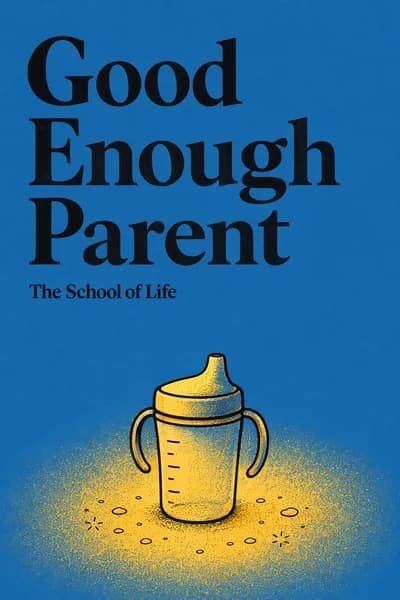
The Good Enough Parent isn't just another parenting manual-it's a philosophical reckoning with one of humanity's most fundamental relationships. This book has quietly become a touchstone for celebrities like Kristen Bell and Dax Shepard, who have publicly referenced its wisdom in discussing their own parenting approaches. Unlike traditional parenting books that promise perfect children through rigid methodologies, this work stands apart by acknowledging the beautiful messiness of raising humans. In an age where parenting anxiety has reached fever pitch-with parents spending over $500 billion annually on child-rearing in the US alone-this book offers something revolutionary: permission to be imperfect. What if the path to being a good parent isn't about getting everything right, but about being present, self-aware, and resilient enough to navigate the inevitable mistakes? This question has made the book a cultural phenomenon, particularly among millennials wrestling with the weight of parental expectation in the social media era.
Capítulo 2
The Evolution of Parenting: From Practicality to Purpose
For most of human history, children were conceived for practical reasons-as farmhands, old-age insurance, or family legacy bearers-rather than out of concern for the child's welfare. In agricultural societies, children were essential laborers by age six or seven, while in merchant families, they represented business continuity. Even in royal households, children were primarily viewed as dynastic necessities rather than individuals deserving nurture. Modern society has undergone a profound shift toward a child-centric approach, where children's flourishing takes precedence over parental needs. This transformation accelerated after World War II, alongside rising living standards and evolving psychological understanding. Yet despite this commitment to children's welfare, we haven't fully developed systematic approaches to parenting, often naively trusting instinct rather than seeking instruction.
The stakes couldn't be higher. Contemporary psychology recognizes childhood as a consequential period determining lifelong emotional health. Research shows that early experiences, particularly from ages 0-7, shape neural pathways that influence everything from stress responses to relationship patterns. Humans' unusually long maturation period makes us particularly vulnerable to parental influence-an unfortunate childhood can unbalance an entire life. Studies indicate that childhood trauma can affect everything from immune system function to adult decision-making patterns. The journey to emotional maturity isn't guaranteed by age alone; some elderly people remain emotionally infantile while some children display remarkable maturity.
This maturity curriculum involves crucial transitions: from believing oneself the center of the universe to recognizing others' existence; from imperial demands to diplomatic compromise; from expecting magical understanding to clear communication; from being controlled by bodily states to understanding their influence; from black-and-white idealization to nuanced perception of others; and ultimately, to becoming someone capable of nurturing a child because someone once nurtured the child within them. Each transition represents a developmental milestone that requires careful guidance and support from caregivers who understand these stages.
Perhaps we should question whether everyone should automatically have children. A society that truly valued children would destigmatize child-free living and recognize that parenting isn't for everyone. Those who struggle with listening, remaining calm, or who have been badly affected by their own parents might consider whether parenting is right for them. This self-reflection requires courage in a culture that often equates adulthood with parenthood. In an ideal world, many might choose to remain child-free, finding fulfillment elsewhere while occasionally enjoying time with others' children. This could lead to a community of adults who consciously choose parenting rather than defaulting to it, potentially creating healthier environments for the next generation. The role of "honorary aunt" or "uncle" could be celebrated as valuable contributions to child-rearing, recognizing that it takes a village to raise emotionally healthy individuals.
Capítulo 3
The Complex Tapestry of Parental Love
While love seems simple to claim, understanding what parental love truly involves is surprisingly complex. Good parental love encompasses several key principles that go far beyond the simplistic "I love you" declarations we often associate with family relationships.
True parental love requires attunement to the child's perspective-seeing the world through their eyes rather than imposing adult interpretations. It means recognizing children's vulnerability without exploiting it, and taking seriously what might seem like "small things" to adults but represent entire worlds to children. When a favorite toy breaks or a friendship falters, these aren't minor inconveniences but profound losses deserving genuine empathy.
Loving parents offer forgiveness and positive interpretations of difficult behaviors, understanding that acting out often signals distress rather than malice. They allow for strange developmental phases without permanent labeling, accepting that children pass through periods of obsession, fear, or peculiarity that don't define their character. They understand that emotional security matters far more than material privilege-a child in a modest home with consistent affection fares better than one surrounded by luxury but emotional neglect.
Perhaps most importantly, good parents show their imperfections rather than presenting impossible idealization. They provide boring reliability-the steady, unglamorous presence that forms the foundation of security. They give love without expectation of reciprocation and avoid burdening children with outsized expectations to fulfill parental dreams.
The ultimate measure of parental love is whether it allows a child to grow into an adult who can participate in society without losing spontaneity, without excessive fear, and with basic trust in their own capacities and chances for fulfillment. Despite our advances, we're only beginning to understand how to ensure loving childhoods for all.
Capítulo 4
Preserving Wonder in a World of Normalcy
Children are like aliens newly arrived on Earth, seeing everything with fresh, unmarked minds. Like travelers in foreign countries who notice details locals take for granted, children possess an innate curiosity about the world that adults have largely lost. This ability to be amazed-to see nothing as "normal"-is also the hallmark of great artists and scientists throughout history. Every raindrop on a window, every shadow cast by streetlights, every rustling leaf becomes a source of fascination and investigation for young minds unencumbered by routine.
Consider how children investigate everyday objects with profound wonder, asking questions about their properties and possibilities that adults would never consider. A vacuum cleaner isn't merely a household appliance but a mysterious creature with peculiar habits and powers. A light switch contains magic that summons brightness from nowhere. They marvel at how water disappears down drains, why clouds don't fall from the sky, and how airplanes stay aloft. The tension often emerges when parental busyness collides with a child's fascination-whether with vacuum cleaners, airplanes, or the intricate patterns in a sidewalk crack. A simple walk to the store can become an expedition of discovery, with each beetle, leaf, and puddle demanding careful examination.
All great scientific discoveries and artistic works come from people who maintained this childlike naivety, while world-weariness results from allowing habit to replace astonishment. Einstein famously wondered what it would be like to ride alongside a beam of light, a question that led to revolutionary physics theories. Albrecht Durer examined hands with extraordinary attention to detail, while photographer William Eggleston found transcendent beauty in ordinary condiment bottles on diner tables. Marie Curie's relentless curiosity about the nature of radioactivity, Georgia O'Keeffe's intense focus on the inner world of flowers, and Jane Goodall's patient observation of chimpanzees all exemplify this preserved sense of wonder. They retained what most adults lose-the ability to see the extraordinary in the ordinary.
Every new human gives our species a chance to return to first principles and rethink everything we've taken for granted. A child's greatest gift is their insistence that nothing is ever normal, that everything deserves questioning and exploration. When we rush children past their wonder, urging them to hurry up or stop asking questions, we're not just inconveniencing them-we're suppressing the very quality that drives human innovation and meaning-making. This suppression has real consequences: diminished creativity, reduced problem-solving abilities, and a decreased capacity for joy in everyday experiences. The child who spends an hour watching ants build their colony may seem unproductive by adult standards, but they're engaging in the same deep observation that has led to humanity's greatest discoveries and insights.
Capítulo 5
The Art of Emotional Regulation
The capacity to soothe is perhaps a parent's most essential skill, though one rarely discussed in parenting manuals. In premodern societies, this need was understood collectively through figures like Mother Mary in Christianity or Guanyin in Buddhism, who offered compassion during moments of suffering. The Hindu goddess Durga and the ancient Greek goddess Demeter similarly embodied this nurturing wisdom. Today, soothing falls primarily to parents, who must master this subtle art without much cultural guidance or communal support.
The gifted soother recognizes when comfort is needed, even when disguised as defiance or aggression. They see beyond the slammed door of a teenager or the tantrum of a toddler to the underlying need for connection and understanding. They normalize vulnerability rather than shaming it, understanding that tears and fears aren't weaknesses but natural human responses. When a child fails a test or faces social rejection, they create space for both disappointment and growth. They offer physical holding to regulate distress-the embrace that contains overwhelming emotions when words fail. They use singing and music to calm without words, tapping into pre-verbal soothing mechanisms that remain effective throughout life, from lullabies for infants to shared playlists with teenagers.
Effective soothing involves active concern through rituals like blankets and temperature checks that signal care beyond words. These might include the special way of tucking in at bedtime, the familiar pattern of stroking hair during illness, or the gentle back rub that says "I'm here" without speaking. It includes providing nourishing food as a symbol of attention and love-the hot chocolate after a fall, the special meal during disappointment, the favorite breakfast on a difficult morning. Skilled parents create comforting nicknames that acknowledge both vulnerability and strength, maintaining a reassuring, slightly boring presence that communicates stability through turbulence.
A household where soothing flourishes equips children with psychological tools to face life's challenges. Parents demonstrate healthy responses to stress through their own self-regulation - taking deep breaths, going for walks, or expressing emotions appropriately. They teach children to identify their feelings, recognize their needs, and develop personal calming strategies. Even when parents are gone, their children will have learned to internalize these soothing capacities, developing the emotional resilience to weather life's inevitable storms. The child who has been well-soothed grows into an adult who can self-soothe-perhaps the most valuable psychological skill one can possess. This ability becomes crucial in managing workplace stress, navigating relationships, and maintaining mental health throughout adulthood.
Through consistent soothing experiences, children develop an internal sanctuary they can access during difficult times. They learn that emotions, no matter how intense, are temporary and manageable. This emotional foundation becomes the bedrock for future resilience, healthy relationships, and psychological well-being.
Capítulo 6
Hearing Beyond the Words
Parents might bristle at the suggestion they don't listen enough to their children, given the constant cacophony of childhood noise they endure. Yet despite the overwhelming volume, the signal can still get lost. Children often become louder precisely because they don't feel heard at the level that matters most.
The challenge is that children cannot articulate their feelings clearly. With minimal understanding of their own minds, they communicate in ways that are violent, hurtful, mean-spirited, rebellious, illogical or irrational. Parents may shut their ears not from meanness but because what they hear violates their hopes for their child. Rather than truly listening, they swerve away from uncomfortable messages, imploring children to be "more normal" by dismissing their feelings with responses like "Don't be silly" or "That's ridiculous."
Parents fear their child might develop into someone problematic-a neurotic, a delinquent, someone who can't function in society. This anxiety prevents them from calmly hearing declarations that seem alarming. The solution isn't just better listening but broadening one's conception of normality to include the full range of human emotions. Sanity has room for madness; it's normal to have contradictory feelings.
The more we listen to children's seemingly weird messages, the less frantically they need to communicate them. A child who threatens to "burn the school down" isn't an arsonist-in-training but someone desperate to express deep frustration. Feelings invariably weaken once aired and recognized. Love involves translating what someone says into what they actually mean-discerning that "I hate you" might really mean "I'm scared by how much I love you." With children, we must practice this translation constantly, responding to surprising declarations with "Tell me more" rather than shutting them down.
Capítulo 7
The Permission to Feel Everything
Modern parenting often operates under the misguided assumption that a good childhood must be an exclusively happy one, filled with constant smiles, giggles, bright colors, and celebrations. Parents meticulously craft birthday parties, plan cheerful activities, and curate positive experiences. But this relentless pursuit of jolliness ignores a crucial truth: every human life, including childhood, naturally contains challenges that warrant sadness, anxiety, and grief. Sadness isn't an anomaly to be corrected but an appropriate and necessary response to existence.
Though adults frequently dismiss childhood as "easier" than adulthood, children face profound challenges from their very first moments: the traumatic loss of the womb's comfort, physical discomforts they lack the vocabulary to articulate, frustrating developmental limitations, complex social dynamics they're learning to navigate, and the constant, primal fear of parental abandonment. Add to this the ordinary disappointments of daily life - toys they can't have, tedious car journeys, difficult peers, academic pressures, family conflicts, and the overwhelming task of understanding an increasingly complex world - yet they're still expected to maintain a cheerful disposition.
A truly nurturing childhood isn't necessarily marked by perpetual cheeriness; it's one where a young person is allowed to feel real, authentic emotions across the entire spectrum. Pressuring children toward artificial contentment without genuine cause isn't kindness but a form of emotional coercion that disconnects them from their authentic experience. True care means allowing children their full emotional range - including resentment, moroseness, dejection, anger, and fear - while providing them with healthy ways to express and process these feelings.
The Buddha's story provides a powerful illustration of this principle. His parents famously attempted to shield him from all sadness, surrounding him exclusively with youth, health, happiness, and beauty. But feeling suffocated by this denial of life's full spectrum, he eventually discovered the world's true nature, leading to Buddhism's first noble truth: "life is suffering." Paradoxically, Buddhism ultimately offers a path to profound joy - not by denying pain but by squarely facing it and understanding its role in the human experience.
The healthiest families understand how to be appropriately melancholy when circumstances warrant it. They recognize that acknowledging despair and disappointment represents true emotional intelligence and kindness, while compulsive jolliness often masks a parent's inability to tolerate their own unresolved feelings and discomfort with negative emotions. Melancholy springs from a rightful awareness of life's inherently tragic structure, helping us understand that loneliness is universal and every life contains unavoidable measures of shame and sorrow. By accepting these truths, we paradoxically become more resilient and better equipped to experience genuine joy when it arrives.
Capítulo 8
The Counterintuitive Value of Difficult Behavior
Consider two contrasting families at dinner. In Family One, the child behaves perfectly-complimenting food, discussing school pleasantly, listening attentively, and dutifully completing homework. They never raise their voice, always say "please" and "thank you," and help clear the table without being asked. In Family Two, the child calls their mother an idiot, mocks their father, makes crude bodily comments, declares school stupid, and storms off slamming doors. They refuse to eat vegetables, complain about everything, and challenge every parental decision.
Counterintuitively, it's the "good" child who faces future problems. They've learned to suppress their authentic feelings because they sense their parents lack resources to handle their true self. They hide anger, boredom, and criticism, fearing these would devastate the adults. These children become expert observers, constantly scanning for signs of parental disapproval and adjusting their behavior accordingly. They develop an exhausting internal monitoring system that prevents spontaneity and genuine self-expression. The "bad" child, however, enjoys psychological safety. Their outbursts occur precisely because they know their parents' love is unconditional and robust enough to absorb aggression, anger and disappointment. This environment fosters healthy development, allowing them to test reality and learn from natural consequences.
The unexpected outcome? The compliant child risks developing excessive rigidity, creativity deficits, harsh self-criticism, and even suicidal thoughts. They often struggle with perfectionism, inability to handle failure, and difficulty forming authentic relationships. Meanwhile, the "naughty" child develops spontaneity, resilience, failure tolerance, and self-acceptance. They learn early on that making mistakes doesn't equal losing love, and that negative emotions are survivable experiences rather than catastrophic events.
What we label naughtiness is actually early exploration of authenticity and independence. Former "naughty" children become more creative adults, comfortable with mistakes, sexually self-accepting, and able to receive criticism constructively. They develop stronger emotional intelligence, better conflict resolution skills, and more authentic relationships. Rather than fearing chaos and raised voices, we should recognize these as signs of psychological health-and be suspicious of perpetually well-behaved children who cause no trouble whatsoever.
This isn't to suggest we should encourage rudeness or disrespect, but rather that we should understand the developmental importance of testing boundaries and expressing difficult emotions. The child who feels safe enough to show their worst sides to parents is paradoxically more likely to develop into a well-adjusted adult than one who never dares to reveal their shadow. Parents who can maintain loving boundaries while allowing for emotional expression create an environment where children learn to integrate both their "good" and "bad" sides into a complete, authentic personality. This integration is crucial for long-term psychological health and the development of genuine self-esteem based on acceptance of the whole self, not just its socially acceptable parts.
Capítulo 9
The Profound Wisdom in Childhood Sweetness
Children's sweetness-their attitudes, mannerisms, games and smiles-might seem trite or sentimental, yet captures important values worth investigating. Why does childhood sweetness touch us so deeply, especially in modern times? What might it reveal about neglected aspects of our own psyches?
In 1961, Attorney General Robert F. Kennedy hung his children's drawings-showing docile animals, flowers, spaceships and sibling antics-in his Justice Department office. Historically, such display would have been unthinkable for anyone claiming decorum. Yet the art we're drawn to reflects what's missing from our lives. Kennedy sought visual relief from his world of extreme discipline and consequential decisions.
Modern adults grow sensitive to children's sweetness precisely because it embodies qualities threatened in adult life-qualities we unconsciously recognize as vital to psychological wholeness. In our world of complex technology, scientific precision, massive bureaucracies and meritocratic competition, we must be controlled, forward-thinking and cautious. Children's sweetness offers a symbolic manifesto for what's urgently needed in anxious modernity:
They display refreshing candor about feelings, declaring the self-important guest boring or the prestigious film overrated. Their irresponsibility reminds us that life isn't worth enduring without occasionally placing pleasure at its center. Their utopian schemes-from astronaut-chefs to elephant gardens-enchant us because we've lost freedom to imagine better worlds. Their endless curiosity (Why is the sea salty? How did Earth begin?) hints at how clever we could be if we maintained innocent determination.
Children upset conventional hierarchies, preferring boxes to expensive toys, examining bricks for hours, finding wonder in repetition and humor in the mundane. While traditional drawing emphasizes faithful observation, children's art prioritizes feelings over facts, offering emotional portraits rather than realistic representations. Unburdened by adult caution, they declare love "as deep as the Mariana Trench," without cynicism or fear of vulnerability.
There's nothing sentimental about children's sweetness. Adults possess this quality too, if only we could detect it. Our progress in recognizing sweetness in children will be matched when we learn to see it in one another.
Capítulo 10
The Good Enough Parent: Embracing Imperfection
Psychoanalyst Donald Winnicott observed parents tormented by their occasional rows, short temper, boredom, and mistakes. Yet these weren't bad parents-they were loving, kind, and interested in their children. They were "good enough." We often suffer from impossible visions of perfect parenting drawn from cultural fantasies rather than reality. With "good enough," Winnicott offered a cure for the sickness of idealization.
Modern parenting ideals have emerged precisely when capitalism demands our complete devotion to work. We're expected to excel professionally while simultaneously being present for bedtime stories and intimately involved in our children's inner lives. This "work-life balance" is as unrealistic as being both a professional ballerina and brain surgeon simultaneously.
Our kindness toward children has made us targets for their rage and disappointment. When things go wrong, we become convenient outlets for their frustration precisely because we've assured them "I will always be on your side." Though we want to be kind, parenting requires being the representative of duty, encouraging delayed gratification against children's natural preference for immediate pleasure. For this necessary role, we're punished and slandered while those who indulge children are celebrated as heroes.
We dream of using reason rather than authority, but children often can't comprehend our adult concerns. A 9-year-old can't understand how humiliating her 6-year-old brother might affect his future relationships with women. Without relevant experience, insight doesn't work. We can't rush children to conclusions or spare them from making their own mistakes.
The Romantic view that all humans are born good and only corrupted by poor upbringing contradicts experience. Certain aggression and cruelty appear innate despite loving environments. Modern parents believe they can mold happy, successful humans through meticulous attention to detail-from cot selection to after-school activities. Yet the relationship between effort and outcome remains unpredictable.
Flawed but kind parents do their children a service: they prepare them for an imperfect world. With love, goodwill and plenty of mistakes, they ready children for the only life they'll ever lead-one that's deeply imperfect but good enough. The greatest gift we can give our children isn't perfection but the resilience to navigate an imperfect world with grace, humor, and self-compassion-qualities that can only be learned from parents who embody these traits themselves.