Capítulo 1
When God Becomes a Brain Function: The Neurological Basis of Spirituality
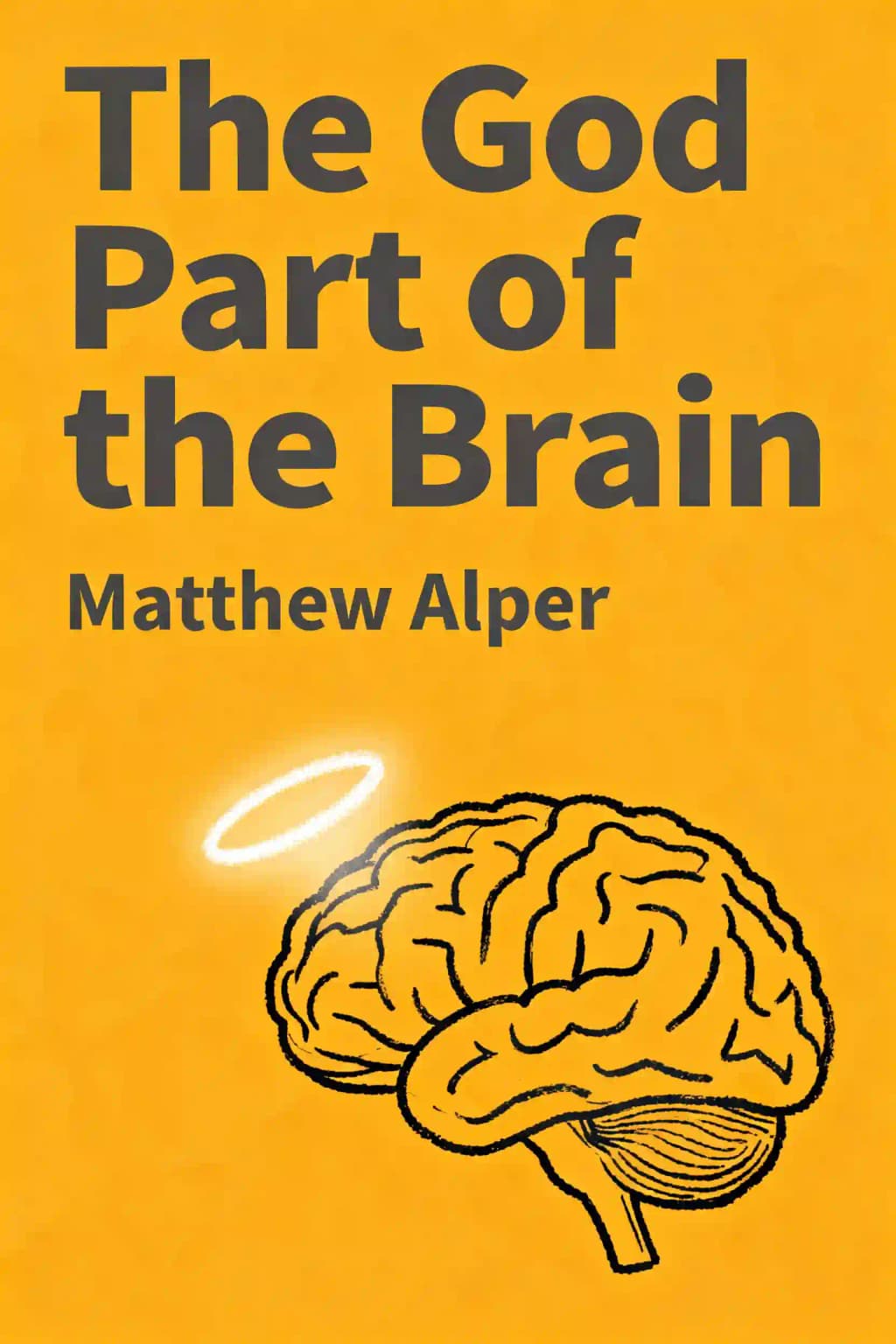
Have you ever wondered why every human culture throughout history has developed some form of religious belief? Why do we universally perceive reality as divided between the physical and spiritual? Matthew Alper's groundbreaking book "The God Part of the Brain" proposes a revolutionary answer: our spiritual perceptions aren't evidence of divine reality but rather the product of specialized neural circuitry evolved to help us cope with mortality awareness. This controversial work has been hailed as "the new Galileo" of religious studies by critics and has influenced fields ranging from neuroscience to anthropology. Even renowned biologist E.O. Wilson praised Alper's approach, suggesting those who "think for themselves will be escorted to the head of the line." The book's cultural impact continues to grow as neurotheology-the scientific study of religious experience-gains mainstream acceptance, challenging our fundamental understanding of what it means to be human.
Capítulo 2
The Existential Crisis That Launched a Quest
Knowledge drives human survival, but unlike other species, we also seek meaning and purpose beyond mere existence. We gather information both to master our world and understand our place in it, hoping each discovery will complete the cosmic puzzle of our existence. From ancient cave paintings to modern quantum physics, humans have consistently demonstrated this dual pursuit of practical knowledge and existential understanding. Despite remarkable scientific advances in fields like cosmology, neuroscience, and evolutionary biology, the question of God remains our ultimate challenge, potentially holding the answer to human existence itself.
The concept of a "universal God" transcends cultural differences, appearing across civilizations throughout history in remarkably similar forms. This universal deity represents the essence of spirit-indestructible, eternal, and everlasting. Whether called Yahweh, Allah, Brahman, or the Great Spirit, this God is perceived as the first cause, omnipresent and omniscient, the embodiment of perfect existence. The consistency of these divine attributes across diverse cultures suggests either a universal truth or a universal human need. Either God exists absolutely or not at all - there can be no partial existence of an infinite being.
If God exists, this profound truth carries immense personal implications. Each human would possess some measure of the infinite, making us immortal and giving our lives intrinsic meaning beyond biological function. Our moral choices would have cosmic significance, our consciousness would be more than neural activity, and our existence would be part of a grand divine purpose. Without God, however, we are merely mortal beings - complex but ultimately expendable parts of a mechanistic universe, with no absolute moral order or transcendent purpose. Between these two possibilities - immortality and death, eternal purpose and cosmic meaninglessness - there is no middle ground.
Like an Arthurian knight seeking the Holy Grail, Alper abandoned conventional life to search for an answer to the ultimate question: Does God exist? This quest led him through philosophy, theology, anthropology, and neuroscience. After years lost in philosophical woods, studying ancient texts and modern research, often despairing he would die without resolution, he returned with what he believes might be the answer-a scientific explanation for why humans universally perceive a spiritual reality. His journey mirrors humanity's eternal search for meaning, combining rigorous intellectual inquiry with deep personal stakes.
Capítulo 3
From Cosmic Origins to Human Consciousness
Science represents a constant contradiction to religion. Where ancient humans once prayed to gods for rain, not understanding evaporation and condensation, science has stripped these powers from deities and assigned them to neutral "forces of nature." Though belief in God provides comfort and purpose, Alper chose to place his faith in physical sciences, pursuing God's existence from a scientific perspective.
The universe emerged approximately fourteen billion years ago from a single point of pure energy that erupted in the "big bang." Within one-millionth of a second, energy began settling into material particles, and by three minutes after, these subatomic particles formed the first stable atoms. For 400 million years, the universe existed as an expanding hydrogen cloud, until gravity caused these atoms to congregate into vast gaseous clouds that eventually formed stars.
Nearly five billion years ago, our sun formed from a tremendous gas cloud. As the core consolidated into a star, heavier elements at the periphery amalgamated into mineral clusters that became planets. Earth formed as a ball of molten rock, constantly bombarded by meteorites that increased its mass and released gases. After nearly a billion years, two-thirds of Earth became covered in water with the remaining third forming a hardened mineral shell.
In 1953, Stanley Miller recreated Earth's primordial conditions in his laboratory, synthesizing amino acids-the building blocks of all organic matter-using only chemicals, heat, and electricity. For a billion years after Earth cooled, complex carbon-based compounds churned in the primordial seas, eventually forming self-replicating molecules that gradually developed functions like ingestion, digestion, excretion, and locomotion-qualities that biology would come to define as "living."
Through natural selection, more energy-efficient variations survived and reproduced, while less efficient ones disappeared. The first life forms diverged into plants using carbon dioxide and animals using oxygen. Within three billion years, these kingdoms diversified into countless species. Eventually, hominids evolved to walk upright, culminating in Homo sapiens about 100,000 years ago-humans with vocal cords and brain structures that enabled language, making them Earth's most powerful creatures.
Capítulo 4
Looking Inward: Kant's Revolutionary Perspective
After exhaustively studying the physical universe for answers about God through astronomy, physics, and cosmology, Alper turned to philosophy, particularly Immanuel Kant's groundbreaking epistemological approach. While ancient Greeks like Aristotle and Plato had looked outward to understand reality through observation and contemplation of the natural world, Kant suggested in his seminal work "Critique of Pure Reason" that we must first look inward, examining the very nature of perception itself.
Kant argued that we never truly know objects as they actually are (noumena) but only our perception of them (phenomena). This marked a radical departure from earlier philosophical traditions. Unlike John Locke's "tabula rasa" theory, which proposed the mind begins as a blank slate written upon by experience, Kant proposed humans possess innate "modes of perception" that actively organize and structure all sensory information. These include inherent frameworks for understanding space, time, and causality that precede any actual experience. Jean Piaget's developmental psychology experiments in the 20th century provided empirical support for this view, demonstrating that children only comprehend spatial relationships and temporal sequences at specific developmental stages, suggesting these cognitive structures unfold according to an innate blueprint.
This revolutionary insight led Alper to a profound realization: perhaps he had been searching for God in the wrong place entirely. Rather than scanning the cosmos or parsing ancient texts, understanding God might require examining the inherent structures of human perception within the brain itself. After years of frustration pursuing external evidence, he finally applied rigorous scientific methodology to his search and arrived at one empirically verifiable fact: God was, at its most basic level, a word! More specifically, it was a concept that appeared in every known culture throughout human history, from the most isolated tribes to the most advanced civilizations. This universal presence suggested something deeper than mere coincidence.
Since words and concepts originate in the human brain through neural activity, perhaps the persistent and universal concept of God was fundamentally linked to our biological nature - hardwired into our cognitive architecture just as Kant had suggested space and time were inherent structures of human perception. This insight opened up an entirely new avenue of investigation, shifting the focus from external reality to the neurological basis of religious experience and belief.
Capítulo 5
Universal Behaviors as Evidence of Genetic Programming
Any physical characteristic universally shared by every individual of a species most likely represents a genetically inherited trait. The uniform wing patterns of Monarch butterflies, for instance, must be encoded in their genes-not a vast coincidence. For every universal function (smelling, hearing, seeing), two things must be true: there must exist specific physiological sites from which that function is generated, and there must be underlying genes responsible for those sites.
According to sociobiology, this principle also applies to universal behaviors. Consider the planarian flatworm, which always turns its head toward light sources. This behavior isn't learned-even isolated planarians exhibit it-suggesting it must be genetically programmed. This phototactic response isn't a matter of free will or coincidence, as experiments show planarians orient themselves precisely to equalize light stimulation in both eye receptors.
Universal behaviors represent genetically inherited traits across all species. Honeybees construct identical hexagonal honeycombs regardless of isolation from other colonies. Three-spined sticklebacks perform the same zigzag courtship dance even when raised in isolation. Eastern Mountain gorillas across separate troops engage in identical play behaviors, courtship rites, and threat displays without contact between groups.
Humans, like all animals, exhibit universal behaviors that suggest genetic programming. All human cultures express emotions like grief, fear, aggression, and amusement with identical facial expressions. Even blind people who've never seen others smile when amused, confirming these are involuntary reflexes. More complex cross-cultural patterns exist in every human society: kin-group arrangements, sexual restrictions, birth and death rites, incest taboos, education methods, legal codes, toolmaking, cooking, gift-giving, dancing, religious worship, musical instruments, mathematics, government, and language.
These universal behaviors likely stem from genetic predispositions. Language, for instance, exists in all human cultures and originates from specific brain structures that enable word storage, comprehension, and speech production. Similarly, music appears in every human culture as a genetically inherited capacity. These cross-cultural behaviors suggest that our brains are hardwired to process information in specific ways, including our universal tendency to perceive a spiritual reality.
Capítulo 6
The Spiritual Function: A Biological Necessity
Just as humans universally possess language genes that create specialized neurophysiological connections for linguistic capacity, our universal tendency toward spirituality suggests we may possess specialized "spiritual" genes. Every human culture throughout history has developed both language and religion, perceiving reality as consisting of two distinct realms: the physical and the spiritual. The physical realm contains tangible objects subject to change, death, and decay, while the spiritual realm transcends physical laws, containing elements perceived as permanent, fixed, and eternal.
Carl Jung's theory of the collective unconscious provides a foundation for understanding our inherited spiritual tendencies. While Freud identified the personal conscious and unconscious, Jung proposed a deeper layer-the collective unconscious that contains components shared by all humans regardless of personal experience. Through comparative studies of world mythologies, Jung discovered remarkable similarities across cultures, which he called archetypes. These universal themes led Jung to conclude humans possess an inherent "religious function" as powerful as our instincts for sexuality and aggression.
The universality of spiritual belief is evident across all human cultures. Every society has believed in supernatural forces or beings, constructed sites of worship, created religious art and scriptures, and maintained belief in souls. All cultures perceive humans as unique combinations of matter and spirit, with consciousness residing in an eternal soul that survives physical death.
Beyond burial practices, all cultures sanctify existence through universal rituals: birth rites (Jewish circumcision, Catholic baptism, Aboriginal purification ceremonies), initiation rites marking passage to adulthood (Bar Mitzvah, Confirmation, Hindu Sannya), and marriage ceremonies. Every society maintains a priesthood-shamans, priests, rabbis, swamis-who serve as intermediaries between material and spiritual worlds.
The universal nature of spiritual behaviors across human cultures suggests an inherent neurophysiological basis similar to how honeybees instinctively build identical hexagonal hives. This pattern indicates we should view our cross-cultural spiritual behaviors as we would any other species' universal behaviors-as genetically inherited instincts rather than coincidental choices.
Capítulo 7
Evolution's Answer to Mortality Awareness
What happens when our anxiety function confronts our unique awareness of death? This collision creates an existential crisis unlike anything experienced by other creatures.
While our capacity for foresight helps us avoid dangers, it simultaneously forces us to recognize that all our protective efforts are ultimately futile. No matter how vigilantly we secure food, shelter, and safety, death remains inevitable and inescapable. This awareness strips our anxiety function of its efficacy, undermining our survival capacity.
In our futile attempts to oppose inevitable death, we channel energy into self-destructive behaviors-suicide, genocide, sadism, masochism, self-mutilation, drug abuse-making us what Freud called the "neurotic" animal. Furthermore, death's inevitability renders life seemingly meaningless. Our struggles become exercises in futility, compelling us to ask: "Why go on living? What's the point?"
How could our species possibly survive the crippling awareness of our own mortality? Nature needed to modify our cognitive processing without compromising our intellectual faculties that gave us such evolutionary advantage.
Rather than weeding out self-awareness (our greatest strength despite its existential drawbacks), selection pressure transformed our cerebral physiology. Those individuals whose brains possessed mutations allowing them to withstand overwhelming death anxiety were more likely to survive and pass these adaptations to offspring.
Over generations, a cognitive function emerged that altered how protohumans perceived reality by adding a "spiritual" component to their perspective. Just as the human brain evolved linguistic, musical, and mathematical intelligence, we developed "spiritual" intelligence as an adaptive response.
Nature selected lineages predisposed to believe in an alternate reality-one that transcends the limitations of our finite physical realm with its inevitable suffering and death. This adaptation compelled our species to believe ourselves transcendent, to imagine we are more than mortal beings trapped in decaying bodies.
Capítulo 8
The Neurobiology of Spiritual Experience
Every culture from the dawn of humanity has documented experiences where individuals feel touched by some "higher" truth or power. These experiences are described with remarkably similar terms across cultures: "feelings of unity," "cosmic consciousness," "God-consciousness," "dissolution of normal ego boundaries," and sensations of "bliss," "ecstasy," and "timelessness."
Recent neuroscience confirms these experiences have physiological origins. SPECT scans of meditating Buddhist monks show decreased blood flow to the amygdala (reducing anxiety), parietal lobe (altering time/space perception), and frontal lobe (diminishing self-awareness). Temporal lobe epilepsy patients often experience intense religious fervor, with figures like Dostoyevsky describing "touching God" during seizures. Michael Persinger's transcranial magnetic stimulation experiments produced similar "spiritual" experiences by stimulating specific brain regions.
The transcendental function evolved as nature's solution to the overwhelming strain placed on our ego by our awareness of death. By temporarily suppressing our ego function, this mechanism provides relief from existential anxiety. During such states, we experience a "loss of sense of self" or "dissolution of normal ego boundaries," leaving us without a coherent "I" through which to experience pain or anxiety. Instead, we feel boundless and cosmic, returning to an altered state similar to infancy when we couldn't differentiate between our internal reality and the external world.
Research shows this experience has measurable physiological effects. During meditation, brain wave patterns shift from Beta (13 cycles per second) to Alpha (8-12 cycles), making us less responsive to physical pain. Neural imaging reveals decreased blood flow to the parietal lobe (responsible for orienting us in time and space) and increased activity in the frontal lobe (regulating focus), creating sensations of timelessness and intense attention.
Across cultures throughout history, psychedelic drugs have been used to evoke mystical experiences. From soma in Vedic Hinduism to peyote among Native Americans, these substances-called "entheogens" meaning "God generated from within"-have been integral to spiritual practices worldwide. The fact that chemicals can induce experiences indistinguishable from mystical states raises profound questions. Since drugs can only enhance or suppress existing physiological capacities-they cannot create new ones-the universal effect of entheogens suggests humans must possess a physiological mechanism specifically designed to generate spiritual experiences.
Capítulo 9
The Genetic Basis of Spirituality
The debate between nature versus nurture extends to spiritual and religious behavior. While our environments significantly shape us, genetic studies increasingly reveal how profoundly our genes influence our perceptions, behaviors, and emotions. With 50,000-70,000 of our genes involved in brain function and over 50 trillion neural connections established before birth, our genetic makeup forms the foundation upon which experience builds.
Multiple twin and adoption studies provide compelling evidence for genetic influence on religiosity. Research comparing identical versus fraternal twins separated at birth shows significant genetic components to religious attitudes and practices. Studies from Virginia Commonwealth University, the University of Minnesota, and other institutions consistently demonstrate that while religious affiliation may be culturally transmitted, religious attitudes, devotion, and spiritual interests are moderately to strongly influenced by genetic factors-with estimates suggesting genes determine approximately 50 percent of our religious interests.
Every religion encourages daily prayer, a practice so universal it appears instinctive. Prayer possesses documented healing properties across cultures, suggesting it's a genetically inherited trait with physiological mechanisms. When we pray, we tap into our belief in supernatural beings who can assist us-an extension of our instinct to seek parental protection.
Prayer works by reducing anxiety levels. When we believe our solicitations will be answered by higher powers, our ego function experiences relief from psychological strain. This allows our bodies and immune systems to function at maximum capacity, expediting healing processes. Children raised without proper nurturing likely suffer more health issues, just as adults without spiritual support may be more prone to illness.
Capítulo 10
The Implications of a "God Part" in the Brain
If human spirituality is an inherent characteristic of our species-if we're "wired" to believe in a spiritual realm and God-how do we explain atheists? Though humans share species traits, each individual possesses unique physical and cognitive characteristics distributed along a bell curve. Just as some are born with superior vision while others are blind, or some have exceptional musical ability while others are tone deaf, spiritual capacity likely follows the same distribution pattern.
For every human capacity, there exists a physiological site from which it originates. Similarly, spiritual capacity correlates to particular neural structures. While most people possess average spiritual sensitivity, some are exceptionally spiritually attuned, while others-at the opposite extreme-may lack this capacity entirely. These are society's "spiritually tone deaf"-those born with underdeveloped spiritual/religious functions who rarely feel compelled to worship, pray, or contemplate spiritual concepts.
If Kant was right, our conceptions of reality are merely products of internally generated cognitions-"the outward picture of an inward condition." All we interpret as "real" is subjective, relative to how our species is hardwired to perceive the world. Each species processes information differently, making absolute truth an incomprehensible ideal.
To understand human reality, we must first understand how our brains work-as networks of separate regions processing information uniquely. What if spirituality represents one of these cognitive functions, a way our species is "wired" to interpret reality? This would mean our cross-cultural spiritual beliefs in God, souls, and afterlife are manifestations of information processing rather than absolute truths. God would be reduced to a relative perception, an evolutionary adaptation helping us cope with mortality.
While spiritual propensities are generally harmless, providing psychoemotional comfort, problems arise when spiritual sensibilities become bound by restrictive religious dogma. As Alfred North Whitehead noted, religion has often been "a melancholy record of horrors" throughout history. Even today, religion continues to act as a divisive force, promoting discrimination and intolerance. This happens because each religion believes its tenets alone represent "the truth," creating inherent antagonism toward others.
If we viewed religiosity as merely a genetically inherited impulse, we might better contain its destructive influences. Knowledge is power; spirituality and religiosity should be "biologized" rather than left to philosophers and theologians. Not that we should eradicate religiosity entirely-it bonds communities and reduces stress-but we must temper its excesses that foster radical ideologies.
Capítulo 11
Finding Meaning in a Potentially Godless Universe
Here concludes Alper's lifelong quest for knowledge of God. Though he remains open to the possibility of a spiritual realm, he trusts in the solution he's provided. While immortality might seem preferable to death, consider its ramifications-no rest from eternal existence, no meaningful goals amid eternity where hours and eons blur together. Perhaps it's better to burn quick and bright than forever dim. Perhaps without death, life would lack meaning.
Why continue living in a godless universe? Alper consoles himself knowing he'll have eternity to not exist, so why not make the most of this fleeting experience? Even one more moment of genuine happiness is better than nothing. Our consciousness itself is remarkable-we can laugh, love, ponder existence, appreciate art. Even if we're just spiritless atoms, we're nature's paramount form, its creme de la creme. Whether happiness is merely physiological or something more, these experiences remain genuinely ours, and each new moment brings wondrous mystery.
Several experimental approaches could help prove the existence of a spiritual function in the brain. These include: conducting fMRI scans on highly spiritual individuals from diverse religious backgrounds during prayer to identify common neural patterns; comparing these results with non-religious individuals; performing blood chemistry analysis during religious activity; conducting longitudinal fMRI studies on subjects from age one to twenty to chart the development of spiritual cognition; studying individuals who undergo religious conversions to observe neural changes; and examining cases where damage to potential "spiritual centers" in the brain may have affected religious sensibilities.
Whether or not Alper's theory is correct, "The God Part of the Brain" challenges us to reconsider our most fundamental assumptions about spirituality, consciousness, and what it means to be human. By viewing religious experience through the lens of evolutionary neuroscience, we gain a new perspective on humanity's oldest and most persistent beliefs-not necessarily invalidating them, but understanding them in a radically different light.