Capítulo 1
When Death Becomes the Greatest Teacher of Life
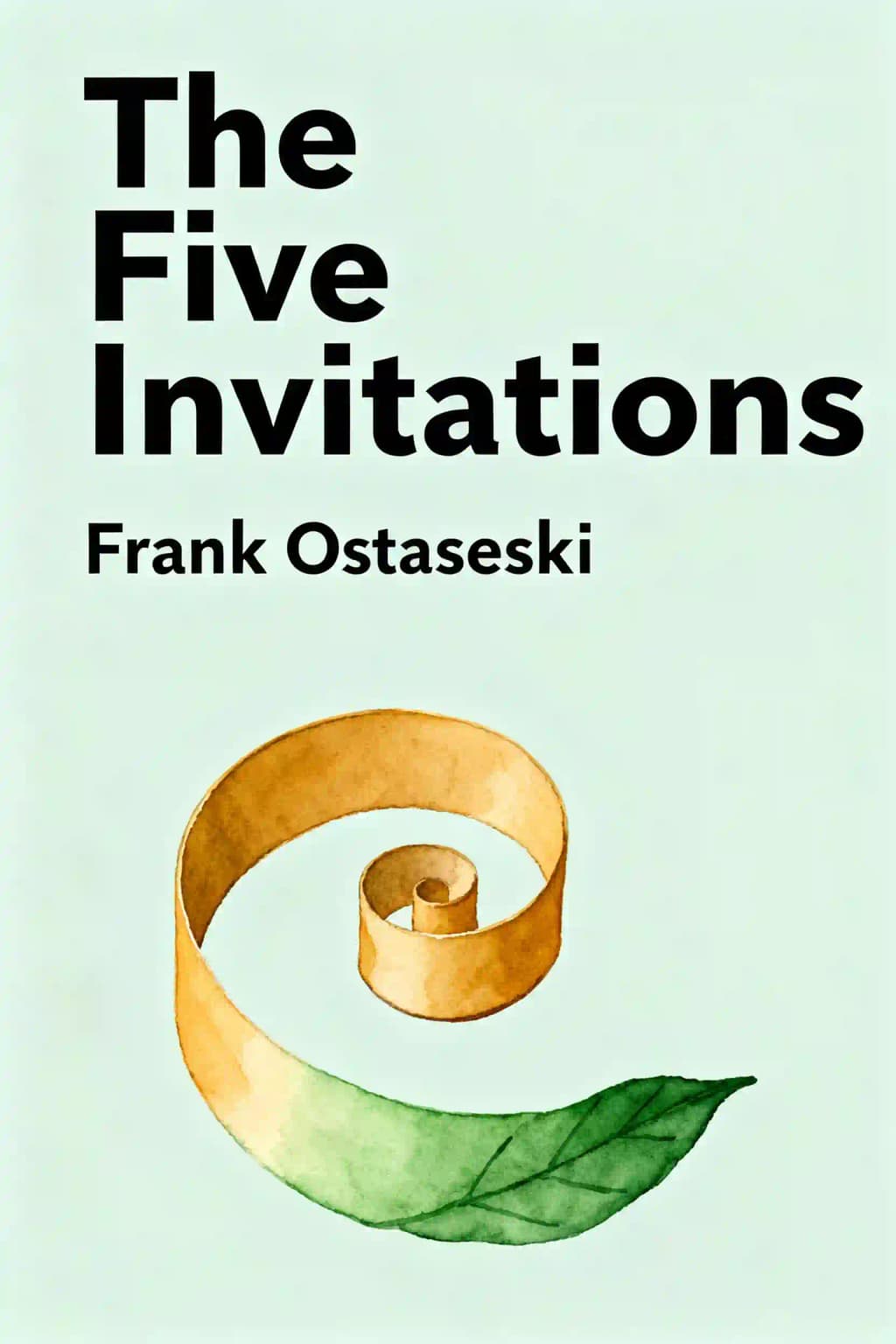
Have you ever wondered what wisdom might emerge if you sat with thousands of dying people over decades? Frank Ostaseski has done exactly that. His book "The Five Invitations" distills profound insights from his thirty years as a pioneering hospice worker and Buddhist teacher. This isn't just another book about death-it's a masterclass on living with purpose and meaning. Oprah featured Ostaseski on her Super Soul Sunday, calling his work "life-changing wisdom," while the Dalai Lama has honored him for his compassionate service. The book has become required reading in medical schools and spiritual centers worldwide, offering a rare combination of practical guidance and spiritual depth. What makes this work extraordinary is how it transforms our greatest fear-death-into our most powerful teacher about what truly matters in life.
Capítulo 2
Don't Wait: Embracing Life's Impermanence
Life and death are inseparable-a package deal that we receive at birth. Death isn't waiting for us at the end of a long road; it exists in every moment as our secret teacher, helping us discover what matters most. When we embrace this truth, we stop postponing our lives.
Jack's story illustrates this perfectly. At 45, diagnosed with terminal lung cancer, this former heroin addict wrote poignantly about his regret: "I always thought there would be time later. Time to make amends with my family. Time to fall in love again. Time to visit those places I dreamed about. Now I realize I've been putting off living for a long time."
The first invitation-Don't Wait-emerges from witnessing how death awareness reveals the preciousness of each moment. When we truly understand that all things inevitably end, we stop wasting our lives on meaningless activities. Instead of pinning hopes on some better future, we focus on the present, becoming more grateful, loving, and forgiving.
Impermanence isn't something that happens later-it's happening right now. Everything is constantly changing, vanishing before our eyes. From microscopic cells to vast galaxies, all things form, exist temporarily, and dissolve. This isn't a mistake but nature's fundamental process.
Yet impermanence isn't only about loss. In Buddhism, it's called the "Law of Change and Becoming"-as things dissolve, new possibilities emerge. Without impermanence, life couldn't exist-illnesses wouldn't end, children couldn't grow, dictatorships couldn't fall. Like Tibetan monks who create intricate sand mandalas only to destroy them, we can learn to value the process rather than cling to permanence.
Our attempts to arrange perfect, unchanging conditions for happiness always fail. Even perfect moments-like lying warm in bed on a winter morning-inevitably change. We become like "hungry ghosts" constantly seeking the next satisfying experience. Not living in harmony with change causes endless suffering, creating habits of craving and regret that become obstacles to peace when dying.
Capítulo 3
The Maturation of Hope: Finding Possibility in Uncertainty
Walking through a massive Midwest medical center, Ostaseski heard Brahms's "Lullaby" playing through the PA system. The head nurse explained they played it whenever a baby was born-for all births, in every room throughout the hospital. As the music played, rushing people paused and smiled, a momentary respite in an environment filled with suffering. The lullaby served as a reminder of new life's potential even amid adversity.
Hope is that essential resource that motivates us to rise each morning. But there's a crucial difference between mature hope and conventional hope. Conventional hope is mere wishful thinking, often tied to the belief that external forces will fulfill our desires. It rejects present reality for preferred conditions-it's fear's flipside.
Fred's story illustrates this transformation. He visited his wife Rachel at Zen Hospice Project daily, feeding her entire watermelons despite her dislike for them. He'd read online that watermelon could help fight her colon cancer. When Ostaseski asked to see this website, Fred realized he'd misread it-the site merely suggested watermelon aided hydration, not that it cured cancer.
After his moment of despair, Fred found a deeper hope: "I hope to love her with my whole heart. To love every part of her without reservation. To make sure she knows how blessed my life has been to be married to her." For Rachel's remaining week, Fred never left her side.
Mature hope requires both clear intention and letting go. Unlike conventional hope, it doesn't depend on outcomes but rests in our potential for awakened response. It's an orientation of heart grounded in trust of our basic goodness, guiding actions without attachment to results. In illness, mature hope helps us find wholeness even without cure.
When we release our single-minded vision of the future, we leave room for surprise. Natural disasters demonstrate how devastating circumstances bring out our best selves-feeding strangers, acting bravely, showing altruism. We grow not in comfort zones but when challenged to change ourselves.
Capítulo 4
Welcome Everything, Push Away Nothing: The Art of Fearless Receptivity
The second invitation explores welcoming everything and pushing away nothing. Like saying "You're welcome," this invitation asks us to be receptive to whatever presents itself, suspending judgment and offering hospitality to all experiences.
When faced with uncertainty or difficulty, our first reaction is often resistance. But being open doesn't mean letting life walk over us-it gives us options. We become free to discover and respond skillfully to anything we encounter. Our well-being becomes less dependent on external circumstances and more on our inner capacity to meet life as it is.
Lorenzo, a homeless man with terminal cancer, transformed during his three months at Zen Hospice. Initially suicidal and hostile, he found peace through acceptance and attention. Despite his initial desire to die, nightly readings from a book about assisted suicide created space for him to express his deepest fears. Before dying, Lorenzo told Ostaseski he was happier than ever before, finding joy not in activities but in the attention to them-"the coolness of the breeze and the softness of the sheets." In a non-judgmental atmosphere, he discovered a new way to be present, developing the capacity to welcome his experience rather than fight against it.
This invitation to openness is a fundamental characteristic of an awake mind that discovers reality rather than determining it. When Ostaseski sat with his alcoholic brother Alan's body after his death, his plans for quiet reflection were interrupted by Alan's agitated ex-wife and then the funeral home's closing. By accepting "what is," he found peace amid disappointment.
Acceptance isn't resignation but opening to possibility. Like vintage clothes tagged "As Is," we should accept ourselves and others with all our beauty and imperfections. This welcoming stance requires accessing awareness beyond our habitual selves-awareness that is inherently open and receptive, allowing us to see through obstacles clouding our view.
Capítulo 5
Turn Toward Your Suffering: Finding Freedom Through Acceptance
Suffering is everywhere, not just in dramatic circumstances but in our daily lives. It stems from our resistance to life's realities-wanting permanence in an impermanent world. The Buddhist concept of dukkha (suffering) arises from our refusal to accept things as they are.
While pain is inevitable, suffering is optional-it comes from our mental and emotional relationship to pain. When we resist pain, we create more suffering (Pain + Resistance = Suffering). Instead, we must turn toward our difficulties rather than running away. Like approaching a falling telephone pole rather than fleeing from it, moving toward our pain allows us to understand it and respond with wisdom.
After Ostaseski's heart attack, a Tibetan Buddhist teacher offered simple wisdom: "It's good to have a heart. And if we have one, we should expect it will have problems!" This acceptance helped him relax into his painful situation. We can shift our relationship to pain by turning toward it rather than running away-"putting out the welcome mat" for our suffering. This allows us to understand its nature and causes.
The story of Jamie's family illustrates this approach. When their seven-year-old son died of cancer, the parents gathered herbs and flowers from their garden and slowly bathed their child, sometimes pausing to share stories, other times stepping away when emotions overwhelmed them. Through this process, the family faced unbelievable pain without pretense or denial, finding healing in each other's care and in accepting death as an integral part of life.
An integral part of healing is letting go, but there is no letting go until there is letting in. Ostaseski shares his own story of sexual abuse by a priest during his teenage years. Years later, a spiritual teacher suggested he work with AIDS patients-primarily gay men-forcing him to face his demons and confused associations between homosexuality and abuse. Though he initially reacted with anger, he recognized the wisdom in confronting his suffering directly. Working the graveyard shift caring for men with AIDS became his path to healing, allowing him to nurture himself by caring for others.
Capítulo 6
Love Heals: The Power of Compassionate Presence
When Ostaseski was a teenager, he put his Red Cross lifesaving certificate to use teaching swimming to children with severe disabilities. Jasmine, a beautiful sixteen-year-old with spina bifida, was too self-conscious about her contorted body to join them in the pool, but she loved to watch from the sidelines. After months of patient encouragement, reflecting back her strength and beauty, she gradually moved from sitting on the pool ledge to finally appearing in her turquoise bathing suit and leaping into his arms with a huge smile. He discovered that he wasn't rescued by love coming toward him, but when love came through him.
Carl's story demonstrates how love becomes a resource in difficult times. Suffering from stomach cancer, he wanted to learn meditation to manage his pain instead of relying on morphine. When traditional mindfulness techniques proved too difficult, Ostaseski guided him to create space around his pain. As he relaxed, Carl spontaneously murmured, "Rest in love." He had discovered an innate resource within himself that required no special effort. Later, when overwhelmed by pain, he would push his morphine pump and repeat "Rest in love." He even shared this wisdom with his anxious wife, gently telling her, "Rest in love, my dear."
There's a crucial difference between love and attachment. Attachment impersonates love by saying "I will love you if you give me what I need," while true love focuses on generosity. Love encourages freedom; attachment clings in fear and possessiveness. A Buddhist story tells of a family whose love was a model for their village-when their oldest son died, they remained at peace, explaining they had always understood they would one day part and lived accordingly.
After his heart attack and open-heart surgery, Ostaseski understood the two questions that matter most to the dying: "Am I loved?" and "Did I love well?" During recovery, he felt objectively helpless, fragile, and unlovable. Friends and students placed his name on Buddhist altars and included him in prayers, revealing how deeply he was loved. This opened him to self-love and recognition of boundless love that was palpable and nourishing. For months he cried with gratitude, saying "The doctors told me I couldn't get my incisions wet, but I have been bathing in love every day."
Capítulo 7
Bring Your Whole Self: Beyond Roles to Authentic Presence
The third invitation - Bring Your Whole Self to the Experience - challenges us to embrace our complete humanity, including aspects we typically conceal. In professional caregiving settings, we often project carefully curated versions of ourselves, displaying confidence and competence while suppressing vulnerability, uncertainty, and raw emotion. Yet these supposedly "undesirable" qualities often serve as bridges to genuine human connection, allowing us to meet others' suffering with authentic compassion and understanding.
Ostaseski's experience with his friend John, who was dying of AIDS, powerfully illustrates this principle. When neurological complications severely affected John's cognitive function, leaving him disoriented and struggling with basic tasks, Ostaseski instinctively retreated behind his professional persona - what he calls his "Mr. Hospice" role. Through an exhausting night of providing physical care, moving between bathroom and bedroom, John's simple observation - "You're trying too hard" - pierced through this professional facade. Ostaseski's subsequent breakdown revealed a profound truth: their deepest connection emerged not from his competent caregiving but from their shared experience of human vulnerability.
The concept of "helper's disease" pervades caregiving professions - a condition where practitioners become overly identified with their role as helpers, creating an artificial separation between themselves and those they serve. This dynamic manifests in subtle ways: maintaining professional distance through carefully controlled empathy, approaching care as a series of tasks to complete, or reflexively offering solutions instead of presence. The helper-helpless dynamic creates a hierarchy that can diminish both parties, turning rich human interactions into mechanical exchanges.
Ostaseski's personal experience as a cardiac patient provided crucial insights into institutional healthcare's limitations. The prevalent "fix it" mentality in hospitals, while well-intentioned, often overlooks deeper human needs for connection and understanding. True service, he discovered, requires a fundamental shift from doing to being - from solving problems to sharing presence. This might mean sitting in silence with someone's pain rather than rushing to offer comfort, or acknowledging our own uncertainty rather than projecting false confidence.
At Zen Hospice Project, Ostaseski developed practices to maintain human connection amidst institutional pressures. He deliberately stepped away from medical protocols in initial meetings, greeting new patients at the door like welcoming friends into his home. By introducing himself by first name and discussing ordinary topics like neighborhood history or favorite foods before addressing medical concerns, he established relationships based on shared humanity rather than clinical roles. This approach required seeing beyond surface differences to recognize common human experiences - fear, hope, love, and loss.
The wisdom of George Washington Carver's observation that "Anything will give up its secrets if you love it enough" applies equally to human relationships. When we bring our whole selves to caregiving - including our doubts, fears, and imperfections - we create space for others to do the same, enabling deeper healing and connection than technical expertise alone can provide.
Capítulo 8
Find Rest in the Middle of Things: The Calm Within the Storm
The fourth invitation reveals a profound truth: rest is not a destination but an ever-present reality within us. It manifests as an unchanging aspect of our consciousness that remains untouched by illness, untainted by birth, and unaffected by death - we need only redirect our attention to access this inherent stillness in the present moment.
Adele's story at Zen Hospice powerfully illustrates this principle. This resilient 86-year-old woman faced the ultimate challenge of terminal illness, struggling with each labored breath. When Frank Ostaseski guided her to focus on the subtle pause between exhales - that microscopic moment of natural rest - something remarkable happened. The fear that had gripped her features melted away, replaced by a profound serenity that accompanied her through her final moments. Her experience demonstrates how peace can emerge not from changing external circumstances, but from shifting our relationship to them.
The Zen story of the two monks offers another layer of understanding. One monk, vigorously sweeping the temple grounds, appears consumed by activity. When another monk passes by remarking "Too busy," the sweeper's response is enlightening: "You should know there is one who is not too busy." This paradoxical teaching reveals how external action need not disturb internal peace. Most of us have become entrapped in a time-scarcity mentality, constantly racing against the clock, treating rest as yet another item on our endless to-do lists. True rest, however, isn't about adding or doing - it's about recognizing the space of awareness that already exists within our experience.
Ostaseski's night dive in Indonesia provides a powerful metaphor for understanding different levels of consciousness. Sitting in complete darkness on the ocean floor, he experienced profound stillness. Upon ascending, they encountered a violent storm at the surface, yet he maintained connection to the deep peace he'd found below. This experience perfectly illustrates the layers of mind: the surface turbulence represents our daily anxieties and reactive patterns; the middle waters mirror our deeper human tendencies and emotional currents; while at the bottom lies vast, undisturbed serenity - always present, regardless of surface conditions.
Buddhist psychology identifies three primary disturbances to inner peace - "the three poisons": demand (the endless craving for more), defense (resistance and aversion to what is), and distraction (the tendency to avoid awareness of our true nature). These forces create the turbulent surface waters of our minds. However, when we learn to recognize these patterns, they become doorways to transformation through mindful awareness. By cultivating access to our inner stillness, we don't just find peace for ourselves - we become living embodiments of that peace for others. This allows us to respond to life's challenges from a place of wisdom rather than reactivity, maintaining clarity even in the midst of chaos.
Capítulo 9
Cultivate Don't Know Mind: Embracing Uncertainty with Wonder
The fifth invitation-"Cultivate Don't Know Mind"-represents a profound shift from our typical need for certainty toward embracing the unknown with genuine curiosity and wonder. This state transcends both conventional knowledge and ignorance, remaining receptively open to whatever life presents. It's not about dismissing what we know, but rather holding our knowledge lightly while maintaining a sense of spacious awareness.
When Frank Ostaseski's son approached him before his critical heart surgery asking if he would survive, Ostaseski's response-"I'm not taking sides"-embodied this principle perfectly. He wasn't choosing between life or death, success or failure, but rather resting in the profound space of uncertainty while trusting in whatever outcome would unfold. This stance requires tremendous courage and illustrates how "don't know mind" operates in life's most challenging moments.
The invitation's origins trace back to a powerful exchange between two Buddhist monks. When young Fayan embarked on his pilgrimage and honestly admitted to not knowing its purpose, his teacher Dizang offered the profound teaching: "Not knowing is most intimate." This concept is central to Zen practice, where intimacy is synonymous with awakening-not as some distant, transcendent state, but as complete presence with life exactly as it is.
The contrast between children and adults provides a telling metaphor. Children naturally swing between monkey bars with joyful abandon, while adults typically refuse to release their grip until absolutely certain of their next hold. This adult tendency to fight against uncertainty-attempting to make ourselves solid, unchanging entities-fundamentally opposes life's natural flow and often results in deepening isolation and fear.
Reality itself defies our attempts at fixed description or permanent mapping. It remains perpetually alive and dynamic, expressing itself through endless cycles of form and formlessness. The Heart Sutra captures this paradoxical truth in its famous declaration: "Form is emptiness; emptiness itself is form." Here, emptiness doesn't signify absence or void but rather boundless potential-an infinite open expanse unrestricted by our conceptual frameworks.
This wisdom found powerful expression through Tommy, a teenager with Down syndrome, when his mother Ethel died at the hospice. While the adults around him worried about his reaction, Tommy approached the situation with natural, unfiltered awareness. His simple yet profound question-"Where has all that gone?"-demonstrated an intuitive understanding of the mystery of death. He recognized his mother's essence had departed despite her body's physical presence, directly experiencing the interplay of form and emptiness. With remarkable presence and intimacy, Tommy explored this reality through touch and smell, moving from head to toe with a pure, visceral knowing unconstrained by social conventions or adult inhibitions.
This raw, immediate way of experiencing reality-free from preconceptions and willing to meet each moment fresh-exemplifies the essence of "don't know mind." It invites us to approach life's mysteries with childlike wonder while maintaining the wisdom to embrace uncertainty as a gateway to deeper understanding.
Capítulo 10
Dying Into Life: The Transformative Journey
Death offers transformation-not just change, but a profound internal shift that reconstitutes our basic identities. Like a caterpillar becoming a butterfly, transformation helps us see beyond our stories as limiting boundaries dissolve. This expansive freedom becomes almost unrecognizable to our former selves, requiring our active engagement and vulnerability to the unknown.
Death represents perhaps the greatest unknown. As Shu-Li, a Chinese immigrant dying of cancer, wisely observed: "Living with the uncertainty of my illness has prepared me for death. Most people are afraid of death because they don't know how to be with the unknown." The encounter with death is pervaded with mystery that cannot be solved by the conceptual mind. We don't just observe mystery; we realize we are mystery.
This encounter often brings awe and wonder, stopping the usual mental activity as consciousness rests in tranquility. In such moments, we enter the eternal now where time no longer devours our lives. Without fear of death, love emerges-the lubricant that helps us slip beyond bodily boundaries, the longing calling us home.
At Zen Hospice, a straightforward woman named Sono arrived to "die the way I need to die." One day as Ostaseski read Japanese death poems to her, she became inspired to write her own, which she asked him to memorize and pin to her clothes when she died. Her beautiful poem invited openness even toward death's great unknown: "Don't just stand there with your hair turning gray, soon enough the seas will sink your little island... set out for another shore... Don't be afraid. Someone knows you're coming. An extra fish has been salted."
The Five Invitations call us to transformation, taking us to the threshold we must cross ourselves. As Rumi wrote, "The door is round and open. Don't go back to sleep." Every wisdom tradition offers paths to harness death's transformative power, all leading to an open field where we release habits of mind to meet life freshly.
The contemplation of life, death and mystery shouldn't wait for our final hours. By embracing these invitations-Don't Wait; Welcome Everything, Push Away Nothing; Bring Your Whole Self to the Experience; Find a Place of Rest in the Middle of Things; and Cultivate Don't Know Mind-we discover that death is not merely life's opposite but its most profound teacher, revealing what matters most in each precious moment we're alive.