Guy Spier's transformative journey from Wall Street to value investing reveals how lunch with Warren Buffett changed everything. Beyond tactics, it's about creating ethical advantage through environment design - a book Mohnish Pabrai champions as essential for investors seeking both profits and principles.
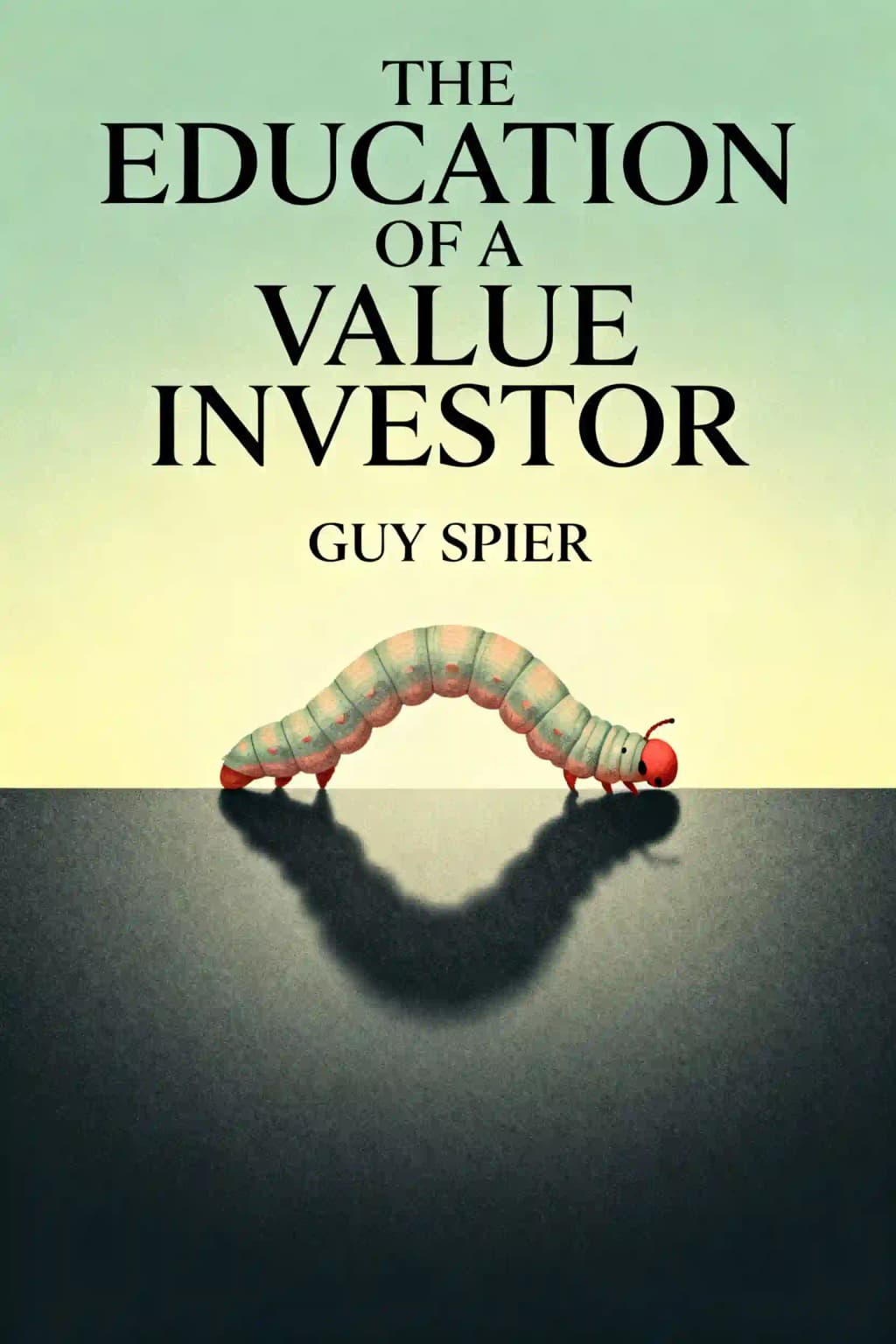
Guy Selmar Spier is the Swiss-American value investor and fund manager behind The Education of a Value Investor, a bestselling memoir that blends investment strategy with personal transformation.
A Harvard Business School MBA graduate and Oxford University alum (First Class PPE degree), Spier founded Zurich-based Aquamarine Fund in 1997, managing $400 million in assets through Warren Buffett-inspired value principles.
His reputation soared after co-winning a record $650,100 charity lunch with Buffett in 2008—an experience that reshaped his ethical investing philosophy and forms the book’s core narrative.
Spier regularly shares insights through his VALUEx Klosters conference, TED-style talks, and financial media commentary. His work is featured in Atul Gawande’s The Checklist Manifesto and endorsed by industry leaders like Mohnish Pabrai.
Translated into eight languages, The Education of a Value Investor has sold nearly 50,000 copies worldwide, cementing Spier’s status as a bridge between Wall Street practices and mindful wealth-building.
The Education of a Value Investor chronicles Guy Spier’s journey from a profit-driven Wall Street banker to an ethical value investor inspired by Warren Buffett. The memoir blends investing strategies, personal growth, and lessons from his transformative $650,000 charity lunch with Buffett. Key themes include avoiding herd mentality, building principled routines, and prioritizing long-term wisdom over short-term gains.
Aspiring investors, finance professionals, and anyone seeking personal development will benefit. The book offers actionable advice for value investing enthusiasts, while its introspective narrative appeals to readers interested in aligning career success with integrity. Spier’s candid reflections on Wall Street’s pitfalls make it particularly relevant for those navigating high-pressure environments.
Yes, it’s praised for combining practical investing insights with philosophical depth. Spier’s transparency about his failures—such as misguided trades—and his adoption of Buffett’s principles provide a roadmap for ethical wealth-building. The book’s focus on mentorship, self-awareness, and systemic decision-making makes it a standout in finance literature.
The 2008 lunch taught Spier to prioritize reputation over profits, avoid toxic environments, and invest with a long-term horizon. Buffett’s emphasis on authenticity and patience reshaped Spier’s approach to both investing and life. These lessons are foundational to the Aquamarine Fund’s success.
Spier advocates for buying undervalued companies with durable competitive advantages and holding them indefinitely. He stresses the importance of ignoring market noise, focusing on cash flow potential, and conducting thorough due diligence. His checklist includes assessing management integrity and avoiding investments where sellers have conflicting incentives.
The checklist includes rules like:
Spier openly shares career missteps, like his early obsession with short-term gains and poor stock picks. He reframes failure as a teacher, emphasizing how disciplined routines, mentorship, and emotional detachment from outcomes prevent repeated mistakes.
Some readers note the book focuses more on Spier’s personal journey than technical investing strategies. Others highlight that his privileged access to Buffett and elite education limits relatability. However, most praise its honesty and actionable psychological insights.
Despite his Harvard MBA, Spier argues traditional finance education often prioritizes theory over practical wisdom. He credits his success to unlearning academic habits, embracing humility, and adopting mentors like Buffett who emphasize behavioral discipline over complex models.
Key routines include:
While both endorse value investing, Spier’s book adds a memoir-style layer, detailing how Buffett’s principles apply to modern finance. Unlike Benjamin Graham’s technical focus, Spier emphasizes psychological resilience and ethical decision-making as critical to sustained success.
Its lessons on avoiding speculative trends (e.g., meme stocks, crypto mania) and maintaining discipline amid AI-driven market volatility resonate today. Spier’s advocacy for ethical investing also aligns with rising demand for ESG-focused strategies.
Sinta o livro através da voz do autor
Transforme conhecimento em insights envolventes e ricos em exemplos
Capture ideias-chave em um instante para aprendizado rápido
Aproveite o livro de uma forma divertida e envolvente
Our environment changes us more than we change it.
Elite institutions produce minds like Formula 1 Ferraris.
Our consciousness changes our reality.
Life can change in a heartbeat.
Just Do It! Just make a move. Any move!
Divida as ideias-chave de The Education of a Value Investor em pontos fáceis de entender para compreender como equipes inovadoras criam, colaboram e crescem.
Destile The Education of a Value Investor em dicas de memória rápidas que destacam os princípios-chave de franqueza, trabalho em equipe e resiliência criativa.

Experimente The Education of a Value Investor através de narrativas vívidas que transformam lições de inovação em momentos que você lembrará e aplicará.
Pergunte qualquer coisa, escolha a voz e co-crie insights que realmente ressoem com você.

Criado por ex-alunos da Universidade de Columbia em San Francisco
"Instead of endless scrolling, I just hit play on BeFreed. It saves me so much time."
"I never knew where to start with nonfiction—BeFreed’s book lists turned into podcasts gave me a clear path."
"Perfect balance between learning and entertainment. Finished ‘Thinking, Fast and Slow’ on my commute this week."
"Crazy how much I learned while walking the dog. BeFreed = small habits → big gains."
"Reading used to feel like a chore. Now it’s just part of my lifestyle."
"Feels effortless compared to reading. I’ve finished 6 books this month already."
"BeFreed turned my guilty doomscrolling into something that feels productive and inspiring."
"BeFreed turned my commute into learning time. 20-min podcasts are perfect for finishing books I never had time for."
"BeFreed replaced my podcast queue. Imagine Spotify for books — that’s it. 🙌"
"It is great for me to learn something from the book without reading it."
"The themed book list podcasts help me connect ideas across authors—like a guided audio journey."
"Makes me feel smarter every time before going to work"
Criado por ex-alunos da Universidade de Columbia em San Francisco

Obtenha o resumo de The Education of a Value Investor como PDF ou EPUB gratuito. Imprima ou leia offline a qualquer momento.
There's a particular kind of nausea that comes from looking in the mirror and despising what you see. Fresh out of Harvard Business School with an Oxford economics degree, I found myself at D.H. Blair Investment Banking-a firm later shut down amid 173 counts of stock fraud. My job? Dress up dubious deals while aggressive brokers in the "boiler room" sold them to unsuspecting investors. My Ivy League credentials provided a respectable veneer for operations that would eventually result in executives pleading guilty and paying $21 million to defrauded customers. How does someone supposedly intelligent end up in such a morally bankrupt place? The answer reveals something uncomfortable about elite education and human nature. We like to think credentials protect us from poor judgment, but they often do the opposite-creating overconfidence that blinds us to obvious red flags. My arrogance made me ignore warnings, convinced I was too smart to be fooled. This catastrophic choice became my greatest teacher, forcing me to confront a truth that would reshape everything: our environment changes us far more than we change it.