Capítulo 4
A Friendship Built on Shifting Sands
The foundation of Katelyn and Leah's friendship stretches back to childhood, when six-year-old Leah brought Katelyn home after discovering her mother intoxicated and incapable of care. That night at Leah's house, Katelyn experienced "the best sleep ever" after enjoying cookies, chicken nuggets, and playing with Leah's toys. Before falling asleep, Leah whispered that since Katelyn was her first sleepover guest, they must be best friends. Katelyn, desperate for stability, asked if they'd be friends "forever," to which Leah promised they'd "be best friends forever" who "never fight and always love each other."
This childhood promise takes on ironic significance as the novel reveals the complex evolution of their relationship. By their teenage years, subtle resentments had already formed. Katelyn spent most afternoons at Leah's house to avoid her alcoholic mother, seeing Leah's family as her own and particularly bonding with Leah's mother Teresa. She even fantasized about marrying Leah's brother Tom to become part of their family permanently.
Meanwhile, Leah secretly felt burdened by Katelyn's constant presence and resented how her mother seemed to favor Katelyn. Despite these undercurrents, their friendship persisted through high school, college, and into adulthood, with each woman playing a significant role in the other's life milestones.
When Katelyn's mother died from alcoholism during their post-high school European trip, Leah's family became Katelyn's only real family. Later, Leah introduced Katelyn to Toby, initially dating him herself before encouraging Katelyn to pursue him after their breakup. At Katelyn's wedding, Leah's father Isaac walked Katelyn down the aisle-a gesture that symbolized how thoroughly Katelyn had been absorbed into Leah's family.
Yet beneath these gestures of friendship lay growing resentment. As adults, their lives diverged dramatically: Katelyn achieved domestic bliss with Toby and their daughter Harper, while Leah endured a difficult marriage to Aaron, eventual divorce, and career setbacks. This imbalance created a toxic dynamic where Leah increasingly viewed Katelyn as having stolen the life that should have been hers-including Toby, whom Leah secretly still desired.
Capítulo 5
The Tangled Web of Secrets and Lies
As Katelyn attempts to reconstruct the events of her birthday party, she uncovers a disturbing network of secrets that challenges everything she thought she knew about her marriage and her friendship with Leah.
While cleaning up after the party, Katelyn receives a text from Aaron that reads: "I'm so, so sorry about everything that happened at the party and I'm here to talk. You know where to find me when you're ready." This cryptic message alarms her-what happened that Aaron feels the need to apologize for? Why would he be contacting her about it? The text suggests something significant occurred that Toby might be hiding from her.
Further investigation reveals more troubling clues. Katelyn discovers a Victoria's Secret box under her bed containing red lingerie with a note saying "I can imagine you in this"-something Toby would never buy her. The discovery triggers a disturbing flash memory of Toby and Leah embracing at the party. Later, she notices Toby choosing to sleep in Harper's room instead of their bed. Nauseous and confused, Katelyn wonders if her husband is cheating with her best friend.
When Katelyn arranges to meet Aaron for lunch, hoping he'll reveal what happened at the party, she's unprepared for his shocking claim: "What happened, Katelyn, is that you and I had sex." He adds loudly enough for the cafe to hear, "And actually, you quite enjoyed it."
This revelation forces Katelyn to question not only what happened at the party but her own character and choices. Had she been secretly meeting with Aaron behind Toby's back? The truth emerges gradually: over the past three months, she'd been secretly meeting with Aaron to discuss buying a gallery from his friend Liza. Aaron had offered to invest, giving Katelyn a chance to finally use her art history degree and be more than just Harper's mother.
Meanwhile, Leah harbors her own destructive secrets. Recently fired and living in a hastily rented apartment after her divorce from Aaron, she's fabricated a pregnancy to gain sympathy from friends. More disturbingly, she's nursing an obsessive desire for Toby and a growing resentment toward Katelyn that borders on hatred. When she visits Toby's law firm, she attempts to kiss him, revealing her true feelings and intentions. His rejection only fuels her determination to destroy Katelyn's seemingly perfect life.
Capítulo 6
The Breaking Point: Confrontation and Violence
The novel builds toward several explosive confrontations that expose the true nature of these damaged relationships. At Katelyn's birthday party, Leah follows Katelyn and Aaron upstairs, where she discovers them having sex in the bathroom. When she accidentally opens the door, Aaron hisses at her to get out. Stunned, Leah bumps into Toby in the hallway and blurts out what she saw.
This discovery sets in motion a series of increasingly dangerous events. After the party, Aaron becomes obsessed with Katelyn, bombarding her with texts claiming they had a meaningful relationship. When she rejects his advances and calls their encounter "an alcohol-fuelled mistake," Aaron snaps, grabbing her by the neck and pushing her onto the sofa. As he chokes her, he rages about being "sick of being lied to by women" and treated "like a joke." Katelyn struggles desperately, thinking of Harper upstairs and possibly another child inside her, as black spots appear before her eyes.
The violence culminates three months after the party in a harrowing scene at a cliff edge. Leah manipulates Katelyn into a dangerous position by holding Harper hostage on the wrong side of a safety fence. After getting Harper to safety, Katelyn is forced to stay as Leah reads a letter from Aaron revealing their conspiracy: Leah had encouraged Aaron to pursue Katelyn because she wanted Toby for herself.
As the women struggle near the cliff edge, Leah's jealousy and resentment reach their peak. She confesses her lifelong envy, believing Katelyn has always taken everything she wanted-even her mother's attention. The confrontation takes a deadly turn when Katelyn reveals she knows about Leah sleeping with Toby when Harper was a baby. Before Leah can process this betrayal, Katelyn shouts "Stop pushing!" even though Leah is no longer touching her. Leah takes a small step back and suddenly finds herself falling through the air, with Katelyn's strange smile being the last thing she sees.
Capítulo 7
The Aftermath: Rebuilding from Ruins
In the epilogue, set three months after Leah's death, Katelyn and Toby escape to a sun-drenched Queensland resort for their babymoon. At twenty-eight weeks pregnant with their son, Katelyn finds solace in the gentle ocean breeze and the promise of new beginnings. Yet beneath the surface tranquility, she remains haunted by recurring nightmares - Leah's wide-eyed expression of betrayal as she plummeted from the cliff edge replays like a macabre film reel in her darkest hours.
The official police investigation proved relatively straightforward. Harper's innocent testimony that "Aunty Leah tried to push Mummy off the cliff" provided crucial support for Katelyn's self-defense claim. The investigating officers, noting the history of tension between the two women and the evidence of a struggle at the cliff site, found no reason to doubt this version of events. The case was closed with minimal scrutiny, deemed a tragic accident born of self-preservation.
However, the truth that Katelyn carries is far darker and more calculated. The push wasn't defensive - it was deliberate, premeditated. In her mind, she justifies it with chilling simplicity: "It wasn't murder. It was just a push, just a little push." She wanted Leah to understand in those final moments that she knew everything - about Aaron's damning letter, about the betrayal that had festered beneath years of false friendship.
Katelyn's confession to the police was masterfully selective, sharing enough truth to appear cooperative while protecting her most vital secret: Toby's admission of his affair with Leah during Harper's infancy. This knowledge remains locked away, a poisonous truth she decides to bury for the sake of her marriage. The weight of this secret creates an invisible barrier between her and Toby, even as they present a united front to the world.
Their beachside resort serves as both escape and rebirth. Toby, seemingly unburdened by guilt or knowledge of Katelyn's true actions, suggests hosting a homecoming party - a celebration of their survival and fresh start. Katelyn's response that it's "an excellent idea" carries layers of dark irony. She has orchestrated the perfect conclusion: eliminating her rival while maintaining her carefully constructed facade of domestic bliss.
The chilling finale reveals Katelyn as both victim and victor - a woman who chose to protect her family through the ultimate act of elimination. She returns home with her marriage intact, her children secure, and her position as matriarch unchallenged. The cost of this victory lies buried with Leah, along with the complicated truths that threatened to unravel everything Katelyn held dear.
Capítulo 8
The Price of Perfection: Motherhood and Identity
Throughout the novel, motherhood emerges as both a source of fulfillment and a battlefield for identity, with each character's relationship to maternity revealing deep psychological complexities. Katelyn's experience with postpartum depression after Harper's birth left profound psychological scars that continue to shape her daily life and future choices. Her depression manifested not just in sadness, but in paralyzing anxiety that made even simple tasks like grocery shopping feel insurmountable. Despite Toby's gentle persistence about having more children - his casual mentions of siblings for Harper and pointed comments about their empty guest room - Katelyn firmly resists, haunted by memories of crying uncontrollably in the shower while her mother watched the baby.
When Katelyn discovers she's pregnant on the night of her birthday party, her devastation reveals the depth of her trauma. With Harper finally starting preschool, she had meticulously planned her return to the art world, spending months developing business plans and scouting locations for the gallery she would open with Aaron's help. The pregnancy threatens to derail not just these concrete plans but her careful reconstruction of an identity beyond motherhood. The prospect of another pregnancy resurrects vivid memories of her darkest days - when neighbors whispered about her unkempt appearance, when she couldn't remember if she'd fed Harper lunch, when she became "that weird woman" who couldn't function during her postpartum depression.
Leah's relationship with motherhood presents a painful counterpoint, her infertility becoming a lens through which she views every aspect of her life. Her inability to have children with Aaron evolved from disappointment to obsession, marked by years of failed fertility treatments that drained their savings and their marriage. She meticulously tracks Katelyn's life through social media, saving every photo of Harper's milestones - first steps, first day of school, birthday parties - in a private folder that feeds her growing resentment. This unfulfilled maternal longing drives increasingly destructive actions, from fabricating a pregnancy complete with fake ultrasound photos to crafting elaborate fantasies about stepping into Katelyn's life - imagining herself as Toby's wife and Harper's mother if Katelyn were to vanish.
The novel masterfully explores how motherhood can simultaneously be a source of profound fulfillment and a threat to individual identity. For Katelyn, being Harper's mother brings moments of transcendent joy - reading bedtime stories, watching first steps, sharing ice cream cones - but also represents a sacrifice of her professional ambitions and personal autonomy. Her art studio, once her sanctuary, has become a storage room for Harper's toys. For Leah, the inability to become a mother represents not just a personal disappointment but a fundamental failure that deepens her sense of inadequacy compared to Katelyn, whose seemingly perfect life - successful career, loving husband, beautiful child - becomes both an obsession and a source of bitter envy.
Capítulo 9
The Illusion of Memory: Truth, Perception, and Reality
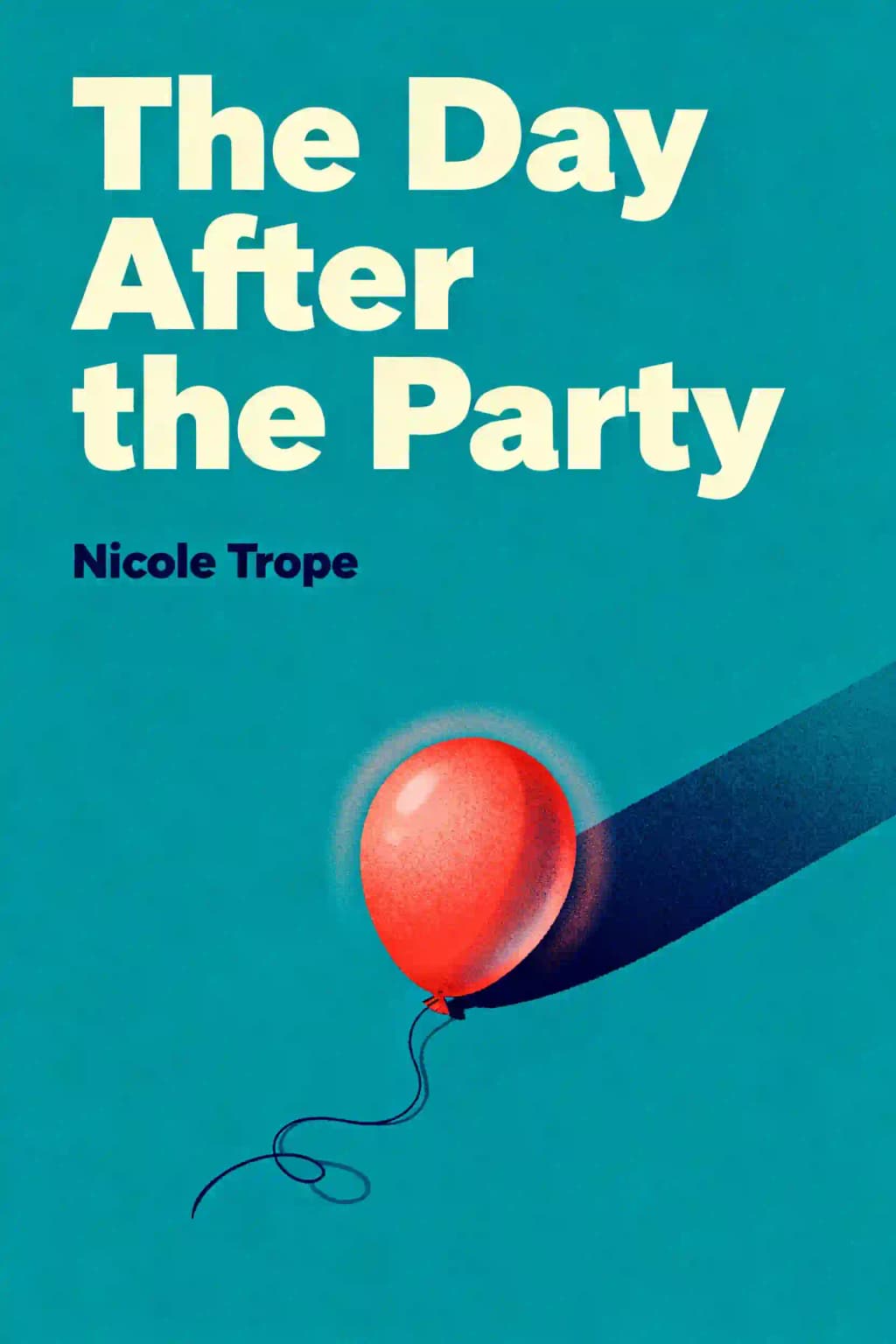
"The Day After the Party" masterfully explores how memory shapes our understanding of reality and our relationships with others. Katelyn's transient global amnesia creates a literal blank space where different versions of truth compete for dominance. Without her own memories to guide her, she must rely on accounts from Toby, Leah, and Aaron - each of whom has reasons to manipulate the narrative. This medical condition serves as both plot device and metaphor, highlighting how memories are not just stored experiences but actively constructed narratives that we use to make sense of our lives.
The novel questions whether objective truth exists at all when it comes to interpersonal relationships. Each character perceives the same events through their own psychological filters, colored by past traumas and present desires. Leah views Katelyn as privileged and entitled, stealing everything Leah deserves, while Katelyn sees herself as having overcome a difficult childhood to create the stable family she never had. These conflicting perspectives manifest in small details - how they remember shared conversations, interpret facial expressions, even recall the weather on significant days - showing how memory serves personal narratives rather than objective reality.
As Katelyn's memory returns in fragments, these recollections are colored by her present knowledge and emotional state. She begins to question everything she thought she knew about her marriage to Toby, their shared history, and even her own character. The "truth" about what happened at the party becomes less important than how each character chooses to interpret and respond to these events. This philosophical dimension elevates the novel beyond a simple thriller, asking readers to consider how much of our own understanding of relationships is based on selective memory and self-protective narratives. The author skillfully weaves in examples of how different characters remember the same conversations and events, showing how memory can be both a shield and a weapon.
The novel's exploration of memory reaches its climax in the confrontation between Katelyn and Leah. When Katelyn pushes Leah from the cliff, the question of memory becomes literally a matter of life and death. Without witnesses besides Harper, Katelyn can shape the narrative of what happened, claiming self-defense while knowing she deliberately eliminated her rival. The police and public accept this version of events because Katelyn controls the story - just as she ultimately controls which memories and truths she allows into her reconstructed life. This final act demonstrates how memory isn't just about recalling the past; it's about constructing a version of reality we can live with.
Throughout the narrative, small inconsistencies in characters' recollections build tension and uncertainty. Weather changes from sunny to rainy in different tellings, times shift by hours, and crucial conversations take on radically different tones depending on who's doing the remembering. These discrepancies serve as constant reminders that memory is less about preserving truth than about maintaining the stories we tell ourselves to justify our actions and beliefs.
Capítulo 10
The Deadly Dance of Envy: When Friendship Becomes Fatal
At its core, "The Day After the Party" examines how envy can transform even the closest friendship into a deadly rivalry. From childhood, Leah and Katelyn's relationship contained the seeds of resentment-Leah envied Katelyn for capturing her mother's attention and affection, while Katelyn envied Leah for having a stable family life.
As adults, this dynamic intensified. When teenage Leah and Katelyn wrote lists of how they wanted their lives to be at thirty-six, they had different dreams-Katelyn wanting a suburban life with four children, Leah desiring city glamour with maybe one child. By the time of Katelyn's thirty-sixth birthday party, Katelyn had achieved everything on her list while Leah sat alone in her apartment, fired from her job and divorced.
This imbalance created a toxic environment where Leah's envy festered into hatred. She began to see Katelyn not as a friend but as a thief who had stolen the life that should have been hers-particularly Toby, whom Leah had dated first and continued to desire. During her runs, Leah fantasized about Katelyn's kitchen, but with herself in it-pregnant and married to Toby, living the life she believed should be hers.
The novel suggests that long-term friendships can become dangerous when they're built on unequal power dynamics and unresolved resentments. What began as childhood affection between Leah and Katelyn evolved into a competition neither could win without destroying the other. Their promise to be "best friends forever" became a trap that bound them in an increasingly destructive relationship until one of them-literally-went over the edge.
In the end, Nicole Trope delivers a chilling meditation on the nature of female friendship, the fragility of memory, and the devastating consequences of envy. "The Day After the Party" reminds us that sometimes the people who know us best are the ones most capable of destroying us-and that the line between love and hatred can be as thin as the edge of a cliff.