Capítulo 1
Unveiling the Code: A Journey Through Faith, Conspiracy, and Ancient Secrets
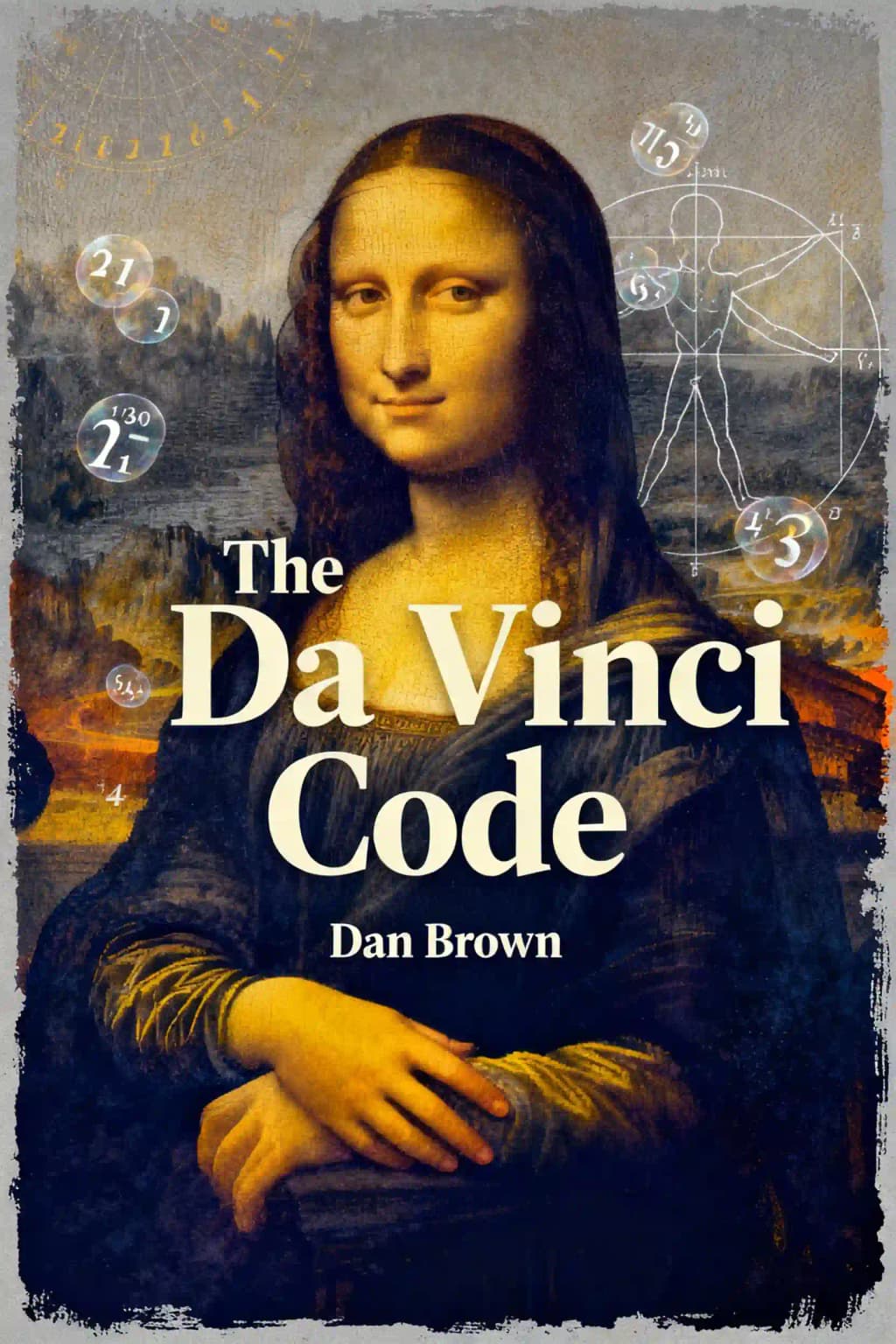
Have you ever wondered what would happen if the foundations of Christianity were challenged by an explosive revelation? Dan Brown's "The Da Vinci Code" became a cultural phenomenon for precisely this reason, selling over 80 million copies worldwide and sparking heated debates among religious scholars, art historians, and casual readers alike. The novel even caught the attention of celebrities like Tom Hanks, who starred in the film adaptation, and was famously banned in several countries due to its controversial reimagining of Christian history. What made this thriller so compelling wasn't just its page-turning suspense, but how it blurred the lines between fact and fiction, leaving readers questioning everything they thought they knew about religion, art, and history.
Capítulo 2
A Murder in the Louvre: The Mystery Begins
The story opens dramatically in Paris's Louvre Museum, where curator Jacques Sauniere is fatally shot by an albino monk named Silas, a zealous member of the secretive Catholic organization Opus Dei. In his final moments, despite suffering from a bullet wound to the stomach, Sauniere meticulously arranges his naked body in the position of Leonardo da Vinci's Vitruvian Man within the museum's Grande Galerie. Using his own blood, he creates an elaborate crime scene filled with enigmatic symbols. Harvard symbologist Robert Langdon, who was scheduled to meet Sauniere that evening for a discussion about religious iconography, is awakened in his Paris hotel room and summoned to the crime scene by French police captain Bezu Fache.
What appears to be a straightforward murder investigation quickly transforms into something far more sinister. Langdon examines Sauniere's body and the strange symbols drawn around it, including a pentacle on his stomach drawn in blood and a mysterious message written in ultraviolet-sensitive ink: "O, Draconian devil! Oh, lame saint!" Adjacent to this cryptic message is a sequence of numbers: 13-3-2-21-1-1-8-5. While Langdon explains to the skeptical Fache that the pentacle historically represents the sacred feminine, Venus, and the five-pointed star of nature rather than satanic worship, he remains unaware that Fache's team has found his name written on the floor by Sauniere, making him the primary suspect.
Sophie Neveu, a talented cryptologist with the French Judicial Police and secretly Sauniere's estranged granddaughter, interrupts the investigation with urgent information about a phone message. In reality, this is a ruse to privately warn Langdon that Fache believes he murdered Sauniere and has already contacted Interpol. She reveals that her grandfather, whom she hadn't spoken to in ten years following a mysterious falling out, left additional clues specifically for her, including "P.S. Find Robert Langdon." This wasn't a mere postscript but rather her initials - a reference to his childhood nickname for her, "Princesse Sophie." Working together, they decipher that Sauniere's seemingly nonsensical message is an anagram that rearranges to reveal "Leonardo da Vinci" and "The Mona Lisa," leading them to the iconic painting where they discover a key bearing the fleur-de-lis symbol hidden behind another da Vinci masterpiece.
The intensity of this opening sequence establishes the novel's breathless pace and complex narrative structure. Readers are immediately thrust into a world where art history, religious symbolism, and murder mysteriously intersect, where every painting potentially holds a secret, and where ancient symbols carry deeper meanings than most people realize. The juxtaposition of high culture with brutal violence creates a disorienting effect that pulls readers into the mystery alongside Langdon and Sophie. The Louvre itself becomes a character, its vast halls and priceless artifacts serving as both backdrop and crucial elements in an unfolding conspiracy that spans centuries. This opening chapter sets up the novel's central themes of hidden knowledge, the conflict between faith and reason, and the power of symbols to preserve ancient secrets.
Capítulo 3
The Sacred Feminine and Religious Conspiracy
As Langdon and Sophie flee the Louvre (now fugitives from the law), they begin to unravel the larger significance of Sauniere's murder. Langdon explains that Sauniere was not just a museum curator but the Grand Master of the Priory of Sion, a secret society dating back to 1099 whose members included Leonardo da Vinci, Isaac Newton, and Victor Hugo. The Priory's primary mission was protecting an explosive secret: the Holy Grail.
But the Holy Grail, Langdon reveals, is not the cup from which Christ drank at the Last Supper as commonly believed. Instead, it represents something far more controversial - Mary Magdalene herself. According to the theory Langdon presents, Mary Magdalene was not a prostitute as portrayed by the Church but Jesus's wife and the mother of his child. After the crucifixion, she fled to France, pregnant with the royal bloodline of Christ. This bloodline continued through the Merovingian dynasty of French kings and survives to the present day.
The novel suggests that the early Church, seeking to consolidate male power, deliberately suppressed the feminine aspects of early Christianity. The sacred feminine, once revered in pagan religions, was systematically eliminated, with goddess worship replaced by male-dominated religion. Mary Magdalene's importance was diminished, and women's role in the Church was marginalized. Even the pentacle, once a symbol of Venus and feminine perfection, was recast as a sign of the devil.
Brown weaves historical facts with speculation to create a compelling alternative history. He references actual documents like the Nag Hammadi and Dead Sea Scrolls, which contain gospels excluded from the Bible. He cites Emperor Constantine's Council of Nicaea in 325 CE, where the divinity of Christ was established by vote and competing gospels were suppressed. These real historical elements lend credibility to the fictional conspiracy at the heart of the novel.
The power of this section lies in how it challenges readers to question established narratives about Christianity's development. By suggesting that history is written by the winners and that the Church actively suppressed certain truths, Brown taps into contemporary skepticism about institutional authority and creates space for readers to reconsider religious history from a fresh perspective.
Capítulo 4
The Priory of Sion and Knights Templar: Guardians of the Secret
As Langdon and Sophie seek refuge with Sir Leigh Teabing, a wealthy British Royal Historian living near Paris, the historical background of the conspiracy deepens. Teabing explains that the Priory of Sion was founded to protect not just the truth about Mary Magdalene but also a collection of documents called the Sangreal (or Holy Grail) documents that prove her marriage to Jesus and the existence of their bloodline.
To retrieve these documents from beneath Solomon's Temple in Jerusalem, the Priory created a military arm known as the Knights Templar. These warrior monks became extraordinarily wealthy and powerful after their excavation, suggesting they found something of tremendous value. For two centuries, they operated with unprecedented autonomy, until Pope Clement V and King Philippe IV of France conspired to destroy them. On Friday, October 13, 1307 (the origin of Friday the 13th superstition), the Knights were simultaneously arrested across Europe. Many were tortured and executed, but the Priory had already moved their precious documents to safety.
Throughout history, the Priory has protected both the documents and the bloodline descendants, known as the "Rose Line" or Sangreal (from San Greal, or Holy Grail). Leonardo da Vinci, as a Grand Master of the Priory, embedded clues about the Grail in his artwork. In "The Last Supper," for instance, there is no central chalice as tradition would suggest. Instead, the figure commonly identified as the apostle John is actually Mary Magdalene, positioned in a V-shape with Jesus that forms the chalice symbol.
This section of the novel brilliantly connects disparate historical elements into a coherent alternative narrative. The Knights Templar, the origin of banking systems, the suppression of goddess worship, and the symbolism in Renaissance art all become pieces of a grand historical puzzle. Brown's genius lies in taking real historical curiosities-like the Knights Templar's mysterious wealth or Leonardo's unconventional religious paintings-and weaving them into his conspiracy theory in ways that seem plausible.
The detailed historical exposition serves multiple purposes: it advances the plot by explaining why powerful forces would kill to protect this secret, it deepens the novel's intellectual appeal by engaging with actual history, and it creates a sense of revelation as readers discover connections between seemingly unrelated historical events.
Capítulo 5
The Cryptex: Da Vinci's Ingenious Device
While hiding at Teabing's estate, Sophie and Langdon discover that Sauniere left behind not just clues but a physical object: a cryptex. This cylindrical device, allegedly invented by Leonardo da Vinci, consists of interlocking disks with letters that must be aligned to spell a password before the container can be opened. Inside is a papyrus message, but if the cryptex is forced open, a vial of vinegar inside will break and dissolve the papyrus before it can be read.
The cryptex represents the perfect blend of art and science that characterized Da Vinci's genius. It's both beautiful and functional, a Renaissance-era security system designed to ensure that only the worthy-those who can solve the riddles-can access the secret knowledge within. Sophie reveals that her grandfather used to make smaller versions as birthday presents, creating elaborate treasure hunts for her as a child.
This device serves as a powerful metaphor for the novel itself: truth is protected by layers of puzzles, and breaking in forcefully only destroys what you seek. Knowledge must be earned through intelligence and perseverance. The cryptex also embodies the novel's central tension between preservation and revelation-the same tension that divides those who want to protect the Grail secret and those who want to expose it.
As Langdon, Sophie, and Teabing work to decipher the password, they apply various cryptographic techniques, including the ancient Atbash Cipher. Their intellectual collaboration showcases how different perspectives and areas of expertise can combine to solve seemingly impossible puzzles. When they finally open the first cryptex using the password "SOFIA" (wisdom), they discover another, smaller cryptex inside-a classic example of Brown's fondness for nested puzzles and revelations.
The cryptex sections provide a welcome change of pace from the chase scenes and historical expositions. They give readers the satisfaction of puzzle-solving alongside the protagonists and demonstrate how intellectual challenges can be as thrilling as physical ones. The device itself has become one of the most iconic elements from the novel, representing the perfect marriage of historical mystery and modern thriller that characterizes Brown's work.
Capítulo 6
The Hunt Across Europe: From Paris to London
As the story progresses, the action expands geographically, taking readers on an intricate tour of significant religious and historical sites across Europe. After fleeing the Louvre through its Grand Gallery and ancient corridors, Langdon and Sophie make their way to the Depository Bank of Zurich, where Sauniere maintained a sophisticated vault under a pseudonym. The bank itself represents the intersection of old-world discretion and modern security, with its cutting-edge technology hidden behind a centuries-old facade. Their journey then leads them to Teabing's magnificent Chateau Villette outside Paris, a sprawling estate that serves as both sanctuary and scholarly haven, filled with historical artifacts and religious manuscripts.
Each location is meticulously described, with Brown highlighting architectural details and historical significance that go beyond mere setting. Temple Church in London, with its distinctive round nave and effigies of medieval knights, was built by the Knights Templar in a circular design deliberately echoing the Temple of Solomon in Jerusalem. The church's unique architecture, with its weathered stone columns and ancient tombs, serves as a physical link to the Templars' mysterious past. Westminster Abbey, with its Gothic spires and vaulted ceilings, houses Isaac Newton's elaborate tomb, which becomes pivotal to solving the final puzzle. The black marble marker, adorned with scientific instruments and mathematical symbols, contains clues that only those versed in both history and symbology can decipher.
The geographical movement parallels the protagonists' intellectual journey from ignorance to enlightenment. As they travel physically closer to the Grail, they also move conceptually closer to understanding its true nature. Each new location peels back another layer of the mystery, revealing connections between art, religion, and history that span millennia. The journey structure allows Brown to maintain tension while introducing new settings and characters that expand the scope of the conspiracy, from local murder mystery to international intrigue.
During their travels, Langdon and Sophie face an increasingly complex web of pursuers: the determined Captain Fache of the French police, who believes Langdon murdered Sauniere; the albino monk Silas, whose religious fervor makes him particularly dangerous; and shadowy forces that seem to have infiltrated both law enforcement and religious institutions across Europe. This creates a constant sense of danger and urgency that propels the narrative forward, forcing the protagonists to solve each puzzle not just for intellectual satisfaction but for their very survival.
The European setting adds a profound layer of historical depth that would be impossible in a more modern location. These ancient cities, with their labyrinthine streets and Gothic cathedrals, their hidden passages and forgotten crypts, become characters in their own right. Paris's narrow alleys and London's medieval churches represent the weight of European history and the long shadow that religious conflicts cast across the centuries. Each stone and statue, each carved symbol and ancient text, serves as a witness to the historical drama unfolding in the present day.
Capítulo 7
Betrayal and Revelation: The Teacher Unmasked
As the hunt for the Grail intensifies, the novel introduces a mysterious figure known only as "The Teacher," who orchestrates events from the shadows. This unseen mastermind manipulates both Silas and Bishop Aringarosa of Opus Dei, promising them that finding the Grail will save the Church from liberal forces threatening to undermine traditional faith.
In a shocking twist, Sir Leigh Teabing is revealed as The Teacher. After helping Langdon and Sophie escape from France and seemingly becoming their ally, he betrays them at Westminster Abbey, holding them at gunpoint and demanding they solve the final puzzle. His motivation, he explains, is not greed but a desire to expose the truth about Christianity's origins and end what he sees as the Church's millennia-long deception.
This revelation forces readers to reevaluate earlier scenes and recognize the clues Brown had subtly planted. Teabing's obsession with the Grail, his vast resources, his hatred of the modern Church-all pointed to his identity as The Teacher. Yet his complex motivation makes him more than a simple villain. He genuinely believes that revealing the truth about Mary Magdalene and Christ's bloodline will liberate humanity from religious oppression.
The betrayal creates a moral dilemma for Langdon. While he shares Teabing's academic interest in the truth, he questions whether exposing the Grail would do more harm than good. Is faith, even if based on incomplete history, worth preserving if it gives meaning and comfort to millions? This philosophical question elevates the novel beyond a simple treasure hunt to an exploration of truth, faith, and their sometimes uneasy coexistence.
In the climactic confrontation, Langdon appears to throw the cryptex in the air, forcing Teabing to drop his gun to catch it. The sound of breaking glass suggests the vinegar vial has shattered, destroying the message inside. But Langdon reveals he had already solved the final password-"APPLE," referring to Newton's famous inspiration-and removed the papyrus before tossing the empty container.
This resolution showcases Langdon's growth throughout the novel. Initially just an academic dragged into events beyond his control, he ultimately outsmarts The Teacher by combining his scholarly knowledge with quick thinking under pressure. The moment represents the triumph of wisdom used responsibly over knowledge wielded as a weapon.
Capítulo 8
The Bloodline Revealed: Sophie's Heritage
The novel's final revelations occur at Rosslyn Chapel in Scotland, a place filled with symbols connecting Christianity to older pagan traditions. Here, Sophie experiences strange feelings of familiarity, eventually realizing she visited as a child. In the chapel's caretaker's cottage, she meets an elderly woman named Marie Chauvel-her grandmother, long believed dead.
Marie reveals the stunning truth: Sophie is a direct descendant of Jesus Christ and Mary Magdalene. Her parents were from the Plantard and Saint-Clair families, the last surviving branches of the Merovingian bloodline carefully protected by the Priory of Sion. When Sophie's parents died in a car accident (possibly murdered for their bloodline), the Priory separated the family for protection. Sophie went to live with her grandfather in Paris, while her grandmother and brother were reported dead but actually went into hiding.
This revelation transforms Sophie's understanding of herself and her relationship with her grandfather. His involvement in strange rituals that she once witnessed and misinterpreted-the reason for their ten-year estrangement-was actually his duty as Grand Master of the Priory, performing ancient ceremonies honoring the sacred feminine. The Hieros Gamos ritual Sophie had stumbled upon as a teenager was not perversion but a sacred celebration of the divine union of masculine and feminine energies.
Sophie's discovery of her heritage represents the novel's most profound revelation. The Holy Grail isn't just an abstract historical secret-it's embodied in a living person. This personalization of the grand historical narrative gives emotional weight to what might otherwise be merely an intellectual exercise. Sophie's journey from orphan to heir of Christianity's greatest secret parallels the reader's journey from conventional understanding to new perspective.
The reunion with her grandmother and brother (who appears at the end) provides emotional closure to Sophie's arc. Having lost her family twice-first in the accident and then through her estrangement from her grandfather-she finally regains a sense of belonging and identity. This personal resolution balances the larger historical revelations and grounds the novel's abstract theological debates in human relationships.
Capítulo 9
The True Resting Place: Beneath the Louvre
In the epilogue, Langdon returns to Paris and has a sudden realization about the Grail's location. Following the ancient Rose Line (Paris's original prime meridian) leads him to the Louvre, where he recognizes the glass pyramid and its inverted counterpart beneath as perfect symbols of the Blade and Chalice-masculine and feminine principles united.
He concludes that Mary Magdalene's remains rest beneath the inverted pyramid, at the intersection of these ancient symbols. The novel ends with Langdon kneeling in silent reverence, feeling "a connection to something he could not fully understand."
This final location brilliantly ties together the novel's themes. The Louvre, where the story began with Sauniere's murder, is revealed as the endpoint of the quest. The modern glass pyramid, once controversial for its placement among classical architecture, becomes the perfect modern expression of ancient symbolism. Even I.M. Pei's controversial design choice is recontextualized as part of a grand symbolic tradition.
The circular narrative structure suggests that answers have been hiding in plain sight all along. The Grail wasn't in some remote location but at the center of Paris, beneath one of the world's most visited museums. This parallels the novel's central argument that truth about Christianity's origins has always been visible to those who know how to look-encoded in art, architecture, and symbols we encounter regularly but rarely truly see.
Ending with Langdon alone, in contemplation rather than celebration, emphasizes that the Grail quest is ultimately personal and spiritual. There's no triumphant public revelation, no dramatic confrontation with Church authorities. Instead, there's a quiet moment of connection to something larger than himself-exactly the kind of transcendent experience that religion, at its best, is meant to provide.
The ambiguous ending leaves readers to draw their own conclusions about what should happen to the Grail secret. Should it remain hidden, protecting both faith and the descendants of Christ? Or should humanity know the full truth of its religious history? By refusing to answer these questions definitively, Brown respects his readers' intelligence and invites them to continue the conversation beyond the final page.
Capítulo 10
The Legacy of Symbols: How Art Preserves Truth
Throughout "The Da Vinci Code," Brown emphasizes how symbols and art have preserved truths that might otherwise have been lost to history. From Leonardo's paintings to the architecture of great cathedrals, from the five-petaled rose to the Star of David, symbols carry meanings that transcend time and language barriers.
The novel suggests that when direct communication becomes dangerous, symbols provide a safer alternative. The early Christians used the fish symbol (ichthys) to identify themselves without attracting Roman persecution. Similarly, the Priory of Sion embedded their knowledge about Mary Magdalene in artwork, architecture, and rituals that could be dismissed as mere decoration by the uninitiated but recognized by those with proper understanding.
This theme resonates with contemporary readers because we live in a world saturated with symbols and images whose original meanings we've often forgotten. Corporate logos, national flags, religious iconography-all carry histories and associations that influence us subconsciously. Brown invites us to become more conscious of these symbolic influences and to question the narratives we've inherited.
Art emerges as a powerful preservative force throughout human history. When books could be burned and heretics executed, artistic expression offered subtle resistance to dominant narratives. The novel celebrates artists like Leonardo who embedded subversive ideas in works commissioned by the very authorities those ideas challenged. This portrayal of art as intellectual resistance rather than mere decoration elevates the cultural significance of museums, cathedrals, and other repositories of human creativity.
By the novel's end, readers have received not just an entertaining thriller but a new lens through which to view familiar cultural landmarks. A trip to the Louvre or Westminster Abbey becomes an opportunity to search for the symbols Brown has highlighted. Whether or not one accepts his historical interpretations, this renewed attention to symbolic details enriches our experience of art and architecture.
The novel's legacy lies partly in this reawakening of interest in symbolism and religious history. Regardless of its historical accuracy (which many scholars have contested), "The Da Vinci Code" encouraged millions of readers to look more closely at art, to question official narratives, and to consider alternative perspectives on religious history. In doing so, it fulfilled one of fiction's noblest purposes: making us see the familiar world with new eyes.