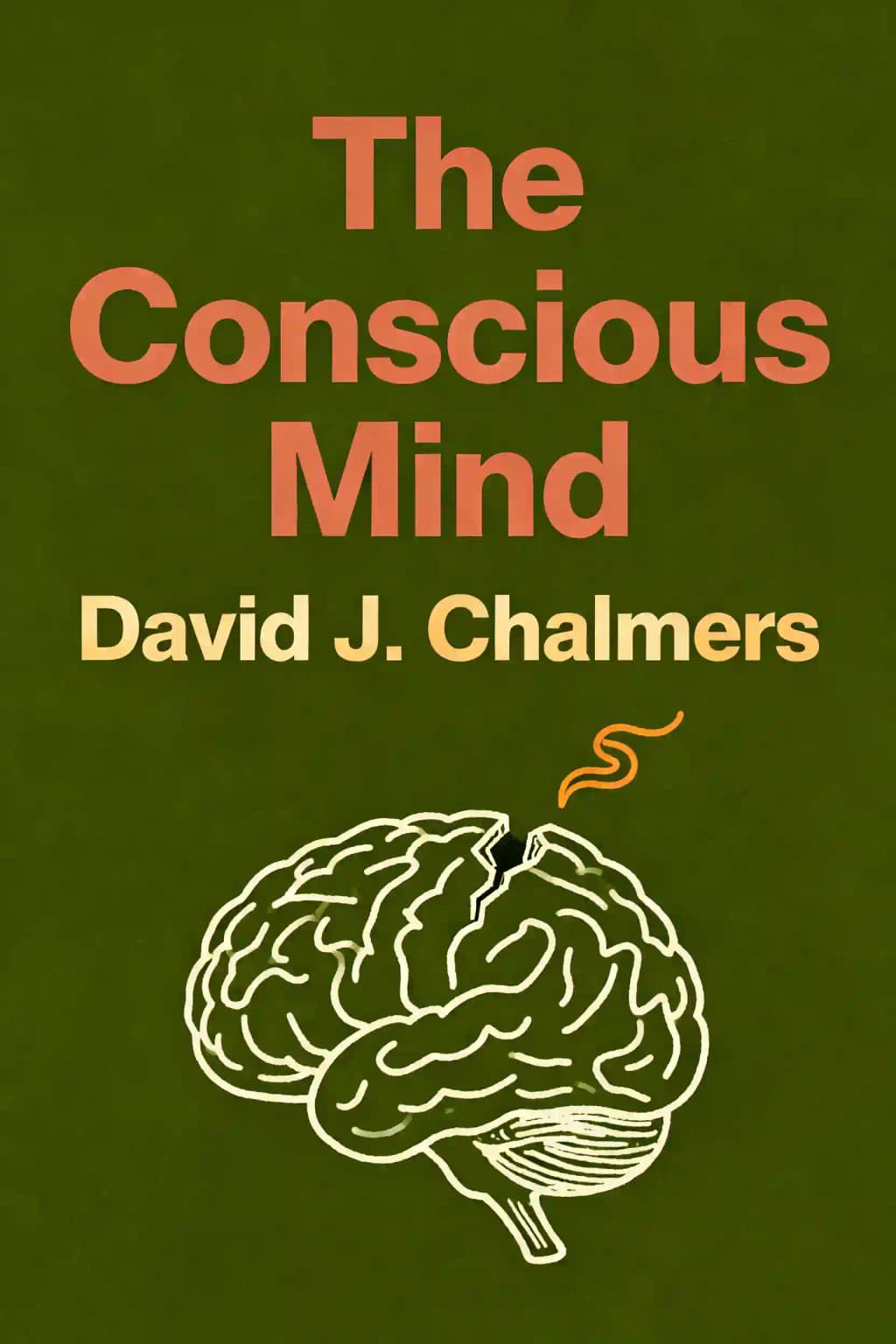
Chalmers' revolutionary exploration of consciousness challenges materialism, arguing subjective experience is as fundamental as time or mass. His "zombie argument" sparked fierce debate among philosophers and AI researchers, redefining how we understand the mind-body problem and machine consciousness.
Sinta o livro através da voz do autor
Transforme conhecimento em insights envolventes e ricos em exemplos
Capture ideias-chave em um instante para aprendizado rápido
Aproveite o livro de uma forma divertida e envolvente
Why does it feel like something to be you? Why does the color purple look the way it does? Why should physical processes in our brains generate any inner experience at all? These questions form the heart of what philosopher David Chalmers calls "the hard problem of consciousness" - perhaps the most profound mystery in our understanding of reality. While science has made remarkable progress explaining the mechanisms of cognition - memory, attention, perception - it stumbles when confronting subjective experience itself. When you see a vivid purple book cover, nothing about light waves at 400 nanometers inherently suggests the experience of "purpleness." Musical experiences seem even stranger - somehow transcending their component notes to create unified qualitative experiences that completely absorb us. This mystery persists because consciousness involves two distinct concepts. The psychological concept refers to the functional basis of behavior - how we discriminate, categorize, and react to our environment. The phenomenal concept refers to subjective experience itself - what it feels like to be in particular mental states. This distinction reveals two separate mind-body problems: the "easy problem" of explaining psychological functions and the "hard problem" of explaining why these functions are accompanied by conscious experience. As Chalmers memorably puts it: "Why is all this processing accompanied by an experienced inner life? We might have been zombies, but we're not."
Divida as ideias-chave de The Conscious Mind em pontos fáceis de entender para compreender como equipes inovadoras criam, colaboram e crescem.
Destile The Conscious Mind em dicas de memória rápidas que destacam os princípios-chave de franqueza, trabalho em equipe e resiliência criativa.

Experimente The Conscious Mind através de narrativas vívidas que transformam lições de inovação em momentos que você lembrará e aplicará.
Pergunte qualquer coisa, escolha a voz e co-crie insights que realmente ressoem com você.

Criado por ex-alunos da Universidade de Columbia em San Francisco
"Instead of endless scrolling, I just hit play on BeFreed. It saves me so much time."
"I never knew where to start with nonfiction—BeFreed’s book lists turned into podcasts gave me a clear path."
"Perfect balance between learning and entertainment. Finished ‘Thinking, Fast and Slow’ on my commute this week."
"Crazy how much I learned while walking the dog. BeFreed = small habits → big gains."
"Reading used to feel like a chore. Now it’s just part of my lifestyle."
"Feels effortless compared to reading. I’ve finished 6 books this month already."
"BeFreed turned my guilty doomscrolling into something that feels productive and inspiring."
"BeFreed turned my commute into learning time. 20-min podcasts are perfect for finishing books I never had time for."
"BeFreed replaced my podcast queue. Imagine Spotify for books — that’s it. 🙌"
"It is great for me to learn something from the book without reading it."
"The themed book list podcasts help me connect ideas across authors—like a guided audio journey."
"Makes me feel smarter every time before going to work"
Criado por ex-alunos da Universidade de Columbia em San Francisco

Obtenha o resumo de The Conscious Mind como PDF ou EPUB gratuito. Imprima ou leia offline a qualquer momento.