Capítulo 1
The Quiet Revolution in Personal Finance
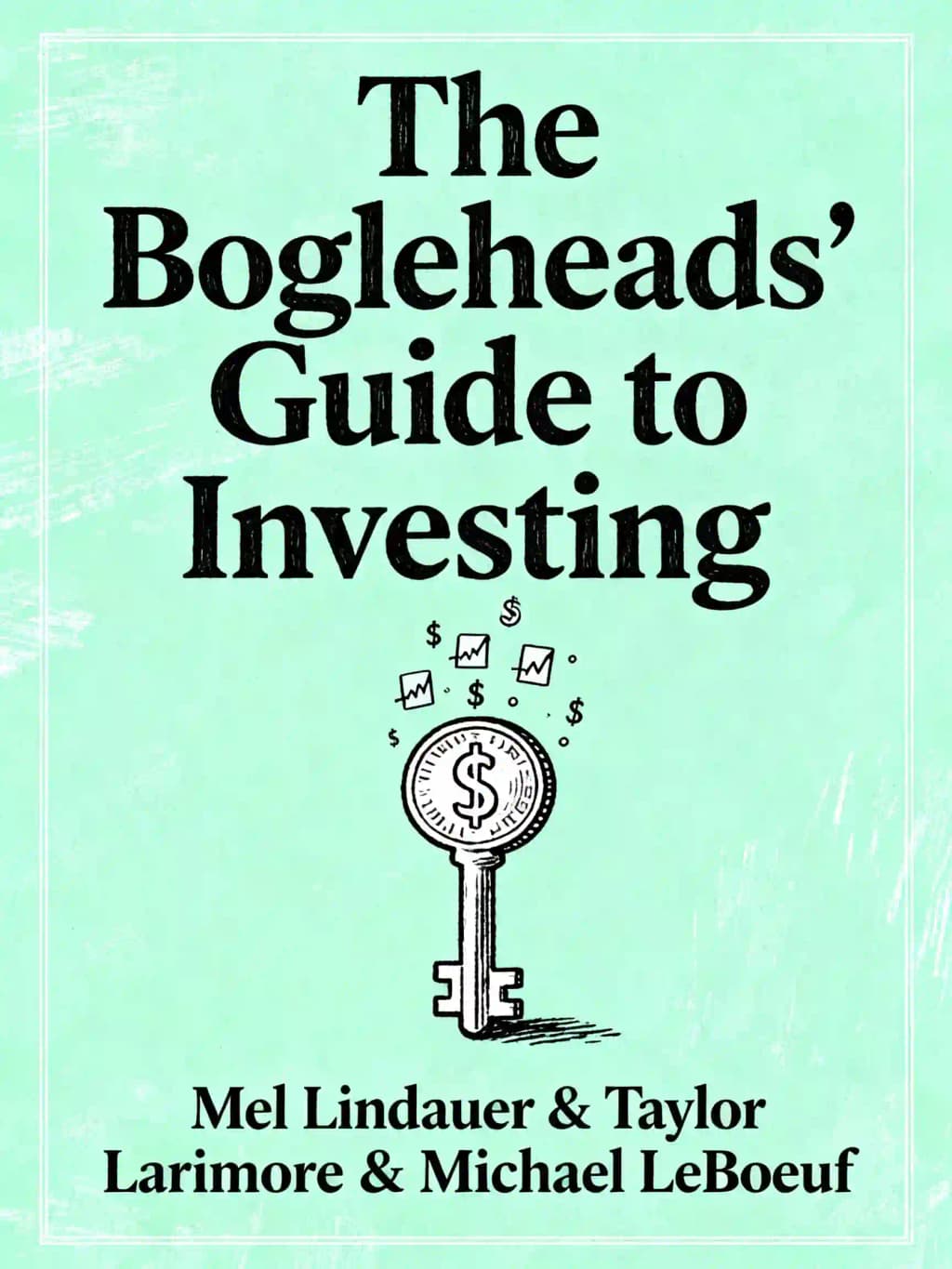
In a world where financial advice often comes with hidden agendas and flashy promises, a quiet revolution has been brewing for decades. At its center stands John C. "Jack" Bogle, the founder of Vanguard and creator of the first index fund for everyday investors. What began as "Bogle's Folly" in 1976 has transformed into the world's largest mutual fund, while spawning a passionate community of followers known as "Bogleheads." These aren't bobbleheads nodding in blind agreement, but thoughtful investors who've discovered that the path to financial freedom isn't through market timing or stock picking, but through low-cost, tax-efficient investing combined with common sense. Warren Buffett himself declared that Bogle "has done more for American investors than any other individual," and Time magazine named him one of the "100 Heroes and Icons" of the 20th century. The Bogleheads' approach has helped countless ordinary people achieve extraordinary financial results-not through get-rich-quick schemes, but through the patient application of time-tested principles that put more money in investors' pockets instead of Wall Street's coffers.
Capítulo 2
Choose a Sound Financial Lifestyle: The Foundation of Wealth
The sobering reality is that of 100 Americans starting work at age 25, by age 65, only one will be rich and four will be financially independent. The remaining 95% will depend on family, charity, or government assistance. This outcome isn't determined by intelligence or luck, but by financial lifestyle choices.
Three distinct financial lifestyles shape most people's futures. "The Borrowers" live for today, financing everything through credit cards and loans, creating an illusion of success while building negative wealth. "The Consumers" avoid excessive debt but spend everything they earn, passing up retirement savings opportunities to fund immediate desires. Meanwhile, "The Keepers" prioritize future financial freedom by automatically setting aside at least 10% of every paycheck before spending anything else.
The difference between these approaches is profound. Keepers may earn less than others but will likely accumulate more wealth because they focus on net worth (what they keep) rather than income (what they make). As the authors note, "It's not how much you make, but how much you keep of what you make, that determines your financial destiny."
Before investing, three crucial steps must be taken. First, graduate from the paycheck mentality to the net worth mentality by calculating everything you own minus everything you owe. This simple calculation reveals your true financial position and provides a baseline for measuring progress. Second, pay off high-interest debts, particularly credit cards. A credit card balance at 18.9% represents a guaranteed 18.9% return when paid off-far better than most investment opportunities. Finally, establish an emergency fund of three to twelve months' living expenses in safe, liquid accounts to prevent having to tap long-term investments during crises.
These foundational steps create the stable platform from which successful investing can begin. Without them, even the best investment strategy will eventually crumble under the weight of poor financial habits.
Capítulo 3
Start Early and Invest Regularly: The Magic of Compounding
The most powerful force in investing isn't market timing or stock selection-it's time itself. Through the miracle of compound interest, modest but consistent investments can grow to remarkable sums. Consider that just 54 cents invested daily at 10% for 65 years grows to $1 million. This explains how a Vanguard shareholder who never earned more than $25,000 annually built a portfolio worth $1,250,000 through disciplined saving and investing over decades.
The Rule of 72 illustrates this power: divide 72 by your annual return percentage to find how quickly your money doubles. At 8%, money doubles every 9 years; at 12%, every 6 years. Starting early creates an enormous advantage-a 25-year-old needs only $46,030 invested once at 8% to reach $1 million by age 65, while someone starting at 55 needs $463,193 to achieve the same result.
Finding money to invest requires either earning more or spending less. The authors suggest practical approaches: pay yourself first by automatically diverting a portion of each paycheck to investments (starting with just 1% and increasing gradually); commit future pay raises to investing rather than lifestyle inflation; buy used items when appropriate; avoid frequent new car purchases (a three-year-old car costs about $2,500 less annually than a new one); and consider relocating to areas with lower living costs.
Creating side incomes can be particularly effective. The authors share the example of Ralph, a 28-year-old who runs a weekend carpet-cleaning business and owns a rental property while working full-time. His side ventures fund mutual fund investments while he maximizes his 401(k) and Roth IRAs. Side businesses not only provide investment capital but reduce vulnerability to layoffs and workplace politics.
Not all debt is bad debt. Low-interest, tax-deductible loans for homes, education that increases earning potential, or business expansion can be strategic uses of leverage. Sometimes keeping a mortgage makes financial sense-if you're borrowing at 5% but can earn 8% by investing, you're potentially earning a 3% spread while maintaining liquidity.
As Boglehead Eric Haban wisely noted at age 23, "When you're just starting out, how much you save is more important than your investment returns." The ability to consistently pay yourself first, manage debt wisely, and develop clear financial goals creates the foundation upon which successful investing is built.
Capítulo 4
Understanding Investment Vehicles: The Building Blocks of Your Portfolio
Before embarking on your investment journey, understanding the various mainstream investment options is essential. While most Bogleheads ultimately invest through mutual funds rather than individual securities, knowing how the underlying investments work provides crucial context for making informed decisions.
Stocks represent ownership stakes in corporations, with shareholders profiting through dividends and/or price appreciation as companies grow. Since stocks represent ownership in single companies, concentrating investments in just one company is risky-if that company fails, you could lose everything, as Enron and WorldCom employees painfully discovered.
Bonds are essentially loans where you lend money to an issuer in exchange for interest payments and the return of principal at maturity. Various entities issue bonds, including the U.S. Treasury (considered safest), government agencies, corporations, and municipalities. Treasury issues include T-Bills (1 year or less), T-Notes (2-10 years), T-Bonds (10+ years), TIPS (inflation-protected), and Savings Bonds. Corporate bonds pay higher interest rates based on creditworthiness, with ratings from AAA (highest) to junk bond status. Municipal bonds offer tax advantages, typically exempt from federal taxes and often state taxes for residents of the issuing state.
Mutual funds pool investors' money to buy securities including stocks, bonds, or money market instruments. They come in numerous varieties: equity funds investing in stocks, bond funds for fixed income, and hybrid/balanced funds combining both. Two primary management styles exist: indexing (which aims to replicate a benchmark's performance) and active management (which tries to outperform benchmarks through security selection). Research consistently shows that few active managers outperform over long periods after accounting for higher costs.
Exchange-traded funds (ETFs) function similarly to index mutual funds but trade like stocks. While they offer tax advantages and potentially lower expense ratios, broker commissions on each transaction make them unsuitable for dollar-cost averaging or frequent small purchases. They're most appropriate for investors making large, one-time purchases with long holding periods.
Annuities are investments with insurance wrappers available in several varieties. Fixed annuities resemble bank CDs but often feature enticing "teaser" rates accompanied by punishing surrender fees. Variable annuities allow investment in "sub-accounts" (essentially mutual fund clones) but typically carry significantly higher expenses than comparable mutual funds-often exceeding 2.5-3.0% annually. Immediate annuities exchange a lump sum for guaranteed regular payments for life, providing income security but sacrificing liquidity and potential growth.
Understanding these investment vehicles provides the foundation for building an effective portfolio. As the authors note, "Knowledge is power, and nowhere is this more true than in investing."
Capítulo 5
Preserve Your Buying Power: The Silent Threat of Inflation
Inflation silently erodes our future buying power like a thief in the night. With 3% inflation, a 25-year-old investor will need $3,262 in 40 years to buy what $1,000 buys today; at 4% inflation, they'd need $4,801. This compounding effect works against us over decades, making inflation protection a critical component of any long-term investment strategy.
Two specialized Treasury securities offer direct inflation protection: I Bonds and TIPS (Treasury Inflation-Protected Securities). I Bonds are risk-free U.S. Savings Bonds with yields combining two components: a fixed rate guaranteed for the bond's life and a variable inflation-adjustment rate recalculated semi-annually based on the Consumer Price Index. This structure guarantees that I Bonds' before-tax returns equal or exceed inflation.
TIPS offer another inflation protection option, with rates established by marketplace auctions rather than being set administratively. Their principal value adjusts upward with inflation, and interest is paid on the adjusted principal. Investors can purchase TIPS at Treasury auctions, in the secondary market, or through TIPS mutual funds like Vanguard's VIPSX.
Both instruments have advantages and disadvantages. I Bonds offer tax deferral for up to 30 years and can be redeemed anytime after one year without principal risk. TIPS typically offer higher guaranteed rates but create "phantom income"-paying taxes annually on inflation adjustments you won't receive until maturity-making them ideal for tax-deferred accounts.
When comparing I Bonds and TIPS across various inflation scenarios, each outperforms in different situations, but the differences are often minimal. With a 1% I Bond versus a 1.5% 10-year TIPS over 10 years, the performance difference is less than $50 regardless of tax bracket. For larger investments ($50,000-$100,000), the difference becomes more meaningful, but both serve the essential purpose of protecting an investor's future spending power against inflation.
As the authors emphasize, "What matters isn't the dollar amount but its purchasing power." Without specific inflation protection, even seemingly "safe" investments like Treasury bonds have sometimes failed to post positive real returns after inflation. Including inflation-protected securities in your portfolio provides insurance against this silent wealth destroyer.
Capítulo 6
The Power of Simplicity: Why Index Funds Win
The investment industry thrives on complexity, but the evidence overwhelmingly supports a simpler approach. As Jeremy Siegel noted, "The beauty of indexing is that it gives the average investor a fighting chance-actually, more than a fighting chance-of outperforming the experts." Research consistently shows that passive index investing outperforms 70-80% of actively managed funds over extended periods.
This counterintuitive reality exists because investing differs fundamentally from most areas of life. Principles that serve us well elsewhere-like "don't settle for average," "listen to your gut," "hire experts," "you get what you pay for," and "take action in a crisis"-actually harm us when applied to investing. While the long-term market trend over 200+ years is upward, short-term performance is highly random and unpredictable.
Index funds outperform primarily because of rock-bottom costs. They offer seven key advantages: no sales commissions; low operating expenses (often under 0.2% compared to 1-2% for active funds); tax efficiency through minimal turnover; no need for expensive money managers; higher diversification across hundreds or thousands of companies; immunity from manager skill variations; and consistent adherence to their stated investment objectives.
The cost difference compounds dramatically over time. A $10,000 investment earning 10% annually for 20 years would grow to $49,725 with a 1.5% expense ratio, but to $60,858 with a 0.5% expense ratio-an 18% difference from just 1% lower annual expenses. As Jack Bogle frequently noted, "In investing, you get what you don't pay for."
The evidence supporting indexing comes from the highest authorities in finance. Nobel laureates, Wall Street legends, and academic researchers all reach the same conclusion: index funds consistently outperform most actively managed funds over time. Even Warren Buffett advises that "most investors will find that the best way to own common stocks is through an index fund."
When purchasing index funds, focus exclusively on no-load funds with annual expense ratios of 0.5% or less-the cheaper, the better. While Vanguard offers excellent low-cost options, other reputable providers include TIAA-CREF, Fidelity, T. Rowe Price, and Charles Schwab.
The authors acknowledge that some actively managed funds can perform well, particularly those with low costs. However, even within Vanguard, performance varies dramatically-their Health Care Fund was the world's top performer for 20 years while their U.S. Growth fund performed terribly during the 1990s bull market. This unpredictability is why they recommend placing the bulk of investments in index funds, where costs are certain even if returns are not.
Capítulo 7
Asset Allocation: Your Most Important Investment Decision
Asset allocation-how you divide your portfolio between stocks, bonds, and cash-represents your most crucial investment decision. Studies show it determines 77-93% of your portfolio's return variability, far outweighing the impact of specific security selection or market timing.
This insight comes from Modern Portfolio Theory, developed by Nobel Prize-winning economist Harry Markowitz, who demonstrated that combining volatile non-correlated securities could create portfolios with lower volatility and potentially higher returns. The landmark 1986 study by Brinson, Hood, and Beebower examined 91 large pension funds over a decade and found that asset allocation determined 93.6% of portfolio return variability, while active management actually reduced returns by 1.10%.
Four factors should guide your allocation decisions. First, define specific investment goals-whether saving for a home, education, or retirement-to determine how much money you need and develop an appropriate strategy. Second, consider your time frame, as stocks are unsuitable for short periods (less than five years) due to their volatility but excellent for long-term objectives. Historical data demonstrates this clearly: the worst one-year stock return was -43%, while the worst ten-year return was only -1%.
Third, understand your personal risk tolerance. Most investors fear losses more than they value gains, and risk tolerance varies widely. The "sleep test" helps determine if your allocation suits your risk tolerance: can you sleep soundly without worrying about your investments? Adding bonds significantly reduces maximum annual losses-a 100% stock portfolio experienced a worst-case annual loss of 43.1%, while a 60/40 stock/bond portfolio limited losses to 26.6%.
Finally, consider your personal financial situation. Investors with pensions and Social Security need less accumulated savings than those without such resources. Similarly, those with significant net worth don't need to chase higher returns through risky investments.
For most investors, a simple combination of stocks, bonds, and cash provides the optimal foundation. Jack Bogle suggested that bonds should roughly equal your age as a starting point. Diversifying your stock allocation across different market capitalizations (large, medium, small) and styles (value, core, growth) is essential since various types perform differently at different times. International stocks, representing about half the world's stock value, offer valuable diversification benefits, with the authors recommending allocations between 20-40% of your equity portfolio.
For bonds, a single low-cost short- or intermediate-term, high-quality bond fund with duration matching your investment time frame is sufficient for most investors. As portfolios grow, consider adding Treasury Inflation-Protected Securities (TIPS) for diversification and inflation protection.
Since each investor has unique circumstances, the authors provide model portfolios for different life stages, from young investors (80% stocks/20% bonds) to late retirees (20% stocks/80% bonds). The exact percentages aren't critical-a difference of 10% in any asset class won't significantly impact long-term performance-but having a deliberate allocation aligned with your personal situation is essential.
Capítulo 8
Minimizing Investment Costs and Taxes: Keep What You Earn
Every dollar paid in investment costs or taxes is one dollar less working toward your financial goals. Understanding and minimizing these drags on performance can dramatically improve long-term results.
Investment costs come in many forms, both visible and hidden. Visible costs include sales loads (which reduce the amount actually invested), expense ratios (covering management fees, 12b-1 marketing fees, and administrative expenses), and account fees. Hidden costs can be even more significant: brokerage commissions (averaging 0.38% of fund assets), bid-offer spreads (the difference between buying and selling prices, averaging 0.34% annually), and market impact costs (from large trades pushing prices up when buying or down when selling).
These costs compound devastatingly over time. Jack Bogle's research showed the total annual cost of the average U.S. equity fund is 3.3%, reducing the historical stock return of 10.5% to just 7.2%. Over a 40-year period, this difference could reduce a retirement portfolio from nearly $2 million to less than $800,000, and annual income from $206,000 to just $57,000.
Taxes represent an even bigger cost for mutual fund investors. A Charles Schwab study found that over 30 years, a high-bracket taxpayer who invested $1 in stocks would have $21.89 in a tax-deferred account but only $9.87 in a taxable account-less than half as much. Two sources of mutual fund income are subject to tax: dividends and capital gains, each taxed differently.
To minimize tax impact, use tax-advantaged accounts like 401(k)s, IRAs, and Roth IRAs whenever possible. For taxable accounts, favor tax-efficient investments like index funds (which have minimal turnover), tax-managed funds, municipal bonds, and U.S. Savings Bonds. Place tax-inefficient investments (like bonds and REITs) in tax-sheltered accounts and tax-efficient investments (like stock index funds) in taxable accounts.
Tax-loss harvesting-selling investments with losses to offset gains and reduce taxable income-can significantly enhance returns. A First Quadrant study found it adds about 27% compared to buy-and-hold strategies. When repurchasing sold funds, wait 31 days to avoid wash sale rules.
For maximum tax efficiency, keep turnover low by buying funds to hold "forever"; avoid short-term gains by holding profitable shares over 12 months; buy fund shares after distribution dates; delay profitable sales until January to postpone tax payments; and use tax-efficient withdrawal strategies in retirement.
As the authors emphasize, "While investors can't control market returns, they can control costs-including taxes." This control makes cost and tax management one of the most reliable ways to improve investment results.
Capítulo 9
Staying the Course: The Behavioral Challenge of Successful Investing
The greatest obstacle to investment success isn't market performance but investor behavior. Studies consistently show that average investors earn substantially less than the funds they invest in because of poor timing decisions. From 1993-2012, while the S&P 500 averaged 8.21% annual returns, the average equity fund investor earned only 4.25%-a difference that transforms $10,000 into either $46,610 or just $22,989 over 20 years.
This performance gap stems from emotional decision-making driven by behavioral biases identified by psychologists Amos Tversky and Daniel Kahneman. Greed and fear-primitive emotions that helped prehistoric humans survive-destroy investment returns in modern markets. Greed drives investors to buy when markets are up, while fear causes them to sell during downturns, creating a destructive buy-high, sell-low pattern.
Other emotional traps include overconfidence (particularly among men, who trade more frequently and earn lower returns than women investors); loss aversion (feeling the pain of losses twice as intensely as the pleasure of gains); analysis paralysis (becoming overwhelmed by choices and failing to invest at all); the endowment effect (overvaluing what we already own); herd behavior (following the crowd into popular investments); mental accounting (treating money differently based on its source); and anchoring (clinging to arbitrary reference points).
The investment media exacerbate these tendencies. Financial TV shows parade "experts" who confidently predict market direction despite overwhelming evidence that such forecasting is futile. Financial magazines prioritize selling copies over providing sound advice, featuring attention-grabbing headlines about "hot" investments that typically underperform. As one anonymous source noted, "rational, pro-index-fund stories don't sell magazines."
To overcome these challenges, create a written investment plan and commit to it. Tune out market noise by recognizing that all forecasting is essentially guesswork-if anyone truly had the gift of market prophecy, they wouldn't sell newsletters or host TV shows; they'd quietly make billions. Distinguish between information that sounds good and information that is good. If you crave excitement, limit speculation to no more than 5% of your portfolio in a "casino account" that, once depleted, is gone forever.
The logical alternative to performance chasing and market timing is creating a long-term asset allocation plan and staying the course. This requires both knowledge to prepare a sound strategy and confidence to stick with it. As Jack Bogle emphasized, "No matter what happens, stick to your program... It is the most important single piece of investment wisdom I can give to you."
Capítulo 10
Securing Your Financial Future: From College to Retirement
Beyond the core principles of successful investing, specific life goals require targeted strategies. Two of the most significant financial challenges families face are funding college education and ensuring retirement security.
College education represents a significant investment that pays substantial dividends-college graduates with bachelor's degrees earn nearly $1,000,000 more than high school graduates over their 40-year working careers. Parents have numerous options for funding education, each with unique tax implications and financial aid impacts. The 529 qualified tuition plan offers particularly attractive benefits: generous contribution limits, tax-deferred growth, tax-free withdrawals for qualifying expenses, and parental control of assets. Unlike custodial accounts where children gain full control at the age of majority, parents retain complete control of 529 funds. Other options include Coverdell Education Savings Accounts (for expenses beyond just college), U.S. Savings Bonds (with potential tax-free benefits), and personal savings.
For retirement planning, the critical question is: "How much of my portfolio can I spend each year without running out of money?" Research suggests sustainable withdrawal rates of 4-6% for 30-year portfolio survival. For inflation-adjusted withdrawals, start with no more than 4% of initial portfolio value; for fixed-percentage withdrawals, limit to 5% annually. Flexibility is crucial-keep fixed expenses low, have income-earning options, and adjust withdrawals based on market performance.
Several strategies can extend retirement solvency: delaying retirement (adding savings and reducing withdrawal years), postponing Social Security until full retirement age (increasing benefits by 33% compared to age 62), and possibly purchasing immediate annuities for guaranteed income. Remember that a 65-year-old couple has a 45% chance that one spouse will live to 90, so plan accordingly.
Protecting your assets through proper insurance is equally essential. Only insure against catastrophes you can't afford to pay yourself, carry the largest deductibles you can afford, and avoid narrow specialized policies. Life insurance should be purchased only when needed (typically term insurance rather than expensive cash-value policies); health insurance should include high lifetime benefits; disability insurance should protect your future earning power; and long-term care insurance makes sense for those with liquid assets between $200,000-$2 million in their mid-to-late fifties.
Finally, estate planning ensures your assets go to chosen beneficiaries efficiently with minimal taxation. Essential documents include a will (even with a trust), living trust (to avoid probate), powers of attorney (for finances and healthcare), and advance healthcare directive. Consider gifting strategies to reduce estate size and potentially avoid estate taxes, while taking advantage of the stepped-up cost basis heirs receive on inherited property.
As the authors conclude, "You now have all the tools you need to become a successful investor." The principles outlined in this book-living below your means, starting early, understanding investment options, using low-cost index funds, creating a personal asset allocation plan, minimizing costs and taxes, diversifying investments, rebalancing regularly, avoiding market timing, and mastering your emotions-provide the roadmap to financial freedom. The key is taking action now and staying the course through market fluctuations and life changes.