Capítulo 1
Risking It All: The Science Behind Life's Biggest Gambles
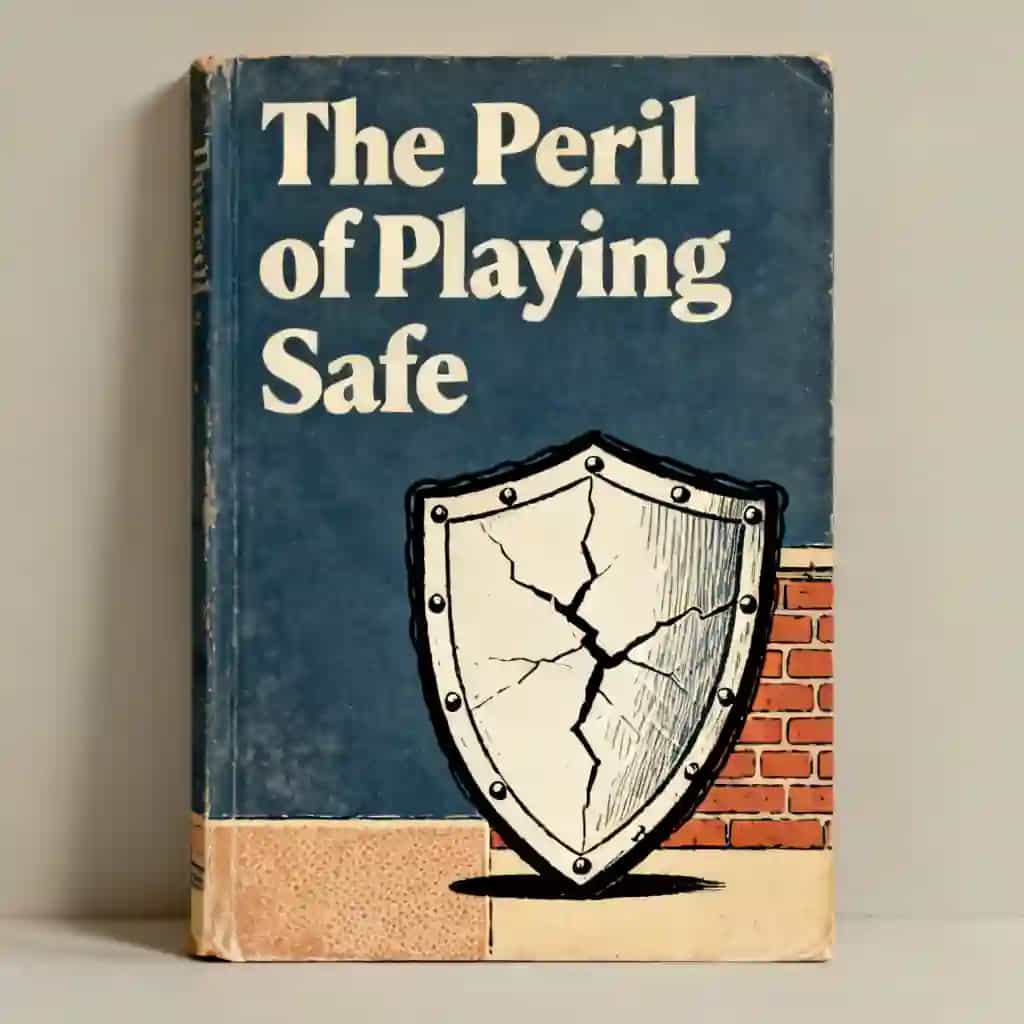
When Kayt Sukel was younger, she climbed trees as a toddler, swam with sharks, jumped out of planes, and even married a soldier during wartime. While he deployed to Iraq, she explored Europe with their infant strapped to her back. She viewed mistakes as valuable learning experiences alongside her successes. But approaching 40, she traded adventure for the PTA and a reliable station wagon, becoming more spectator than participant in life's riskier endeavors.
This transformation isn't unusual. Many of us shift from embracing uncertainty to avoiding it as we age. Yet research shows that calculated risk-taking remains essential for growth, learning, and fulfillment throughout our lives. "The Art of Risk" has become a cultural touchstone for those seeking to understand the science behind our decisions, with celebrities like Tim Ferriss and Angela Duckworth citing its insights in their own work on personal development. The book's exploration of the neuroscience behind risk-taking has influenced fields from business leadership to education, challenging conventional wisdom about what makes some people seemingly "fearless" while others remain cautious.
Capítulo 2
Understanding Risk: More Than Just Danger
When we think about risk-takers, we often imagine extreme athletes or high-rolling investors. But risk is far more fundamental to human experience than these dramatic examples suggest. Risk, at its core, is simply any decision with a significant probability of negative outcomes-something we all face daily.
Consider Gayle King, a 65-year-old asphalt scientist from Galveston. At first glance, he seems risk-averse-married 40 years, wearing the same style Hawaiian shirts, preferring cruise ships for travel. Yet King understands risk intimately from growing up on a family farm in Ohio, where weather and market fluctuations created constant uncertainty. This experience taught him to approach decisions analytically, calculating probabilities before acting.
Traditional economic definitions of risk focus on quantifiable probabilities-like knowing the exact odds of a coin flip. But real-world risk is far more complex. Neuroscientists have expanded this definition to include "individual-specific discounting factors," recognizing that humans approach risk differently based on subjective values. Most everyday decisions involve uncertainties where we can't calculate all probabilities.
The gap between scientific and everyday understandings of risk creates confusion. While researchers might consider any uncertain decision "risky," most people associate risk with potential danger. This disconnect has led scientists like Tom Schonberg to call for bridging laboratory gambling tasks with naturalistic risk behaviors like drug use or unprotected sex, questioning whether mathematical definitions truly capture what most people consider "risk-taking."
Risk carries significant emotional baggage, often viewed negatively due to business schools' emphasis on risk minimization. Yet society simultaneously celebrates risk-takers-those heroes and rule-breakers who inspire us by challenging the status quo. To make better risk calculations, we need to understand how our brains gauge probabilities, how genetics influence decision-making, and how environmental factors affect risk tolerance. Only then can we determine which risks are truly worth taking.
Capítulo 3
The Brain's Risk Calculator: How We Decide
When software developer Michelle contemplated leaving her secure corporate job for an exciting startup opportunity across the country, her decision process illuminated how our brains evaluate risk through the mesocortical limbic pathway-the circuit responsible for processing both risks and rewards.
This critical pathway comprises three key systems working in concert. The basal ganglia, our "reptilian brain," sits deep beneath the cortex and drives our most fundamental desires-food, sex, companionship, money, and social status. As part of Kahneman's "fast-thinking system," it rapidly influences our decisions by representing what we want most.
Balancing this is the prefrontal cortex-the brain's executive control center providing the crucial power of "no." This evolved region enables judgment, reasoning, and inhibition-Kahneman's "slow-thinking system." The dorsolateral prefrontal cortex (DLPFC) is particularly important for decision control, with the basal ganglia-prefrontal cortex connection functioning like the brain's "gas" and "brakes."
The third component, the limbic system, integrates emotion and past experience into current decisions. It includes the hippocampus (memory center), amygdala (fight-or-flight response), cingulate gyrus (associating rewards with actions), and insula (emotion regulation). This system helps calculate the subjective value of potential rewards based on personal importance, with the ventromedial prefrontal cortex (VMPFC) acting as a calculator combining emotional, memory, and environmental data.
This mesocortical limbic circuit functions as a sophisticated learning mechanism. Unexpected rewards trigger significant dopamine releases that facilitate neuroplasticity, strengthening neural connections and accelerating learning. While expected rewards produce minimal dopamine, unexpected positive outcomes flood the brain with this neurotransmitter. Conversely, negative consequences virtually shut down dopamine release, teaching avoidance.
This neurobiological advantage explains why risk-taking enhances learning-without pushing beyond your comfort zone, you miss the dopamine surge that strengthens learning signals. As neuroscientist Michael Frank explains, "Sticking with the status quo can make it hard to learn and improve at anything." Risk-taking fundamentally changes expectation levels, creating the neurological conditions necessary for growth.
When making decisions, our brain functions like a complex probability calculator. Jeff Cooper describes it as "all numbers up here at some point," with the brain computing subjective values for each choice. Despite this sophisticated apparatus, optimal choices aren't guaranteed if any component becomes imbalanced. Research using transcranial magnetic stimulation demonstrated that temporarily disrupting the right DLPFC caused participants to make riskier decisions, suggesting this region normally suppresses "superficially seductive options."
Scientists can even predict risk behaviors by monitoring brain activity. Using the Balloon Analog Risk Task, researchers found they could predict participants' decisions with 70% accuracy based on prefrontal cortex activity. When participants made riskier choices, their prefrontal regions showed significantly less activity than when they played it safe-confirming the importance of the brain's "brake system" in risk assessment.
Capítulo 4
Genetic Influences: Born to Take Risks?
Andy Frankenberger transitioned from successful Wall Street trader to professional poker player, distinguishing his work from gambling through analytical skills and disciplined risk management. His extraordinary success in two risk-intensive fields raises questions about whether risk-taking abilities might be innate rather than learned-potentially written in DNA.
The DRD4 gene, sometimes called the "risk gene," influences risk-taking by regulating dopamine flow through the mesocortical limbic circuit. The 7R+ variant affects dopamine receptor distribution, potentially causing rewards to receive greater weight in risk calculations than potential negatives. Evolutionary biologist Justin Garcia suggests this gene was selected during human migrations from Africa, as impulsivity and novelty-seeking helped prehistoric humans find new resources.
Research shows individuals with the 7R+ variant make riskier financial decisions in experimental settings, gambling more for potential rewards. Another gene, 5-HTTLPR, affects serotonin transport, which acts as a dopamine brake. Studies found people with shortened 5-HTTLPR variants were 28% more risk-averse in investment games, while those with the DRD4 7R+ variant increased risky investments by 25%.
Beyond mere risk-taking tendencies, certain genes may help individuals make more optimal decisions. The MAOA gene, nicknamed the "warrior gene," produces an enzyme that breaks down neurotransmitters like dopamine. While often linked to aggression and impulsivity, research by Cary Frydman revealed that individuals with the MAOA-L variant were actually better at comparing risky options against sure things, choosing options most beneficial to them over time.
While these genetic links are compelling, researchers caution against oversimplification. Christopher Chabris notes that complex behavioral traits are influenced by hundreds or thousands of genetic variants, each with minimal individual effect. The author herself, despite past risk-taking tendencies, lacks the 7R+ DRD4 variant, illustrating that genetic contributions are probabilistic, not deterministic.
Any behavior results from complex biology-environment interactions, and our prefrontal cortices provide a "cognitive override" option regardless of genetic predisposition. As Justin Lum explains, "We all have urges...Some people just have the kind of biology that requires them to put on more brakes than others." Genetic variants mean our perceived realities and risk responses differ, but don't dictate our choices.
Capítulo 5
Gender and Risk: Beyond Stereotypes
Imagine your ideal risk-taker. Chances are, you pictured a man. This reflects both cultural assumptions and scientific research indicating biological sex differences influence risk-taking behaviors. As the author notes, "whether or not we take risks has quite a bit to do with what we have between our legs-and the corresponding hormones that run rampant in our bodies and brains."
Scientists have investigated whether testosterone might explain gender differences in risk-taking. Harvard researchers found stock traders showed their greatest profits on days when their testosterone was elevated. Researchers led by Coren Apicella studied 98 young men playing financial games and found those with higher testosterone (measured via saliva samples, facial masculinity, and finger-length ratios) risked more money on gambles. Importantly, similar effects appear in women too-Paola Sapienza's study of MBA students revealed women with higher testosterone levels chose riskier financial options and pursued higher-risk careers after graduation.
However, women are increasingly taking risks in thrill and adventure activities, with the gender gap narrowing significantly. While only 30% of North Face's sponsored extreme athletes are women, this represents substantial progress. The shift stems from changing social norms that now allow and even encourage women to pursue adventure rather than traditional domestic activities.
Studies show women take plenty of risks, just in different domains than men-they're more likely to take social risks like bringing up unpopular issues or changing careers later in life. Researcher Bernd Figner suggests women's historical unfamiliarity with financial decisions explains their lower risk tendency in monetary gambles, not an inherent risk aversion. Despite perceiving activities as riskier than men do, women participate in risky behaviors at similar rates.
Leah Davis, a 44-year-old mother of two and veteran firefighter, exemplifies this reality. Her physically demanding, unglamorous profession challenges gender stereotypes about risk-taking. As a fire captain who evaluates recruits, she emphasizes that successful firefighters need flexibility, adaptability, discipline, and teamwork-with no mention of gender requirements.
As society evolves and gender roles shift, women are increasingly taking significant risks and finding success in previously male-dominated fields like boardrooms, hospitals, trading floors, and research labs. The evidence suggests that risky behavior is fundamental to human experience regardless of gender, and our outdated notions about risk and gender need updating.
Capítulo 6
Age and Risk: The Teenage Brain and Beyond
Even "good kids" like Jonathan-an 18-year-old star student, athlete, and well-liked student council secretary-engage in risky behaviors during adolescence. Despite his outward success and bright future, Jonathan admits to weekend partying involving excessive drinking, unprotected sex, and dangerous stunts. This pattern reflects the unique developmental stage of the teenage brain.
The paradox of teen risk-taking is that they intellectually understand the dangers. Jonathan acknowledges his risky behaviors aren't good ideas but pursues them anyway for fun. He can recognize poor judgment afterward but can't access that reasoning during the moment of decision. Despite being able to articulate the dangers of behaviors like unprotected sex, this knowledge doesn't translate into safer choices when opportunities for risk arise.
Research shows teen brains process risks similarly to adults but with dramatically heightened reward center activity. This overestimation of rewards means potential pleasures like sex appear impossibly valuable, outweighing potential consequences. For teens, reward anticipation activates brain regions linked to habit formation and motivation even more powerfully than the reward itself-providing motivation for the repeated attempts necessary for learning.
Abigail Baird's research reveals a critical difference in how teens and adults evaluate risky situations. When adults hear questions like "Is swimming with sharks a good idea?" they immediately respond "bad idea" using their amygdala and insula-brain regions providing automatic gut feelings based on experience. Teens lack these automatic responses and must consciously reason through each scenario using their frontal lobes, taking about 300 milliseconds longer-a seemingly small delay that can be life-threatening in dangerous situations.
Risk-taking naturally declines as we age due to both biological maturation of the prefrontal cortex and accumulated life experience. This improves our ability to inhibit impulsive responses and better understand consequences. Research on rock climbers found that self-efficacy-confidence in one's abilities-correlates with willingness to take risks, but this self-efficacy decreases with age regardless of experience.
However, this risk aversion can sometimes go too far; studies show adults are often too risk-averse in laboratory decision-making tasks, potentially missing out on greater rewards. By recapturing some of that teenage belief in unbridled possibility-the motivation to try again despite obstacles-adults might discover opportunities they'd otherwise miss.
Capítulo 7
Preparation: The Foundation of Smart Risk-Taking
Steph Davis exemplifies extreme risk-taking as a world-renowned rock climber and BASE jumper who free solos thousand-foot walls without ropes before parachuting off. Despite her seemingly fearless approach, Davis is extraordinarily mindful about her risks. She intimately understands the potential consequences-having lost not only friends but also her husband, BASE jumping legend Mario Richard, who died during a jump in the Dolomites in 2013.
Familiarity powerfully influences our risk-taking behaviors. Sarah Helfinstein's research revealed that knowing others who engage in certain risky activities dramatically increases our willingness to participate ourselves-even when we recognize potential dangers. When participants were told "everybody was doing it," whether skydiving or having affairs, they became more likely to consider doing it themselves. Our environment and peer groups shape our risk perception more significantly than mathematical probabilities.
Successful risk-taking requires dedicated practice. Davis didn't just attempt free-climbing El Capitan's challenging Free Rider route on a whim-she spent two seasons learning its nuances and preparing physically. This exemplifies "deliberate practice," working at the edge of your abilities where failure is common but improvement is rapid. This intensive practice creates neurological benefits: sharpened motor skills, activation of the brain's action-observation network, and the ability to "chunk" complex movements into automatic sequences.
Automaticity from practice helps allocate cognitive resources effectively during risky situations. When basic movements become second nature, your attention can focus on critical variables rather than fundamentals. Michael Posner explains that expertise allows you to "deploy your attention faster and in a different way," anticipating what comes next based on accumulated experience. This creates intuition-not mystical awareness but unconscious pattern-matching that maps past experiences onto current situations.
Risk is like opening a door to potential outcomes. Davis has clear boundaries-she won't take certain risks like returning to Pakistan after 9/11 when a climbing acquaintance disappeared. "That outcome is unacceptable to me," she explains. Yet free soloing and BASE jumping represent acceptable risks because she loves them so deeply. Mitigating risk requires understanding dangers, accepting uncertainty, and evaluating potential outcomes. Familiarity helps you recognize that a door exists, while experience developed through deliberate practice helps determine whether to go through it.
Capítulo 8
The Social Dimension: How Others Shape Our Risks
Military spouses are traditionally viewed as conservative and risk-averse-yet Kristina Kaufmann defies this stereotype completely. As executive director of the Code of Support Foundation and wife of a lieutenant colonel, Kaufmann took an enormous social risk by publishing a 2009 Washington Post editorial criticizing how the Army was failing military families. Despite understanding the breach of protocol, she felt compelled to speak out about families suffering from domestic violence, stress, mental illness, and suicide. "If I don't say something, I'm going to regret it for the rest of my life," she explains.
Teens are particularly susceptible to social influence when taking risks. Temple University researchers found that while teenagers showed similar driving patterns to adults when alone, they took significantly more risks when friends were watching, with brain scans revealing heightened activation in reward-processing regions. This wasn't mere distraction-teens were tuning into potential rewards more intensely in social contexts.
Even adults aren't immune to social influence. "Groupthink," as described by Yale psychologist Irving Janis, occurs when a cohesive group's desire for unanimity overrides realistic appraisal of alternatives. Risk consultant Ruth Murray-Webster explains that groupthink works bidirectionally-groups may become either more risk-seeking or risk-averse depending on their leader's attitude.
Family considerations powerfully influence risk decisions. Kaufmann delayed publishing her op-ed until her husband changed duty stations, protecting him from potential career fallout. Thomas Hills' research revealed that social context affects risk-taking along gender lines. Men increased risk-taking when viewing photos of other men, supporting parental investment theory-males must compete and display to attract mates. Women, however, became more risk-averse when shown photos of babies, suggesting an evolutionary protection instinct.
Attractive potential mates dramatically influence male risk-taking behavior. Richard Ronay and William von Hippel demonstrated this at a Brisbane skate park, where male skateboarders attempted more difficult tricks with fewer aborted attempts when recorded by an attractive female rather than a male experimenter. Testosterone levels spiked significantly in the presence of the attractive female, diminishing the calculating capability of the prefrontal cortex.
Our social connections fundamentally shape our risk calculations. Even nonconformists like Kaufmann find themselves influenced by group dynamics. Risk consultant Murray-Webster advocates self-awareness when making risky decisions, recommending we step back to understand who's influencing our attitudes and what outcomes they're invested in.
Capítulo 9
Emotions, Stress, and Recovery: The Complete Risk Package
John Danner, a successful Silicon Valley entrepreneur, rejects the risk-taker label, citing research showing social entrepreneurs feel compelled to solve problems they deeply care about, making risk considerations secondary. His success stems from emotional conviction rather than calculated risk assessment.
Traditional economic models viewed emotions as "mind killers" that interfere with optimal decision-making. However, modern research reveals affect-a subtler form of emotional response-can actually enhance risk assessment. Neuroscientist Antonio Damasio's work with patients who had brain damage revealed that emotional inputs guide decision-making, especially under uncertainty. These "somatic markers" are subtle emotional indicators from past experiences that help us assess choices.
While feelings provide valuable decision-making shortcuts, they don't always lead to optimal choices. Paul Slovic argues we have two pathways for risk assessment: "risk as feelings" (gut response) and "risk as analysis" (logical approach). Though both matter, feelings typically dominate our everyday risk calculations, which becomes problematic with "affect-rich" outcomes that produce vivid emotional reactions.
Successful risk-takers excel at emotional self-regulation-finding techniques to gain perspective before making important decisions. Research shows that when participants used visualization techniques like imagining calm scenes before gambling decisions, they chose safer options more frequently and showed reduced activation in the ventral striatum.
Stress also significantly impacts risk assessment. Mark Walters, a 17-year Army Special Forces veteran, represents an extreme example of stress resilience. When questioned about his seemingly high-risk military activities, he breaks down risk management systematically: "If I jump out with a parachute and I've been trained and an experienced jumpmaster checks my equipment, and I did a jump refresher just prior... it's crazy safe."
The timing of decisions after stress exposure significantly impacts risk-taking behavior. Researchers found two distinct stress pathways affect decision-making differently: the fast-acting SAM pathway can actually enhance decision-making, while the slower HPA axis tends to degrade it. Participants who made gambling decisions 28 minutes after stress exposure (when cortisol levels were highest) took significantly bigger risks than those who decided after just 5 or 18 minutes.
Finally, recovery from failure distinguishes successful risk-takers. Neurosurgeon Dr. David Baskin, who specializes in nearly impossible brain tumor removals, exemplifies this balance. He meticulously prepares for each procedure while planning for potential complications, breaking complex tasks into smaller achievable goals to maintain optimal performance. Despite inevitable setbacks, he maintains perspective on mistakes and knows when to persist versus when to retreat. As he explains, "High-risk surgery is simply a series of adjustments. But, you know, most of life is."
Capítulo 10
Building Your Risk Intelligence: Four Essential Lessons
Risk isn't just about gambling or extreme sports-it's any decision with a significant probability of negative outcomes. We must accept that risk permeates every decision we make daily. Few choices come with guarantees, and portraying risk as something extraordinary only makes it scarier than necessary.
The truth is we're all risk-takers. Neuroscientist Mauricio Delgado explains that risk-taking is normal decision-making-it's about exploring alternatives and learning from experiences to make better choices. Risk-taking is integral to the brain's learning system, pushing boundaries and helping us adapt. It offers the potential for growth and provides a platform for pursuing what we truly want in life.
Once you accept everyone is a risk-taker, recognize what kind you are. Science confirms we each approach risky situations differently based on our unique biology. Genetic anthropologist J. Koji Lum explains that our different genetic makeups cause our mesocortical limbic circuits to function slightly differently, creating distinct risk-taking algorithms that lead to vastly different life paths.
Some people naturally embrace risks while others avoid them at all costs. To become a better risk-taker, determine your default algorithms-whether you need to exert more effort to slow down or need encouragement to accelerate. Research shows self-awareness strongly predicts business success, as leaders who understand their strengths and weaknesses better manage risk.
Understanding your inner risk-taker is just the first step. Environmental factors profoundly influence our risk calculations. Successful risk-takers are planners who consider all factors, visualize success, focus on the big picture, and break challenges into manageable steps.
We can control several environmental factors that affect our decision-making:
• Preparation: Train intensively for contingencies, developing intuition through deliberate practice
• Connection: Examine how social groups may be driving your decisions
• Emotion and stress: Use self-regulation techniques to engage the slow-thinking system when overwhelmed
• Recovery: View failure as valuable data rather than defeat
Risk-taking isn't necessarily about dramatic feats-it's about stepping outside your comfort zone to explore options that help you learn, grow, and achieve long-term goals. The essence of healthy risk-taking is challenging yourself enough to gather knowledge and experience that helps your brain become a better prediction machine.
As the author concludes: "G.I. Joe was right. When it comes to risk, knowing is half the battle." With self-awareness and understanding of environmental influences, you can harness risk to achieve greater success in whatever matters most to you.