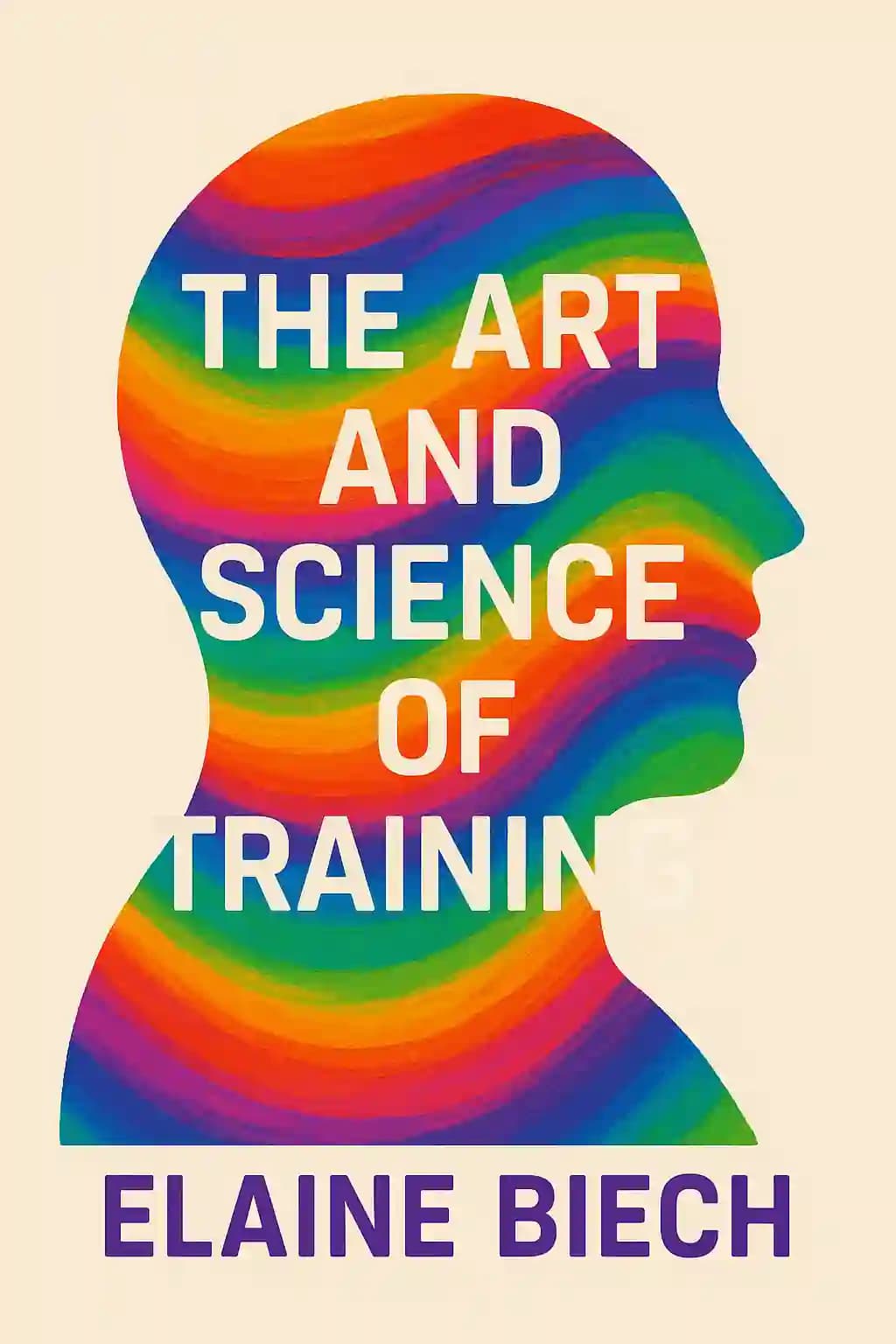
Master trainer Elaine Biech blends psychology with practical methods in this industry-defining guide. Revered by learning professionals with a 3.91 Goodreads rating, it's transformed corporate training across sectors. What counterintuitive approach makes even the toughest teams suddenly receptive to change?
Elaine Biech, bestselling author of The Art and Science of Training, is a titan of talent development renowned for bridging organizational strategy with experiential learning. With over 40 years shaping workplace training, her book merges scientific learning principles with creative facilitation techniques. This draws from her roles designing groundbreaking programs for organizations such as NASA, McDonald’s, and Hershey.
A 2020 ATD Distinguished Contribution Award recipient, Biech has authored 89 books, including the TDBoK Guide™, and served on the Center for Creative Leadership’s board of governors.
Her work has been featured in the Wall Street Journal, Harvard Management Update, and Fortune, while her practical frameworks are implemented by Fortune 500 companies and government agencies alike.
A Washington Post #1 bestseller, The Art and Science of Training reflects her signature approach: equipping professionals to handle real-world challenges through evidence-based yet adaptable methods. Biech’s legacy includes scholarships for emerging leaders and 38 consecutive years presenting at ATD’s premier conferences.
The Art and Science of Training by Elaine Biech explores the intersection of evidence-based learning principles (science) and adaptive facilitation skills (art). It provides actionable strategies for designing effective training programs, handling challenging learner scenarios, and measuring outcomes. The book emphasizes balancing cognitive research with creativity to address real-world L&D challenges like disengaged audiences or mismatched delivery methods.
This book is essential for corporate trainers, HR professionals, and learning designers seeking to improve program efficacy. It’s particularly valuable for those navigating complex training environments, such as hybrid workplaces or resistance to upskilling. Biech’s insights also benefit managers overseeing team development initiatives.
Yes—the book is a Washington Post #1 bestseller and distills Elaine Biech’s 30+ years of L&D expertise. It offers timeless frameworks for adult learning, troubleshooting common training pitfalls, and aligning programs with organizational goals. Readers gain practical tools for evaluating training ROI and adapting methods to modern workplace needs.
Key ideas include:
Biech argues exceptional training requires equal mastery of instructional science and interpersonal artistry.
The book provides scripts for handling 10+ challenging personas, such as skeptics or overparticipators. Biech emphasizes pre-emptive strategies like setting clear expectations, while also offering real-time fixes (e.g., redirecting tangents with focused questions). A core theme: understanding learners’ motivations trumps rigid content delivery.
Biech advocates a blended approach:
The book contrasts methods using a decision matrix based on content complexity, audience size, and resource constraints.
Two standout models:
Unlike purely theoretical texts, Biech merges academic research (e.g., Bloom’s Taxonomy) with battlefield-tested tactics—like converting a disengaged group into co-facilitators. The book also includes 23 ready-to-use templates, from needs assessment surveys to ROI calculators.
Some practitioners note the book focuses more on corporate contexts than nonprofit or academic settings. A minority of readers desire deeper dives into gamification and AI-driven personalization, though Biech addresses these trends in later works.
The principles remain vital for navigating post-pandemic shifts like distributed teams and AI-augmented workflows. Updated examples in recent editions cover virtual reality training and microlearning apps, ensuring alignment with modern tech-enabled L&D practices.
While both emphasize client-centric approaches, The Art and Science of Training targets internal L&D teams, whereas Consulting focuses on external advisors. They share core themes: needs analysis, stakeholder alignment, and outcome measurement. Trainers managing hybrid roles benefit from reading both.
Absolutely—it’s frequently cited in ATD certification prep and internal promotion cases. Mastering Biech’s frameworks demonstrates strategic thinking in talent development. The book’s ROI focus helps HR professionals quantify training’s impact on retention, productivity, and innovation metrics.
Sinta o livro através da voz do autor
Transforme conhecimento em insights envolventes e ricos em exemplos
Capture ideias-chave em um instante para aprendizado rápido
Aproveite o livro de uma forma divertida e envolvente
Adults learn because they want or need to.
Words matter and should be chosen carefully.
Moderate stress levels optimize learning.
Attention must be high.
The art lies in stretching learners appropriately without overwhelming them.
Divida as ideias-chave de The Art and Science of Training em pontos fáceis de entender para compreender como equipes inovadoras criam, colaboram e crescem.
Destile The Art and Science of Training em dicas de memória rápidas que destacam os princípios-chave de franqueza, trabalho em equipe e resiliência criativa.

Experimente The Art and Science of Training através de narrativas vívidas que transformam lições de inovação em momentos que você lembrará e aplicará.
Pergunte qualquer coisa, escolha a voz e co-crie insights que realmente ressoem com você.

Criado por ex-alunos da Universidade de Columbia em San Francisco
"Instead of endless scrolling, I just hit play on BeFreed. It saves me so much time."
"I never knew where to start with nonfiction—BeFreed’s book lists turned into podcasts gave me a clear path."
"Perfect balance between learning and entertainment. Finished ‘Thinking, Fast and Slow’ on my commute this week."
"Crazy how much I learned while walking the dog. BeFreed = small habits → big gains."
"Reading used to feel like a chore. Now it’s just part of my lifestyle."
"Feels effortless compared to reading. I’ve finished 6 books this month already."
"BeFreed turned my guilty doomscrolling into something that feels productive and inspiring."
"BeFreed turned my commute into learning time. 20-min podcasts are perfect for finishing books I never had time for."
"BeFreed replaced my podcast queue. Imagine Spotify for books — that’s it. 🙌"
"It is great for me to learn something from the book without reading it."
"The themed book list podcasts help me connect ideas across authors—like a guided audio journey."
"Makes me feel smarter every time before going to work"
Criado por ex-alunos da Universidade de Columbia em San Francisco

Obtenha o resumo de The Art and Science of Training como PDF ou EPUB gratuito. Imprima ou leia offline a qualquer momento.
A manufacturing plant invests $50,000 in safety training. Three months later, accident rates haven't budged. Meanwhile, a small startup spends a fraction of that amount and sees immediate behavioral change. What's the difference? Training that transforms isn't about bigger budgets or fancier presentations - it's about understanding how adults actually learn and creating conditions where knowledge becomes action. Most training fails not because the content is wrong, but because it ignores fundamental truths about how our brains process, retain, and apply new information. The gap between knowing something and doing something is where most corporate training dollars disappear, yet bridging that gap is entirely possible when we blend scientific principles with artful delivery. Adults don't learn like children. This isn't opinion - it's neuroscience. When your manager sends you to a compliance training, you're asking "Why does this matter to my work?" before the first slide loads. Children learn for tomorrow; adults learn for today. This distinction reshapes everything about effective training design.