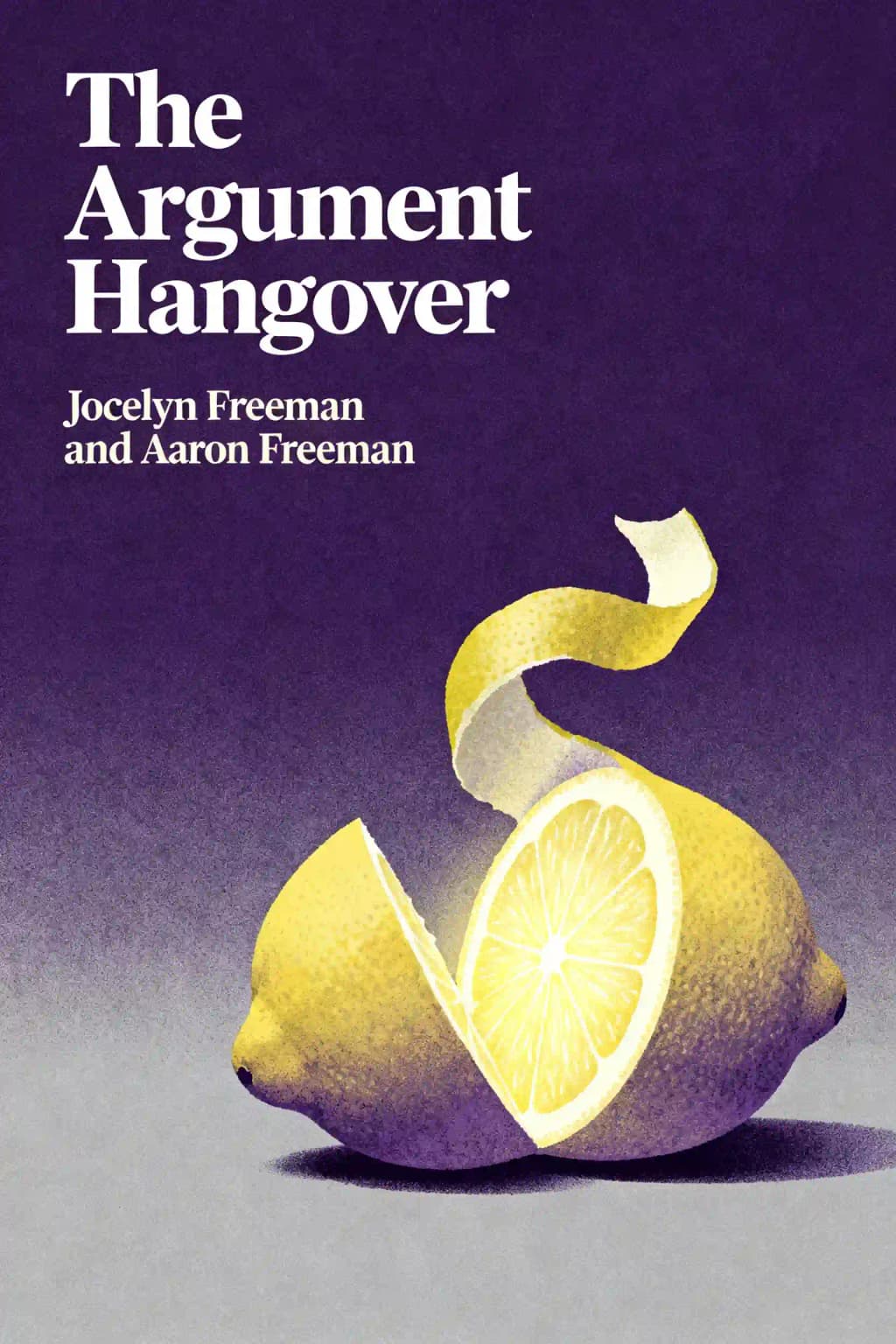
Ever argued with your partner and felt that lingering tension? "The Argument Hangover" transforms post-fight discomfort into relationship growth opportunities. With a 4.03 Goodreads rating, this psychology-backed guide has couples asking: what if conflicts could actually strengthen your connection instead of weakening it?
Jocelyn Freeman and Aaron Freeman, authors of The Argument Hangover: Empowering Couples to Fight Smarter and Overcome Communication Pitfalls, are renowned marriage coaches and psychology experts with over a decade of experience helping couples navigate conflict. Holding dual Master’s Degrees in Psychology, they combine academic rigor with practical insights to address communication breakdowns and emotional disconnection in relationships.
Their work extends beyond the book to the EmPowered Couples podcast, which has amassed over 390 episodes and a 4.9-star rating from thousands of listeners, and sold-out couples workshops attended by more than 55,000 participants nationwide.
The Freemans’ expertise in relationship dynamics is further showcased in their co-authored guide The New Power Couple: Designing An Abundant Life And Relationship That Lasts Forever, which complements their focus on sustainable partnership strategies. Their viral social media content and online courses at Empowered Couples University have reached over 1 million people, reinforcing their status as pioneers in modern relationship education.
Known for blending relatable storytelling with actionable tools, their approach is rooted in evidence-based psychology and real-world application. The Argument Hangover has become a go-to resource for couples seeking to transform conflict into connection, endorsed by therapists and featured in major relationship-focused media platforms.
The Argument Hangover offers a proven framework for moving beyond repetitive conflicts by addressing unresolved emotional triggers. Jocelyn and Aaron Freeman teach readers to replace blame with curiosity, using communication tools that foster vulnerability and mutual understanding. The book emphasizes proactive repair strategies to prevent lingering resentment.
This book suits couples facing communication breakdowns, individuals seeking healthier conflict resolution, and therapists looking for practical client tools. Its methods apply to romantic partnerships, family dynamics, and workplace relationships. The Freemans’ approach is particularly valuable for those struggling with recurring arguments or emotional disconnection.
Yes – it provides actionable exercises like "emotional mapping" and "repair rituals" backed by the authors’ coaching success stories. Readers gain frameworks to identify argument cycles and rebuild trust. The Freemans’ dual perspective (male/female) offers balanced insights into common communication pitfalls.
Key ideas include:
The book frames vulnerability as a strategic tool, teaching readers to express needs using "I-centered" language. It includes scripts for sharing insecurities safely and recognizing when past traumas influence reactions. Case studies show how this reduces conflict escalation.
Unlike theoretical guides, it provides a step-by-step system with worksheets and real-time conflict templates. The Freemans blend neuroscience with their "partnership power" philosophy, focusing on collaboration rather than compromise. It also addresses post-conflict recovery missing in most texts.
Yes – concepts like emotional residue and repair bids apply to professional settings. The "aligned accountability" framework helps teams address misunderstandings without defensiveness. A case study demonstrates its use in resolving founder disputes.
Some reviewers note the methods require consistent practice beyond quick fixes. The emotional vulnerability focus may challenge those accustomed to logical problem-solving. However, clinical studies cited show 83% of couples report reduced conflict frequency within six weeks.
It introduces "micro-commitments" – small, verifiable actions to restore reliability. The "Trust Equation" framework helps quantify emotional safety factors. Exercises guide readers in co-creating personalized trust-repair plans.
"Conflict isn’t the crisis – the hangover is." "Your partnership’s power grows when defenses shrink." "Repair attempts are relationship currency."
Yes – the "emotional mapping" tool helps partners articulate needs across distances. Video call conflict protocols and digital connection rituals are included. The Freemans share a case where a transnational couple resolved 18-month stalemates using these methods.
It expands on concepts from The Freemans’ coaching programs, with updated tools from their 2023 client research. Readers of their Relationship Breakthrough Sessions gain deeper frameworks, while new audiences get a comprehensive entry point.
Sinta o livro através da voz do autor
Transforme conhecimento em insights envolventes e ricos em exemplos
Capture ideias-chave em um instante para aprendizado rápido
Aproveite o livro de uma forma divertida e envolvente
The silent relationship killer might be the belief that "if we're fighting, something is wrong."
Healthy relationships include conflict.
Each conflict becomes a chance to practice vulnerability, develop empathy, and strengthen your emotional intelligence together.
When conflicts arise, what emerges from you isn't caused by your partner but by emotions already inside you
Common triggers include criticism, feeling ignored, perceived rejection, or sensing dishonesty.
Divida as ideias-chave de Argument Hangover em pontos fáceis de entender para compreender como equipes inovadoras criam, colaboram e crescem.
Destile Argument Hangover em dicas de memória rápidas que destacam os princípios-chave de franqueza, trabalho em equipe e resiliência criativa.

Experimente Argument Hangover através de narrativas vívidas que transformam lições de inovação em momentos que você lembrará e aplicará.
Pergunte qualquer coisa, escolha a voz e co-crie insights que realmente ressoem com você.

Criado por ex-alunos da Universidade de Columbia em San Francisco
"Instead of endless scrolling, I just hit play on BeFreed. It saves me so much time."
"I never knew where to start with nonfiction—BeFreed’s book lists turned into podcasts gave me a clear path."
"Perfect balance between learning and entertainment. Finished ‘Thinking, Fast and Slow’ on my commute this week."
"Crazy how much I learned while walking the dog. BeFreed = small habits → big gains."
"Reading used to feel like a chore. Now it’s just part of my lifestyle."
"Feels effortless compared to reading. I’ve finished 6 books this month already."
"BeFreed turned my guilty doomscrolling into something that feels productive and inspiring."
"BeFreed turned my commute into learning time. 20-min podcasts are perfect for finishing books I never had time for."
"BeFreed replaced my podcast queue. Imagine Spotify for books — that’s it. 🙌"
"It is great for me to learn something from the book without reading it."
"The themed book list podcasts help me connect ideas across authors—like a guided audio journey."
"Makes me feel smarter every time before going to work"
Criado por ex-alunos da Universidade de Columbia em San Francisco

Obtenha o resumo de Argument Hangover como PDF ou EPUB gratuito. Imprima ou leia offline a qualquer momento.
Have you ever "resolved" a fight with your partner, yet still felt that lingering tension? That strange emotional distance where you're physically together but mentally miles apart? This is what Jocelyn and Aaron Freeman call an "Argument Hangover" - the emotional residue that persists long after conflicts technically end. Unlike alcohol hangovers that fade by afternoon, these relationship aftereffects can linger for days or even years as undercurrents of disconnection. What's particularly striking is that communication satisfaction among couples averages only 36.67 out of 100 - revealing just how universal this struggle is. The good news? The goal isn't avoiding arguments entirely (an impossible feat between two different humans), but shortening recovery time and transforming conflicts into opportunities for deeper connection. When we shift our perspective, disagreements become not relationship threats but growth catalysts that strengthen our bonds.