Capítulo 1
Time Management: The Ultimate Competitive Edge
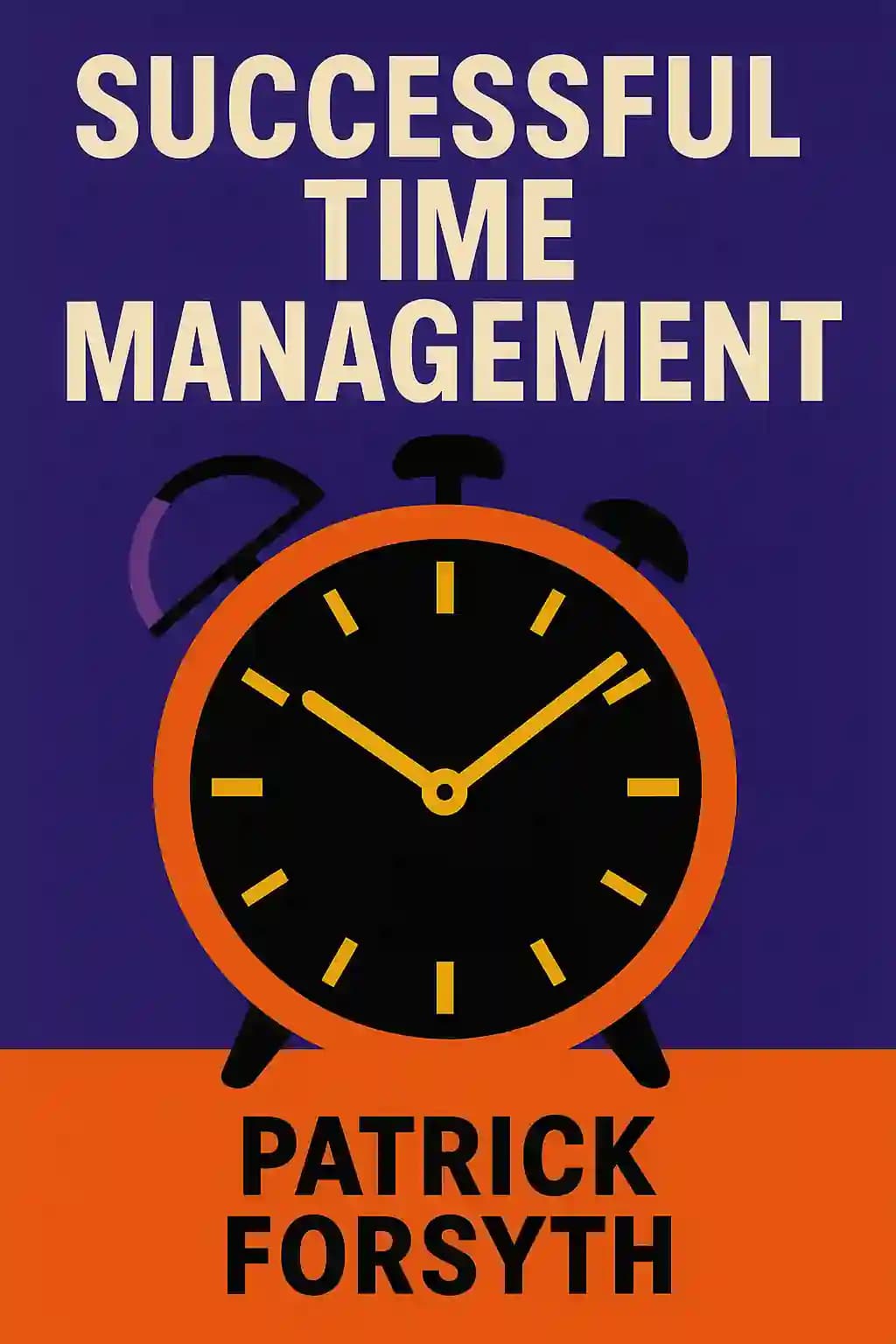
Ever wonder why some people seem to accomplish so much while others constantly struggle to keep up? The difference often lies not in intelligence or talent, but in how they manage their most precious resource: time. In today's hyperconnected world where distractions are endless and demands never cease, mastering time management has become not just helpful but essential for survival and success. Patrick Forsyth's "Successful Time Management" offers a roadmap to reclaiming control of your schedule and maximizing productivity without simply working longer hours. The book has influenced executives at companies like Google and Microsoft, where productivity optimization is part of the corporate DNA. Even Warren Buffett, who famously said "the difference between successful people and very successful people is that very successful people say no to almost everything," endorses the principles found within these pages. With workplace stress at record levels and work-life balance increasingly elusive, the techniques in this book aren't just productivity hacks-they're life-changing strategies that can transform both your career trajectory and personal wellbeing.
Capítulo 2
The Foundation: Understanding Time as Your Most Valuable Resource
Time is the great equalizer-we all have exactly the same amount each day. Yet some people consistently achieve more than others with their allotment. Why? The organizational environment itself often works against us, with hierarchical structures, constant deadlines, endless paperwork, meetings, and various interactions making proper time management difficult. But here's the truth: time management isn't optional for anyone wanting to work effectively, though no one gets it 100% right.
Effective time management rests on two key pillars: how you plan your time and how you implement the details. Good planning creates an essential foundation, while implementation involves countless operational practices and techniques that positively affect your work. These range from simple tactics (like visibly checking your watch to discourage visitors from overstaying) to more complex systems (like well-organized filing).
What's fascinating is how small time savings accumulate into significant productivity gains. Just four minutes saved daily on a regular task adds up to nearly two full working days over a year! We often dismiss such small increments as insignificant when what we think we need are large blocks of uninterrupted time. Yet these brief moments, when properly recognized and planned for, can free up considerable time at minimal cost.
Sometimes the time management paradox requires investing time to save time-a seeming contradiction that can become a barrier to action. The "it's quicker to do it myself" mindset often proves shortsighted. While briefing someone else on a task might take 10-15 minutes initially compared to doing it yourself in 3-4 minutes, if the task recurs regularly, delegation quickly becomes time-positive. The best time managers recognize this equation and make investments that yield ongoing returns.
Remember that perfect time management remains elusive-you'll never eliminate all interruptions or unexpected delays. In dynamic work environments with creative elements, your to-do list will never be completely cleared. As the saying goes, "never let perfection be the enemy of the good." While perfection is impossible, meaningful improvement is always achievable.
Capítulo 3
Creating Your Personal Time Management System
Time management must be personalized to fit your specific job and individual working style. While some ideas can be adopted directly, others will need tailoring to your circumstances. What matters is thoroughly exploring all possibilities, selecting and experimenting with methods that realistically fit your work patterns.
Before improving your approach, you must thoroughly understand your current practices. This assessment provides both a baseline for measuring progress and valuable insights about where the greatest improvements can be made. Self-delusion is common in this area-we may readily admit to spending too much time in meetings while being defensive about poor organization. To get an accurate picture, either estimate your time allocation using a pie chart (dividing reactive versus plannable time) or keep a detailed time log for at least a week. Most people who keep such logs are surprised by where their time actually goes.
Any real progress requires a written plan that's regularly reviewed and updated-typically daily. This rolling plan provides a snapshot of your workload at any moment, showing immediate tasks and future commitments. At minimum, it should include daily and weekly plans, recurring commitments, and a monthly outlook. The system must work for you, clearly distinguish different activities, and link to your diary. Though maintaining this plan takes only minutes daily, it prevents disorganized juggling throughout your day.
While many time management books promote proprietary systems with specific diaries, files and binders, no single system works for everyone. Rather than adopting a branded system that may be restrictive, first determine your specific needs: what kind of diary format suits you, how much space you need for notes, how your tasks should be grouped, and what permanent filing is necessary. The most effective system is one tailored to your specific working style rather than forcing yourself to adapt to a pre-designed structure.
Remember that any plan is only as good as the objectives behind it. Effective time management requires SMART objectives-Specific, Measurable, Achievable, Realistic and Timed. Without clear objectives, you'll struggle to make decisions about priorities and resolve conflicts.
Capítulo 4
The Art of Organization: Creating Structure for Success
Organization and time management are inseparable partners. Good organization creates the right environment for time efficiency, while poor organization insidiously erodes productivity as everything takes slightly longer than necessary. The poorly organized person struggles to locate documents, double-books appointments, "task hops" between competing deadlines, arrives late to meetings, allows paperwork to proliferate, lacks clear priorities, works in disarray, and communicates inadequately.
An overriding principle of good time management is batching your tasks into manageable categories-three or four is ideal. Category names like PRIORITY, IMPORTANT, ACTION NOW, or simply A, B, C work well. Additional categories might include FILE, TELEPHONE, WRITE, DISCUSS, or job-specific groupings. The key is determining which batching system suits your workflow and ensuring it aligns with your physical desk organization.
A clear diary system is essential. Ideally, it should show at a glance both appointments and tasks for the day. Entries should include full details (not cryptic notes like "R B Lunch"), indicate duration, and be written in pencil to allow for changes. The most effective time management systems schedule not just appointments but also dedicated time for specific tasks and thinking time, preventing creative work from being squeezed into gaps between meetings.
How you program appointments significantly impacts productivity. Always allow sufficient time between meetings and schedule both start and end times. Consider factors that affect meeting efficiency: potential for interruptions (early meetings may have fewer), location (meeting rooms versus your office), timing that might extend into meals, and how appointments restrict your ability to schedule other activities.
Despite claims from those with paper-strewn desks that "I know where everything is," disorder rarely accompanies good time management. A tidy desk with a clear system accommodates both the need for organization and the desire to keep current projects visible. One solution is a project tray with a master list of contents, allowing quick status checks while maintaining order.
The internet provides quick access to vast information resources that once required significant effort to obtain. However, "cyberloafing" presents a major time management challenge-what begins as a quick search easily becomes extended browsing, with one thing leading to another. Social media and non-work-related surfing waste enormous amounts of time. Developing good habits and maintaining discipline is essential when using these powerful but distracting tools.
Taking occasional breaks during intensive work isn't counterproductive-it actually enhances productivity. When concentration flags, a brief pause to stretch, make tea, or take a short walk can refresh your mind and help you return with renewed focus. This is particularly valuable when facing seemingly intractable problems, as solutions often become clear after stepping away briefly.
Capítulo 5
Confronting Your Greatest Time Waster: Yourself
The greatest time waster is often ourselves. Three key self-generated interruptions include: putting off difficult tasks, which only become more challenging and costly when delayed; avoiding tasks we dislike, particularly administrative chores that then fall into arrears; and spending disproportionate time on favorite tasks, often over-engineering them while neglecting other priorities. This last tendency can be particularly insidious, as we may unconsciously use preferred tasks to avoid more important but less enjoyable work.
Working in our "discomfort zone" often leads to significant performance improvements. Many people procrastinate on tasks that make them uncomfortable, either consciously or unconsciously rationalizing the delay. This avoidance behavior prevents addressing important issues and can directly harm performance. The rewards for pushing through discomfort can be considerable, whether in increased sales, higher productivity, or other measurable outcomes.
When managing underperforming staff, discomfort often leads to procrastination despite clear benefits to addressing the issue. There are only three options: tolerate poor performance (inadvisable), address the problem through motivation or development, or conclude the person cannot improve and remove them. The second and third options typically involve uncomfortable conversations, causing many managers to delay action despite knowing what needs to be done.
To overcome avoidance of difficult tasks, resolve to actively seek out uncomfortable situations as places where you can achieve results quickly and effectively. When you find yourself procrastinating, analyze why, check that action is possible, fill any information or skills gaps, schedule the action with appropriate priority, and learn from the experience. Making this approach a habit can significantly increase your effectiveness.
Capítulo 6
Managing External Time Thieves: Interruptions and Communications
Interruptions cost more time than just their duration, as you need additional time to refocus on your interrupted work. There are five key responses to manage interruptions: refuse them outright, postpone them to a more convenient time, minimize them by setting time limits, prevent them through systems like "do not disturb" signs, or physically relocate to somewhere interruption-free.
To minimize drop-in interruptions: insist on appointments, establish "do not disturb" times, acknowledge visitors but schedule them for later, avoid starting unnecessary discussions, brief staff to screen visitors, use effective communications to reduce queries, don't invite people to sit down if you want them to leave quickly, set time limits, indicate when conversations are ending, and most importantly, learn to say "no" more often without being rude.
Phone calls can be particularly disruptive. Unlike face-to-face interruptions, callers can't see you, giving you more flexibility in managing these interruptions. To reduce telephone interruptions: brief switchboard operators or assistants about call screening, arrange for colleagues to take calls during focused work periods, establish clear "do not disturb" times, use voicemail strategically, specify when people should call you back, delegate appropriately to direct calls elsewhere, limit social chatter, set time limits for conversations, signal when conversations are ending, and when necessary, be firm about ending calls that waste your time.
Modern telephone technology offers significant time-saving features that reduce wasted time on dialing, redialing and holding. Features like stored numbers, automatic redial, and speakerphone functionality allow you to continue working while on hold-small efficiencies that accumulate into meaningful time savings.
Inaccurate or incomplete messages waste enormous amounts of time through confusion, repetition, and miscommunication. Creating a customized message form that serves as a checklist for the information you need can prevent these issues. Consider using distinctive formatting (like colored paper) to ensure messages stand out, and provide clear instructions about what should be dealt with immediately versus what can wait.
Capítulo 7
Email Management: Maximizing Benefits While Minimizing Distractions
Email offers instant worldwide communication but requires careful management to prevent time waste. While it reduces the need for face-to-face meetings, overreliance can damage relationships and collaboration. The temptation to dash off quick replies must be resisted as confusion wastes time. Though less formal than letters, emails still require appropriate formality depending on the recipient, with clear structure and proofreading.
Email has significant limitations: recipients need computer access, agreements are legally binding, technical problems can disrupt communication, spam is irritating despite filtering software, and security threats like viruses require caution with unknown senders. Most critically, the habit of brevity can lead to ambiguity and misunderstandings. Organizations need firm policies about email usage to prevent time waste and potential legal issues from inappropriate personal messages.
Effective emails must be brief with plain language, direct with clear presentation, and logically structured. Before sending, consider your objective, the background context, who will receive it, appropriate style, clarity of content, what response you need, and what attachments you're including. Since emails lack tone of voice and body language, clarity is paramount.
The longer emails remain untouched in your inbox, the more difficult managing them becomes. A systematic approach requires immediate deletion of emails after handling them, regular culling of the oldest messages, and maintaining a consistent cleaning practice to control volume. Setting aside dedicated time for email management is essential, as is printing out important messages that need physical copies.
Security measures like electronic signatures ensure email authenticity and confidentiality. Digital IDs prove identity in electronic transactions, while encryption provides coded protection for sensitive information. Message tracking features confirm when emails are received and read-particularly important for time-critical communications.
Email communication presents numerous pitfalls beyond just spam and viruses. Avoid writing in all capitals (perceived as shouting), sending unnecessary messages, or using email to discharge responsibility. Never share confidential information or forward others' emails without permission. Instead, be precise to eliminate follow-up checks, reply promptly, maintain appropriate formality, and minimize attachments. Your "email exterior" reveals much about your status, work habits and personality-managers typically use more formal language and avoid emoticons or joke emails.
Capítulo 8
Mastering Prioritization: The Heart of Effective Time Management
The fundamental truth of time management is that no one can do more than one thing at a time. Effective time management involves both increasing available productive time and properly ordering work to focus on the right priorities. The ability to decide priorities easily and accurately is what truly separates the time-efficient from others-a skill worth developing even if perfection is impossible.
Pareto's law-the 80/20 rule-reveals that approximately 20 percent of your work time contributes around 80 percent of what's necessary for job success. This principle appears across business: 20 percent of customers generate 80 percent of revenue; 20 percent of meeting time produces 80 percent of decisions. Identifying which tasks fall into this crucial 20 percent requires careful analysis of your job description and time log.
While focusing on priorities is essential, the miscellaneous tasks inevitably pile up. Rather than ignoring them, schedule occasional "blitz" sessions to clear these accumulated bits and pieces. Though individual items may not be vital, clearing this backlog removes distractions from your desk and systems. Taking an hour occasionally to handle these miscellaneous items-writing names in your address book, answering memos, returning non-urgent calls-clears the decks and puts you back in control, making you more able to focus on key tasks without nagging distractions.
For multi-stage projects, backward scheduling is essential. Rather than starting immediately and discovering midway that you're behind schedule, begin with the deadline and work backward. Estimate time needed for each stage, ensure the total job fits available time, build in contingencies, and consider how the project will interact with other responsibilities. Early planning provides more options, while waiting reduces flexibility and increases the likelihood of disrupting other work.
How tasks are done directly affects how long they take. Regularly reviewing working methods can reveal significant time-saving opportunities. Consider systematizing random tasks, changing methods (like switching from handwriting to typing), collaborating with colleagues for faster results, accepting lower but adequate standards when perfection isn't necessary, or subcontracting tasks to specialists who can complete them more efficiently.
We often waste time on unnecessary tasks through habit, insurance against potential problems, avoidance of new responsibilities, meeting perceived expectations, or maintaining appearances. Combat this by regularly asking "why?" about each task. If the answer is merely "that's how it's always been done," consider eliminating it or reducing its frequency or scope.
Beware of "black hole jobs"-projects that consume disproportionate amounts of time with little return. These typically involve multiple complex tasks, contentious issues, impossible expectations, reputation risks, and enormous time commitments. Examples include organizing anniversary celebrations or office relocations. Such tasks often seek "volunteers" through subtle pressure. Recognize these traps in your workplace and plan to avoid them if they're not explicitly part of your responsibilities.
Capítulo 9
Taming the Paper Monster: Document Management Strategies
Despite promises of the paperless office, paperwork remains a significant time drain that requires strategic management. The key approach involves eliminating unnecessary paperwork, minimizing what remains, and efficiently processing what must be handled. While some paperwork is essential, much can be reduced through thoughtful evaluation of what truly needs documentation.
Before creating documents, question whether they're truly necessary. Consider alternatives like telephone calls instead of written communications. Be judicious with copy distribution-only send to those who genuinely need the information. Standardize routine communications where appropriate, but never sacrifice personalization when individual responses are warranted.
Business communications waste tremendous time through unnecessary verbosity. Succinct, precise writing saves time both for writer and reader. A brief, clear letter or email that directly addresses the essential points is far more effective than lengthy, rambling correspondence filled with extraneous pleasantries.
The "measles test"-marking documents with a red spot each time you handle them-reveals how inefficiently we process paperwork. Many items cross our desks repeatedly before resolution, wasting considerable time. While some documents legitimately require multiple reviews, particularly those involving creative connections between different areas of work, the goal should be handling papers the minimum number of times necessary before resolution.
Studies show approximately 90 percent of filed documents are never referenced again, representing enormous waste. Develop a consistent, personalized filing system with clear categories rather than one giant system. For each document, decide whether to discard it immediately, file it indefinitely, or file it with a destroy/review date. Consider batch filing (temporary A-Z storage before permanent filing) or chronology files (extra copies kept in date order for limited periods) as insurance against premature disposal.
Maintaining multiple copies of the same information in different places wastes valuable time. A quick matrix analysis mapping information against storage locations can reveal excessive duplication. By identifying where information is most frequently accessed, you can eliminate redundant records and streamline your systems.
The waste-paper basket may be your most valuable time-saving tool. Office efficiency requires maintaining order, but this becomes impossible when buried under "just in case" papers. Make immediate decisions about incoming materials-pass on circulation items when busy, extract useful articles from magazines while discarding the rest, and critically evaluate whether "potentially useful" items truly warrant keeping. The author suggests making a full waste basket a daily target, viewing it as a measure of minutes saved rather than volume disposed.
Capítulo 10
Collaborative Time Management: Working Effectively with Others
People interactions in business are both essential and inevitably time-consuming. Whether intentionally or unwittingly, colleagues at all levels will waste your time. Since these interactions cannot be avoided, you must develop strategies to minimize their disruptive effects while maintaining productive relationships.
Organizations are inherently social environments where work relationships blur with friendships. While social interaction builds necessary relationships and makes work more enjoyable, it can easily consume excessive time. Particularly vulnerable moments include mornings when greetings become extended conversations, breaks around the coffee machine, lunch planning discussions, and end-of-day wind-downs. Creating a culture of mutual respect for people's concentration and time requires everyone's participation.
Despite the time risks, maintaining personal connections throughout an organization is essential. "Management by walking about" (MBWA) keeps leaders connected to operational realities beyond formal reporting systems. These informal interactions often save time by eliminating the need for multiple meetings or reports, as direct observation provides immediate insights for decision-making.
While some conflict can catalyze debate and creativity, unnecessary conflict disrupts productivity and wastes time. Areas where conflict should be minimized include communications (persuasion works better than coercion), office politics (which must be kept in check), personality clashes (which can overshadow issues), and sectional interests. When managing change like office reorganization, keeping discussions focused on practical considerations rather than personal issues significantly reduces the time needed to resolve matters.
Recruiting the wrong people inevitably wastes time through poor performance, corrective actions, disciplinary proceedings, replacement efforts, and covering gaps during transitions. While recruitment takes time, it's time well invested. Selecting people who themselves manage time effectively can strengthen any team.
Clear instructions prevent the need to redo work. As communicator, you bear responsibility for clarity. Instructions should specify what needs doing (with sufficient details), why it needs doing (improving motivation), how it should be done, and completion timing. Always confirm understanding through feedback. Written guidelines prove especially valuable for complex or infrequent tasks where even brief reference to instructions saves considerable time compared to working through confusion.
Delegation is perhaps the most powerful time-saving technique available to managers, yet many find it difficult. Good delegation creates development opportunities for staff, builds morale, has broader motivational effects, allows managers to focus on key objectives, and brings fresh perspectives to tasks. The process requires careful monitoring with prearranged check-ins rather than unannounced interference. As Theodore Roosevelt noted, "The best executive is the one who has sense enough to pick good men to do what he wants done, and the self-restraint enough to keep from meddling with them while they do it."
The most powerful time-saving phrase for managers is "What do you think you should do?" When staff interrupt with questions, managers often provide quick answers to minimize disruption. However, this creates dependency and encourages more interruptions. By consistently redirecting questions back to staff, managers teach self-reliance and decision-making confidence. Though this approach initially takes longer than giving direct answers, it gradually reduces interruptions as staff learn to solve problems independently.
Capítulo 11
The Transformation: From Time Management to Life Management
Effective time management delivers crucial benefits: greater productivity, better focus, achievement of objectives, career development, increased job satisfaction, and improved work-life balance. While some techniques become habits easily, others require more effort. The key difference between success and failure is commitment-merely appearing organized without adopting the underlying philosophy won't improve performance.
During difficult times especially, good time management becomes even more essential. Though requiring initial investment of effort, the payoff is substantial-potentially transforming both professional results and personal wellbeing for your entire career. Good time management affects not just organizational results but also personal job satisfaction and well-being. Though requiring commitment and effort-"There is no such thing as a free lunch"-it can quickly change your life for the better.
Successful time management isn't a single magic formula but a series of actions and habits contributing to ultimate success. Like the medieval baker who promised to teach the king's horse to talk to escape imprisonment, progress often comes in steps. There may not be an instant solution that creates immediate efficiency, but there are numerous small steps that collectively make your workload more manageable, helping you meet objectives in a better-organized way.
If you've made changes while reading this summary, return to the assessment exercise suggested earlier and compare your time management status before and after to measure improvement. Consider doing this regularly. Through thought, analysis and creativity, you can enhance your productivity and effectiveness. The process begins with consideration, which becomes a series of habits that can keep you well organized, enhance performance, and potentially transform your life.
Remember that time management isn't just about doing more-it's about doing what matters most. When you control your time rather than letting it control you, you gain not just productivity but also peace of mind. In a world that constantly demands more from us, mastering time management may be the most important skill you ever develop.