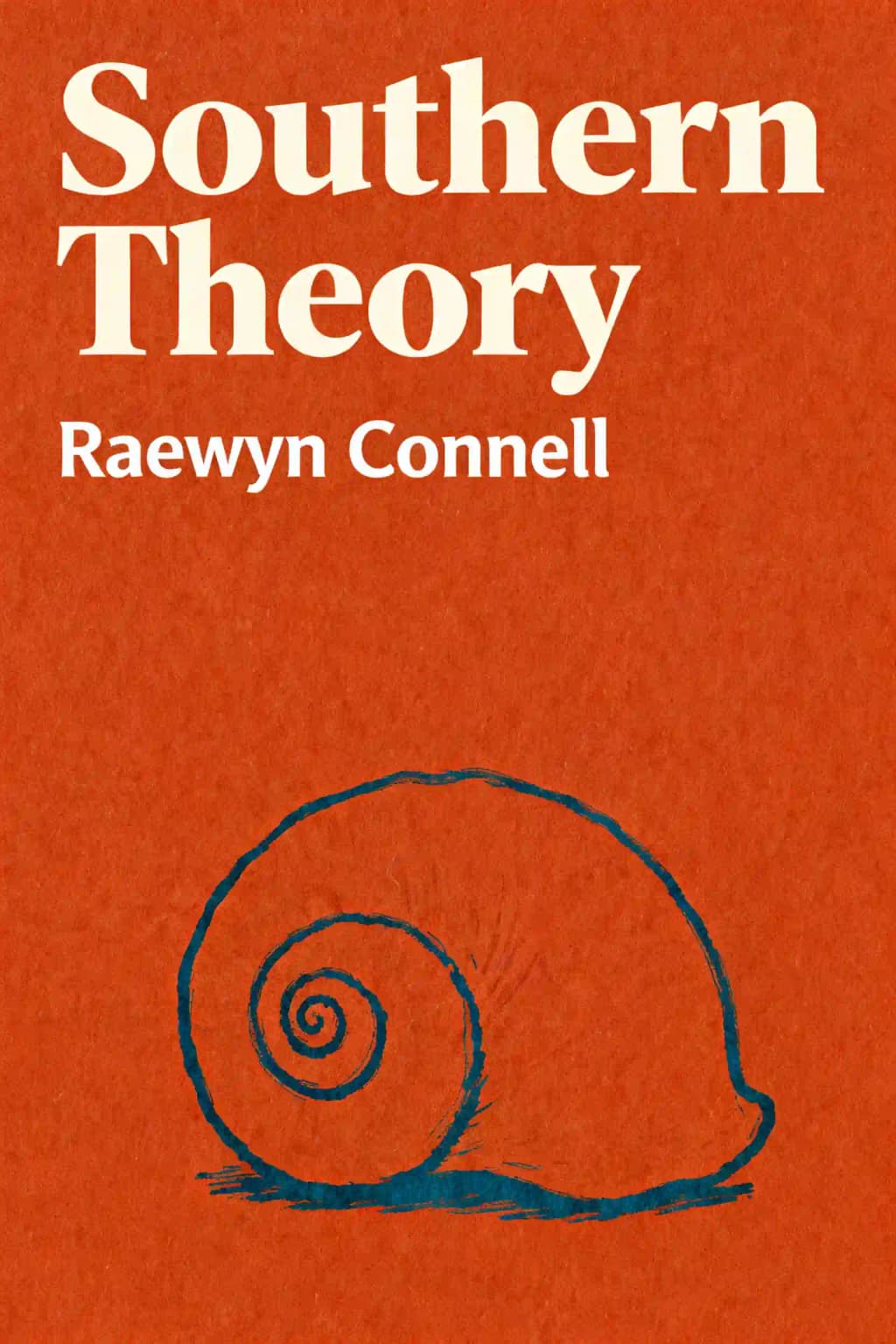
"Southern Theory" challenges Northern dominance in social science by amplifying global South perspectives. What if our entire understanding of society is filtered through a colonial lens? This groundbreaking work has transformed postcolonial studies, prompting scholars worldwide to rethink knowledge production and power dynamics.
Raewyn Connell, an Australian sociologist and a global authority on gender studies, has significantly impacted the field through her exploration of the dynamics of knowledge production, notably in her influential work Southern Theory: The Global Dynamics of Knowledge in Social Science.
As a University Professor Emerita at the University of Sydney and the founder of Macquarie University’s sociology department, Connell revolutionized academic discourse by critiquing Northern-centric social theories. Her extensive research encompasses class dynamics, educational inequality, and gender hierarchies.
Foundational texts such as Masculinities (1995/2005) established her as a pioneer in masculinity studies, while Gender and Power (1987) reshaped feminist theory. Connell's work challenges Eurocentric frameworks by centering marginalized voices from the Global South, reflecting her commitment to knowledge democracy.
A trans feminist scholar, she combines academic rigor with activist insights, contributing to journals like Signs and Theory and Society. Southern Theory has become essential reading in postcolonial studies, translated into multiple languages, and adopted in universities worldwide.
Southern Theory critiques the Northern dominance in social sciences, arguing that mainstream theories marginalize Southern perspectives shaped by colonialism and global inequality. Connell highlights voices from Africa, Asia, and Latin America, showcasing how Southern scholars like Ali Shariati and Vivek Chibber theorize power, resistance, and knowledge production. The book advocates for a democratized global social science that integrates marginalized intellectual traditions.
This book is essential for sociologists, postcolonial scholars, and anyone studying epistemic justice or globalization. It’s particularly valuable for educators rethinking Eurocentric curricula and activists addressing knowledge inequality. Connell’s interdisciplinary approach also appeals to historians, anthropologists, and political theorists.
Yes—it’s a groundbreaking critique of academic Eurocentrism, offering fresh frameworks for decolonizing scholarship. Connell combines rigorous analysis of classical theorists like Durkheim with understudied Southern works, making it vital for understanding global knowledge hierarchies. However, some critics argue it oversimplifies “Northern” academia’s diversity.
Connell exposes how founders like Weber and Comte ignored colonialism’s role in shaping modernity. For example, Marx’s analysis of capitalism omitted its reliance on enslaved labor and resource extraction from the South. This erasure perpetuates a false universality that silences Southern theorists.
Connell argues Northern theories reduce globalization to economics, ignoring Southern epistemologies that frame it as layered imperialism. Examples include Latin American dependency theory and Southeast Asian critiques of "Asian values" discourse.
Imperialism shaped sociology’s birth: 19th-century theorists studied colonized societies to legitimize European domination. Connell shows how this legacy persists in modern research funding, journal hierarchies, and citation practices favoring Northern institutions.
While both critique Eurocentrism, Connell prioritizes material power structures over cultural analysis. Postcolonial theorists like Said focus on discourse, whereas Southern Theory emphasizes economic exploitation and institutional gatekeeping in academia.
Some scholars argue Connell homogenizes “Northern” academia, overlooking critical traditions like Frankfurt School Marxism. Others note limited engagement with feminist Southern theorists or Indigenous knowledge systems beyond state-aligned intellectuals.
The book spurred debates about decolonizing curricula and funding Southern-led research networks. Its frameworks inform UNESCO’s Global Observatory on Science Policy and grassroots movements for epistemic justice.
As universities grapple with decolonization, Connell’s work provides tools to dismantle knowledge apartheid—from reevaluating canonical texts to amplifying Global South journals. It’s increasingly cited in AI ethics discussions about biased training data from Northern contexts.
As an Australian scholar, Connell bridges Global North/South perspectives, having critiqued masculinities and class dynamics before tackling epistemic injustice. Her activist roots inform the book’s focus on democratizing knowledge production.
Sinta o livro através da voz do autor
Transforme conhecimento em insights envolventes e ricos em exemplos
Capture ideias-chave em um instante para aprendizado rápido
Aproveite o livro de uma forma divertida e envolvente
This narrative [of sociology] is fundamentally dishonest.
The colonial connection wasn't merely incidental.
Sociology's foundational belief in inevitable progress shattered.
Modern sociological thinking remains profoundly shaped by its metropolitan origins.
Colonized experience [is rendered] irrelevant to European conceptual framing.
Divida as ideias-chave de Southern theory em pontos fáceis de entender para compreender como equipes inovadoras criam, colaboram e crescem.
Destile Southern theory em dicas de memória rápidas que destacam os princípios-chave de franqueza, trabalho em equipe e resiliência criativa.

Experimente Southern theory através de narrativas vívidas que transformam lições de inovação em momentos que você lembrará e aplicará.
Pergunte qualquer coisa, escolha a voz e co-crie insights que realmente ressoem com você.

Criado por ex-alunos da Universidade de Columbia em San Francisco
"Instead of endless scrolling, I just hit play on BeFreed. It saves me so much time."
"I never knew where to start with nonfiction—BeFreed’s book lists turned into podcasts gave me a clear path."
"Perfect balance between learning and entertainment. Finished ‘Thinking, Fast and Slow’ on my commute this week."
"Crazy how much I learned while walking the dog. BeFreed = small habits → big gains."
"Reading used to feel like a chore. Now it’s just part of my lifestyle."
"Feels effortless compared to reading. I’ve finished 6 books this month already."
"BeFreed turned my guilty doomscrolling into something that feels productive and inspiring."
"BeFreed turned my commute into learning time. 20-min podcasts are perfect for finishing books I never had time for."
"BeFreed replaced my podcast queue. Imagine Spotify for books — that’s it. 🙌"
"It is great for me to learn something from the book without reading it."
"The themed book list podcasts help me connect ideas across authors—like a guided audio journey."
"Makes me feel smarter every time before going to work"
Criado por ex-alunos da Universidade de Columbia em San Francisco

Obtenha o resumo de Southern theory como PDF ou EPUB gratuito. Imprima ou leia offline a qualquer momento.
What if everything you learned about how societies work was built on a lie? Not a small fib, but a foundational deception woven into the very fabric of social science itself. Picture the standard sociology textbook: Marx analyzing capitalism, Durkheim studying social solidarity, Weber examining bureaucracy-all responding to Europe's industrial transformation. Clean. Logical. Complete. Except it isn't. These "founding fathers" weren't just observing factories and cities. They were writing during the height of European imperialism, when Western powers controlled 85% of the world's land. The colonial relationship wasn't background noise-it was the stage itself. Early sociologists justified their new "science" by contrasting "advanced" European societies with "primitive" colonized ones, using race and gender as analytical tools that reinforced imperial hierarchies. When Durkheim penned his foundational texts, French armies were conquering North Africa. The comparative method that gave sociology its scientific credibility depended entirely on viewing colonized societies through what scholars call the "imperial gaze"-a one-way flow of information from periphery to center, treating millions of people as specimens rather than knowledge creators.