Capítulo 1
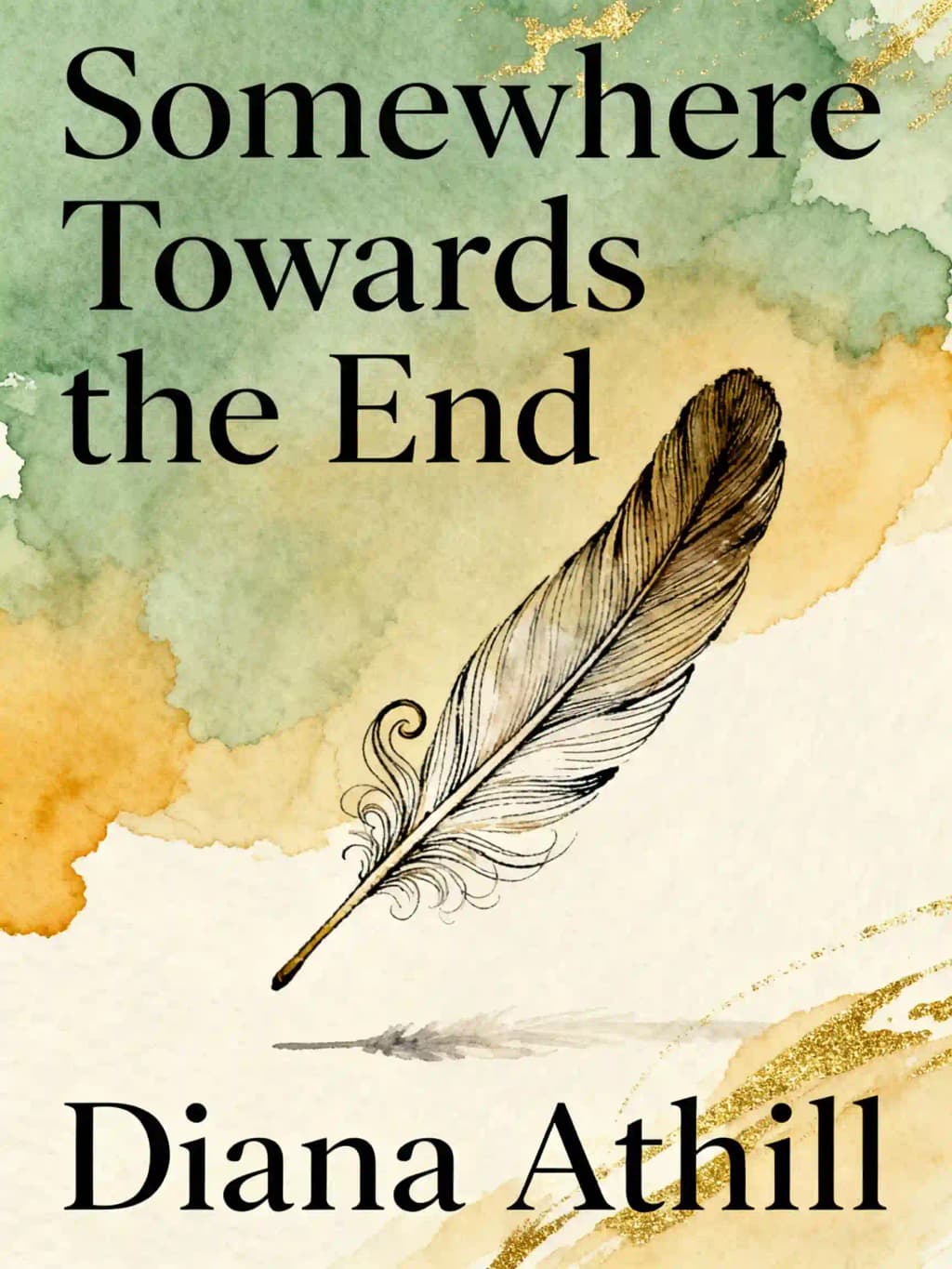
The Journey Toward Life's End: A Memoir of Aging with Grace
Diana Athill's memoir has become something of a modern classic in an unlikely genre: literature about aging. While countless books explore youth and middle age, few examine what Athill calls "the falling away" with such unflinching honesty. When celebrities like Emma Watson and Reese Witherspoon featured it in their book clubs, they praised its refreshing candor about topics society often avoids. The New York Times called it "a luminous memoir of old age," while The Guardian described it as "life-affirming in the truest sense." What makes this slim volume so powerful is Athill's refusal to sentimentalize or despair about aging, instead offering a clear-eyed account of what it means to approach life's end with dignity, humor, and remarkable self-awareness.
Capítulo 2
When Sex Fades: Finding New Dimensions of Self
As I entered my seventies, I realized I had reached old age-no longer navigating the coastal waters of middle age but firmly aground on the shore of being elderly. The most significant change was ceasing to be a sexual being-something that had always been central to my existence. My sexual journey began innocently in childhood with playground "engagements" and romantic daydreams of rescuing boys. At fifteen, I fell truly in love with Paul, whom I expected to marry and be faithful to forever. His infidelity during our engagement revealed my naivety.
After Paul jilted me, I experienced two more painful loves-one with a married man I never expected to leave his wife, another with an "eligible" man who couldn't quite love me back. What followed were years of pleasant but emotionally safer affairs, some with married men, which I never felt guilty about as I had no intention of damaging marriages. I developed a skeptical view of loyalty and fidelity, believing sexual exclusivity is overvalued and sometimes causes unnecessary harm when discovered.
Eventually, I settled into a happy "loving friendship" with Barry that lasted eight years before gradually fading as physical interest diminished with familiarity. I began faking pleasure, never discussing the issue with him. When he had an affair with a young blonde, I felt one night of sorrow, mourning not his betrayal but my lost youth. I soon realized I'd stopped wanting him physically, and our relationship became more like siblings. My sexual life was unexpectedly extended by seven years through affairs with two different men, for which I felt grateful.
As sex diminishes in importance, other aspects of life become more interesting. Sex affects young women differently than men because women's bodies are designed for reproduction. Even with contraception, women's physiology means they can't simply walk away from sexual acts the way men can. A woman's body is designed to build another human being from her substance, creating a bond whether she wishes it or not. Because of this fundamental difference, women often "disappear" into their sexual identity at their physical peak, with many only discovering their true personalities in middle age, if at all.
Capítulo 3
The Clarity of Unbelief: Atheism in Old Age
My atheism crystallized at Oxford in the late 1930s when I met a man named Duncan. When I suggested some kind of First Cause must exist, he replied: "Why? Might it not be that beginnings and endings are things we think in terms of simply because our minds are too primitive to conceive of anything else?" Looking up at the star-filled sky, I felt dizzy elation, accepting this idea instantly as truth.
How can intelligent people believe their human-conceived ideas are universally relevant when we occupy a mere speck in the cosmos and can't explain 90% of what scientists call "dark matter"? Faith-deciding to act as though you believe something without reason-seems like mumbo-jumbo to me. The universe continues regardless of our beliefs, and our smallness within it needn't be boring or frightening. Life itself contains mystery enough without inventing gods.
What explains irreligiosity? Lack of imagination? Courage? Genetics? Religious people of limited intelligence often attribute it to licentiousness, but many unbelievers are as scrupulous about moral obligations as any religious person. To the irreligious, the answer seems simple though embarrassing: they consider themselves more intelligent than believers. But believers see with equal clarity the opposite is true. We must accept there are simply two kinds of people.
My moral compass comes from my Christian upbringing-doing unto others, turning the other cheek, helping those in trouble, being gentle to children, avoiding materialism. I accept Christ's teaching partly from childhood influence and partly because it continues making sense. Beyond ethics, I benefit from the artistic legacy of belief. What moves me in religious art isn't just technical skill but the selflessness-artists representing something outside themselves with utmost respect.
Though indifferent to most religious writing, I make one majestic exception: the Bible. My maternal grandmother's gift for reading these "special true stories" left a permanent impression. When I read biblical stories now, something odd happens-it's as though my adult mind is momentarily replaced by my child mind. The stories unfold exactly as they did when Gran read them, engraved so deeply in my imagination they can't be erased by disbelief.
Capítulo 4
Facing Death Without Illusion
As I advance into old age toward my inevitable end, I face it without religious support, looking to those who've gone before me for insight. Most women in my family lived into their nineties with their wits intact, never needing care homes, outliving husbands with daughters to see them through. This contrasts sharply with my closest friend's expensive end-of-life care, highlighting how fortunate my family has been.
When my mother was ninety-two, I was seventy. She was deaf, partially blind, arthritic, and suffering from angina and vertigo. Though I lived in London, still working, I knew she longed to have me with her in Norfolk. I believed children should look after parents in old age as parents did for them in youth. I compromised by spending four days with her for every three in London.
As my mother's health declined, my anxiety intensified. I'd wake at night listening for her movements, terrified by every cough. This wasn't rational-I knew I could help her through vertigo attacks and that death would eventually be the timely conclusion to a good life-but still I feared her suffering. After a year, I developed dangerously high blood pressure from stress.
Not long after a mortuary visit, I wrote a poem about the white vans with painted-out windows and black vans that transport the dead. These vans carry various bodies-dead junkies, frozen old women, suicides, stabbing victims-and the men who handle corpses seem to despise those who don't, carrying a look of "impatient ribaldry" in their eyes. I realized death "tells nothing because it has nothing to tell"-it's utterly ordinary.
When my mother died at nearly ninety-six, she was incredibly fortunate. The day before her birthday, after planting a eucalyptus tree, she felt unsteady and was taken to hospital with heart failure. It took her two days to die, the first cruel as her body crashed beyond repair. When I arrived, she gave me "a great flash of recognition and utmost joy"-the love I'd never doubted "flaming into visibility." The second day brought morphine-induced calm, where she remained lucid enough to discuss practical matters. Her final words before slipping into her last sleep were about a recent garden visit: "It was absolutely divine."
Capítulo 5
The Unexpected Gifts of Aging
What happens today interweaves with yesterday's events-only those with dementia move to another plane. For the rest of us, we reap what we've sown. One of my best harvests came from lucky sowing long ago.
After accepting my sexual waning, Barry Reckord took his play "White Witch" to Jamaica. He needed a young, inexperienced actress willing to travel cheaply, and found Sally Cary, a farmer's daughter from Somerset. When they returned to England, I was slightly surprised by the seriousness of their relationship, but quickly understood why Barry loved her-Sally was one of the nicest people I'd ever met.
Sally found a bedsitter but struggled financially with infrequent acting work. I suggested she move in with us since she spent most nights with Barry anyway. Our menage a trois seemed odd to others, but I wasn't possessively jealous-I simply enjoyed having a lovely new friend in the house alongside my darling old one. Those next two years were among my happiest.
When Sally's father's health deteriorated, she took a farm management course at Cirencester, where she met and married Henry Bagenal. They took over her father's farm, and their children Jessamy and Beauchamp became like grandchildren to me. Sally blossomed into remarkable motherhood without losing herself, breastfeeding her children until they chose to stop despite criticism. Her children grew into admirably independent adults-Jess becoming a doctor, Beachy equally successful in his way.
Young people provide a valuable counterbalance to an old person's tendency toward pessimism. They remind us we're not just "dots at the end of thin black lines projecting into nothingness" but part of life's continuing river. Their reflections of us in their eyes can provide shots of self-esteem, though one must be careful not to become addicted to their approval or expect them to treat us as peers. Enjoy whatever companionship they generously offer, without making demands.
Capítulo 6
The Joy of Creative Pursuits in Later Life
Beyond relationships, activities matter tremendously in later life. About twenty years ago, London offered nearly-free evening classes in countless subjects. Initially skeptical, I enrolled in dress-making when I became too large for ready-made clothes I could afford. I was astonished by the variety-painting, dancing, plumbing, languages, mechanics-all available at local schools.
When I retired at seventy-five, I followed my mother's example (who had taken up painting in her seventies) and joined a life drawing class near my home. I discovered I was almost alone in attempting to accurately reproduce the model's appearance-most students aimed for abstract "modern art" effects. This seemed an absurd waste to me. Art requires mastery of skill, particularly drawing, which at its best can abolish time and transport viewers directly into the artist's experience.
Since attempting to draw the nude figure, I've concluded that quality in drawing comes from the attention and respect given to the subject rather than mere ingenuity. One needs an object or subject to probe. Non-representational art that merely makes flat surfaces interesting seems to require chiefly self-importance-particularly those canvases of single flat colors that strike me as absurd.
I eventually gave up my second life class when I realized I'd need daily practice to improve, and even then would never be more than an illustrator. Perhaps vanity made me lose interest once convinced my best would never exceed second-rate. I still occasionally draw and wish I had energy to do more as it remains absorbing. Despite my limitations, the classes gave me one positive result: I now see things much better than before-a common benefit of drawing that adds considerable pleasure to one's days, even in old age.
Capítulo 7
The Therapeutic Power of Gardens
Gardening has given me as much pleasure as drawing, but more consistently. In my youth, gardening was done by employees-my grandparents had a head gardener with two men, and we had one man who became increasingly part-time as money dwindled. Even my grandmother, who never dug herself, knew exactly what should happen in her garden. She personally cut back lavender to dry for linen bags and sprayed roses with soft soap solution.
As children we didn't just look at the garden but inhabited it-climbing trees, hiding in bushes, fishing for tadpoles, stealing peaches. We performed regular tasks like picking sweet-peas and berries. Gardens were sources of sensuous pleasure and beauty.
Twenty-six years ago, when my cousin Barbara left for Washington, I suddenly found myself responsible for the garden at my London home. I unexpectedly channeled my mother's spirit, deciding to "take the whole thing out and start from scratch." Though I hired help for heavy work, I did all planting myself, becoming hooked when my first plant grew and flowered.
For years I worked evenings and weekends in that garden, but eventually digging and mowing became too much. I reshaped it into something more manageable that required only fortnightly professional maintenance. By then, I shared my cousin's Norfolk property with its half-acre garden. While she enjoys sitting in it, I run it with weekly help from professional gardeners. I still manage small tasks myself-tying, trimming, weeding, planting-and find it deeply refreshing despite aching bones.
Gardening, like painting or writing, is totally absorbing, offering wonderful release from self-consciousness. Simply sitting in the garden is equally transporting. During a difficult period when Barry was ill, I finally returned to Norfolk and was intoxicated by spring's display-narcissi in drifts, Japanese cherry blossoms, exuberant primroses. Though one might say flowers are merely "vegetable organisms shaped and colored according to natural laws for survival," I choose to believe otherwise.
Capítulo 8
The Unexpected Burden of Caregiving
When discussing old age, we tend to focus on its more agreeable aspects to avoid depressing ourselves or others. But I must admit that much of my time is now spent caring for people older or less resistant to aging than myself. Not everyone ages at the same rate, and eventually most people will either care or be cared for. While the former is preferable, I've failed to understand in advance how unenjoyable it can be. Some people have a natural bent for caring, but I can only speak for those like myself who don't.
I can date the beginning of Barry's illness to January 2002, though his diabetes had started earlier. His doctor had advised that it could be controlled with medication and diet, but Barry only heeded the medication part, assuring me that was all he needed. I knew nothing about diabetes and was relieved it wasn't the insulin-dependent type.
During his ordeal with prostate troubles, I kept a diary for the first time. Looking back, I recall how comfortable it had been that Barry had a competent wife when we first met, so I never worried about caring for him. Even after he moved in with me, our relationship remained undemanding-he did his own laundry and shared cooking duties. As our eccentricities increased over the years, we simply gave each other more space, making our arrangement never claustrophobic.
Though Barry's prostate trouble resolved, his diabetes worsened, requiring insulin injections which he administered himself. Unlike most diabetics who manage well with proper treatment, Barry feels permanently exhausted and rarely leaves his bed. I feel guilty about not controlling his diet with an iron hand, but it seems impossible-he refuses to eat properly and sneaks out to buy sweets when I'm gone, only becoming sensible when his blood sugar spikes dangerously.
The worst part is how his energy has drained away, taking his interests with it. This intelligent man now reads nothing but crime fiction, never finishing a book. He watches only sports on television, often turning away even from that. Days pass with him saying nothing beyond asking about meals or library trips. With food as his only pleasure, depriving him seems cruel, and I sometimes wonder if shortening a severely diminished life by eating doughnuts truly matters.
I sometimes wonder what keeps me and countless other elderly spouses going through these motions of care. The answer seems metaphorical: obligations grown from love, however different they now appear, remain part of the same organism. They become effortlessly binding despite being unwelcome. There's no real alternative.
Capítulo 9
Finding Meaning in Life's Final Chapter
The activities I escape into are mostly ordinary things that have become more valuable with age, enjoyed with increasing intensity because I know I won't enjoy them much longer. But easily the best part of my old age has been discovering I can write.
Unlike most writers who know early on that writing is their calling, I was surprised by writing twice in my life. Without hitting a certain rhythm, my sentences are dead. With it, sentences flow as though on their own. My dependence on specific stimulus seems proof I'm an amateur, though writing remains what I like doing best.
By the time I retired at seventy-five, I hadn't written for years because nothing had happened needing therapeutic writing. When people suggested I write about my publishing career, boredom descended-until I began remembering incidents with enough pleasure to scribble about them. The early days of starting our firm with almost no money proved particularly enjoyable to recall, but I couldn't imagine plodding through thirty subsequent years.
Writing books in my eighties proved absolutely delicious for three reasons: the unexpectedness, the lightness (as my self-esteem no longer depended on others' perceptions), and freedom from shyness. I discovered a closet exhibitionist who loved making audiences laugh, and found book promotion a treat rather than a chore. The experience made my life, which I'd long seen as one of failure, nothing of the sort!
The absence of regret that surprises me most is about childlessness, despite once passionately wanting a child and losing one. I believe I was born with uncommonly little maternal instinct. As a child I despised dolls, preferring stuffed animals. At nineteen, studying a month-old baby, I felt nothing-I'd rather pick up a puppy. This worried me, but I assumed love would come with having my own child.
Nevertheless, when at forty-three my body pushed me into pregnancy, something buried deep inside woke up. Though I'd terminated previous pregnancies without hesitation, this time I found myself making excuses not to arrange a termination. When I realized I wasn't going to end the pregnancy, I experienced happiness so astonishingly complete that I still remember it with gratitude. Any child emerging from that experience would certainly have been loved.
But it didn't emerge. I miscarried early in the fourth month of what had been the happiest months of my life. The miscarriage nearly killed me-I was rushed to hospital in a pool of blood, barely conscious as they transfused me. After the operation, as I vomited from chloroform, I felt peace restored in my belly. A wave of perfect joy swept through me: I AM STILL ALIVE! This intense sensation swept away grief for the lost child.
Capítulo 10
The Capaciousness of a Single Life
How successfully we navigate old age depends more on luck than effort. I speak only for the fortunate, but there are more of them than one might suppose, because fortune comes partly from within-the greatest luck being built-in resilience.
Alice Herz-Sommer, at 103, exemplifies this resilience. Born in Prague to cultured Jewish parents, she became a brilliant pianist before Hitler's invasion destroyed her life. She survived Theresienstadt concentration camp, though her husband perished. After the war, she found her home emptied of family and friends. She raised her son in Israel, only to endure his sudden death when he was sixty-five.
Yet today she lives alone in a London flat, still radiantly joyful as in photos from her youth. She plays piano three hours daily, finding work "the best invention." Without religious support, she believes we're all born "half-good and half-bad," but chooses to "look only for the good." She says, "Life is beautiful, extremely beautiful. And when you are old you appreciate it more."
One doesn't have to end a book about aging with a whimper, but it can't end with a bang either. Looking back, I see that a human life, though brief in universal terms, is amazingly capacious, containing many opposites: serenity and tumult, heartbreak and happiness, coldness and warmth.
Most lives swing between ups and downs rather than plunging conclusively into extremes. Many seem to return to their starting point, as if drawn back to an innate norm. I believe I am complacent, having started life wrapped warmly in my family's belief that we were "the best kind of people possible short of saintliness"-a belief common in the upper English middle class, reinforced by pride in being English with all those pink bits on the world map that were "ours."
Global warming looms even if I won't see much of it. The capaciousness of life reminds me of its opposite-the tininess of an individual existence. Yet each "self" contributes something to the world. To think our existence pointless would be absurd; we should try to conduct it properly. An individual life merits honest examination.
What dies is not a life's value but the worn-out container of the self. The difference between being and non-being remains shocking despite its commonness. What I would like to say at the end is: "It's all right. Don't mind not knowing." And I hope that occasion doesn't come very soon.
The tree fern now has nine fronds each measuring about twelve inches long. Within days of each frond unfurling, a little green nub appears in the fuzzy top of the trunk. This nub grows slowly at first, then faster-so much faster you can almost see it moving. I was right that I'll never see it become a tree, but I underestimated the pleasure of watching it be a fern. It was worth buying.