Capítulo 4
Letting Go: Abdicate What Doesn't Serve You
To make room for what matters, we must abdicate what doesn't. This means relinquishing physical possessions, emotional baggage, and outdated commitments that consume our resources without contributing to our happiness.
When Horn announced her Year by the Water, reactions were mixed. While most cheered, some questioned her sanity or implied she was being irresponsible. One consultant warned she'd "fall off clients' radar." When faced with naysayers, determine whether they truly have your best interests at heart. Research shows successful habit change depends on surrounding yourself with encouraging peers. True friends show up and help dreams come true; "five percenters" want to control and keep you small because they see your happiness as a threat.
Possessions first own us, then they own us. George Carlin brilliantly riffed on how we spend endless time buying, cleaning, moving and repairing our "stuff." When Horn gave away 95% of her possessions before her Year by the Water, it was one of the most freeing experiences of her life. Following Mary LoVerde's example, she invited friends to take items they'd appreciate rather than haggling with strangers. The joy of giving things to appreciative new owners far outweighed any attachment to material goods.
Decluttering gives a disproportionate boost to happiness. One woman followed Marie Kondo's approach drawer by drawer, keeping only items that were beautiful, functional or meaningful. For the first time in years, she looked forward to coming home. Americans have three times more space than fifty years ago yet still need storage-the personal storage industry is worth $24 billion, with more facilities than Starbucks, McDonald's and Subway combined. Most people never visit their units, essentially paying $125 monthly ($1,500 yearly) to store things they don't use.
Sometimes we need to abdicate commitments, not just possessions. Horn describes driving through a hurricane because she'd been taught to keep commitments no matter what. When she finally called to cancel, the relief was immense. Sometimes it's not rude to opt out; it's the right thing to do. What situation isn't working for you anymore? Could you have an honest conversation to find options that benefit everyone? Your happiness depends on your willingness to speak up instead of continuing the same old patterns.
Capítulo 5
Taking Action: The Courage to Begin
You don't need to be courageous to pursue your dreams; you just need to trust you can figure things out along the way. When Captain Jen invited Horn to take the helm of her 74-foot schooner, Horn eagerly accepted, experiencing that perfect moment when all elements come together and everything feels gloriously right.
People kept asking how she got the courage to embark on her adventure alone. She realized another pivotal event had prepared her: choosing Recreation Administration as her college major despite pushback from adults who urged more "serious" fields. Her father gave her W.H. Murray's quote about commitment, advising: "When you don't know what to do, go with your gut and take the bolder option."
As Tina Fey says, "You can't be that kid standing at the top of the waterslide, overthinking it." Miki Agrawal exemplifies this-she left Wall Street to open WILD, a farm-to-table restaurant with gluten-free pizza, despite having no food industry experience. This bold move led to award-winning restaurants, two books, and global speaking engagements. Sometimes it's better to start with an open mind rather than a perfect plan.
Our intuition-that "voice that doesn't use words"-guides us toward unexpected delights when we pay attention. By canceling a train ticket and driving instead, Horn discovered Marineland and had a magical encounter with Zach the dolphin. These nudges aren't just random thoughts; they're internal guidance systems that alert us to opportunities just as they warn us of danger.
To benefit from intuition, we must build time and space to follow nudges when they appear. Serendipity isn't accidental-it requires intention. We must make our intentions tangible by writing them down, get quieter to hear the whispers, stay alert to congruent people and events, honor instincts instead of overruling them with intellect, and act quickly on aligned opportunities. When we cooperate with life instead of controlling it, everything gets better.
While driving California's Pacific Coast Highway at night, Horn nearly drove off a cliff trying to let an impatient driver pass-a stark metaphor for how habitually putting others first can be dangerous. Self-sacrifice comes at a price: we lose our equilibrium and compromise our health and happiness. Worse, we teach others that we don't count. Though service to others is noble, it becomes unhealthy when we completely remove ourselves from our own story.
Despite her intentions for a Year by the Water, Horn spent the first three months in cities, business hotels, and office buildings far from any shoreline. The "rubber band of routine" had snapped her back to her habitual patterns. To prevent reverting to old habits, we need clear boundaries with specific metrics-not vague intentions. Setting tangible numbers to our boundaries makes them enforceable rather than wishy-washy.
Capítulo 6
Celebrating the Present Moment
Life Hack 5 offers various ways to enjoy life in the present moment, even during difficult circumstances. While stressful situations may be beyond your control, there are small daily actions that can make life worth living.
During a mastermind retreat in Corona del Mar, Horn's friend Mary introduced the concept of a morning practice-those first minutes of the day we can control that set the tone for everything else. Spending just ten minutes on "goals and gratefuls" has become the lead domino of good days, helping live in what Dale Carnegie called "day-tight compartments" or what Horn calls "day-right compartments."
Journaling offers a tangible way to "get what's bothering us off our chest and onto paper" rather than letting it swirl around in our heads. Research from Yale, Stanford, and Harvard confirms that gratitude journals can improve immune function, reduce illness and anxiety, and strengthen relationships. Like exercise, journaling might not always feel appealing but consistently delivers rewards.
Meditation offers another path to living in day-right compartments, especially during tough times. Golbie Kamarei introduced meditation to BlackRock, a Wall Street financial institution managing trillions, where ambition and stress run rampant. What began as one class attended by sixty "suits" expanded to sixty locations worldwide. The key benefit wasn't just improved performance and productivity, but that stressed-out professionals stopped trading internal well-being for external success.
Henry Miller observed that giving close attention to anything, even a blade of grass, reveals a magnificent world. National Geographic photographer Dewitt Jones shares a story about being frustrated during a shoot when a little boy with a pink plastic camera kept interrupting him. When the boy asked, "Does yours have juice in it?" Dewitt realized he was looking at the world with exasperated eyes while the child viewed it with awe.
Movement is essential to life. After injuring her ribs in a fall, Horn experienced firsthand how quickly one can shift from being an active participant in life to becoming a passive spectator. This sedentary state led to a loss of enthusiasm and initiative-a "stultifying" effect that made her feel removed from life rather than part of it. She discovered that movement equals mood: the more sedentary we become, the more depressed we feel; the more active we are, the more energized we become.
Many people report being "too busy" for basic activities like voting, making friends, sleeping, or even having sex. Horn questions why we wear busyness as a badge of honor, suggesting it might be because we need to feel productive and important. Many people believe fun is something to do only when work is done-but since work is never truly finished, this leaves no time for enjoyment. This "Protestant Work Ethic" ties our worth to how hard we work, making us feel we must earn the right to have fun.
True wealth isn't measured by money but by meaningful moments. While many believe money will bring happiness, studies by the Gallup World Poll surveying 1.7 million people found that happiness peaks when people earn between $60,000-$75,000 annually. Surprisingly, earning more than this "threshold amount" can actually lower overall life satisfaction. The "Hedonic Treadmill" explains why wealth doesn't guarantee happiness-we pursue pleasurable things believing they'll fulfill us, but once achieved, the thrill fades and we chase the next thing.
Capítulo 7
Building Your Support Network
Life Hack 6 shows how to affiliate with people who support your Top Priorities, expedite their success, and make them even more rewarding. When we launch our dreams publicly rather than privately, we create a "rising tide" effect where 1+1=11.
Captain Ray Ashley demonstrated this when building the San Salvador ship replica. Despite initial budget constraints, building in public view attracted fifty volunteers who contributed expertise and resources. When they faced crises-from contaminated epoxy to needing 180,000 pounds of lead-volunteers connected them with solutions. Similarly, during Horn's Year by the Water project, launching publicly brought offers of cabins, connections, and support that made her journey financially feasible and more meaningful.
J.C. Chamberlain exemplifies the power of asking for help. Approaching his fiftieth birthday, this former nationally ranked athlete decided to attempt breaking a cycling world record. After announcing his intentions publicly, people rallied to his cause-one connected him with an Olympic coach, another offered a velodrome contact, someone suggested a hyperbaric chamber, and a videographer volunteered to document his journey. These connections increased his chances of success while creating accountability.
Making your dream project visible increases its viability. At a writing retreat, a participant named Julie worried her writing ambitions would fade once she returned home. The solution? She drafted her book cover and posted it on her refrigerator where she'd see it daily, and joined a writers' support group. Research supports this: a TD Bank survey found 82% of small business owners who used vision boards accomplished more than half their goals.
Can you feel connected when completely alone? During her Year by the Water, Horn discovered you absolutely can. Driving through Texas Hill Country at golden hour, she was awestruck by a golden field stretching to the horizon. Pulling over in complete silence, she felt deeply connected-to the place, to the magnificence of that moment, and to her own gratitude. This wasn't loneliness; it was connection in its purest form.
Many of us don't get enough alone time in our crowded lives. Being alone doesn't mean being lonely. Visiting Lincoln's Cottage in Washington D.C., where Lincoln wrote the Emancipation Proclamation, Horn was struck by its sparse furnishings-just a desk, chair, table, and minimal decoration. The walls seemed to whisper "Space to think." Lincoln wasn't anti-social; he was pro-solitude. Like many inventors and artists who need isolation for their best work, he understood the necessity of balancing solitude with socialization.
Capítulo 8
Blending Passion and Profession
Simon Sinek wisely distinguishes: "Working hard for something you don't care about is called stress. Working hard for something you love is called passion." This life hack focuses on bringing together what you love with how you make your living.
Why see work and recreation as separate when you can blend them? Horn's tennis buddy Kathy, a realtor who thought she had to give up tennis to focus on business development, discovered she could play with resort guests who were potential clients. By connecting with visitors at luxury hotels, she stayed fit doing what she loved while naturally meeting qualified buyers-the best of all worlds.
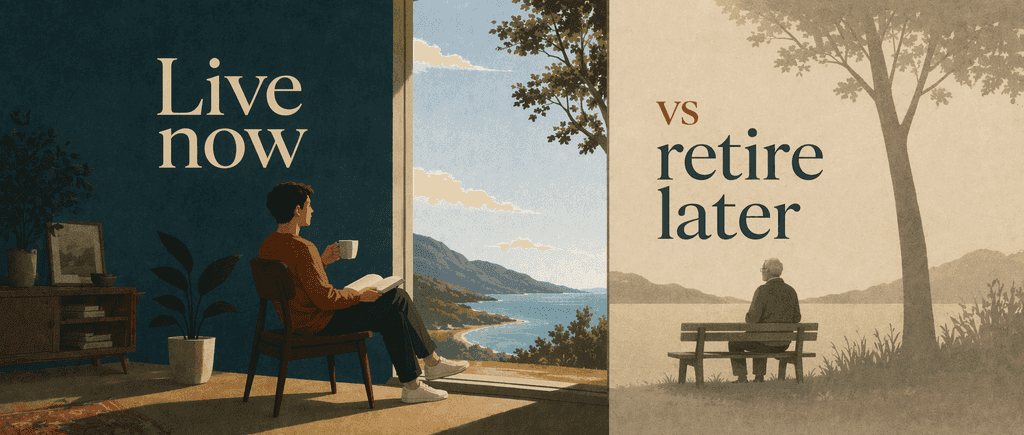
The current retirement model is broken; waiting until 65 to do what we want is absurd. Like Horn's dad who postponed his dream of touring National Parks, many postpone joy until health or freedom has diminished. Two women she met camping demonstrated the right approach-taking breaks now rather than waiting for a "less busy time." As one said after meeting a client who bought his dream RV too late: "I waited too damn long, and now I'm too old to enjoy it."
So many people viewed Horn's Year by the Water as a "vacation" rather than what it was-a working vacation. Like Frank McCourt who taught English while writing his Pulitzer Prize-winning memoir, we can pursue our passions alongside our professions. A corporate photographer she met transformed his IT job by volunteering his photography skills for company events, making his workplace a place where "everybody knows your name."
We spend a third of our lives at work-it's not okay to be unhappy for that long or to simply hope things get better someday. Take responsibility for making your job fulfilling. A family friend who worked in security at Hickam Air Force Base parlayed his golf skills into rounds with visiting dignitaries, creating experiences he never would have had otherwise.
Work we love doesn't just exist out there waiting to be found-it emerges from doing what we're good at. Horn created her career as an Authorpreneur by following her Four I's Career Compass: Instincts (taking the unconventional path), Interests (studying Recreation Administration because she loved sports), Integrity (prioritizing making a difference over money), and Initiative (actively pitching herself for opportunities).
Instead of copying experts' work, create your own intellectual capital through "street interviews" with everyday people. Horn's W Quiz helped develop her methodology by asking questions like: What does concentration mean to you? Who taught it to you? When do you concentrate well or poorly? What's your best advice? These interviews immerse you in your subject, address current needs, and offer real-life insights.
Farmers' markets and craft fairs are full of Today, Not Someday stories. Lisa Schalk turned homemade toffee gifts into Toffee to Go, eventually buying a 16,000-foot warehouse and being featured in Oprah's magazine. A retired teacher couple created "Pretty Darn Good Salsa" after party guests loved their recipe, now selling at weekend events while "paying for their retirement."
Capítulo 9
Advocating for Yourself: The Art of Negotiation
Life Hack 8 provides win-win ways to advocate for yourself and speak up for your rights to improve personal and professional relationships. Rather than waiting for things to come your way, you'll discover how to be proactive, quit watering dead plants, and stop ordering pasta you don't want.
During a NYC dinner with her son Andrew, Horn ordered pasta at a vegan restaurant despite not wanting it-simply to avoid making waves. Andrew confronted her: "Mom, why did you order something you didn't want?" This revealed her lifelong habit of mind-reading and anticipating others' wants to make them happy, creating confusion instead of clarity.
Many of us become such habitual people-pleasers that we no longer know what we want. We've sublimated ourselves so often that our needs vanish from our radar. Like the refrigerator covered with photos of her sons but none of her, we take ourselves out of the picture of our own lives. Next time you're about to say yes when your gut says no, ask yourself, "Am I ordering pasta I don't want?"
When Horn joined Open University in D.C., she accepted half her previous salary because she believed in their mission and loved the work. Despite boosting revenue with new course ideas and effective copywriting, after a year with no recognition or raise, she felt taken advantage of. Finally, she confronted founder Sandy Bremer, declaring she deserved a raise. She calmly replied, "You're right. I was wondering when you'd have the courage to ask." This taught her that our happiness is in our hands-it's not someone else's responsibility to give us what we deserve; it's our responsibility to ask for it.
When unhappy with a situation, we have only four options: avoid it (suppress or deny), argue about it (complain), accept it (decide it's "just how it is"), or alter it (take action to improve it). A female engineer chose to alter her situation by proposing reduced hours and a "new mom room" at work instead of quitting her job. By making a thorough case showing how her responsibilities would still be met in 30 hours and how a private room would honor female employees, her boss approved immediately-creating a win for both her and her employer.
To successfully negotiate what you want, follow these five persuasion principles: 1) Believe in the value of what you're proposing-decision makers "bet on the jockey" and need to trust your confidence; 2) Anticipate objections and address them first; 3) Number your points to demonstrate organization and expertise; 4) Use their language and focus on their needs, not yours; and 5) Create a two-way conversation with "Wouldn't it be wonderful if...?" questions that help them visualize your proposal.
Capítulo 10
Creating Fresh Starts and New Beginnings
When a situation in your life remains unsatisfying despite taking action, Life Hack 9 shows additional ways to alter a soul-sucking situation. You'll discover it's never too late to innovate a fresh start, regardless of what you're dealing with.
When 25-year-old Matt came home dejected after his boss dismissed his innovative ideas with "just do your job," Horn encouraged him to dream despite his college debt burden. By reaching out to travel bloggers he admired and following their advice to start local with blogging and videos, Matt eventually moved to South Korea, first teaching ESL and later managing a search firm while having adventures worldwide. He continued paying off his loans but did so while experiencing rewarding work and overseas adventures-all because he stopped "watering dead plants" in a soul-sapping job.
You know you're watering a dead plant when you've been "hitting your head against a wall" for months or years with no improvement. If you've done everything to improve a situation-examined yourself, changed your approach, offered solutions-and nothing's changed, it's time to stop watering that plant. Fresh starts require your initiative, as Lisa discovered when her controlling manager blocked her promotions. Her mother suggested getting involved with the Chamber of Commerce, opening a new path forward that led to her becoming Program Chair and President Elect.
Sometimes perseverance becomes foolishness. Ed and Cyndi Justice, owners of Talk Story Bookstore in Kauai, demonstrate the power of quitting what doesn't work. Despite industry trends pushing diversification, they discovered "Coffee sells coffee. Books sell books." By abandoning unprofitable ventures and focusing solely on their core business, they thrived. Like Michelangelo who created David by "chipping away everything that wasn't David," they succeeded by removing everything not aligned with their priorities.
When you're trapped in circumstances you can't escape, find ways to compensate-what Horn calls the "Godfather Plan." Make your mind a deal it can't refuse. Lana, a USC film school dropout forced to work at a post office to care for her sick parents, found her light by volunteering with the Hawaii International Film Festival. You need not just a light at the end of the tunnel, but a light in the tunnel right now-something that puts the light back in your eyes.
Our lives can become like aircraft carriers-so massive and momentum-driven they're nearly impossible to stop or redirect. Even successful careers can lock us into patterns that prevent exploration of new possibilities. As Horn told transformational leaders in Costa Rica, we must decide whether to continue on our current trajectory or "jump ship." George R.R. Martin's contemplation of abandoning his "Game of Thrones" series raises the question: "Whose life is it anyway?" After decades of pleasing others, do we have the right to change direction?
Even if your career is headed in a good direction, is it the same direction it's been going for decades? You don't have to jump ship completely-perhaps you can fly off the carrier occasionally for side trips, or steer your carrier to explore different waters. Many successful people feel trapped by their obligations, wishing for simple pleasures like watering their garden or enjoying an uninterrupted dinner. Remember: the only way to sustain a life of service is to also serve yourself.
Capítulo 11
Finding Your Place in the World
Sometimes the best way to develop new eyes is to seek new landscapes, despite what Proust suggested. If you've tried everything else and your life still isn't what you want, it may be time to move out and move on. Sometimes the grass really is greener elsewhere.
After retiring and divorcing amicably, Gael Sherman used her teacher's pension to buy a round-the-world ticket, inspired by Rita Golden Gelman's "Tales of a Female Nomad." She eventually settled in San Miguel de Allende, Mexico, where she co-operates a school for the blind. Her urgent message: "The world is friendly." Similarly, 82-year-old Richard explained that relocating doesn't mean abandoning family-technology keeps connections strong while allowing exploration of new places "where the stars kiss the ocean."
Sometimes the grass truly is greener elsewhere. Environment matters-when we "stay put" everything reminds us of who we've always been. Jennifer couldn't stop thinking about her ex-boyfriend because her apartment triggered memories of their relationship. After relocating to a riverside apartment with the same rent, she reported, "I don't even think about him anymore. I've moved on." Moving to a new location can facilitate moving on mentally and emotionally, providing the geographical support needed for personal transformation.
You don't need something "wrong" to relocate. Sometimes it's about recognizing that staying where you are means staying who you are. Psychologists distinguish between "roots people" who thrive on familiarity and stability, and "wings people" who come alive with flexibility and variety. Neither approach is superior, but recognizing your preference is crucial for your happiness.
Returning to your roots can provide valuable insights into who shaped you and why. Visiting New Cuyama, California after thirty years away, Horn reconnected with formative places: the elementary school where a librarian gave her an identity, the tiny family home, the football field where the town gathered. Thomas Wolfe got it wrong-we can go home again, and it's often a trip worth taking. As Jennifer Lopez says, "No matter where I go, I know where I came from." Knowing our origins centers us in who we really are.
Sometimes "home" isn't where you grew up but where you were your best self. Neil Phillips, a former Harvard athlete and respected headmaster at Landon School, realized he had lost his passion when he couldn't even muster the energy to play basketball on vacation. Despite concerns about letting people down and financial security, Neil followed his dream to create "Visible Men," an organization providing positive role models for young Black boys. By hosting a basketball-camp fundraiser with sportscaster James Brown, he set the wheels in motion, eventually founding the thriving Visible Men Academy in Sarasota, Florida-clearly his life's work.
Home doesn't have to be a physical structure or a single place-it can be a state of mind. Like Ram Dass who once walked into an empty hotel room, felt homesick, then stepped outside and walked back in calling "I'm home!"-we can create home wherever we are. Being connected through technology to loved ones and paying attention to our surroundings creates a sense of belonging that transcends physical location. True nomads aren't homeless; they're at home everywhere they go.