Capítulo 4
The Punisher Rises
Rodrigo Duterte cultivated an image as a common man despite his privileged background. Though he portrayed himself as "born poor," he was actually the son of a provincial governor, raised with bodyguards, cooks, and drivers in a politically connected family. Young "Rody" was a troubled youth who skipped school, joined gangs, drank with his father's police bodyguards, and got into fights.
At 27, he shot a fraternity brother named Octavio Goco who had bullied him over his Visayan accent-an incident he later boasted about, though Goco survived. Despite mediocre academic performance, Duterte became a prosecutor through political connections when his mother approached her late husband's colleague for help. His political career began when his mother Soledad "Soling" Duterte, who had led the Yellow Friday Movement against Marcos, declined the position of OIC vice-mayor of Davao City and suggested her son instead.
The Davao that Duterte inherited in 1986 was known as "murder city" and "crime capital," a sprawling urban landscape plagued by violence, poverty, and Communist insurgency. During his second term as mayor, a new pattern of killings emerged targeting petty criminals and drug users. A group that came to be known as the Davao Death Squad (DDS) emerged, composed largely of "former New People's Army partisans and some policemen."
Despite finding human remains at the Laud quarry burial site, the Commission on Human Rights' 2012 report could only conclude there was "circumstantial evidence" of the DDS's existence. The Coalition Against Summary Executions documented 1,424 deaths attributable to the DDS between 1998 and 2015, noting a lull when Duterte was in Congress and spikes during his mayoral terms.
Two key witnesses later emerged. Edgardo Matobato, a self-confessed DDS hitman who claimed to have killed at least fifty people, testified that Duterte ordered killings. Police Chief Master Sergeant Arturo Lascanas initially denied these claims but later recanted after a religious awakening. Lascanas eventually confessed to numerous murders on Duterte's orders, including mosque bombings, the killing of a journalist, and executions of drug dealers. Despite these testimonies, Duterte maintained there was no need for a death squad since he "had a police department," though he had previously stated "Am I the death squad? True. That is true."
Capítulo 5
The Duterte Defense Squad
"Where I come from, most of the people were Duterte," Ann Valdez explained about her hometown. The statement was telling-residents didn't just support Duterte, they identified as him, embodying his values and worldview completely. For Ann, to be Duterte was to belong after a lifetime of searching for family connection. At twenty-five, she finally found the father figure she'd been seeking since childhood. She called him Father and proudly identified as DDS-not Davao Death Squad, but Diehard Duterte Supporter.
The Duterte political dynasty had dominated Davao City for decades, circumventing term limits through family succession. This dynastic control was so complete that "Davao meant Duterte and Duterte meant Davao." The Duterte Defense Squad emerged after Sara Duterte punched a sheriff during a demolition dispute, with the rallying cry "WE DEFEND OUR MAYOR." This movement evolved into numerous variations-Digong Duterte Supporters, Duterte's Destiny's to Service to the Country, and ultimately Diehard Duterte Supporters.
Rodrigo Duterte's path to presidential candidacy was characterized by a prolonged public performance of reluctance spanning almost two years. Despite saying "no" thirteen times in public statements, each refusal making headlines, he simultaneously outlined presidential promises. When the filing deadline passed in October 2015, his party fielded Martin Dino instead, who later withdrew. A quirk in election law allowed for substitution, and Duterte finally announced his candidacy.
At campaign rallies, Duterte unleashed his unfiltered rhetoric to cheering crowds. He boasted about his sexual exploits, threatened drug users with death, and promised to order military and police to kill every addict in the country. He dismissed concerns from human rights activists and Congress, threatening to send tanks if they challenged him. He pointed to Davao's safety as proof his methods worked, assuring "law-abiding, God-fearing citizens" they had nothing to fear.
Capítulo 6
The War Begins
Duterte won the presidency by four million votes while human rights lawyer Leni Robredo narrowly defeated Ferdinand Marcos Jr. for vice president. At his noon inauguration, Duterte delivered a surprisingly statesmanlike address, quoting Lincoln and Roosevelt while promising due process and rule of law. But by evening, addressing the poor in Tondo's Delpan Sports Complex, he reverted to his campaign persona, threatening drug users: "If you do, I will kill you."
Within hours, the first victim appeared-an unidentified man shot behind the ear, abandoned in a Tondo alley with a cardboard sign reading "I Am a Chinese Drug Lord." In Philippine English, "salvage" became a contronym meaning both "to save" and "to execute without trial"-a linguistic corruption born during Marcos's martial law era when extrajudicial killings became commonplace.
The journalists who documented Duterte's drug war at night were dubbed "nightcrawlers" by foreign press. Vincent Go, whose own father was abducted and murdered when Vincent was eleven, captured one of the first victims: a body bound with duct tape, head stuffed in a black trash bag, abandoned on Delpan Bridge with a sign reading "Chinese Drug Lord Li Peng Hui."
For photographer Raffy Lerma, his first night covering the drug war revealed a disturbing public bloodlust. At a crime scene in Pandacan, he witnessed a daughter unable to grieve openly for her father, killed and labeled a drug pusher, while bystanders cursed the dead. Later that night, he encountered another body bound in a sack with a warning sign. A lone woman screamed at the journalists, asking if they had hearts or consciences-"like she was the only one who made sense that night."
Capítulo 7
The Machinery of Death
President Duterte carefully avoided using the word "murder" while calling for drug suspects to be killed. He spoke of them being "wiped out," "slaughtered," thrown from helicopters, or hanged with barbed wire, but insisted this wasn't murder-it was war. Duterte distinguished between murder (killing a bound man begging for his life) and what he called necessary killing for the nation's protection. He repeatedly promised no police officer would spend a day in jail for performing their "duty to kill."
According to Duterte, drug addicts could be identified by their physical appearance-particularly their damaged teeth. He claimed addicts are "smelly," don't bathe or sleep, and constantly grind their teeth, resulting in tooth loss. The president portrayed addicts as monsters beyond redemption, claiming they rape indiscriminately, kill without reason, and are "no longer viable as human beings."
The president's claims about drug users were grossly inflated. While he insisted there were 3-8 million drug addicts, the government's own Dangerous Drugs Board estimated only 1.8 million current drug users in 2015-a figure consistent with previous years and below global averages. When DDB chairman Benjamin Reyes publicly acknowledged this discrepancy, the president fired him, declaring "You do not contradict your own government."
In July 2016, the Philippine National Police launched the drug war through Command Memorandum Circular No. 16-2016. The operation, called Project Double Barrel, targeted both high-value suspects and street-level users. The second component, "Tokhang"-a portmanteau of Visayan words meaning "knock" and "plead"-involved police visiting suspected drug users' homes to persuade them to surrender. While officially described as an invitation rather than a demand, the president's rhetoric made clear the deadly consequences for those who "resisted."
The word "nanlaban" (fought back) became police justification for killing. "Nanlaban siya"-"he fought back"-appeared in countless reports explaining deaths during police operations. The phrase became both judgment and justification, a shorthand for those who "deserved what they got."
Capítulo 8
Inside the Killing Machine
Buy-bust operations followed a predictable pattern in police reports. After surveillance, an undercover officer posed as a drug buyer to catch dealers in the act. Police reports used consistent language-"consummated transaction" followed by arrest. When suspects died, reports invariably claimed they "sensed the presence of lawmen" before drawing weapons, leading to fatal shootouts. This narrative appeared with suspicious regularity across countless reports, despite statistically improbable outcomes.
On August 15, 2017, police in Bulacan province conducted sixty-seven operations resulting in thirty-two deaths within twenty-four hours. Each report followed the same template: suspects "sensed" they were dealing with police, drew weapons, and were killed in the ensuing firefight. Despite claiming multiple gunfights, police reported zero injuries among their ranks and a 100% kill rate of suspects who "resisted"-a statistically impossible outcome suggesting systematic execution rather than legitimate encounters.
The day after thirty-two citizens died at the hands of state agents in Bulacan, President Duterte addressed the Volunteers Against Crime and Corruption at Malacanang Palace. Rather than expressing concern over the bloodshed, he declared "Thirty-two died early in Bulacan in a massive raid. Maganda 'yun"-"That's beautiful." His approval came while presenting his "narco list" of public servants allegedly involved in illegal drugs.
According to President Duterte, killing drug addicts requires following procedure: being on duty, having a warrant, announcing police authority, and attempting arrest. When suspects resist, officers must overcome resistance. If the suspect appears armed, officers must shoot. The president's doctrine relies on "presumption of regularity"-the legal principle that official actions are presumed proper unless proven otherwise. "It's your duty to kill," Duterte instructed police, adding they could "kill them legally" rather than illegally.
Police spokespeople offered contradictory justifications for the killings. While claiming addicts naturally resist and must be killed, they simultaneously boasted that millions of suspects surrendered peacefully-proof, they argued, that extrajudicial killings weren't state-sponsored. This contradiction revealed the fundamental flaw in the presumption of regularity: to kill legally required making an irrevocable connection between addicts and guns-a connection the president reinforced in speech after speech until it became accepted as normal.
Capítulo 9
The Faces Behind the Numbers
Efren Morillo, a fruit vendor and father of two, survived what should have been his execution. Shot in the chest during a police operation, he played dead as Police Staff Sergeant Allan Formilleza killed his friend Marcelo Daa just steps away. After the officers left, Morillo threw himself down a ravine and eventually found help on a highway. When police discovered him, they handcuffed him to his hospital bed and charged him with assault. His family sold their house to pay for bail and medical expenses.
With pro bono help from the Center for International Law, Morillo filed criminal charges against the officers for frustrated murder, murder, robbery, and planting evidence. Physicians for Human Rights conducted independent forensic analyses that supported Morillo's account. On March 17, 2023, five years after the shooting, a Quezon City court acquitted Efren Morillo of assaulting police officers. The court determined that the presumption of innocence outweighed the presumption of regularity in police operations. Morillo's case exposed the falsehoods only because of a single "irregularity" in the drug war's fatal police encounters-he had survived.
Lieutenant Colonel Robert Domingo ran Police Station 6 in Manila's Santa Ana district from a casual, workmanlike office. Short, square and solid, he proudly served under Duterte's administration, appreciating the president's support for police and the resulting safer streets. Domingo boasted that his patrols had cleared neighborhoods of troublemakers, allowing even his teenage son to roam safely at night.
Domingo proudly recounted the takedown of "Buwaya" (Crocodile), allegedly the most dangerous criminal in Santa Ana. According to police, Buwaya was a six-foot-tall menace who terrorized neighbors, fired guns recklessly, and continued selling drugs despite the war on drugs. "He didn't believe in Tokhang," Domingo explained. "So, we encountered him." In police parlance, "encountered" is a euphemism for killing.
According to Domingo, Buwaya's death followed democratic process. Residents of Village 767 had gathered at a basketball court to anonymously vote on who were the drug dealers in their community. Buwaya topped the list. But court documents tell a different story. Valerie, Buwaya's partner, testified that armed men burst into their bedroom, dragged her downstairs despite Ryan's (Buwaya's real name) pleas as he stripped to prove he was unarmed, then shot him twice. She claimed police planted evidence, took photos "for the cameras," and extorted 30,000 from her family before jailing her.
Capítulo 10
The Hidden Hand of Vigilantes
In January 2017, the murder of South Korean businessman Jee Ick Joo by police officers exposed the corruption within Duterte's drug war. Jee had been abducted from his home on a fake drug bust, strangled at police headquarters, and his body cremated while officers extorted ransom from his wife. The international scandal forced Duterte to temporarily suspend police participation in the drug war and admit corruption within the force. For the first time in seven months, the death toll-which had reached 7,080-stopped climbing. Even vigilante killings ceased, revealing the connection between police operations and supposedly independent extrajudicial killings.
After the drug war's suspension damaged credibility, authorities highlighted vigilante activity. PNP chief Dela Rosa presented the Confederate Sentinels Group (CSG), a "civilian volunteer organization" that had become vigilantes killing robbery suspects. They murdered sixteen-year-old Charlie Saladaga, shooting him in the face and dumping his body in a sack. The press conference aimed to dispel accusations that police were behind extrajudicial killings. However, not all killers were arrested, and some spoke to me about their involvement in state-sanctioned murders for bounties ranging from 30,000 to 100,000 per kill.
Angel, a vigilante I interviewed in a motel, revealed that the CSG press conference was "putting on a show" while knowing the arrested men "were their men on the ground." Under Commander Maning's orders, Angel joined CSG to "clean out thieves and drug dealers." CSG Chapter 2 in Tondo had 20-40 members-garbage collectors, drivers, security guards-who considered themselves soldiers in Duterte's drug war. Commander Maning set bounties ranging from 30,000-100,000 per kill, split among team members. "The police knew," Angel insisted. "We couldn't have operated if they didn't know."
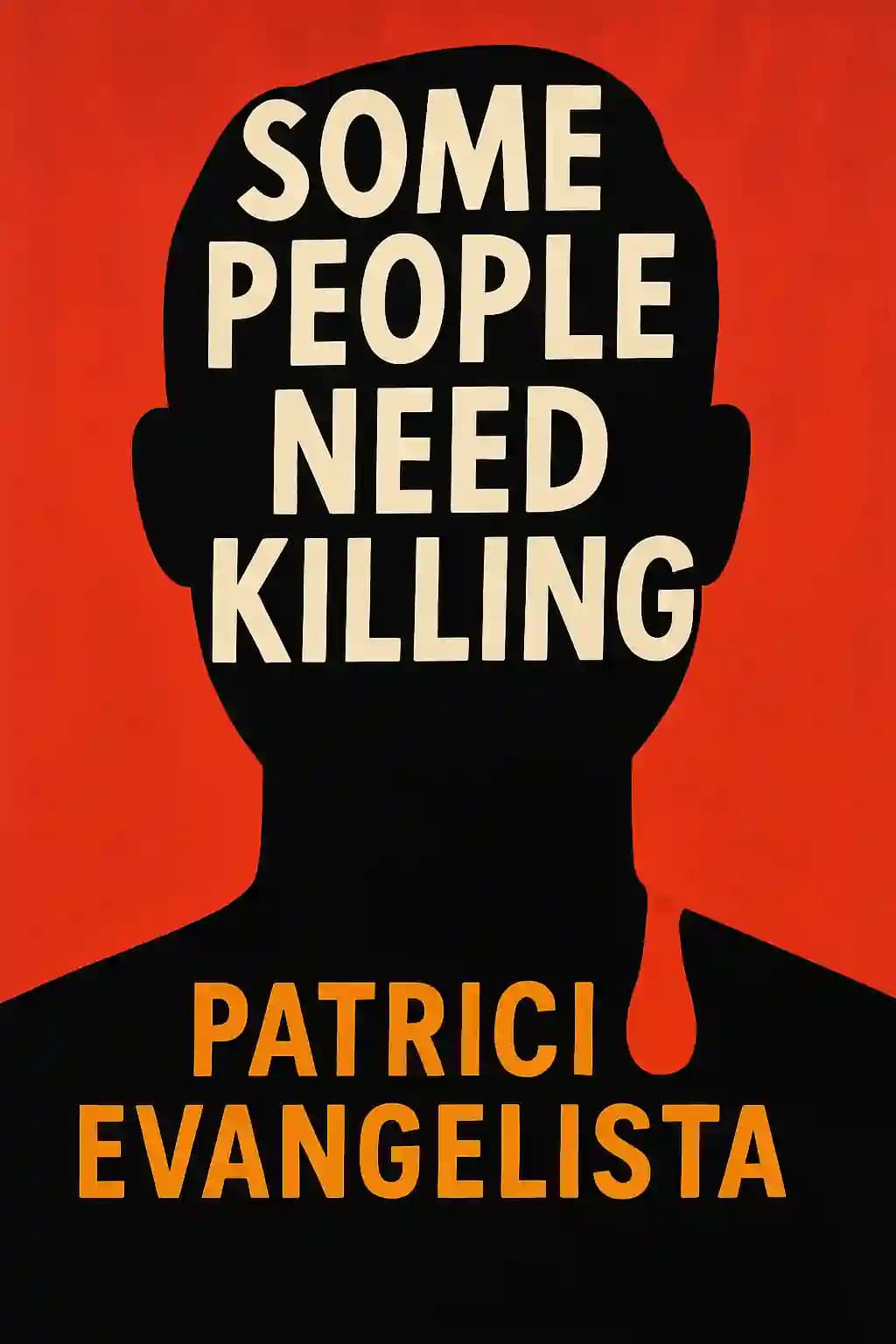
Another killer, whom I called Simon, described himself as an ordinary religious man with a family who believed Duterte was right that addicts should die. The group targeted meth users, drug runners, thieves, and even unfaithful husbands, killing about twenty people in seven months. "After Duterte was elected, the killing was automatic," Simon said. Though claiming he was never paid, he stayed because he believed in the cause: "Some people need killing." The vigilantes operated confidently, knowing police would release them if they mentioned Commander Maning's name.
Four sources claimed a specific police commander had ordered extrajudicial killings from late 2016 to early 2017. When a journalist revealed the name to me, I was shocked-it was my friend Domingo, Station 1 chief. According to the vigilantes, Domingo outsourced murders to CSG Chapter 2, providing target lists and ensuring police wouldn't interfere. "It was Domingo," Angel confirmed, pointing to his photo. My friend never told me if he ordered the killings.
Capítulo 11
When the Camera Captures Truth
Rodrigo Duterte wasn't the first politician to declare war on a domestic issue, but unlike metaphorical "wars" on poverty or hunger, when Duterte declared war on drugs and said "kill," he meant it literally. Despite some dissent from lawyers, priests and activists, most Filipinos continued their normal lives as the death toll mounted. For those in privileged areas, death remained an abstraction-until December 2020, when everything changed.
An eleven-second video captured the final confrontation between off-duty police officer Jonel Nuezca and the Gregorios. After a brief moment when peace seemed possible, Nuezca taunted Anton ("You be the cop so you can get a gun"), while Sonya refused to let her son be taken. The situation escalated when Nuezca's twelve-year-old daughter shoved Sonya and proudly declared "My father is a policeman!" When Sonya mockingly responded with a singsong "I don't care-eh-eh-eh," Nuezca snapped. Four gunshots rang out in less than five seconds-leaving both Sonya and Anton dead on the ground while the cop and his daughter calmly walked away.
The video flooded cyberspace with millions of views, triggering widespread outrage with hashtags like #StoptheKillingsPH and #CopsareTerrorists trending. Journalists who had covered the drug war for years expressed frustration at those suddenly shocked by police violence when similar killings had occurred for years without video evidence. Many journalists were angered not by the violence itself-a constant presence for years-but by those expressing sudden indignation after ignoring a "four-year parade of coffins."
Within 24 hours of the shooting, police leadership and government officials rushed to distance themselves from Nuezca. The cop surrendered an hour after the murders, and was quickly condemned by the Tarlac police chief, interior secretary, and PNP Chief Debold Sinas, who assured the public "the PNP does not and will never condone any criminal act." In a televised address, President Duterte called Nuezca "an isolated case" who was "sick in the head." The government successfully recast Nuezca as an exception rather than representative of police culture, with Duterte declaring the officer should be jailed and even suggesting he be "fried alive."
Capítulo 12
The Legacy of Blood
Thirty-six years after the EDSA Revolution that overthrew Ferdinand Marcos, I stand on Epifanio de los Santos Avenue observing what should be a commemoration but feels more like a wake. The Philippines has come full circle: from Ferdinand Magellan who claimed the islands for Spain, to Ferdinand Marcos who bled the nation as dictator, to Ferdinand Marcos Jr. now taking his oath of office while Ferdinand Marcos III waits in the wings. Jubilant crowds celebrate at Marcos-Duterte campaign headquarters on the very avenue where citizens once marched to overthrow the dictator.
The war on drugs leaves countless victims like Rene Desierto, found on a bridge with packing tape wrapped around his head and a cardboard sign reading "Drug Pusher. Do Not Imitate." His wife Ivy identifies him by his feet, begging police to let her touch him. The investigator struggles to cut through the tape mask, revealing a face with a thin dark line across the neck-Rene had been stabbed nineteen times and garroted.
Then there's Djastin "with a D," whose mother used to carry him through floods to the hospital when he seized, shot dead at twenty-five on railroad tracks gasping "Mama, help me." The Ocdin family lost three brothers to Duterte's war-Mark Andy being the last, killed on the final Sunday of Duterte's presidency. The Ocdins had learned all the rituals of death: which hospital handled gunshot wounds, which councilor would lend a tent for the wake, where to buy balloons stamped "We Love You Mark Andy," and how to fit multiple bodies into a single cemetery niche.
The Filipino greeting "Mabuhay"-meaning "to live"-takes on grim irony in a nation where extrajudicial killings became policy. While presented to tourists as a warm welcome, in Manila during Duterte's reign it became both wisdom and warning: "I hope you live."
Vincent, a photojournalist who documented at least 990 killings after Duterte took office, tells me he might have supported Duterte if the president had truly focused on killing the corrupt rather than drug users, whom Vincent sees as victims of disease. The vigilante's phrase "Some people need killing" reveals the moral calculus of Duterte's Philippines. It's an active sentence where the subject is "people" and the verb is "need"-suggesting they earned their deaths, removing accountability from those who pulled triggers. But "kill" is transitive-someone killed Djastin Lopez. The direct line from order to trigger to bullet to death can be drawn straight.
I recall Ninoy Aquino's words: "Is the Filipino worth suffering, or even dying, for?" He concluded yes, because Filipinos are brave, value life, are patient and dignified. But what of those deemed criminals and addicts? What of those who voted for killers? Are they worth dying for? The question hangs unanswered while the mayor's brutal philosophy counters: "The Filipino is worth killing for. The dead do not count."