Capítulo 1
The Silent Revolution: Finding Wonder in a Noisy World
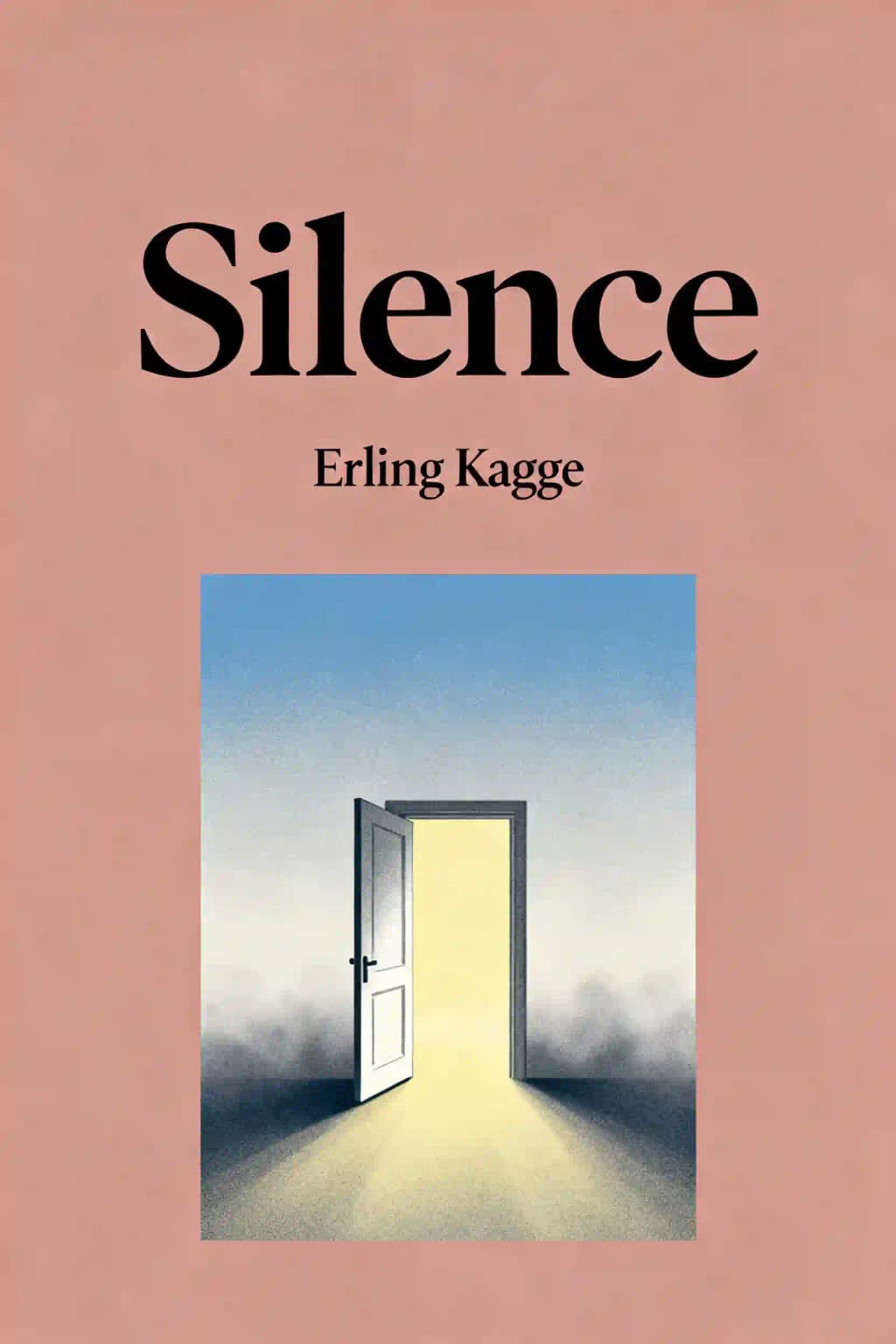
In an age where noise dominates our existence, Erling Kagge's "Silence" has emerged as a cultural phenomenon, resonating deeply with those seeking respite from our hyperconnected lives. The book has garnered praise from figures ranging from Arianna Huffington to Patti Smith, who called it "a meditative journey into the silence that surrounds us." Since its publication, it has been translated into over 30 languages and spent months on bestseller lists across Europe and North America. What makes this exploration so compelling is Kagge's unique perspective-he's not a monk or meditation guru, but an accomplished polar explorer who was the first person to reach the "three poles" (North Pole, South Pole, and Mount Everest). His insights into silence come not from a monastery but from the most extreme environments on Earth. As our world grows increasingly chaotic, this Norwegian adventurer's reflections offer something increasingly precious: the possibility of finding wonder through silence in our everyday lives.
Capítulo 2
Wonder: The Engine of Life's Greatest Discoveries
Wonder is one of life's purest joys and our finest skills-a force that drives exploration everywhere, whether traveling to remote corners of the Earth or simply watching a sunrise. Unlike scientific inquiry that seeks definitive answers, wonder shifts and evolves, sometimes arising from voluntary exploration, sometimes from involuntary contemplation of difficult thoughts. From Einstein's childhood fascination with a compass needle to Marie Curie's relentless pursuit of radioactive elements, wonder has propelled humanity's greatest discoveries.
This exploration of silence began with a line from Jon Fosse's poetry: "there is a love no one remembers." When asked about its meaning, Fosse replied simply: "In a way it is the silence that speaks." This cryptic response sparked a journey into understanding silence's profound role in human experience. Like ancient desert fathers who retreated to the wilderness or Buddhist monks who spend years in meditation, the pursuit of silence has been a constant thread throughout human spiritual and intellectual development.
Silence carries a majesty similar to an ocean or endless snowy expanse, yet many people actively fear it. We fill every moment with music, conversation, or digital distraction. In modern urban environments, finding true silence has become increasingly rare - even our supposedly quiet spaces are filled with the hum of air conditioning, distant traffic, or electronic devices. This avoidance, at its core, reflects a reluctance to know ourselves better-a form of cowardice I recognize in myself whenever I shy away from stillness. The constant noise serves as a shield against deeper self-reflection and uncomfortable truths.
The most profound silence isn't external but internal-something we must each create for ourselves. A world-class footballer once described how after kicking a goal-bound shot, he experiences complete silence despite the roaring stadium-a perfect moment of internal stillness before awareness returns. Similar experiences are reported by musicians during perfect performances, painters absorbed in their work, and writers in the flow of creation. This inner silence is available to everyone, even amid constant noise. It exists below life's surface waves-while showering, sitting by a fire, swimming, or walking across a field. These moments of stillness can emerge during daily rituals, from morning coffee to evening walks.
Wonder thrives in these silent spaces, where we can contemplate life's mysteries without the constant intrusion of information. The greatest insights often come not from active searching but from allowing our minds to settle into natural rhythms of thought and observation. By creating moments of silence, we open ourselves to the wonder that makes life rich with meaning and discovery. This practice of cultivating wonder through silence has been central to human creativity and innovation throughout history, from Newton's famous apple moment to Archimedes' eureka in the bath.
Capítulo 3
The Polar Silence: Lessons from Earth's Extremes
The secret to reaching the South Pole isn't extraordinary skill but simple repetition-putting one foot before the other countless times across an endless white landscape. The real challenge lies in desire and finding peace with oneself. In Antarctica, silence adhered to me like a second skin, forcing confrontation with my own thoughts and feelings with nowhere to hide.
Sometimes the cold was brutal-freezing until I wept, with frostbitten extremities causing pain that consumed all my energy, especially during thawing. Yet within this extreme discomfort came moments of extraordinary clarity. At the American South Pole base, ninety-nine residents once celebrated Christmas with stones as gifts-simple objects they hadn't seen for months amid endless ice and snow. Each person sat silently holding their stone, feeling its weight and texture, appreciating its fundamental reality in a world of white.
During my South Pole journey, I imagined the man in the moon watching me-a tiny figure in a blue anorak trudging across endless ice, setting up camp each evening before continuing the next day. He must have thought I was nuts. But turning his gaze northward, he would see millions of people leaving small houses to sit in traffic, spending hours before screens in large buildings, then returning home to watch news at the same time each night, year after year. Contemplating this from my tent in Antarctica, I felt calmer and more content with my chosen path.
The Arctic differs dramatically from Antarctica-an ocean surrounded by continents rather than a continent surrounded by oceans. Its ice creates constant noise, moved by wind and currents, cracking and rumbling. At the North Pole with Brge Ousland in 1990, after an American spy plane dropped food to us, Brge suggested we pause silently before eating-showing collective restraint. That moment of silence amid extreme hunger made me feel incredibly rich.
These polar experiences taught me that silence isn't about emptiness but presence-being fully aware of yourself in relation to the world around you. The extreme environments stripped away distractions, leaving only the essential elements of existence.
Capítulo 4
The Many Faces of Silence: From Terror to Tranquility
Silence wears many faces-sometimes boring, exclusive, uncomfortable or frightening. It can signal loneliness or sorrow, leaving heaviness in its wake. We often retreat into stony silence when upset, creating tension like married couples avoiding each other after an argument, their home filled with a deafening quietness that speaks volumes. As a child, I lay tormented by silence at bedtime, feeling it rumble inside my head without a single comforting thought, each tick of the clock amplifying the emptiness around me. In hospitals, schools, and libraries, silence can feel institutional and oppressive, weighing on visitors like an invisible burden.
Yet silence can also befriend us, offering sanctuary from life's constant noise. Poet Rolf Jacobsen wrote of "The silence that lives in the grass/on the underside of each blade/and in the blue space between the stones." This reassuring silence exists in nature's subtle movements-water lapping against shores, pine needles rustling in mountain breezes, swaying branches dancing in twilight, stones warming in afternoon sun, and moss growing imperceptibly on forest floors. I seek this quality within myself throughout daily life, even before meetings or during conversations, finding moments of stillness amid chaos.
Sound transcends mere noise, carrying meaning beyond its acoustic properties. Sailing near Cape Horn in 1986, I heard what seemed like a deep breath west of our boat. Turning toward it, I spotted a fin whale-about twenty meters long and sixty tons-swimming alongside us. For precious minutes we traveled the same course, the whale's rhythmic breathing from its blowhole creating a primal, majestic sound before it vanished into the ocean. The encounter felt ancient and sacred, connecting us to millions of years of marine life. Days later in port, I heard a vacuum cleaner on nearly the same frequency, but while one sound represented mundane chores, the whale's breath remains an enriching memory of authentic, primal force.
Shutting out the world isn't about turning away from surroundings but seeing more clearly, staying course and loving life. Silence offers richness and exclusivity-a key to unlock new thinking and creative potential. In meditation rooms, forest temples, and mountain retreats, people seek this transformative quiet. Rather than spiritual renunciation, it's a practical resource for experiencing life more deeply than merely watching the news again or scrolling through social media feeds.
Activities like knitting, brewing beer, and stacking wood offer similar meditative peace-basic, authentic alternatives to modern din. These pursuits satisfy a profound human need, creating tangible results through physical effort rather than digital production. Working with our hands connects us to ancient rhythms: the click of knitting needles, the bubble of fermenting beer, the solid thunk of wood being stacked. Each activity creates its own peaceful silence, a cocoon of focus where the mind can rest while the body works. These moments of engaged quiet have become increasingly precious in our hyper-connected world, offering an antidote to constant digital stimulation and the ceaseless stream of information that characterizes modern life.
Capítulo 5
The Brain's Chaos and Our Flight from Ourselves
Contrary to my youthful beliefs, our brain's basic state is chaos. This insight eluded me because daily life runs on autopilot-sleeping, checking phones, showering, working, responding to messages-all guided by expectations. When I break routine and sit quietly alone without purpose, chaos surfaces. My brain, efficient on autopilot, struggles with idleness and silence. I often choose any activity rather than filling silence with myself, gradually realizing this struggle underlies many of my problems.
Research validates philosopher Blaise Pascal's assertion that humans struggle with solitude. In a Virginia-Harvard study, participants left alone for 6-15 minutes without distractions universally reported discomfort. A third admitted breaking the rules when doing the experiment at home. Remarkably, when given the option, nearly half chose painful electrical shocks over sitting quietly with their thoughts-one person shocking themselves 190 times.
Pascal wouldn't be surprised; he believed our constant flight from ourselves reflects a brutal reality we avoid confronting. "All of humanity's problems," he wrote, "stem from man's inability to sit quietly in a room alone." Perhaps we're becoming "stark raving lunatics" in our inability to be alone with ourselves.
Sometimes making life deliberately difficult yields value-like exploring silence despite its challenges. Silence matters not because it's superior to noise, but because noise addiction costs us parts of ourselves. We enter a "dopamine loop" where seeking stimulation becomes more rewarding than satisfaction, making us check devices compulsively.
Biology explains this: dopamine (driving desire) overpowers opioid (creating satisfaction), keeping us perpetually seeking rather than appreciating. Social media exploits this addiction by design, creating temporary needs they partially fulfill, fostering dependency while users experience isolation and frustration. Silence offers the opposite: being present within each moment, experiencing rather than overthinking, not living through others but fashioning your own inner quiet whether running, cooking, working or reading.
Capítulo 6
The Tragedy of Unlived Life
At milestone birthday celebrations, I often hear the lament: "All of those days that came and went-I didn't realize those were life." While we fear death, the fear of not having truly lived runs deeper, intensifying as we age. The tragedy isn't recognizing wasted potential but having allowed distractions to prevent us from exploring it.
As Seneca wisely noted two millennia ago: "Life is long if you know how to use it." Even a thousand-year existence would feel brief if squandered. We merely exist rather than truly live when we "forget the past, neglect the present, and fear the future." Despite common complaints about lacking time, we actually have enough-if only we'd listen to ourselves and look up.
One December night in 2010, urban explorer Steve Duncan and I climbed the Williamsburg Bridge during our journey through New York's underground tunnels. From that height, we watched dawn break over Queens and Brooklyn, the sun's first rays touching the bridge summit and skyscraper tops before gradually warming the entire city below. Though surrounded by traffic and subway noise, I heard nothing-consumed by the view.
You cannot wait for silence; you must create your own. Below the city, we discovered a different world in the tunnels-a man-made wilderness formed purely for function yet possessing its own negative beauty in the absence of fresh air, color, and quiet. The city never sleeps, shaped by the idea of earning a crust, with noise permeating even deep in the sewers. We experienced the full cycle of civilization: Christmas shopping above, excrement flowing below.
At Greene Street, covered in sewage, I noticed a lone tree growing against a shabby house-a silent symbol of life persisting against odds. As the sun rose over the Atlantic, I felt deep pleasure watching it illuminate the city, though we had to descend quickly before police spotted us. That moment of created silence amid the world's busiest city revealed what truly matters-being present enough to witness life's beauty unfolding.
Capítulo 7
Silence: The New Luxury in a World of Noise
Luxury has always been about status and exclusive happiness. As luxury becomes more commonplace, it grows boring-a Louis Vuitton bag loses exclusivity when everyone has one. The world's wealthiest people know luxury provides only short-lived pleasure. I believe silence is the new luxury-more exclusive and lasting than material goods.
My daughter observed that silence is the only need that luxury-seekers can never attain. Unlike traditional luxury that's about adding more, silence is about subtraction. It's free and doesn't need seasonal replacement. Being unavailable is another luxury-turning away from the daily din, ignoring messages, delegating tasks.
Noise also reinforces class divisions-the wealthy enjoy quieter workplaces, better-insulated homes, and cleaner environments. Silence has become part of the disparity giving some people longer, healthier lives. Even birds in urban areas have adapted their songs to compete with human noise, becoming more agitated and less successful at mating. Silence is a luxury for every living creature.
I once flew eighteen hours to Sri Lanka just to disconnect and practice yoga-strange to travel so far for silence. Some create favorable conditions through soundproof rooms or silence centers, like the hall in Jutland, Denmark where dozens gather to sit cross-legged for fifty minutes, seeking deeper human connection.
Fabricating conditions for silence is fine, but sometimes tedious-driving to find calm or flying to disconnect at a retreat. The silence I value can be found wherever you are, at no cost, if you pay attention. I discover it staying five extra minutes in bed, or choosing to walk thirty minutes to work instead of driving or taking the subway. Walking reveals faces, changing attire, shop windows, variations in pavement-small values that allow me to shut out the world.
Silence is about rediscovering, through pausing, the things that bring us joy. My children are always accessible, always busy-as am I, enslaved to screens, constantly interrupted by other interruptions. I rummage in a world that has little to do with me, trying to be effective until I realize I'm walking in circles without a compass.
Capítulo 8
The Universe Within: Finding Infinity in Stillness
The starry sky "is the truest friend in life," as polar explorer Fridtjof Nansen noted-reminding us that our restlessness and doubts are passing trivialities while the universe remains unshaken. As Kant highlighted, "the starry heavens above me and the moral laws within" are life's two most important pillars.
As a Norwegian, I'm privileged to see stars without man-made light interference-a visual silence increasingly rare worldwide. Gazing at stars reminds us of the universe beyond our environment and our place within it. Before his death, neurologist Oliver Sacks found meaning in stargazing. The celestial beauty made him realize how little time he had left, his sense of eternity mixed with awareness of transience.
By turning his gaze upward, he also turned inward, toward his inner silence, discovering forgotten aspects of himself. One universe stretches outward, the other inward-and as Emily Dickinson concluded, "The Brain-is wider than the Sky."
Silence has value beyond measurement, but it can also be a practical tool. When I asked entrepreneur Elon Musk about silence, he first laughed, then acknowledged he often shuts out the world to open his thoughts. While talking, he takes long pauses before answering questions. Musk excels at using "the first principle": disconnecting from the world to uncover fundamental truths rather than building on accepted wisdom.
When NASA scientists believed space shuttles could only be used once, Musk questioned this expensive assumption, proposing reusable shuttles. His colleague Mark Juncosa admits that creative solutions surface only during rare moments of quiet-exercising, showering, or sitting on the toilet.
I recognize this principle in my own experience founding a publishing house. The entire book industry operated on the unquestioned belief that quality books belonged in bookstores at high prices, while romantic novels belonged in supermarkets. While washing dishes, undisturbed in my kitchen, I questioned these assumptions. The only unusual thing I did, on a much smaller scale than Musk, was to stand uninterrupted at my sink and question sanctioned truths.
Capítulo 9
Beyond Words: When Silence Speaks Louder
"What we cannot speak about we must pass over in silence" concludes Wittgenstein's Tractatus Logico-Philosophicus. His manuscript was initially rejected, perhaps because he claimed it had two parts-the written part and the unwritten part, with the latter being more important. Wittgenstein was motivated by the empty chatter he overheard in Vienna's bourgeois salons, believing such babble threatened life's very meaning.
In Skjolden, Norway, where nature and silence shaped his philosophy, he emphasized that we can show what we cannot say in words. Words create boundaries, especially when trying to express ethics or the meaning of life. These things must be shown, thought and felt.
It feels good to share joy, yet sometimes this can be disruptive. Norwegian mountain guide Claus Helberg understood this perfectly. Leading hikers one beautiful morning, instead of commenting on the spectacular conditions, he handed each participant a slip of paper reading: "Yes, it is totally amazing." Helberg went further than Wittgenstein by simply falling silent.
Words can destroy the atmosphere and distance us from what's happening. The simple pleasures-like studying green moss on stone-are often the most difficult to express. Helberg wanted everyone to see, think and wonder at nature without diminishing the experience through endless commentary.
In music, the absence of sound-the cesur, the pauses between notes-often stirs me most. Science confirms these intervals generate intense neural activity. Beethoven's sudden silences expand the mind. Miles Davis became respected for the dramatic silences in his performances; the notes he chose not to play were as meaningful as those he did.
When Beethoven went deaf, it liberated a deep originality within him. He composed his Ninth Symphony using sounds existing solely in his head. John Cage removed all tones in his piece 4'33", creating pure silence. I think of silence as a practical method for uncovering answers to the puzzle that is yourself.
Capítulo 10
The Art of Presence: Finding Your Own South Pole
Is it possible to be present in the world and not present simultaneously? I think so. In those brief moments when I'm captivated by my surroundings-studying moss on rock or holding a child-time stops and I'm both inwardly present and completely distant. A brief moment becomes eternity.
As William Blake wrote: "To see a World in a Grain of Sand/And a Heaven in a Wild Flower,/Hold Infinity in the palm of your hand/And Eternity in an hour." Kierkegaard called this the "annulled Succession" where time's endless progression halts. The world shuts out, inner silence takes over. I keep mossy stones in my home and office to remind me of these precious moments.
Marina Abramovic has made silence into an art form. In 2010, she sat for 736 hours at MoMA, silently looking into visitors' eyes in "The Artist Is Present." As days passed, her senses heightened-first hearing museum noises, then cars outside, eventually detecting individual manhole covers. For Abramovic, the opposite of silence is a thinking brain. Silence helps escape the surrounding world, creating "a waterfall in your brain" where time stands still.
As a partner, I sometimes yearn for silence. Real intimacy emerges in wordless moments. Chatter often becomes a defense mechanism against truth. When everything I want is in my arms, words become superfluous, as Depeche Mode sang. Stendhal claimed successful relationships contain an element of doubt that "endows each moment with desire." This success manifests in being able to sit together in silence. If your partner doesn't understand your silence, they'll struggle even more with your words.
I was dyslexic as a child, unable to pronounce "dyslexic" until I turned twenty. My deepest learnings came from small experiences-gratitude for food after a long day, noticing subtle nuances, discovering thoughts in the space between my ears. The most important book is the one about yourself. It remains open. Like a snail carrying its house, we carry everything within us.
The most important thing is not what I believe, but that we each discover our own way. We all have our own paths-sva marga: follow your own path. Finding silence is easier than many people think. Neither professors, psychologists, Pascal, Cage nor a father of three like me can fully explain everything in words. It feels good to wonder on your own. I had to travel far to discover this, but now I know silence is possible anywhere. You only need subtract. You have to find your own South Pole.