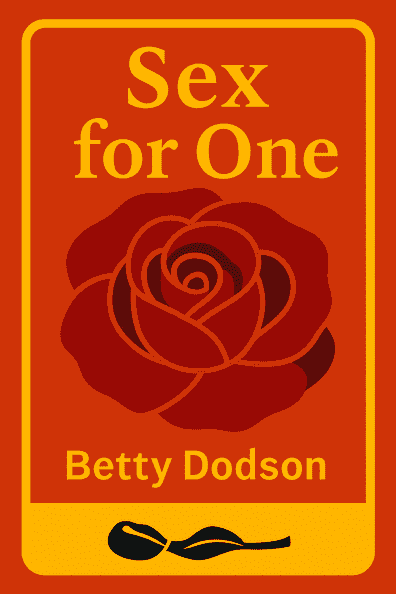
Capítulo 4
Discovering Sexual Independence
Dodson's first post-divorce relationship with Blake transformed her sexuality completely. At forty-two, he had retired from his workaholic life as a professor and publisher to seek pleasure. Their experimental affair quickly changed her understanding of ecstasy-instead of being grateful for one orgasm, she was having several intense ones that actually triggered anxiety about their power.
The breakthrough came through honest communication. They shared their guilt-ridden marital masturbation experiences and resolved to banish sexual guilt forever. They moved beyond traditional roles, taking turns being receptive or assertive, and discovered the joy of stimulating her clitoris during intercourse-combining vaginal and clitoral pleasure in ways she hadn't experienced before.
Their greatest liberation came when they shared masturbation with each other. After first watching herself alone in a mirror, Dodson gained enough courage to masturbate with Blake. This "Sexual Independence Day" demystified orgasm and made her a sexual equal. They learned each other's preferences by watching, eliminated performance pressure, and deepened their intimacy through this honesty.
With masturbation liberation, they no longer had to conform to each other's needs. They could say no to sex without starting arguments, and they established themselves as individuals with choices. Though they never lived together, their relationship evolved into a deep friendship that endured for decades-a different kind of love story based on honesty rather than romantic fantasy.
What makes this approach revolutionary is the way it redefines sexual success. Rather than measuring relationships by their longevity or conformity to social norms, Dodson suggests we evaluate them by the honesty, pleasure, and growth they provide. This perspective offers hope and new models for divorced people and singles who may feel like failures in a culture that idealizes traditional marriage.
By expanding our definition of sex beyond "compulsive intercourse," we open ourselves to infinite ways of expressing sexuality and deeper connection. This doesn't mean rejecting intercourse-it means placing it within a broader context of sexual possibilities where partners can communicate honestly about their desires without shame or obligation.
Capítulo 5
Art as Sexual Liberation
As a classically trained artist who painted nudes, Dodson had always kept her art sensual rather than overtly sexual. After her divorce, feeling sex-positive and in love with life, she made the natural decision to create drawings of people celebrating sexual love. This creative choice represented her liberation from self-censorship and social restrictions that had limited her artistic expression.
In 1968, she held her first one-woman exhibition at a prestigious New York gallery. Despite her fears of public outrage, her large charcoal drawings of classical nudes making love behind colored Plexiglas created a sensation. Located next to the Whitney Museum, the exhibition drew over eight thousand visitors in two weeks-the gallery's largest attendance ever.
The public's reactions ranged from embarrassment to fascination. One mother quickly removed her ten-year-old daughter who innocently described the images as "people wrestling." Most significantly, the art triggered visitors to share their own sexual histories with Dodson, creating unexpected moments of intimacy with strangers and confirming one undeniable fact: people were deeply interested in sex.
What makes this artistic journey significant is how it challenges the artificial boundary between "high art" and sexuality. Throughout history, erotic art has been either relegated to private collections or sanitized for public consumption. By bringing explicit sexual imagery into a prestigious gallery space, Dodson democratized sexual expression and invited viewers to confront their own attitudes about sexuality.
The overwhelming response to her exhibition revealed the hunger for honest sexual representation. People didn't just view the art passively-they engaged with it emotionally and intellectually, often sharing deeply personal stories with Dodson. This interaction demonstrated that art can serve as a powerful catalyst for sexual healing and conversation.
For artists today, Dodson's example offers permission to explore sexuality without apology or compromise. Her work suggests that authentic sexual expression isn't just personally liberating-it can also create meaningful connections with audiences who recognize their own experiences in the art. By refusing to separate her sexuality from her artistic identity, Dodson created a more integrated approach to creativity that continues to inspire others.
Capítulo 6
Creating Sexual Community
By openly discussing her sex life and debunking masturbation myths, Dodson gained self-confidence and discovered that sexual honesty was profoundly healing. Women from diverse backgrounds began contacting her with questions about self-love and orgasm. She realized that women sharing sexual information with each other was reversing generations of female sexual repression-the personal truly was political.
Dodson joined feminist groups but found NOW too conservative for her radical approach. At a women's center, she started her own consciousness-raising group that met weekly for over a year. These all-women gatherings reconnected her to childhood friendships and helped her embrace her bisexuality. She developed a "sexual friendship" with Laura, where they shared massage and masturbation rather than being trapped in romantic sexual expectations. Their relationship proved that love didn't have to turn to hate when they parted.
In another consciousness-raising group of professional women, Dodson discovered that career success didn't necessarily correlate with sexual liberation. Despite their achievements, many remained trapped in romantic sexual attitudes and fears about their bodies. She became their sexual educator, demonstrating techniques and eventually distributing vibrators, helping some overcome their sexual repression.
Female sexual liberation faced ongoing challenges-from AIDS fears in the 80s to divisions within feminism over pornography. Dodson joined groups opposing censorship, believing sexual repression, not sexual imagery, caused abuse. She observed that feminists often ignored matriarchal abuses of power while criticizing patriarchy. True equality remained elusive, but she maintained that self-love must come first for healthy partnerships.
What makes Dodson's approach to community-building revolutionary is her insistence on combining theory with practice. While many feminist groups focused on intellectual analysis of oppression, Dodson created spaces where women could physically explore their sexuality together. This embodied approach to liberation acknowledged that reading about sexuality isn't enough-we need direct experience to overcome deeply ingrained shame and repression.
The success of her groups demonstrates the power of collective sexual healing. When women witnessed each other's journeys, they gained permission to explore their own sexuality without judgment. This model of sexual education through shared vulnerability continues to influence sex-positive communities today, offering an alternative to both clinical sex therapy and purely theoretical feminist discourse.
Capítulo 7
Reclaiming Our Bodies Through Visual Awareness
At age ten, Dodson examined her genitals with her mother's mirror and was horrified, believing the inner lips were deformities. This childhood misconception led to decades of genital shame until her lover Blake showed her pornographic magazines featuring other women's vulvas. Seeing that she wasn't deformed was revolutionary-thirty minutes of pornography began her journey toward becoming "cunt positive."
After reclaiming the word "cunt" by repeating it until it lost its negative power, she organized the first feminist genital slide show for the NOW Conference on Women's Sexuality. Twenty women posed for "Creating an Aesthetic for the Female Genitals," revealing beautiful variations in genital appearance. They discovered different styles-Classical, Baroque, Gothic, Danish Modern-and the heart shape formed when women held their outer lips open. Clitorises varied dramatically from tiny "seed pearls" to "large protruding jewels," and vaginal openings displayed unique patterns and colors.
When Dodson presented these slides to over a thousand women at the NOW conference, many reported feeling transformed. Female genital imagery began appearing in women's art, jewelry, and textiles. She advocated against genital surgeries like labiaplasty and circumcision, arguing that sexual ignorance perpetuates harmful practices. Her vision was for a society where everyone grows up with positive genital imagery and sexual education, where both men and women can love their bodies without shame.
What makes this visual approach revolutionary is how it directly confronts the root of sexual shame. In a culture where genitals are hidden and rarely discussed honestly, most people have no reference point for what "normal" looks like. By creating a visual vocabulary for genital diversity, Dodson helped women recognize that the variations in their bodies weren't deformities but natural expressions of human uniqueness.
This work continues to be relevant today, as labiaplasty rates increase and pornography often presents a narrow range of genital appearances. Young people still grow up without seeing the full spectrum of human genital diversity, leading to unnecessary anxiety and shame. Dodson's slide shows offered an alternative to both medical textbooks (which pathologize difference) and pornography (which often showcases a limited aesthetic).
By celebrating genital diversity through art and education, Dodson transformed what could have been a clinical exercise into a joyful affirmation of bodily variation. This approach recognizes that healing sexual shame requires not just intellectual understanding but visual reassurance that our bodies are normal in their uniqueness.
Capítulo 8
The Revolutionary Bodysex Workshops
After three years of consciousness-raising groups, Dodson grew tired of cataloging female suffering and social injustices. She abandoned her romantic notion of being an isolated "fine artist" in favor of addressing real social problems. Recognizing that sex could either enslave or liberate women, she decided to establish physical and sexual consciousness-raising groups where women could explore pleasure together.
To create an appropriate space, she made a radical decision to discard all the expensive furniture from her marriage-symbols of respectability that no longer served her. She transformed her traditional living room into what she called a "Temple of Pleasure," complete with plush wall-to-wall carpeting, mirrors, her erotic art on the walls, and nude photos of herself in yoga postures above the fireplace. With pillows arranged throughout, the space achieved an atmosphere of elegance and spacious simplicity, ready for her new feminist erotic project.
In January 1973, she began recruiting women for the first Bodysex Workshops-four weekly sessions where they would explore their bodies holistically. Her friend Laura joined her as co-facilitator for the first four years. The workshops included women of diverse backgrounds, ages, and sexual orientations, united by their identity as sexual women. Dodson taught masturbation through demonstration, first through pantomime and eventually through actual masturbation to orgasm. Laura and she also demonstrated different sexual positions with humor, poking fun at traditional gender roles while emphasizing clitoral stimulation.
The format evolved into weekend workshops with up to fifteen women. They sat nude in circles, shared feelings about their bodies and orgasms, practiced proper posture, and engaged in role-reversal exercises like "Running a Sexual Encounter." The highlight was always "Genital Show and Tell," where women examined their own genitals, often seeing them clearly for the first time. They discussed PC muscle exercises, anal self-massage, and contraception. Eventually, they incorporated a "Guided Masturbation Ritual" where they practiced different positions and techniques together, creating a powerful shared experience.
What makes these workshops revolutionary is their complete rejection of the notion that female sexuality should be private, passive, or dependent on men. By creating a space where women could explore their sexuality collectively, Dodson challenged the patriarchal separation of women from each other's sexual knowledge. The workshops demonstrated that female sexuality flourishes with female guidance and support, contrary to the cultural narrative that women's sexuality exists primarily for male pleasure.
The radical vulnerability of being naked together, examining genitals collectively, and masturbating in a group setting broke taboos that keep women isolated in their sexual experiences. This shared vulnerability created profound bonds and healing that individual therapy or education couldn't achieve. By witnessing each other's pleasure and struggles, participants gained permission to embrace their own sexuality without shame.
Capítulo 9
Understanding Orgasm: Beyond Myths and Misconceptions
Whether from a lover, bathtub, dildo, finger, tongue, or vibrator, an orgasm is an orgasm is an orgasm-no two exactly alike, and none "wrong." Masturbation is the best way to learn orgasm control for both men and women. Some prefer indirect stimulation through pressure or water, while others need direct contact. For sexually repressed women, electric vibrators provide strong stimulation that can overcome years of sensory deprivation.
Our mind-body inhibitions-from tension to guilt-can block the flow of sexual energy, limiting us to small, contained orgasms. For years, Dodson trained herself for quick, silent "ladylike" orgasms until she embraced her sexuality fully. The G-spot debate revived the vaginal versus clitoral orgasm controversy, but anatomical research suggests a female prostate gland exists. Some women spurt during orgasm by bearing down, while others prefer lifting the PC muscle.
New sexual trends include "thinking off" or "breathing off," but Dodson believes orgasm fundamentally requires genital stimulation. The autonomic nervous system produces those exquisite involuntary contractions, which can be enhanced through conscious PC muscle control, pelvic rocking, and deep breathing for multiple orgasms.
What makes Dodson's approach to orgasm revolutionary is her rejection of hierarchies that rank some orgasms as superior to others. Throughout the 20th century, Freudian psychology promoted the idea that "mature" women should experience vaginal rather than clitoral orgasms-a notion that left countless women feeling inadequate when intercourse alone didn't bring them to climax. By declaring that "an orgasm is an orgasm is an orgasm," Dodson liberates women from these arbitrary standards and encourages them to embrace whatever brings them pleasure.
Her perspective also challenges the medicalization of female sexuality, which tends to pathologize variation and prescribe standardized solutions. Instead of viewing different orgasmic responses as problems to be fixed, Dodson celebrates the diversity of sexual experience and encourages exploration without judgment. This approach empowers individuals to discover what works for their unique bodies rather than conforming to external expectations.
Perhaps most importantly, Dodson demystifies orgasm by providing practical information about anatomy and technique. By understanding how their bodies work, women can take responsibility for their pleasure rather than depending on partners to "give" them orgasms. This shift in perspective transforms women from passive recipients of sexual attention to active participants in their own pleasure.
Capítulo 10
Expanding Sexual Horizons: Men's Workshops and Beyond
After years of women asking for Bodysex Groups, men began requesting them too. Despite initial hesitation, Dodson accepted the challenge of this role reversal. Her first men's group included sex educators, ministers, artists, and businessmen-gentle, non-macho types. Unlike women, their primary sexual concern was performance anxiety rather than their own pleasure.
The "Genital Show and Tell" ritual failed because they claimed penises weren't mysterious, though they showed surprising shyness. The guided masturbation ritual initially met with stiffness but eventually transformed into a powerful shared experience. When one man climaxed loudly, it triggered a chain reaction of orgasms through the group. Afterward, these heterosexual men embraced each other with full-body hugs-a radical break from social conditioning.
Later groups featured group massage rituals, discussions about circumcision, ejaculation control techniques, and multi-orgasmic potential. Her most successful workshop included an equal mix of heterosexual, bisexual, and gay men, fostering enlightening dialogue about monogamy, sexual competition, and breaking down stereotypes. Working with men helped Dodson confront her own assumptions about masculinity and revealed that many men face similar sexual insecurities and relationship challenges as women do.
What makes these men's workshops revolutionary is how they challenge toxic masculinity and the isolation many men experience around their sexuality. In a culture where men are expected to be naturally competent at sex without guidance or education, creating space for men to be vulnerable about their sexual concerns was radical. The workshops revealed that beneath the facade of confidence, many men harbor deep insecurities about their bodies and sexual performance.
By encouraging men to explore pleasure beyond traditional masculine scripts, Dodson offered alternatives to the goal-oriented, performance-focused sexuality that dominates male sexual culture. The emphasis on sensation rather than achievement helped participants reconnect with their bodies and discover new forms of pleasure beyond the narrow focus on erection and ejaculation.
Perhaps most significantly, these workshops challenged homophobia by creating spaces where men of different sexual orientations could interact authentically without fear. The physical affection that emerged spontaneously between heterosexual men after the masturbation ritual demonstrated how artificial barriers between men could dissolve in an environment of trust and acceptance. This work continues to be relevant today as men increasingly question restrictive gender roles and seek more authentic ways of relating to their own bodies and to each other.
Capítulo 11
Sex as Spiritual Practice: Masturbation as Meditation
When Dodson published her first book, she intuitively added the subtitle "A Meditation on Selflove," though she couldn't fully explain why masturbation was meditative. Later, while practicing Transcendental Meditation, she experimented with combining her mantra with masturbation, creating what she called "Transcendental Masturbation." She discovered that masturbation created harmony between body and mind similar to meditation-both left her peaceful, centered, and relaxed.
However, when she shared this revelation, her meditating friends were shocked, while her erotic friends found it merely amusing. The spiritual community wanted to sublimate sexual energy, while the sexual community wanted to enjoy it without esoteric ritual. Years later, she finally got scientific validation when a sex researcher friend invited her to participate in a study at Rutgers University measuring brain phenomena during orgasm.
During the experiment, electrodes measured her brain activity while she masturbated with her vibrator. The EEG showed that during masturbation her brain waves registered alpha, dipping into theta just before orgasm-confirming that masturbation was indeed a form of meditation. This validated her understanding that erotic meditation was natural, healing, and transcendental.
What makes this perspective revolutionary is how it bridges the artificial divide between sexuality and spirituality. Throughout history, many spiritual traditions have viewed sexual desire as an obstacle to enlightenment, encouraging practitioners to transcend or sublimate their sexuality. By recognizing masturbation as a meditative practice, Dodson challenges this dualistic thinking and suggests that sexual pleasure can be a pathway to spiritual awareness rather than a distraction from it.
This integration of sexuality and spirituality offers healing for those who have been wounded by religious sexual shame. Rather than rejecting either sexuality or spirituality, Dodson's approach allows for both to coexist and enhance each other. The meditative qualities of masturbation-focused attention, rhythmic breathing, surrender to sensation-parallel practices found in many contemplative traditions.
The scientific validation of masturbation's effects on brain activity provides empirical support for what many have intuitively understood: sexual pleasure can induce altered states of consciousness similar to those achieved through meditation. This research helps legitimize sexual pleasure as a valuable experience beyond mere physical gratification, suggesting that our capacity for sexual ecstasy may be connected to our capacity for spiritual transcendence.
Capítulo 12
The Power of Fantasy: Exploring Our Erotic Imagination
Every time Dodson confronts a blank canvas or searches for a sexual fantasy, she's engaging in the creative process. Fantasy exploration isn't limited to politically correct scenarios-it's about increasing erotic joy. She encourages workshop participants to understand that fantasies about taboo subjects like rape are separate from real-life desires. We play all roles in our fantasies-rapist and victim, master and slave-and they need not be limited to people. Some fantasize about food, nature, or mythical beings.
For visual stimulation, Dodson recommends masturbating while watching porn, suggesting techniques like turning off poor soundtracks or fast-forwarding to interesting scenes. Gay male porn became a turn-on once she could empathize with male sexuality. Women often lack visual references for fantasies and rarely engage in detailed sexual conversations. Phone sex and online interactions provide safe spaces to practice "talking dirty" and experiment with different sexual identities.
Fantasy role-playing begins with masturbation-exploring opposite gender roles through dress and behavior expands our sexual repertoire beyond traditional constraints. Fetishes for specific fabrics or items enhance pleasure rather than indicate problems. After menopause, Dodson's fantasy life became even more important, with scenarios like "John in the Park" (a threesome fantasy based on a real experience) and power fantasies where she transforms corporations through sexual liberation.
What makes Dodson's approach to fantasy revolutionary is her insistence that our erotic imagination belongs to us alone and need not conform to political correctness or social expectations. In a culture where sexual fantasies are often pathologized or misinterpreted, her perspective offers permission to explore the full range of erotic imagination without shame or fear of judgment.
This approach is particularly liberating for women, who are often expected to have "appropriate" fantasies that align with feminist politics. By acknowledging that fantasies about power, submission, or taboo scenarios don't necessarily reflect our conscious desires or values, Dodson creates space for authentic exploration of the complex, sometimes contradictory nature of human sexuality.
Perhaps most importantly, Dodson recognizes fantasy as a creative force that extends beyond sexuality into all aspects of life. Sharing fantasies feels more revealing than discussing real experiences, yet they can be rehearsals for experiences we might want to have-her erotic art exhibitions, workshops, and books all began as sexual fantasies before manifesting in reality. This perspective honors the transformative potential of erotic imagination as a catalyst for personal and social change.
Capítulo 13
The Art of Self-Loving: A Practical Guide
Sexual healing begins with a passionate love affair with yourself-learning to turn yourself on, discovering fantasies, and giving yourself abundant self-love and orgasms. Dodson recommends a self-loving ritual that begins with looking in the mirror and saying "I love you" to yourself daily, which brings unexpected moments of joy. Start with a sensuous bath in a candlelit bathroom-your private romantic hideaway. Use scented soaps, oils, and music while touching yourself tenderly.
After bathing, stand nude before a mirror in soft candlelight and appreciate your unique body without harsh judgment. Find qualities to praise as you would with a lover, embracing your particular shape whether large or thin. Continue with self-massage while sitting before the mirror-oil your body and press into sore spots, release facial tension, massage your neck, head, shoulders, and chest. Gently stimulate your nipples, tickle your ribs, and love your belly. Knead your thighs like dough and massage your feet before moving to genital exploration.
For genital exploration, set up a makeup mirror that stands independently, freeing both hands. Find a comfortable sitting position with good lighting. Examine your genitals with the same interest you'd give your face. Pull apart your outer lips, observing your inner lips which may vary in size, texture, and symmetry-all variations are normal and beautiful. Examine your clitoral hood and shaft, pulling back to expose the tip. Touch your clitoris with oily fingers to explore sensations. Gently penetrate your vagina, feeling the ridges and exploring different sensations.
What makes this approach revolutionary is how it transforms masturbation from a quick, utilitarian act into a holistic practice of self-love. By incorporating all the senses and attending to the entire body, Dodson elevates self-pleasure to an art form worthy of time and attention. This counters the cultural message that masturbation is merely a poor substitute for partnered sex or something to be rushed through furtively.
The emphasis on mirror work directly confronts body shame by encouraging people to look at themselves with love and appreciation rather than criticism. In a culture saturated with images of idealized bodies, taking time to see and accept our actual bodies can be profoundly healing. This visual self-acceptance creates the foundation for deeper sexual pleasure by removing the self-consciousness that often interferes with arousal.
Perhaps most significantly, Dodson's detailed instructions demystify self-pleasure and provide a concrete pathway for sexual self-discovery. Rather than assuming people naturally know how to pleasure themselves, she acknowledges that many of us need guidance to overcome years of negative conditioning. By breaking self-pleasure down into specific steps, she makes sexual exploration accessible to everyone, regardless of their previous experience or comfort level.