Capítulo 1
When the Arena Floor Becomes Your Teacher
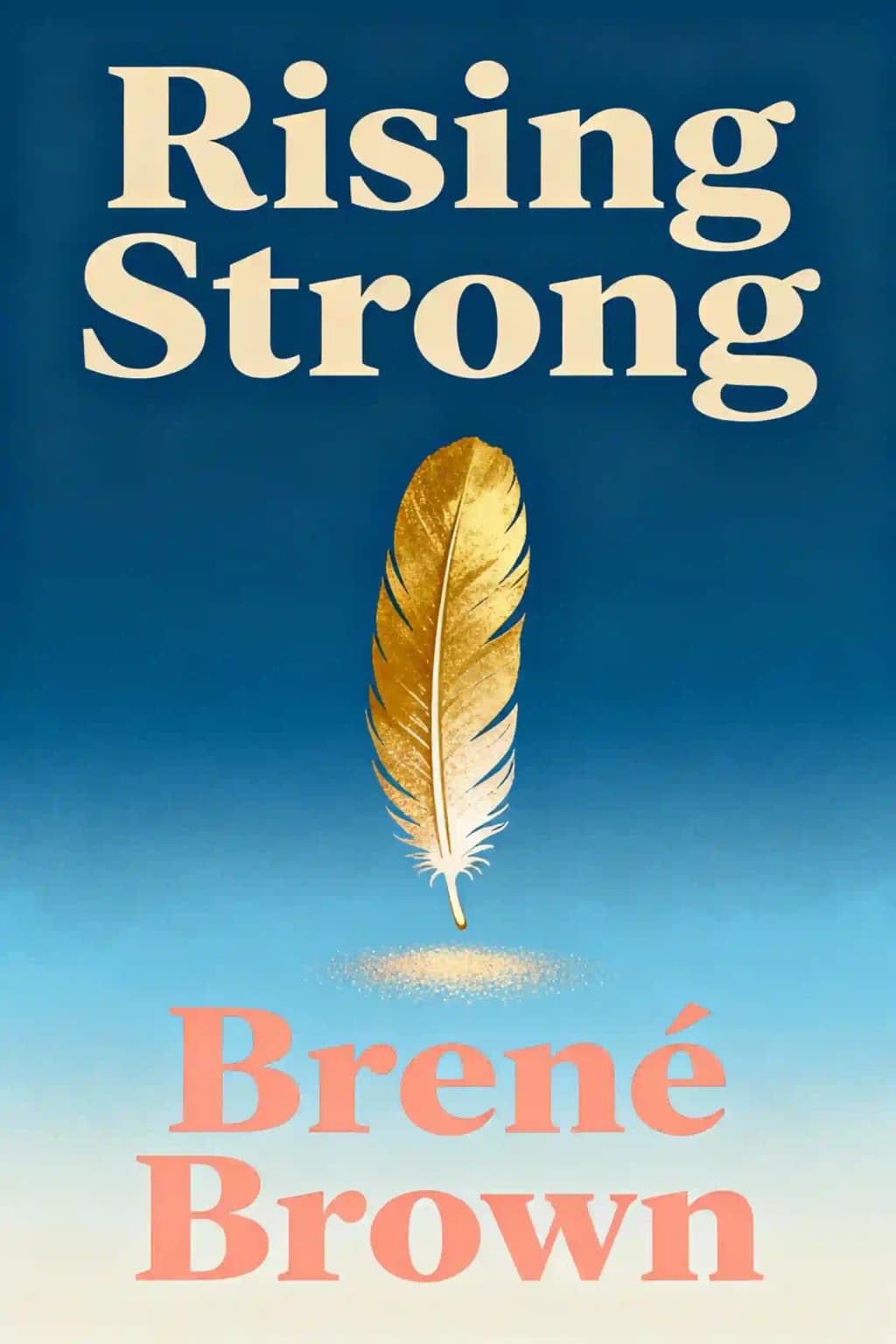
Imagine standing in the middle of a packed arena, dust swirling around your feet, heart pounding in your chest. You've just fallen-hard. The crowd's reaction fades to white noise as you face a pivotal choice: stay down or rise again. This is the moment Brene Brown's "Rising Strong" illuminates with extraordinary clarity. Published in 2015, this book quickly became Oprah's personal manifesto for resilience and earned a permanent spot on Barack Obama's recommended reading list. Brown's work has influenced everyone from Melinda Gates to Russell Brand, who credits her vulnerability research with transforming his approach to recovery. What makes "Rising Strong" particularly powerful is that it doesn't just celebrate triumph-it honors the messy middle where true transformation happens. As Brown's TED Talk on vulnerability (viewed over 50 million times) catapulted her into the spotlight, this book answers the question her global audience kept asking: "I'm trying to be brave, but I keep falling. How do I get back up?"
Capítulo 2
The Physics of Emotional Vulnerability
When we dare greatly-whether in relationships, careers, or creative pursuits-we inevitably fall. These falls aren't just occasional mishaps but guaranteed aspects of living courageously. Brown identifies ten fundamental principles that govern this process, what she calls "the physics of vulnerability."
First, falling is inevitable if we're brave enough, often enough. This isn't just risking failure-it's committing to it as part of the journey. Second, once we fall while being brave, we can never return to who we were before. This transformation brings both loss and renewed purpose. Third, this journey belongs uniquely to each person, yet paradoxically, no one successfully travels it alone. We must learn to depend on fellow travelers for brief moments of sanctuary and support.
Fourth, we're literally wired for story in our DNA. When we hear narratives, our brains release chemicals helping us connect, empathize, and make meaning. Fifth, creativity embeds knowledge into practice-we move learning from heads to hearts through our hands, integrating experiences into our being.
Sixth, rising strong follows the same process whether navigating personal or professional struggles. We can't compartmentalize emotions into separate life domains. Seventh, comparative suffering stems from fear and scarcity thinking. Empathy isn't finite-when we respond with compassion to ourselves and others, the healing affects everyone.
Eighth, vulnerability can't be engineered into a formula. Rising strong isn't a step-by-step solution but a theory explaining how we rise after falling. The process takes different shapes for different people, requiring us to feel our way through most of it. Ninth, courage is contagious. Our transformation through vulnerability affects everyone around us, whether they're inspired or uncomfortable with the mirror we hold up to their own struggles.
Finally, rising strong is a spiritual practice requiring belief in our interconnectedness. Spirituality brings perspective, meaning, and purpose, reminding us that "grace will take you places hustling can't."
What if we approached our emotional falls with the same curiosity and determination we bring to physical ones? What might change if we saw our struggles not as failures but as data-valuable information about ourselves and our world?
Capítulo 3
You Can't Skip Day Two
Brown shares a transformative moment from her marriage-a misunderstanding with her husband Steve while swimming in Lake Travis. What began as a simple swim turned into a complex emotional dance when Steve seemed distant and dismissive. Brown's mind created a story that he was judging her appearance, triggering deep shame. When she confronted him, the truth emerged: he'd been experiencing a panic attack triggered by a nightmare about failing to save their children from danger.
In that raw moment of mutual vulnerability, they found their way back to each other through honesty. Brown admitted that years earlier, she might not have been able to handle his vulnerability, but now she treasured it. "We're the big door prize," she told him, referencing their favorite John Prine song.
Two years later, while speaking at Pixar Animation Studios, Brown had an epiphany: "You can't skip day two." This resonated immediately with Pixar's creative team-that middle space when you're too far in to turn back but can't yet see the light ahead. After learning that Pixar references Joseph Campbell's hero's journey in every film, Brown applied this structure to her lake story with Steve.
She realized she'd been skipping Act 2-the messy middle where real transformation happens. The swim back wasn't just anxiety-filled; it was where she processed her hurt, vulnerability, and shame. During that swim, she questioned her assumptions about Steve's intentions, wrestled with her desire for payback, and faced difficult questions about trust.
What she thought were random thoughts were actually her working through the rising strong process. She realized that comparative suffering is misguided-everyday hurts shape us just as much as major life events. Their Lake Travis moment wasn't magical because it washed away conflict, but because they each owned their stories and worked through the messy middle.
Have you ever noticed how we celebrate beginnings and endings while rushing through the middle? What transformations might be waiting if we stayed present in those uncomfortable middle spaces?
Capítulo 4
The Reckoning: When Emotions Demand Attention
The rising strong process begins with a reckoning-recognizing when emotions are triggered and getting curious about what's happening internally. This is how we walk into our story rather than remaining defined by it.
Most of us were never taught to hold discomfort or communicate it-only to discharge it or pretend it's not happening. We instinctively avoid pain, often off-loading emotions onto others while simultaneously craving deeper emotional connection. Miriam Greenspan explains that our culture is "emotion phobic"-we fear and devalue emotion. Yet something in us wants to feel these emotional energies because they're "the juice of life." When we suppress emotions, we feel deprived and seek vicarious emotional intensity through media, but this "emotional pornography" teaches us nothing about ourselves.
To reckon with emotion rather than off-loading it requires four deceptively simple practices: giving yourself permission to feel, getting curious about emotions, paying attention to them, and practicing this work consistently despite its awkwardness and discomfort.
Permission slips-literal notes we write to ourselves-create powerful intentions to acknowledge emotions. For those raised in families where emotions were encouraged, this practice reinforces existing skills. For those from environments where emotions were minimized or punished as weakness, self-permission may be revolutionary.
After permission comes paying attention-becoming mindful of our feelings through conscious breathing. Despite initial resistance to breathing techniques, Brown discovered their power through conversations with seemingly opposite groups: yoga teachers and meditation leaders on one side, and soldiers, firefighters, and elite athletes on the other. Both groups use nearly identical breathing methods.
Tactical breathing (inhaling for four counts, holding for four, exhaling for four, holding for four) mirrors the square/box breathing used by therapists and mindfulness practitioners. These techniques create awareness and space between stimulus and response, allowing us to make choices aligned with our values rather than defaulting to instinctual reactions.
What emotions do you habitually push away? What might happen if you created space to feel them fully, even for just five minutes?
Capítulo 5
The Rumble: Owning Your Story
The rumble is where we get honest about the narratives we've created around our falls and failures. Our minds instinctively create stories to make sense of pain and vulnerability - a natural defense mechanism that helps us process difficult experiences. These initial narratives are rarely accurate-they're emotional self-protective mechanisms that Brown calls "shitty first drafts" (SFDs), often colored by our fears, past traumas, and insecurities.
These raw stories contain answers to three crucial questions: what more we need to understand about the situation, about others involved, and about ourselves. For example, when facing rejection, our SFD might immediately jump to "I'm not good enough" rather than considering external factors or circumstances. Humans are biologically wired for meaning-making; our brains reward us with dopamine when we recognize patterns, even if those patterns are incomplete or wrong. This explains why we create "conspiracy theories" about our personal experiences-simplified narratives that explain complex emotional situations. Consider how quickly we might assume a friend's unanswered text means they're angry with us, rather than considering countless other possibilities.
The most dangerous stories we tell ourselves diminish our inherent worthiness, particularly around three core areas: lovability ("I'm unlovable"), divinity ("I'm not worthy of connection"), and creativity ("I'm not talented enough"). These stories often stem from childhood experiences, cultural messages, or past disappointments. To break free from these harmful narratives, we must capture our SFDs-unfiltered, emotional stories that reveal our true feelings before rationalization takes over. This requires brutal honesty and the courage to face our deepest fears and insecurities.
Research by James Pennebaker demonstrates the powerful healing effect of expressive writing. Writing about emotional upheavals for just 15-20 minutes daily for four consecutive days can decrease anxiety, boost our immune systems, and help process trauma. The SFD should feel vulnerable and personal-it's not about venting or lashing out, but about capturing our internal narrative to enable growth. This might include writing about feelings of shame, disappointment, or fear without censorship or judgment.
Through this questioning process, specific "rumbling topics" emerge that require deeper exploration, including boundaries ("Am I setting healthy limits?"), blame ("Who am I holding responsible?"), shame ("What parts of this story make me feel unworthy?"), accountability ("What's my role in this situation?"), trust ("Who and what can I rely on?"), failure ("What am I learning from this?"), forgiveness ("What do I need to let go of?") and many others. The "delta"-the difference between what we make up about our experiences and the truth we discover through rumbling-is where meaning and wisdom emerge. Brown uses this mathematical symbol for difference because it forms a triangle, representing the three-legged stool of emotion, thought, and behavior affected by true rumbling.
The rumble requires us to stay curious about our stories, challenge our assumptions, and be willing to revise our narratives as new information emerges. This process isn't about finding quick answers but about developing a deeper understanding of ourselves and our relationships with others.
Capítulo 6
Living BIG: Boundaries, Integrity, and Generosity
Brown shares a powerful personal story about staying in a hotel with a roommate who disregarded rules and boundaries, triggering Brown's deep-seated frustration with "sewer rats and scofflaws"-people who not only break rules but mock those who follow them. This experience led her to a profound question: Are people doing the best they can?
After interviewing forty people, Brown noticed a pattern: those who believed people are doing their best qualified their answers apologetically, while those who disagreed responded with passionate certainty. The "yes" respondents tended to be wholehearted people comfortable with vulnerability, while the "no" group struggled with perfectionism.
The turning point came during dinner with a friend who harshly judged mothers who don't breastfeed for a full year-suddenly Brown realized she'd been judged as a "sewer rat" herself. When her husband Steve suggested, "My life is better when I assume people are doing their best," Brown finally embraced this perspective.
This realization led Brown to develop the concept of Living BIG: Boundaries, Integrity, and Generosity. Her mentor Jean Kantambu Latting taught her to ask, "What is the hypothesis of generosity?" about others' intentions. While initially skeptical, Brown found this approach liberating-but only when paired with clear boundaries.
She defines integrity as "choosing courage over comfort; choosing what is right over what is fun, fast, or easy; and practicing our values rather than simply professing them." Artist Kelly Rae Roberts exemplifies Living BIG through her clear, kind blog post titled "What Is and Is Not Okay," addressing copyright infringement.
Brown applies this approach to parenting, teaching her children to maintain integrity while making generous assumptions about others' motivations. Even with serial killers and terrorists, she believes in both compassion and accountability-holding people responsible in ways that acknowledge their humanity.
Through this process, Brown recognized that self-righteousness is "a tremendous threat to self-respect" and that accepting responsibility for her own life is essential. She acknowledged she agreed to help someone for the wrong reasons-to be likable rather than from genuine generosity. Moving forward, she gives herself permission to ask for what she needs and assumes the best about others' intentions.
How might your relationships transform if you assumed people were doing their best while still maintaining healthy boundaries?
Capítulo 7
The Brave and Brokenhearted: Rumbling with Heartbreak
Heartbreak transcends disappointment or failure, hurting differently because it's always connected to love and belonging. The brokenhearted are truly the bravest-they dared to love. As Brown's mentor Joe Reynolds explained, "Heartbreak is what happens when love is lost." This loss doesn't have to be permanent to be devastating-it can come from rejection, death, or even positive changes in loved ones.
To love intensely is to become vulnerable; heartbreak is unavoidable unless we choose not to love at all. Many people fail to acknowledge heartbreak because they associate it only with romantic love or because it inevitably leads to grief, one of our most feared emotions.
Grief may be our most feared emotion, both individually and culturally, as society often pathologizes it as something to cure rather than experience. Brown's research revealed three foundational elements of grief: loss, longing, and feeling lost. Loss extends beyond death to include losing normalcy or "co-rememberers" of shared experiences. Longing is an involuntary yearning for wholeness or to touch what's been lost. Feeling lost requires reorienting ourselves to every part of our physical, emotional, and social worlds.
For years, Brown struggled to find patterns in her forgiveness research until hearing her mentor explain, "In order for forgiveness to happen, something has to die." This was the missing piece-forgiveness involves death and grief. Nothing is more generous than embracing grief to forgive, as it requires burying expectations, relinquishing the power of "being right," or letting go of others' approval.
Archbishop Tutu explains that forgiveness is "the best form of self-interest" that frees us from being chained to perpetrators, allowing us to move forward while helping perpetrators become better people. The process requires naming our experiences, owning our stories, and rumbling with complexity rather than seeking quick answers.
Compassion practice requires us to move toward what scares us, drawing from our whole experience-suffering, empathy, cruelty, and terror. As Pema Chodron explains, compassion isn't a relationship between healer and wounded but between equals who recognize shared humanity. The most compassionate people are those who've faced their own darkness and can see others lying in the arena with them.
What heartbreak have you experienced that might actually be evidence of your courage to love deeply?
Capítulo 8
Composting Failure: Transforming Shame into Growth
Andrew, a respected advertising executive, experienced a professional failure that left him feeling like "a screwup." His story illustrates the crucial distinction between shame ("I am a screwup") and guilt ("I screwed up"). When perfectionism drives, shame rides shotgun, shifting our focus from "How can I be my best self?" to "What will people think?"
Comparison is another shame sidekick that "sucks creativity and joy right out of life." To counter shame, we must talk to ourselves compassionately and reach out to trusted others, as shame cannot survive being spoken and met with empathy.
Blame functions as a form of anger used to discharge discomfort or pain. The shame-blame combination is common because blame offers a quick escape from shame's pain. Accountability differs from blame just as guilt differs from shame. Accountability means holding ourselves or others responsible for specific actions and consequences, often motivated by wanting to align with our values.
Trust is often the first casualty in a fall. Charles Feltman defines trust as "choosing to risk making something you value vulnerable to another person's actions" and distrust as deciding "what is important to me is not safe with this person." The BRAVING checklist helps identify trust elements: Boundaries (respecting limits), Reliability (doing what you say), Accountability (owning mistakes), Vault (keeping confidences), Integrity (choosing courage over comfort), Nonjudgment (asking for needs without judgment), and Generosity (extending generous interpretations to others' actions).
Brown shares her own humiliating publishing journey, from the shame of "vanity publishing" to having her first traditionally published book "remaindered" due to poor sales. "I'm being composted," she thought, feeling the full weight of powerlessness, despair, and shame. After three weeks of blame and self-criticism, she emerged with a valuable lesson: she had set herself up for failure by not advocating for her work.
Regret isn't something to avoid but rather a powerful emotional reminder that change and growth are necessary. Brown argues that "no regrets" doesn't mean living with courage-it means living without reflection. What we regret most are failures of courage-whether to be kinder, show up, speak honestly, set boundaries, or be good to ourselves.
While composting may be a terrible fate for a book, it's a powerful metaphor for failure. Having the courage to own our mistakes and integrate the lessons yields the same results as adding nutrient-rich humus to soil: growth and new vitality.
How might your past failures be composting into wisdom that will nourish your future growth?
Capítulo 9
The Revolution: When Process Becomes Practice
The rising strong process becomes revolutionary when it transforms from something we do occasionally to a way we engage with the world daily. The true power emerges when our first response to emotional triggers is curiosity rather than avoidance. Integration happens when rumbling with our stories becomes instinctive, knowing that while difficult, it's ultimately easier than running away.
Brown outlines how organizations can implement the rising strong process by creating "story rumble teams" trained to facilitate discussions around conflicts and failures. She shares eleven guiding questions for organizational rumbles and introduces "The 5 Rs" that guide her company: Respect, Rumble, Rally, Recover, and Reach out.
In her home, Brown and her husband regularly use the phrase "The story I'm making up is..." to navigate conflicts, and they've taught their children to use "stormy first drafts" (their child-friendly version of SFDs) to process emotions and misperceptions. Rather than shutting down conversations with "Because I said so," rumbling opens dialogue that builds connection and mutual understanding.
In community settings, Brown demonstrates how story rumbles function through powerful conversations about race, gender, class, and sexual identity. She argues that stereotypes are essentially "shitty first drafts" based on lack of knowledge, and that unraveling them requires acknowledging emotions, getting curious, and rumbling with our stories.
The revolution culminates in Brown's "Manifesto of the Brave and Brokenhearted," which celebrates those willing to fall because they've learned to rise, who choose owning stories of struggle over hiding or pretending. We become authors rather than characters, crafting love from heartbreak, compassion from shame, grace from disappointment, and courage from failure.
The manifesto concludes by declaring that "showing up is our power," "story is our way home," and "we are the brave and brokenhearted... we are rising strong."
What would change in your life if curiosity became your first response to emotional triggers rather than avoidance or defense?
Capítulo 10
The Wholehearted Revolution: Integration as the Path Forward
Understanding our identities requires embracing our wholeness-being both tough and tender, brave and afraid, strong and struggling. "We can't be 'all in' if only parts of us show up," Brown explains. She references Walt Whitman's "I am large...I contain multitudes," acknowledging that her ten-year-old self has saved her as often as her "well-mannered social scientist self."
The rising strong process teaches us that integration-making oneself whole-is the engine driving transformation. Participants valued feeling genuine and authentic rather than compartmentalizing their lives or hiding parts of themselves. The tools for integration are deeply human: storytelling and creativity, particularly writing about experiences.
Steve Jobs believed creativity is connecting dots between experiences to synthesize something new. Creating means paying attention to our experiences and finding connections to learn about ourselves and the world. As Shonda Rhimes told Brown, "I don't even know who a character is until I've seen how they handle adversity. Onscreen and offscreen, that's how you know who someone is."
If integration means "to make whole," its opposite is to fracture or disown. Many of us move through life feeling fractured. Ironically, we disown difficult stories to appear more whole, but true wholeness depends on integrating all experiences, including our falls.
Brown's research reveals that wholehearted living is built on five core principles: 1) Love and belonging are irreducible human needs, and their absence causes suffering; 2) Those who experience love and belonging simply believe they are worthy of it, regardless of life's challenges; 3) This worthiness belief is cultivated through daily practices, not automatically acquired; 4) Wholehearted people prioritize courage, engagement, and purpose; and 5) Vulnerability serves as the catalyst for these qualities.
As we learn to rise strong after our falls, we don't just heal ourselves-we become living examples of what's possible. Our courage becomes contagious, inspiring others to face their own struggles with greater honesty and hope. In a world that often celebrates only success and strength, there is revolutionary power in acknowledging our falls while refusing to be defined by them.
What parts of yourself have you been keeping separate that might need integration? How might bringing your whole self to your life's challenges transform not just your experience but the experiences of those around you?