Capítulo 4
Embracing Life's Messiness
Life is undeniably messy, a truth that reveals itself in countless ways each day. Behind every composed exterior and polished social media presence often lies a person carrying enormous burdens. Kelly's own cancer diagnosis taught him this truth profoundly-walking out of the doctor's office into a sunny day where everyone continued about their business, he realized someone can look perfectly fine while carrying devastating news inside. This moment crystallized for him how the surface rarely tells the complete story of anyone's journey.
This insight applies universally: everyone is fighting a hard battle, often invisible to others. The prayer requests received at Dynamic Catholic reveal ordinary people carrying extraordinary burdens-cancer diagnoses, sexual abuse trauma, depression, job loss, relationship breakdowns. Parents silently struggle with children's addictions, executives battle panic attacks between meetings, and newlyweds face infertility behind closed doors. These struggles aren't exceptions; they're the common human experience, threading through lives regardless of status, wealth, or achievement.
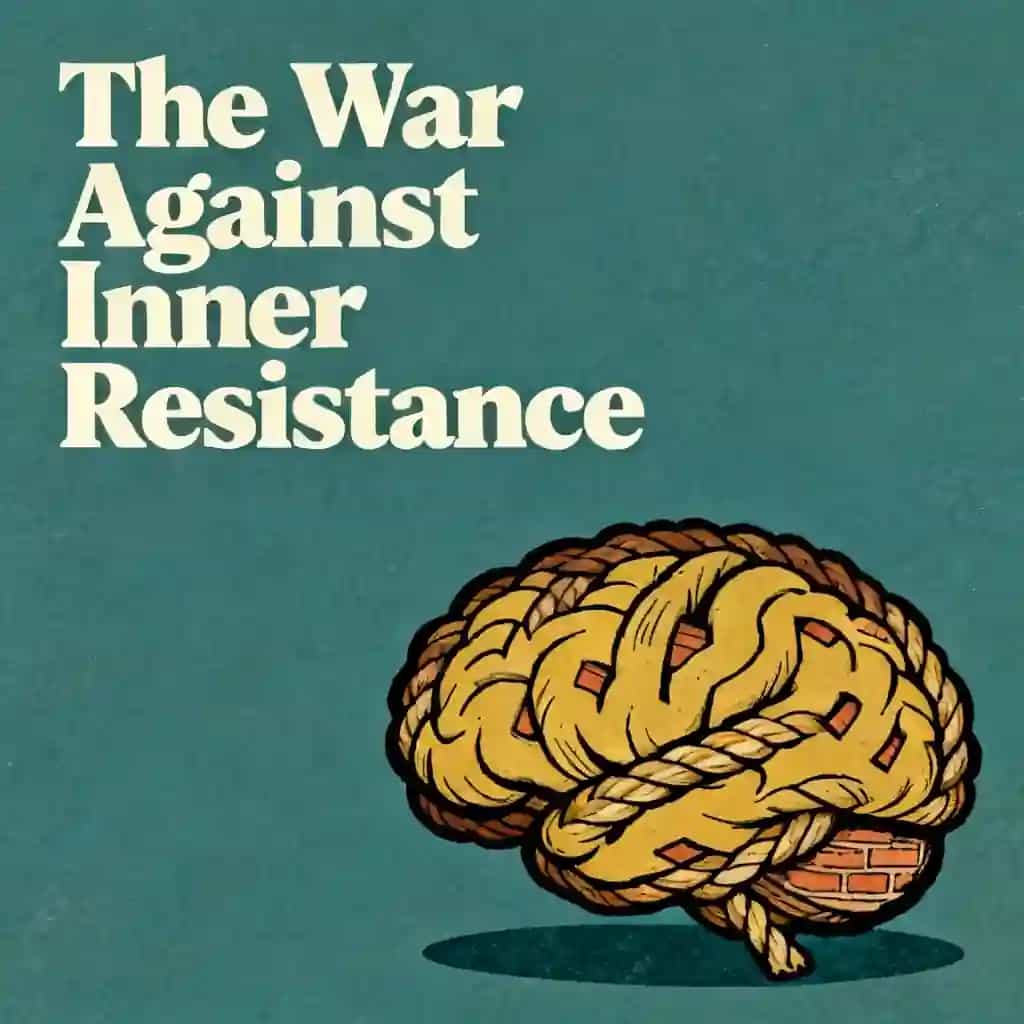
Resistance thrives in this messiness, whispering that problems are too numerous to make a difference. It manifests as procrastination, self-doubt, and a paralyzing sense of overwhelm. It encourages inaction and feeds on discouragement, suggesting that since we can't solve everything, we shouldn't try to solve anything. Yet the appropriate response isn't to deny life's difficulties but to acknowledge them and still take action. Kelly points to the Christian narrative of Christmas as an example-God didn't remain distant from human suffering but entered directly into it, choosing to experience human vulnerability firsthand.
When facing life's inevitable messiness, we have two choices: surrender to resistance or push through it. The former leads to paralysis and despair; the latter opens possibilities for growth and meaning. Those who choose to push through often discover hidden reservoirs of strength. A divorced mother starts a support group, transforming her pain into purpose. A recovering addict becomes a counselor, using his experience to guide others. The messiness doesn't disappear, but our relationship to it transforms. We begin to see difficulties not as obstacles to happiness but as opportunities to develop resilience, compassion, and wisdom.
This perspective doesn't minimize suffering but reframes it within a larger context of human growth and connection. Rather than asking "Why is this happening to me?" we can ask "What might this be teaching me?" or "How might this experience equip me to help others?" Such questions don't provide easy answers but offer a path forward through life's unavoidable messiness. They invite us to find meaning in our struggles and to use our experiences to create bridges of understanding with others who suffer similarly. This approach transforms personal challenges into opportunities for both individual growth and community building.
Capítulo 5
The Whisper of Discontent
Have you ever experienced that nagging feeling that something's missing in your life? Most people quickly push this feeling aside, fearing where it might lead. But ignoring it only increases our restlessness. It's like watching a friend who needs to make a difficult decision but refuses to confront the situation, or a student growing increasingly anxious about an upcoming exam while refusing to study. This discomfort often manifests in subtle ways - restless sleep, unexplained irritability, or a general sense of being off-center despite external circumstances remaining unchanged.
This quiet discontent serves an important purpose-it's trying to lead us toward something better. Kelly suggests we should pay attention to this restlessness rather than suppressing it. Productive restlessness drives creativity and gives birth to new ideas, though it needs to be channeled constructively rather than allowed to spiral into anxiety. Historical figures like Einstein, Gandhi, and Marie Curie all experienced periods of deep discontent that ultimately led to groundbreaking discoveries and social change. Their restlessness became the catalyst for transformation.
Kelly shares his own experience of feeling something missing despite outward success at fifteen. He had good grades, played sports well, and even ran a small business, yet still felt an undefined emptiness. This persistent feeling eventually led him to a spiritual awakening that transformed his life. He describes this period as "living in grayscale" before discovering a world of color. The transformation wasn't immediate but came through gradually acknowledging and exploring his discontent rather than dismissing it.
This pattern of discontent followed by discovery appears throughout human history. Augustine famously wrote, "Our hearts are restless until they rest in you, O Lord," capturing this universal experience. The dissatisfaction we feel isn't a problem to solve but a compass pointing toward deeper fulfillment. Similar themes emerge in Eastern philosophy, where dissatisfaction (dukkha in Buddhism) is seen as the beginning of the path to enlightenment. Modern psychology also recognizes this phenomenon, with researchers finding that periods of discontent often precede major positive life changes.
If you sense something missing in your life, stop ignoring it. That feeling might be the beginning of your most important journey. Rather than seeing it as a failure or weakness, recognize it as an invitation to something more authentic and fulfilling. The discomfort of acknowledging discontent is far less painful than a lifetime of ignoring your deeper yearnings. Kelly provides practical steps for exploring this discontent: journaling about your feelings, seeking quiet moments for reflection, and having honest conversations with trusted friends who can help you process these emotions.
This whisper of discontent often grows louder in times of transition - career changes, relationship shifts, or personal milestones. Instead of drowning it out with busyness or distractions, create space to listen. Your restlessness might be pointing you toward a new career path, deeper relationships, or spiritual growth that could fundamentally change your life's trajectory.
Capítulo 6
The Transformative Power of Daily Prayer
Life changes when our habits change, and no habit has more transformative potential than daily prayer. Kelly's journey began when a family friend named John suggested he try stopping by church for ten minutes each morning on his way to school. Though initially skeptical, Kelly eventually found himself in the chapel, where he experienced unexpected peace and clarity.
What started as simply planning his day in a quiet space evolved into conversations with God. The game-changer came when Kelly faced a decision and asked, "God, what do you think I should do?" This simple question of surrender marked a turning point in his life.
For over twenty years, Kelly has encouraged others to establish this same habit-setting aside ten minutes daily for quiet prayer. He suggests putting a Post-it note reading "Ten Minutes a Day!" on your bathroom mirror as a reminder. While this practice changed his life, he acknowledges how difficult it is to maintain. Resistance fights him every time he tries to pray, attempting to distract, discourage, or delay him.
The key insight: delaying prayer is as effective as skipping it entirely. We'll either rush through it later or postpone until we don't do it at all. Kelly advises taking your first opportunity each day to pray, establishing it as a non-negotiable priority.
This daily habit leads to spiritual health, helping us hear God's voice more clearly. When spiritually healthy, we're focused, invigorated, patient, and generous; when unhealthy, we're irritable, restless, and discontented. What's striking is how little we discuss spiritual health compared to physical health, revealing much about our culture's priorities.
Building this habit is like constructing a skyscraper-you start by digging deep foundations. While we tend to focus on our outer life, it's our inner life of thoughts, feelings, hopes, and relationship with God that truly matters. The first step is establishing a daily prayer habit, ideally at the same time each day, creating a structure that supports spiritual growth.
Capítulo 7
Living with the End in Mind
You are going to die. This inevitable truth should reshape how we live. Reflecting on death brings remarkable clarity to life-suddenly things are either very important or not important at all. Kelly learned this perspective early, having sung at many funerals during middle school.
When hospice nurses share what dying people regret, the list is revealing: wishing they'd been more authentic, spent more time with loved ones, prioritized spirituality, worked less, discovered their purpose earlier, expressed feelings better, worried less, taken more risks, cared less about others' opinions, chosen happiness, loved more, taken better care of themselves, been better spouses, followed their own path rather than others' expectations, pursued meaningful work, maintained friendships, spoken their minds, focused on what matters, had more children, touched more lives, contemplated life's big questions earlier, traveled more, lived in the moment, and pursued their dreams.
This perspective isn't morbid but liberating. It reminds us what truly matters and encourages us to get busy living while we still can. Kelly shares a practical exercise from his brother Simon, a financial planner: At 42 years old with a life expectancy of 80, Kelly has approximately 1,820 Sundays left. While this sounds like many, they disappear quickly. As Simon says, "Don't waste a single Sunday. If you don't waste Sundays, you will be less likely to waste Mondays, Tuesdays, Wednesdays..."
Living with the end in mind doesn't mean becoming obsessed with death but rather becoming more intentional about life. It means asking regularly: "Is how I'm spending my time aligned with what matters most?" This question cuts through resistance's fog of distraction and procrastination, bringing clarity to our daily choices.
Capítulo 8
Finding God in Ordinary Moments
We often make the mistake of looking for God in extraordinary events, but since the beginning, His favorite place has been amid ordinary things-like a child in a manger. Kelly, a self-described meticulous planner with everything scheduled and organized, recognizes that this tendency can become a way of avoiding the present moment-and God lives in the eternal now, constantly inviting us to immerse ourselves in the present.
At Dynamic Catholic, Kelly determined that ideal team members need three qualities: commitment, coachability, and awareness. This third quality is a great gift of spiritual life. While most people have awareness in hindsight, God wants to give us present-moment awareness-to be fully conscious of every breath, every bite of food, every smile, every word, every song, every kiss.
This awareness transforms ordinary work into prayer. While billions of people work every day, the primary purpose isn't just earning money-it's becoming the-best-version-of-ourselves. Through hard work and attention to detail, we grow in virtues like patience, diligence, and integrity. Kelly learned this through a powerful contrast: Joe, who worked sloppily for two thousand dollars but went home unfulfilled, versus his neighbor who volunteered, worked hard without pay, and found genuine fulfillment.
Christianity transforms ordinary activities-eating, sleeping, working-into prayer. Kelly suggests offering each hour of work for specific intentions-your spouse, children, friends in need. This practice brings unimaginable value to even mundane tasks. A trash collector can become a saint because holiness isn't reserved for religious professionals.
While resistance hates ordinary action and prefers distraction, disciples of Jesus bring meaning to everyday things. The hardest lesson is being fully present to what's important now, finding God in the ordinary moments that make up most of our lives.
Capítulo 9
The Journey Toward Your Best Self
Every moment presents a choice: will you move toward becoming the-best-version-of-yourself or away from it? Kelly discovered this concept through what he calls his "Pentecost Moment"-when he learned about the universal call to holiness, the idea that God calls everyone to a holy life. This simple concept captured his imagination: some things help him become the person God created him to be, and some don't.
Through experimentation, Kelly discovered a direct connection between happiness and holiness. When he did something aligned with God's will, he was filled with joy; when he did something wrong, that joy evaporated. He realized you can't stand still spiritually-you're either moving upstream or being pushed downstream.
Years later, Kelly developed the phrase "the-best-version-of-yourself" to explain this concept in accessible terms. Every moment, situation, and encounter becomes an opportunity for growth-whether through prayer, reading spiritual books, or serving others. This realization flooded him with energy and enthusiasm.
While the world compares us to others, God compares us to our former selves, constantly inviting personal transformation. The Pharisees focused on believing they were better than others, but true conversion is an ongoing journey of becoming superior not to others, but to our former selves.
This journey requires help. Kelly's father taught him that "nobody achieves excellence at anything without coaching." While talent and hard work can make you good at something, true excellence requires guidance. This raises a critical question: Who provides your spiritual coaching?
Before meeting John, nobody ever talked to Kelly about excellence in spiritual life. He didn't know holiness was possible for ordinary people. But the central goal of Christian life is loving God and neighbor by living a holy life. God wants you to live an excellent life, and in that quest for excellence, you'll find rare happiness.
Capítulo 10
Embracing Your Unique Mission
Much of our dissatisfaction comes from forgetting we're made for mission. God created us to serve, not to be served. Using anything for a purpose it wasn't designed for leads to problems-the same applies to our lives. We'll never find lasting happiness until we embrace our mission.
Some worry that focusing on becoming the-best-version-of-ourselves seems selfish, but this misunderstands the purpose. Every time we become better, God can use us more powerfully. Our happiness comes not from self-gratification but from serving others with our unique talents.
People often ask how to discover God's calling. Kelly believes God speaks through our talents-He gave us specific abilities because they match the mission He has for us. When people ask how to do what Kelly does, he explains that his work evolved gradually as he took each next step God asked of him, despite often feeling resistant, lazy, afraid, or comfortable.
God often chooses unlikely people for incredible work-Abraham the liar, Moses the murderer with a speech impediment, David the adulterer, Peter the betrayer, and Paul the Christian killer. What does God look for on a resume? Only one thing: availability. Like Jesus multiplying five loaves and two fish, God wants to do amazing things with our lives if we make ourselves completely available.
Most of us resist making ourselves 100% available to God because we want control-a grand delusion since we're never truly in control. Saint Ignatius compared humans to tree trunks that could become beautiful statues if they submitted to the sculptor's chisel. Our resistance prevents God from forming us into our best selves.
As you journey toward your mission, watch for patterns where resistance easily defeats you. Critics will always be present-even Winnie the Pooh has 25,000 "dislikes" online. But we live for an audience of one: God. When discouraged, do the tiniest thing to move forward. As Calvin Coolidge said, "Nothing in the world can take the place of persistence."
Capítulo 11
Choosing Gratitude Over Resistance
Despite advances in medicine, technology, and food supply, our world still contains overwhelming suffering-poverty, human trafficking, ignorance, greed, selfishness, and abuse. Against this backdrop, Kelly was struck when his two-and-a-half-year-old son Harry exclaimed, "I lucky boy, I very lucky boy!" with infectious enthusiasm.
This childlike gratitude offers a powerful antidote to resistance. Without gratitude, yesterday's extraordinary becomes today's ordinary. Entitlement takes over and rots the soul. Gratitude keeps us young, anchors us to the present moment, and reminds us what matters most.
Kelly reflects on his own good fortune, blessed in ways he neither understands nor deserves. Why him and not a child born the same day in Sudan who died within a week from lack of clean water? This mystery reminds us that everything is a gift, which is humbling when honestly considered.
With blessing comes responsibility. Jesus said, "Anyone who has been given much, much will be expected of him." Harry's exclamation beautifully expresses gratitude, which should be our first response to blessings. Our second should be living worthy of those blessings.
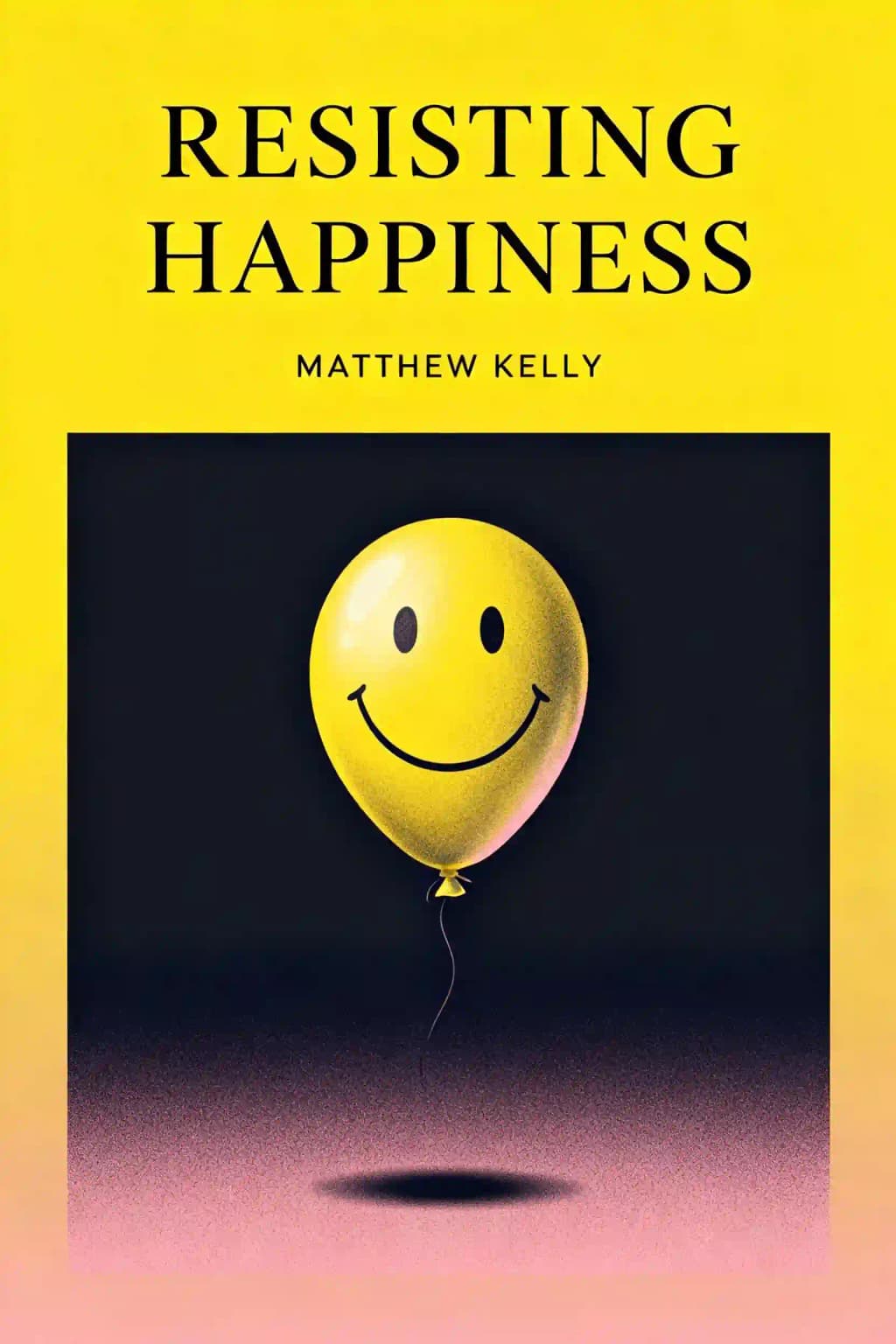
Happiness is ultimately a choice, with resistance almost always standing between you and the happiness you yearn for-the happiness God wants for you. Kelly's simple goal was to give resistance a name and help readers recognize it in daily moments. Resistance is the villain; you are the hero. Simply naming resistance causes it to lose much of its power.
Every moment offers a new beginning, a chance to turn everything around. The battle against resistance isn't won once and for all but must be fought daily. Yet with each victory, we grow stronger and more capable of choosing happiness over resistance, gratitude over entitlement, and love over fear.